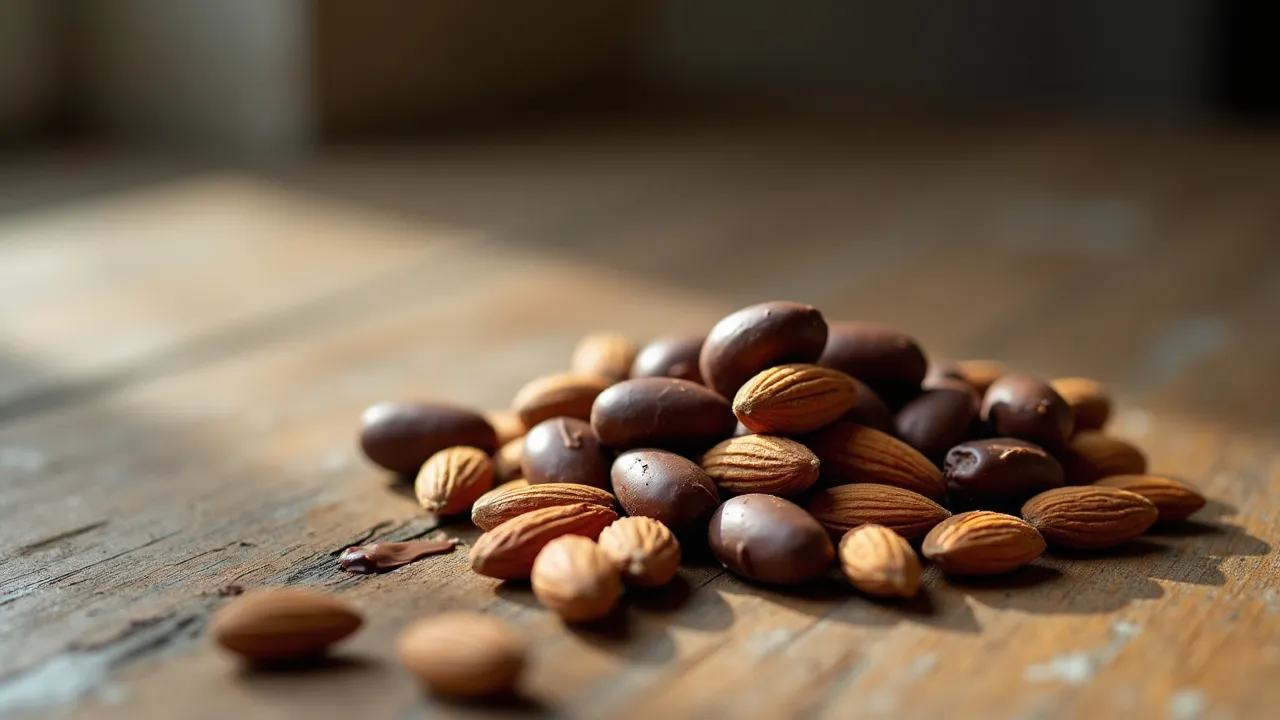
National Chocolate with Almonds Day on July 8th celebrates the delicious pairing of rich chocolate and crunchy almonds. Discover its history, fun facts, and how to indulge in this beloved confection worldwide.
The Historical Origins & Evolutionary Journey
National Chocolate with Almonds Day is an annual food holiday celebrated on July 8th in the United States. Its origins trace back to the long-standing love affair between chocolate and almonds, two ingredients with rich separate histories.
The Foundational Catalyst
Chocolate has been consumed for over 4,000 years, originating in Mesoamerica, while almonds have been cultivated for at least 5,000 years in the Mediterranean. The combination likely emerged in the 19th century when European confectioners began enrobing nuts in chocolate. However, the specific holiday was formalized in the early 21st century by the National Confectioners Association (NCA) to promote the confectionery industry.
The Legislative/Official Adoption
In 2015, the NCA officially registered July 8th as National Chocolate with Almonds Day on various food holiday calendars. The date was chosen arbitrarily but aligns with summer, a time when chocolate-covered nuts are popular for snacking and gifting.
Modern Global Legacy
Today, the day is recognized by chocolate enthusiasts worldwide. In the United States, it’s a minor food holiday celebrated with special promotions, limited-edition products, and social media campaigns. Globally, similar pairings are celebrated in countries like Switzerland and Belgium, though the specific date varies.
How to Celebrate National Chocolate with Almonds Day
Whether you’re a home cook, a student, or a corporate team, there are countless ways to honor this delicious duo. Here are expert-recommended strategies:
For Individuals & Families
- DIY Chocolate-Covered Almonds: Melt dark, milk, or white chocolate and dip whole almonds. Let them set on wax paper.
- Taste Test Party: Buy different brands and vote on the best.
- Gift Giving: Make personalized bags with a ribbon for friends and neighbors.
For Schools & Educational Groups
- Host a "History of Chocolate" short presentation.
- Conduct a science experiment on chocolate tempering.
- Organize a bake sale with chocolate-almond treats.
For Businesses & Organizations
- Employee Appreciation: Distribute branded chocolate almond packages.
- Social Media Contest: Ask followers to share creative almond chocolate recipes.
- Pop-Up Stands: Offer free samples in high-traffic areas.
Global Celebrations
While the U.S. leads, countries like Japan celebrate with limited-edition Kit Kat bars featuring almond. In Italy, cioccolato con mandorle is a traditional sweet. In Mexico, chocolate-covered almonds are sold in markets year-round, but July 8th sees extra promotional activity.
The Nutritional Profile: Health Benefits & Considerations
Chocolate and almonds together offer a balance of indulgence and nutrition. Dark chocolate (70%+ cocoa) is rich in antioxidants and flavonoids, while almonds provide protein, healthy fats, vitamin E, and magnesium.
Key Benefits
- Heart Health: Almonds lower LDL cholesterol; dark chocolate improves blood flow.
- Brain Function: Flavonols in cocoa enhance cognitive function.
- Weight Management: The combination is satiating, reducing overall calorie intake.
Considerations
Milk chocolate and white chocolate have higher sugar and lower cocoa content. For optimal health, choose varieties with at least 70% cocoa and dry-roasted, unsalted almonds. Portion control is key - a small handful (about 30g) is a healthy serving.
Global Impact & Industry Insights
The chocolate and almond market is a multi-billion dollar industry. According to industry reports, the global chocolate confectionery market was valued at $130 billion in 2023, with nut inclusions accounting for a significant share.
Supply Chain Dynamics
Almonds are primarily grown in California (80% of global supply), with production heavily dependent on water resources and pollination. Cocoa beans come from West Africa (Ivory Coast, Ghana) and South America. Climate change threatens both crops, making sustainable sourcing a priority.
Consumer Trends
In recent years, demand for premium, organic, and fair-trade chocolate-covered almonds has risen. Plant-based and vegan-friendly versions (using dairy-free chocolate) are increasingly popular. Limited-edition flavors like sea salt, caramel, and matcha are also trending.
Creative Variations & Pairings Around the World
Chocolate with almonds is a versatile base for many cultural adaptations. Here are notable global variations:
United States
- Chocolate Almond Bark: Spread melted chocolate, top with almonds and sea salt.
- Almond Joy Candy: Coconut and almond in milk chocolate.
Europe
- Switzerland: Schoggi Mandeln (chocolate almonds) are a classic.
- Italy: Torrone includes almonds in chocolate nougat.
Asia
- Japan: Chocolate Kyōzume - almonds in chocolate-coated wafers.
- India: Badam Chocolate (almond chocolate) is a homemade treat.
Latin America
- Mexico: Almendras cubiertas de chocolate with cinnamon and chili.
Common Misconceptions & Frequently Asked Myths
Despite its popularity, several myths surround chocolate with almonds. Let’s debunk them:
Myth: All chocolate-covered almonds are unhealthy.
Fact: When made with dark chocolate and minimal added sugar, they provide beneficial nutrients. Moderation is key.
Myth: White chocolate is a real chocolate.
Fact: White chocolate contains no cocoa solids; it’s made from cocoa butter, sugar, and milk. It does not offer the same antioxidant benefits.
Myth: Almonds in chocolate cause allergies more often.
Fact: Tree nut allergies are serious, but the combination doesn’t increase risk. Always check labels for cross-contamination.
Myth: National Chocolate with Almonds Day is a marketing gimmick.
Fact: While created by the confectionery industry, it’s a legitimate celebration of culinary heritage and enjoyment.
Historical Timeline
Almonds first cultivated in the Mediterranean region, particularly in Greece and Turkey.
The Olmec culture in Mesoamerica begins using cacao beans to make a chocolate drink.
Joseph Fry creates the first solid chocolate bar in England, paving the way for chocolate-coated nuts.
Daniel Peter of Switzerland invents milk chocolate, mixing cocoa with condensed milk.
Chocolate-covered almonds become a popular confection in Europe and the United States, often sold in drugstores and candy shops.
The National Confectioners Association officially registers July 8th as National Chocolate with Almonds Day, launching a social media campaign to promote the holiday.
Global pandemic increases home baking and snacking, leading to a surge in sales of chocolate-covered almonds as comfort food.