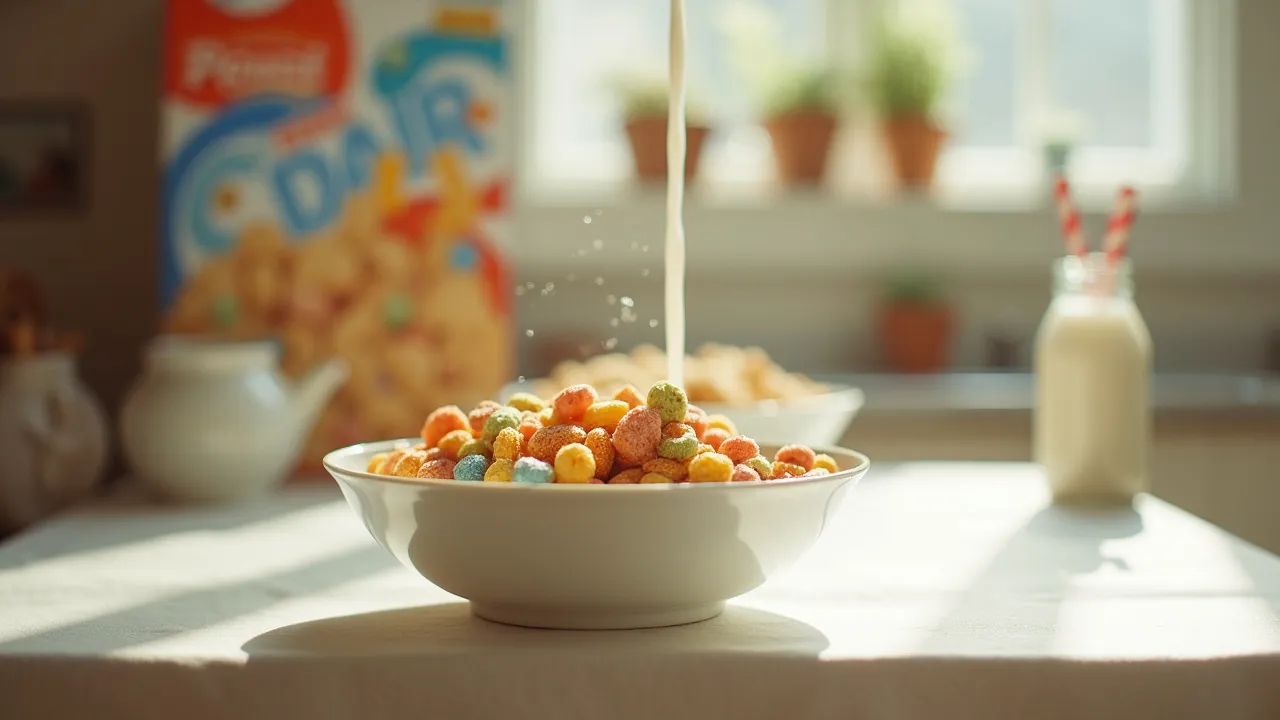
National Cereal Day, observed on March 7th, celebrates the invention and cultural impact of breakfast cereals. From ancient grains to modern boxes, enjoy a bowl and learn about cereal history.
The Historical Origins & Evolutionary Journey
National Cereal Day, observed annually on March 7th, honors one of the most ubiquitous breakfast foods in the world: cereal. The day traces its roots to the mid-20th century marketing campaigns of the Cereal Institute, but the story of cereal itself stretches back millennia.
The Foundational Catalyst
The concept of processed breakfast cereal emerged in the 19th century as part of the health reform movement. Dr. James Caleb Jackson created the first cold breakfast cereal, Granula, in 1863 at the Dansville Water Cure in New York. However, his cereal required overnight soaking and was not commercially successful. In 1877, Dr. John Harvey Kellogg, a Seventh-day Adventist and superintendent of the Battle Creek Sanitarium, invented Granola as a digestible baked wheat product. Later, in 1894, John and his brother Will Keith Kellogg accidentally created Corn Flakes after leaving cooked wheat to go stale. The flaked cereal was an instant hit, and Will formed the Battle Creek Toasted Corn Flake Company in 1906, which later became the Kellogg Company.
The Legislative/Official Adoption
The official National Cereal Day was established by the Cereal Institute, a trade association representing major cereal manufacturers, in 1958. The date March 7th was chosen strategically to coincide with the start of National Nutrition Month, emphasizing cereal's role in a balanced breakfast. While not a federal holiday, the day gained traction through marketing campaigns and consumer education programs throughout the 1960s and 1970s.
Modern Global Legacy
Today, the global cereal market exceeds $40 billion annually. From sugary children's cereals like Froot Loops (introduced in 1963) to health-oriented brands such as Special K and Cheerios, cereal has diversified to meet changing dietary preferences. The rise of granola, muesli, and cold-brewed overnight oats also reflects the ongoing evolution. In recent years, cereal cafes have popped up in major cities, and limited-edition collaborations (e.g., Krave with other brands) keep the industry dynamic. National Cereal Day now encourages people worldwide to share their favorite cereal moments on social media, using hashtags like #NationalCerealDay.
How to Celebrate National Cereal Day
Celebrating National Cereal Day can be both fun and educational. Here are detailed strategies for individuals, schools, and organizations to participate:
For Individuals & Families
- Host a cereal tasting party: Buy mini boxes of various types (classics, new arrivals, and international brands) and sample them with different milk alternatives.
- Create a cereal-inspired recipe: Use cereal as a topping for yogurt, ice cream, or in baked goods (e.g., cereal milk panna cotta, rice krispie treats).
- Explore history: Visit the Cereality archives or watch documentaries like The Cereal Killers to learn about the industry's impact.
For Schools & Educators
- Organize a cereal box design contest where students create their own cereal brand, complete with mascots and nutritional claims.
- Teach a math lesson using cereal sorting and counting for younger grades, or analyze sugar content per serving for older students.
- Host a cereal drive to collect breakfast items for local food banks, emphasizing the importance of nutritious breakfasts.
For Organizations & Brands
- Run a social media campaign with giveaways and user-generated content using a branded hashtag.
- Partner with a cereal company for a limited-time flavor or promotional deal.
- Offer employees a cereal bar in the breakroom with various options and toppings.
Internationally, different countries have unique traditions. In the United Kingdom, porridge (oatmeal) is more common, but cereal bars and muesli are trendy. In Japan, cereal is often eaten with cold milk, but some regions prefer rice-based cereals with fruit. In Mexico, sweetened cereals like Zuckos are popular, often paired with fresh fruit. The day is a global invitation to appreciate the versatility of cereal.
Cereal's Nutritional Evolution
The nutritional profile of cereal has undergone massive changes. Early cereals like Granula and Corn Flakes were touted as health foods, but the addition of sugar and artificial flavors in the mid-20th century sparked controversy.
From Health to Hype
In the 1950s, manufacturers began coating cereals with sugar to appeal to children. Sugar Smacks (now Honey Smacks) had over 50% sugar by weight. This led to public health concerns and eventually stricter labeling laws in the 1990s.
The Health-Conscious Revival
Today, the industry offers a wide range of options: high-fiber, low-sugar, gluten-free, and fortified with vitamins and minerals. Brands like Kashi and Erewhon cater to organic and natural food consumers. Additionally, the rise of plant-based milks (soy, almond, oat) has influenced cereal consumption patterns.
Regulatory Impact
The Food and Drug Administration (FDA) now requires clear nutritional panels, and many cereals have reduced sugar content to meet guidelines. The American Heart Association recommends cereals with at least 3 grams of fiber and less than 10 grams of sugar per serving. This shift has encouraged innovation, such as the development of high-protein cereals made from chickpeas or lentils.
Global Cereal Consumption Trends
Cereal consumption varies widely across the globe, reflecting cultural preferences and economic factors.
North America
The United States remains the largest consumer, with annual per capita consumption of about 10 pounds. Classic brands like Cocoa Puffs and Frosted Flakes dominate, but private-label store brands are growing.
Europe
In the United Kingdom, Weetabix and porridge are traditional, while Continental Europe prefers muesli and granola. Germany leads in healthier cereal adoption with brands like Kölnisch and Bio.
Asia-Pacific
Japan has a growing cereal market driven by Western influence, but portion sizes are smaller and often include dried fruits and seeds. In India, breakfast cereals like Muesli and Oats are gaining popularity in urban areas, though traditional dishes like poha remain dominant.
Emerging Markets
In Latin America and Africa, fortified cereals are used in school feeding programs to combat malnutrition. Brands like Kellogg's and Nestlé have tailored products with local grains like sorghum and maize.
The Cereal Industry and Marketing
The marketing of cereal has been as influential as the product itself, shaping childhood memories and consumer behavior.
Mascots and Characters
From Tony the Tiger (Frosted Flakes, 1952) to Cap'n Crunch (1963), cereal mascots are iconic. They often appeal to children through cartoons and adventure themes. Count Chocula and Franken Berry (1971) even had their own Halloween cereal lines.
Prize Inserts and Collectibles
In the mid-20th century, cereal boxes included mail-in offers for toys, decoder rings, and sports cards. The Cracker Jack prize tradition started earlier, but cereal prizes became a staple until safety concerns reduced them in the 1990s.
Digital and Social Media
Today, brands engage consumers through social media challenges, limited-edition flavors (e.g., Oreo O's revival), and collaborations with influencers. The rise of cereal latte trends on TikTok demonstrates the product's cultural relevance.
Cereal in Popular Culture
Cereal has permeated movies, TV shows, and music, often symbolizing childhood nostalgia or convenience.
Film and Television
In Spider-Man: Into the Spider-Verse, the character Miles Morales eats a bowl of cereal while learning about his powers. The Breakfast Club (1985) famously used cereal as a metaphor for teenage life. TV shows like Stranger Things feature cereal product placements to evoke the 1980s.
Music
Songs like "Cereal" by Kaiyko and "Cereal Song" by Bobby Darin celebrate the food. Rap lyrics often reference specific brands as status symbols, e.g., "Froot Loops" as metaphor for colorful money.
Art and Design
The retro box art of vintage cereals is highly collectible. Artists like Andy Warhol incorporated cereal boxes in pop art, reflecting consumer culture.
Innovations in Cereal Manufacturing
Technology has transformed how cereal is made, from farm to bowl.
Processing Techniques
Modern extrusion cooking allows for complex shapes (e.g., Kix puffed balls and Froot Loops rings). High-pressure homogenization and spray drying create consistent flakes and clusters.
Fortification and Testing
Most cereals are fortified with iron, B vitamins, and folic acid. Companies use near-infrared sensors to batch-test for nutrient levels. The Enrichment Act of 1942, later updated, mandated fortification for many grains.
Sustainability Efforts
Manufacturers are reducing water usage and carbon footprint. General Mills committed to 100% sustainably sourced packaging by 2030. Some brands use upcycled grain from beer brewing to make new cereal products.
Historical Timeline
Dr. James Caleb Jackson invents Granula, the first cold breakfast cereal, at the Dansville Water Cure in New York.
John Harvey Kellogg and Will Keith Kellogg accidentally create Corn Flakes at the Battle Creek Sanitarium, leading to the founding of the Kellogg Company.
Will Keith Kellogg founds the Battle Creek Toasted Corn Flake Company, which later becomes Kellogg's.
The invention of Grape-Nuts by C.W. Post (Post Cereals) introduces a denser, nut-like cereal.
Kellogg's introduces the first fortified cereal, Pep, with added vitamins and minerals.
Tony the Tiger debuts as the mascot for Kellogg's Frosted Flakes, becoming a cultural icon.
The Cereal Institute establishes National Cereal Day on March 7th to promote breakfast cereals as part of a healthy diet.
Kellogg's launches Froot Loops, a colorful sweetened cereal that becomes a children's favorite.
General Mills introduces Count Chocula and Franken Berry, the first chocolate and strawberry flavored monster cereals.
The FDA mandates that all cereals with health claims must meet specific nutritional criteria, spurring a shift toward whole grains.
The cereal cafe trend begins in New York with Cereality, offering bowls of custom cereal and nostalgia experiences.