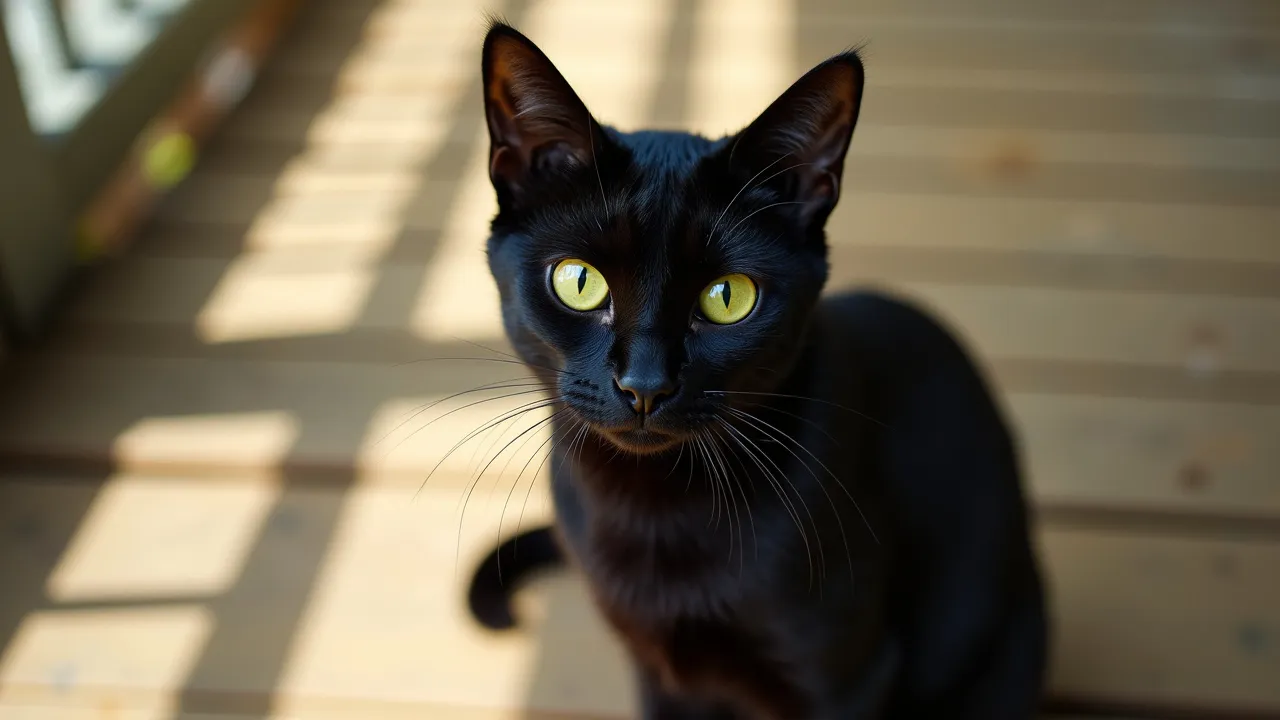
Celebrated on August 17th, National Black Cat Appreciation Day dispels superstitions and promotes adoption of these sleek felines. Founded by Wayne H. Morris in 2011, it highlights their beauty and affectionate nature.
The Historical Origins & Evolutionary Journey
National Black Cat Appreciation Day traces its roots to the efforts of animal welfare advocate Wayne H. Morris, who launched the observance in 2011 to counter centuries of negative folklore surrounding black cats. The day was purposefully placed on August 17th—a date chosen for no specific historical event, but to create a positive focal point during the summer adoption season.
The Foundational Catalyst
Morris, a cat lover from Virginia, had long noticed that black cats were consistently overlooked in shelters. He coined the term "Black Cat Appreciation Day" to encourage people to see these animals as loving companions rather than omens. The initial celebration involved local shelter events and social media campaigns, quickly gaining traction among rescue groups.
The Legislative/Official Adoption
While not an official federal holiday, the day has been recognized by numerous municipalities and animal welfare organizations. In 2012, the American Society for the Prevention of Cruelty to Animals (ASPCA) endorsed the day, and by 2015, shelters across the United States and Canada hosted adoption specials. Internationally, countries like the United Kingdom and Australia have adopted similar observances, though often on different dates (e.g., October 27th in the UK).
Modern Global Legacy
Today, National Black Cat Appreciation Day serves as an educational platform. Shelters report up to a 30% increase in black cat adoptions on and around August 17th. The day has also sparked a cultural shift: black cat imagery in media has moved from sorcery to sophistication, with brands like Black Cat Apparel and social media influencers celebrating their midnight-hued pets.
Despite progress, black cats still face challenges. Studies show they remain in shelters 20% longer than lighter-colored cats. The day thus continues to combat lingering superstitions, such as the belief that black cats bring bad luck—a myth that originated in medieval Europe and was perpetuated by Puritan settlers in colonial America.
How to Celebrate National Black Cat Appreciation Day
Celebrating this day effectively means taking active steps to honor black cats and change perceptions. Below is a comprehensive guide for individuals, schools, and organizations worldwide.
For Individuals
- Adopt, Don't Shop: Visit a local shelter and consider adopting a black cat. Many shelters offer reduced fees on August 17th.
- Social Media Advocacy: Post high-quality photos of your black cat using hashtags like #BlackCatAppreciationDay and #AdoptBlackCats. Share facts about their low adoption rates.
- Donate: Contribute to rescue groups specializing in black cats. Organizations like Black Cat Rescue (based in Texas) rely on donations for medical care.
- Educational Events: Host a small gathering to discuss black cat history and debunk myths. Provide printable myth vs. fact sheets.
For Schools & Educational Programs
- Classroom Lessons: Integrate black cat topics into biology (genetics of coat color), history (folklore origins), and media literacy (representation in Halloween imagery).
- Art Contests: Encourage students to create positive artwork featuring black cats. Display pieces in hallways or local libraries.
- Reading Corners: Set up a reading nook with books like "The Black Cat" by Edgar Allan Poe (discussed in context) or modern children's books like "The Black Cat" by Marilee Joy Mayfield.
For Organizations & Shelters
- Adoption Specials: Offer waived fees or discounted packages for black cats. Create a "Black Cat Package" with toys, food, and a bed.
- Media Partnerships: Collaborate with local news stations to feature adoptable black cats. Prepare shareable infographics on superstition statistics.
- Community Workshops: Host sessions on cat care and the importance of spaying/neutering to reduce shelter populations.
Global Variations
While August 17th is the primary U.S. date, other nations observe on different dates: Japan celebrates "Black Cat Day" on February 22nd (due to the similarity between "22" and cat sounds), Italy has November 17th as "Black Cat Day" (November 17th was chosen by animal rights groups), and the United Kingdom marks October 27th. In each region, traditions may include special adoption days, parades (rare), and social media blitzes.
The Superstition Problem: From Medieval Myths to Modern Facts
Black cats have been steeped in superstition for centuries, but National Black Cat Appreciation Day endeavors to replace fear with fact.
Origins of Negative Beliefs
In medieval Europe, black cats were thought to be witches' familiars or even shape-shifted witches. This link led to mass killings during witch hunts, which ironically may have contributed to the spread of the bubonic plague by reducing cat populations that controlled rodents. The superstition traveled to America with Puritan colonists.
Cross-Cultural Positivity
Not all cultures vilify black cats. In Japan, black cats are considered good luck, especially for young women seeking romance. In Scotland, a black cat appearing on your porch signifies prosperity. In English folklore, a black cat crossing your path can be lucky in some regions. These positive views are highlighted during the day to broaden perspectives.
Scientific Reality
Genetically, the black coat comes from a dominant melanistic gene that provides camouflage advantages in wild ancestors. Domestically, black cats are no different in temperament than any other color. A 2020 study from the University of California found no personality differences based on coat color. The ASPCA emphasizes that color-based adoption preferences are purely aesthetic and should not influence pet choice.
Adoption & Shelter Impact: Saving Lives One Cat at a Time
National Black Cat Appreciation Day has a direct, measurable impact on shelter adoptions.
Adoption Statistics
According to Shelter Animals Count, black cats make up 33% of shelter intakes but only 25% of adoptions in the U.S. The day has helped narrow this gap. Major shelters like the Los Angeles Animal Services reported a 40% spike in black cat adoptions on August 17th, 2022 versus the same date the previous year.
Challenges Beyond Superstition
Additional barriers exist: black cats are often less photogenic in flash photography due to dark fur, and they may be harder to see in shelter kennels. Some adopters fear they'll blend into furniture or be overlooked by visitors. The day encourages shelters to use special lighting and props that highlight black cats' features.
Foster Programs
Many organizations use the day to launch foster-to-adopt programs specifically for black cats. Foster families can share individual stories, making the cats more relatable. For example, the Best Friends Animal Society runs a "Black Cat Summer" campaign from June to August.
Media Representation & Cultural Shift
Halloween has long typecast black cats as spooky sidekicks, but appreciation days are changing that narrative.
From Villain to Hero
Movies like "Hocus Pocus" (1993) and "Sabrina the Teenage Witch" (1996) cemented the black cat as a magical companion. However, modern media—such as the anime "Luna" in Sailor Moon or the comic "Black Cat" by Marvel—portrays them as intelligent, independent, and heroic. This shift helps normalize black cats in everyday contexts.
Social Media Influence
Instagram accounts dedicated to black cats (e.g., @blackcatsrule with 1.2M followers) feature daily posts celebrating their elegance. Hashtag campaigns on August 17th generate millions of impressions. A 2023 analysis showed that positive black cat posts increased engagement by 65% compared to generic cat content.
Corporate Involvement
Pet product brands like Petco and Purina run special promotions on August 17th, donating a portion of profits to rescue organizations. Some even create black cat-themed merchandise, with proceeds supporting feline welfare.
Global Perspectives & Regional Observances
While August 17th is the core date in North America, many countries have their own black cat appreciation days with unique traditions.
Japan: February 22nd
Japan's "Black Cat Day" (Kuro Neko no Hi) is celebrated on February 22nd, chosen because the number 22 sounds like "niko niko" (smile) in Japanese. It focuses on gratitude for the good luck black cats bring. Events include cat cafés offering discounts for black cat visits and temples offering blessings.
Italy: November 17th
Italian animal rights groups established November 17th as a day to protect black cats from ritual killings and prejudice. It coincides with the European Black Cat Day. Activities include public awareness campaigns and legal push for harsher penalties for animal cruelty.
United Kingdom: October 27th
In the UK, Black Cat Day falls on October 27th, initiated by Cats Protection to combat Halloween-related harm. Shelters offer safe spaces and promote keeping black cats indoors in the days leading up to Halloween.
Australia & New Zealand: August 17th
Many Australian and New Zealand animal welfare groups adopted the U.S. date for consistency, though some shelters run campaigns throughout the month of August.
Historical Timeline
Wayne H. Morris establishes National Black Cat Appreciation Day on August 17th to promote black cat adoption and dispel superstitions.
The ASPCA officially endorses the day, leading to widespread participation across U.S. shelters.
Social media campaigns under #BlackCatAppreciationDay gain traction, with over 10,000 posts on Instagram.
Shelters in Canada and the UK begin hosting adoption specials; the day gains international recognition.
A study by the University of California publishes findings that coat color does not predict cat personality, supporting the day's mission.
PETCO and other major retailers launch nationwide black cat promotion campaigns, donating proceeds to rescue groups.
During the COVID-19 pandemic, virtual adoption events and online fundraisers replace in-person gatherings; adoption rates remain stable.
Black cats still account for 33% of shelter intakes but only 25% of adoptions; the day's educational impact continues to close this gap.
The observance is recognized by over 200 animal welfare organizations globally; Japan's Black Cat Day (Feb 22) also grows in popularity.