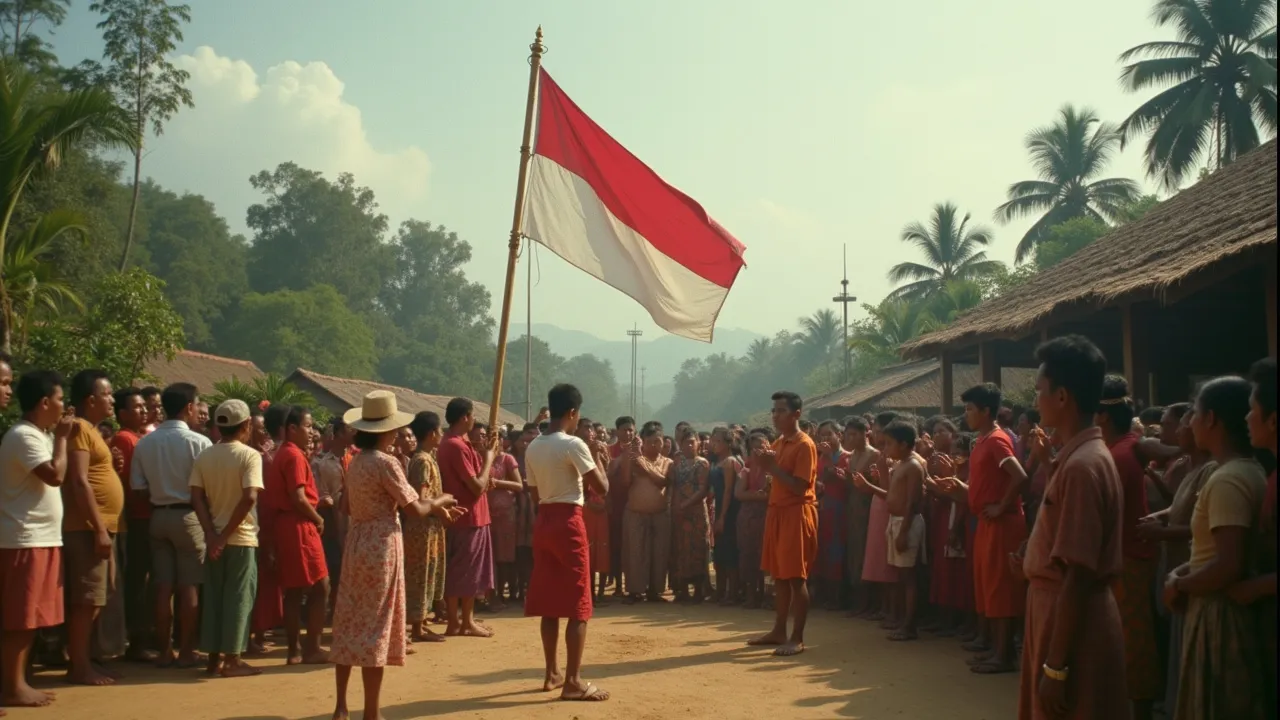
Indonesian Independence Day, celebrated on August 17th, commemorates the 1945 proclamation of independence from Dutch colonial rule. The day features flag ceremonies, community competitions, and festive gatherings across the archipelago.
The Historical Origins & Evolutionary Journey
Indonesian Independence Day, known locally as Hari Kemerdekaan Indonesia, is the most significant national holiday in the Republic of Indonesia. It marks the proclamation of independence on August 17, 1945, by founding fathers Sukarno and Mohammad Hatta. This day ended more than three centuries of Dutch colonial rule and a brief Japanese occupation during World War II.
The Proclamation Catalyst
The seeds of independence were sown in the early 20th century with the rise of nationalist movements. Key organizations like Budi Utomo (1908) and Sarekat Islam (1912) fostered a sense of unity. The Youth Pledge of 1928 (Sumpah Pemuda) famously declared one motherland, one nation, and one language: Indonesian. After Japan's surrender in August 1945, Sukarno and Hatta, under pressure from youth groups (pemuda), proclaimed independence at Sukarno's house in Jakarta.
From Proclamation to International Recognition
The proclamation was followed by four years of armed revolution and diplomacy against Dutch efforts to recolonize. Key events include the Battle of Surabaya (November 1945) and the diplomatic Round Table Conference (1949), which resulted in Dutch recognition of Indonesian sovereignty. Independence Day celebrations were initially subdued due to the conflict, but after 1950, they became official state ceremonies.
Modern Global Legacy
Today, August 17th is a day of nationwide festivities. The president leads a flag ceremony at the Merdeka Palace, broadcast nationally. Communities organize lomba (competitions) like sack races, marble-and-spoon races, and panjat pinang (greasy pole climbing). The holiday reinforces national identity and unity in diversity (Bhinneka Tunggal Ika).
How to Celebrate Indonesian Independence Day
Celebrating Indonesian Independence Day is a vibrant experience. Whether you are in Indonesia or abroad, here is a comprehensive guide to participating in the traditions.
For Individuals
- Attend a flag ceremony (upacara bendera) in your neighborhood or workplace, typically held in the morning.
- Wear red and white clothing, the colors of the national flag (Sang Merah Putih).
- Participate in local competitions (lomba), such as eating crackers, tug-of-war, or traditional games.
- Decorate your home or street with red-and-white bunting, flags, and umbul-umbul (penants).
- Enjoy traditional foods like nasi tumpeng, fried chicken, and kerupuk.
For Schools
- Organize a school-wide flag ceremony with student leaders.
- Hold educational events about the history of independence, including drama performances and quizzes.
- Arrange a bazaar or food fair (pasar malam) where students sell traditional snacks.
- Conduct class competitions that promote teamwork and patriotism.
For Organizations and Companies
- Host a flag ceremony at the office, inviting employees and families.
- Organize team-building activities inspired by traditional games like bakiak (clog race) or tarik tambang.
- Distribute themed merchandise or tokens to employees.
- Engage in corporate social responsibility projects, such as donating to schools or cleaning public spaces.
Celebrating Overseas
Indonesian embassies (KBRI) and consulates (KJRI) worldwide hold flag ceremonies and cultural events. Diaspora communities organize potluck gatherings, music performances, and open houses. It's a chance to introduce Indonesian culture to international friends.
National Symbols and Their Significance
Independence Day is a time to honor national symbols that embody the spirit of Indonesia.
The National Flag: Sang Merah Putih
The flag consists of two horizontal bands: red (top) representing courage, and white (bottom) representing purity. It was first raised during the proclamation. On August 17th, flags are displayed everywhere, from homes to government buildings.
The National Anthem: Indonesia Raya
Composed by Wage Rudolf Supratman in 1924, the song was played at the Youth Congress and later adopted as the anthem. It is sung with great reverence during flag ceremonies.
The National Emblem: Garuda Pancasila
The golden eagle carries a shield with symbols of the five principles of Pancasila (the state philosophy). It represents divine unity, humanitarianism, national unity, democracy, and social justice.
Traditional Attire
Many people wear traditional regional costumes during celebrations, such as batik, kebaya, or songket, showcasing Indonesia's cultural richness.
Regional Traditions Across the Archipelago
Indonesia's diverse cultures add unique flavors to Independence Day celebrations.
Java
In Yogyakarta, the sultanate holds a special ceremony at the palace. In villages, traditional games like egrang (stilts) and bakiak (clog races) are popular.
Bali
Balinese Hindus often incorporate religious rituals, offering prayers at temples and performing traditional dances like Kecak or Barong.
Sumatra
In West Sumatra (Minangkabau), communities hold tabuik (a religious procession) and traditional martial arts demonstrations (silek).
Sulawesi
In Toraja, unique buffalo races and traditional ceremonies mark the day. In Manado, a huge festival with local cuisine and music takes place.
Kalimantan and Papua
Indigenous communities in Kalimantan hold boat races on rivers, while in Papua, cultural parades with elaborate body painting and bamboo music are common.
Economic and Social Impact of the Holiday
Independence Day has significant economic and social effects on Indonesian society.
Boost to Local Economy
The weeks leading up to August 17th see increased sales of flags, decorations, and traditional food items. Micro, small, and medium enterprises (MSMEs) thrive as people buy snacks and party supplies. Many villages organize bazaars (pasar malam) that stimulate local commerce.
Tourism
Domestic tourism spikes as families travel to hometowns or tourist attractions. Major cities like Jakarta and Solo host large parades and cultural events that attract visitors.
Community Cohesion
The holiday strengthens social bonds. Neighbors collaborate to prepare festivals, clean public spaces, and participate in competitions. It fosters a sense of collective pride and unity across diverse ethnic and religious groups.
Reflection on National Progress
August 17th is also a time for reflection. Government officials and media outlets highlight achievements in development, education, and infrastructure, while also acknowledging challenges like corruption and inequality. It's a moment to recommit to national goals.
Global Celebrations and Diaspora Involvement
Indonesians abroad, numbering millions, enthusiastically celebrate Independence Day to maintain cultural ties and introduce their heritage to the world.
Events at Embassies
Indonesian embassies in countries like the United States, the Netherlands, Japan, and Australia hold flag ceremonies followed by cultural performances showcasing traditional dances, music, and cuisine. These events are open to the public and often attended by local dignitaries.
Diaspora Community Gatherings
Indonesian student associations (PPI) and community groups organize celebrations in parks or community halls. Activities include lomba (competitions), karaoke contests, and potluck dinners featuring Indonesian dishes like rendang, sate, and gado-gado.
Cultural Diplomacy
The holiday serves as a platform for soft power. Foreign guests learn about Indonesia's history and culture, fostering goodwill and potential tourism. Many embassies collaborate with local museums or cultural centers for exhibitions.
Social Media Campaigns
Hashtags like #DirgahayuIndonesia and #IndonesianIndependenceDay trend on social media. Diaspora members share photos of red-and-white outfits, flag displays, and festive meals, connecting globally.
Commemorative Events and State Ceremonies
The official state celebration is a grand affair that sets the tone for the nation.
Flag Ceremony at the Merdeka Palace
The President of Indonesia presides over a solemn flag-raising ceremony in the morning. The ceremony includes a military parade, the playing of the national anthem, and a speech by the president. It is broadcast live on national television and radio.
Tablig Akbar and Interfaith Prayers
In many communities, religious leaders hold interfaith prayer sessions to pray for the nation's peace and prosperity. This reflects Indonesia's pluralistic society.
Village and Neighborhood Festivals
Local governments organize competitions, art performances, and fireworks at night. The most famous tradition is panjat pinang, a greasy pole climbing game where participants compete for prizes at the top, symbolizing the struggle for independence.
Memorials and Tributes
Ceremonies are held at national monuments like the National Monument (Monas) in Jakarta, the Proclamation Monument, and the Heroes' Cemetery (Taman Makam Pahlawan). Families visit graves of fallen heroes to pay respects.
Significance in Modern Indonesia
In the 21st century, Indonesian Independence Day remains a pivotal moment for national self-reflection and unity.
Upholding Pancasila
The state ideology of Pancasila is reaffirmed. Schools and offices conduct sessions to discuss its principles and their application in daily life.
Focus on Development
The president's speech usually outlines development targets and calls for cooperation from all sectors. Initiatives like infrastructure projects, education reform, and digital transformation are highlighted.
Unity in Diversity
With over 300 ethnic groups and six officially recognized religions, the holiday emphasizes the motto 'Bhinneka Tunggal Ika' (Unity in Diversity). It strengthens national resilience against separatist movements and social fragmentation.
Youth Engagement
Young people are actively involved in organizing events and social projects. Many use the occasion to launch environmental campaigns, charity drives, or cultural preservation efforts.
Historical Timeline
Establishment of Budi Utomo, the first indigenous nationalist organization, marking the beginning of the national awakening.
The Youth Pledge (Sumpah Pemuda) declares the ideals of one motherland, one nation, and one language: Indonesian.
Japanese occupation of Indonesia. Nationalist leaders like Sukarno collaborate with Japanese authorities to prepare for independence.
Sukarno and Mohammad Hatta proclaim Indonesian independence. The text of the proclamation is read at Sukarno's house in Jakarta.
Indonesian National Revolution against Dutch re-colonization. Key battles include the Battle of Surabaya (November 1945) and the Dutch military offensives (Agresi).
The Netherlands formally recognizes Indonesian sovereignty after the Round Table Conference. Indonesia becomes a federal state but soon returns to a unitary republic.
Indonesia adopts a provisional constitution and becomes a member of the United Nations.
Political turbulence leads to the fall of President Sukarno and the rise of Suharto's New Order regime. Independence Day celebrations are used to legitimize the government.
The Reformasi movement forces Suharto to resign. The holiday takes on new meaning as a celebration of democracy and individual freedoms.
Decentralization leads to more localized celebrations. Regional autonomy allows provinces to add unique cultural elements to the holiday.
Indonesia holds the Asian Games in Jakarta and Palembang, with the opening ceremony coinciding with Independence Day festivities.
The holiday emphasizes national resilience post-pandemic, with economic recovery and digital transformation as key themes.