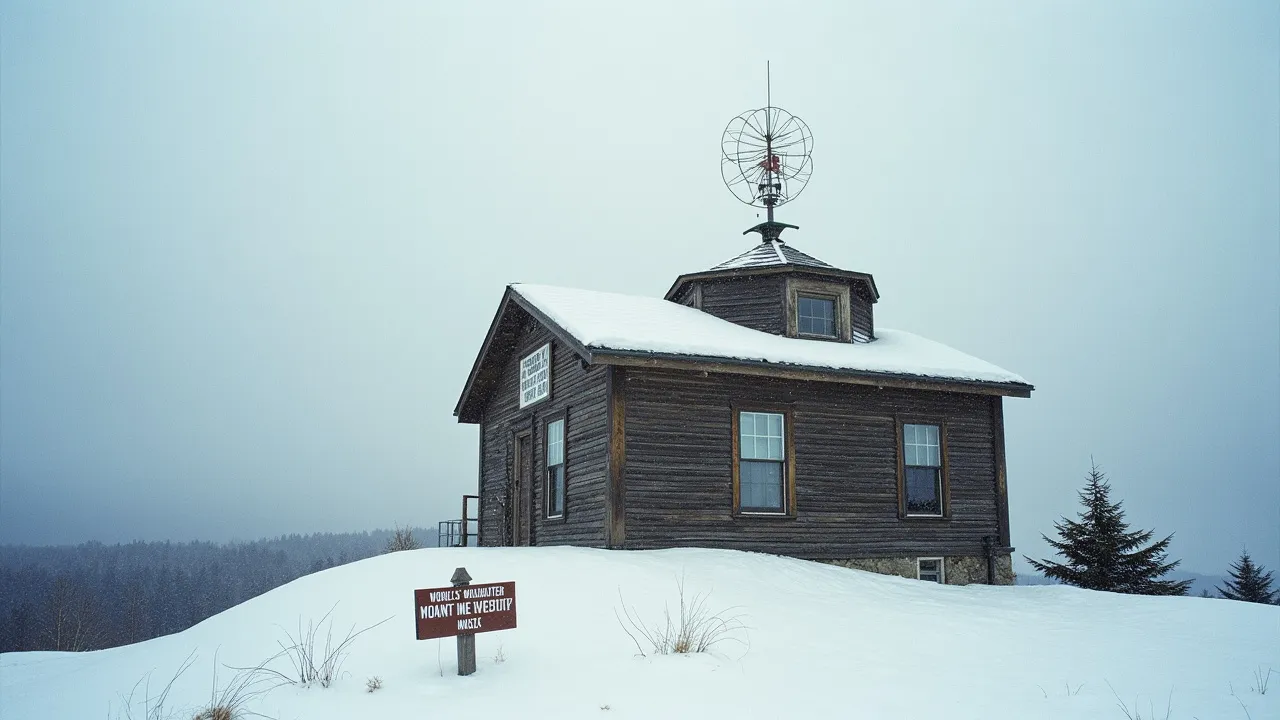
National Big Wind Day on April 12th honors the highest wind speed ever recorded on Earth—231 mph atop Mount Washington, New Hampshire in 1934. It's a day to celebrate extreme weather and promote wind energy awareness.
The Historical Origins & Evolutionary Journey
National Big Wind Day, observed annually on April 12th, commemorates the single most extreme wind gust ever recorded on the surface of the Earth: 231 miles per hour (372 km/h). This record was set atop the summit of Mount Washington in New Hampshire on April 12, 1934, an event that not only captivated meteorologists but also sparked a lasting fascination with extreme weather and wind energy. The day has evolved from a simple anniversary celebrated by weather enthusiasts into a broader observance highlighting wind science, safety, and renewable energy.
The Foundational Catalyst: The 1934 Record
On the afternoon of April 12, 1934, a team of meteorologists led by Charles F. Brooks and Salvatore Pagliuca at the Mount Washington Observatory were observing a powerful storm system. Using a specialized heated anemometer, they recorded a wind gust of 231 mph, shattering all previous records. The event was verified by the Smithsonian Institution and remains the highest natural wind speed ever measured at the Earth's surface (excluding tornadoes). This record drew global attention to Mount Washington's extreme climate, often called the "World's Worst Weather."
The Legislative/Official Adoption
National Big Wind Day is not a federal holiday in the United States. It was informally established by the Mount Washington Observatory and local weather enthusiasts in the decades following the record. The observatory began hosting special events and educational programs on April 12th to honor the milestone. Over time, weather organizations, schools, and wind energy advocates adopted the day as a platform to discuss meteorology, climate science, and renewable energy. Today, it is recognized globally by weather communities as a day to appreciate the power of wind.
Modern Global Legacy
While National Big Wind Day originated in the United States, its significance has spread worldwide as wind energy becomes a critical component of sustainable power. The day is now used to promote wind farm development, safety in high-wind regions, and awareness of climate change impacts. Observances include educational workshops, wind turbine tours, and weather station open houses. The 1934 record has never been surpassed (though some claims exist, they remain unverified). The event cemented Mount Washington's reputation as a living laboratory for extreme weather research.
How to Celebrate National Big Wind Day
National Big Wind Day offers a unique opportunity to engage with the power of nature, learn about wind energy, and promote safety. Below is a comprehensive guide to celebrating this day across different settings and cultures.
For Individuals and Families
- Visit a weather station or wind farm: Many observatories and renewable energy sites offer open houses on April 12th. Mount Washington Observatory provides live webinars and virtual tours.
- Build a wind gauge: Create a simple anemometer using household items to measure wind speed. Use a ping-pong ball and protractor for a fun science project.
- Fly a kite: Harness the wind for recreation. Choose a location with consistent breeze and practice kite-flying techniques.
- Document local wind: Record wind speeds in your area using a handheld anemometer and share data with citizen science projects.
For Schools and Educators
- Conduct weather experiments: Demonstrate Bernoulli's principle with straws and paper, or create a wind tunnel using a box fan. Discuss how wind forces affect structures.
- Host a poster contest: Encourage students to illustrate the 1934 record or design a wind energy future. Display winners in the school lobby.
- Invite a meteorologist: Arrange remote Q&A sessions with weather experts from national stations or local colleges.
For Organizations and Communities
- Organize a wind safety workshop: Provide guidance on securing outdoor items, trimming trees, and preparing emergency kits for high-wind events. Partner with local emergency management.
- Promote wind energy: Host a forum with energy experts discussing the benefits of wind turbines, community projects, and policy incentives.
- Recognize employees: Celebrate by acknowledging staff who work in extreme weather conditions, such as utility crews and meteorologists.
Global Celebrations
In countries like Germany, Denmark, and China—where wind energy is prominent—National Big Wind Day aligns with industry events. The global weather community shares data and stories on social media using #NationalBigWindDay. Some regions hold kite festivals or wind-sculpture contests to celebrate the invisible force.
The Science of Extreme Wind Speeds
Wind speeds are classified using the Beaufort scale, with hurricane-force winds exceeding 74 mph. The 231 mph record on Mount Washington is classified as an EF5 tornado equivalent, yet it occurred as a non-tornadic gust. Understanding the mechanisms behind such extreme events is crucial for structural engineering and disaster preparedness.
How Wind Speed Is Measured
- Anemometers: Standard cup or propeller anemometers measure horizontal wind speed. At extreme speeds, heated anemometers are used to avoid icing.
- Lidar and Sodar: Remote sensing technologies use laser or sound pulses to measure wind at various altitudes.
- Satellites: For large-scale wind patterns, satellites estimate surface winds using scatterometers.
Factors Contributing to Extreme Gusts
Mount Washington's record gust was generated by a combination of intense pressure gradient, regional topography, and the jet stream. The summit's exposure and funneling effect of the Presidential Range accelerated the flow. Similar phenomena occur in other windy locations like Antarctica's Commonwealth Bay (which may have higher sustained winds but not gusts).
Global Wind Extremes
While Mount Washington holds the official record for surface gust, tropical cyclones and tornadoes produce higher speeds but are not measured at standard height or duration. For instance, the 1999 Bridge Creek–Moore tornado had wind speeds estimated at 301 mph. National Big Wind Day highlights the importance of accurate measurement and record-keeping.
Wind Energy: Harnessing Nature's Power
Wind energy is one of the fastest-growing renewable energy sources globally. National Big Wind Day serves as a reminder of the potential and challenges of converting wind into electricity.
How Wind Turbines Work
- Rotor blades: Aerodynamic blades capture kinetic energy from the wind, spinning a shaft.
- Generator: The shaft turns a generator to produce electricity via electromagnetic induction.
- Gearbox and control systems: Adjust blade pitch and yaw to optimize energy capture and protect from high winds.
Global Wind Energy Capacity
As of 2023, the world's installed wind capacity exceeds 900 GW. Leading countries include China (over 300 GW), the United States (140 GW), and Germany (60 GW). Offshore wind farms are expanding rapidly. National Big Wind Day is used to advocate for policies supporting wind projects.
Challenges and Innovations
Wind power is intermittent and can be variable. Innovations like floating turbines (for deep water) and improved energy storage are addressing these issues. The day also highlights community wind projects, where local groups invest in turbines, reaping economic benefits. Additionally, bird and bat mortality concerns are mitigated through better siting and technology.
Safety Tips for High Wind Events
National Big Wind Day also emphasizes preparedness for high-wind events like hurricanes, derechos, and severe storms. Below are critical safety measures.
Before a High Wind Event
- Secure outdoor objects: Bring in or anchor patio furniture, garbage cans, and decorations that could become projectiles.
- Trim trees: Remove dead or weak branches that could fall on structures or power lines.
- Prepare an emergency kit: Include flashlights, batteries, first aid, water, and non-perishable food. Have a battery-powered radio for updates.
- Reinforce windows and doors: Install storm shutters or brace garage doors that can collapse under pressure.
During a High Wind Event
- Stay indoors: Avoid being outside, especially near trees, power lines, or tall structures. If driving, pull over safely away from trees.
- Take shelter: Go to a basement or an interior room on the lowest floor. Stay away from windows.
- Monitor updates: Listen to weather alerts and follow evacuation orders if issued.
After the Event
Inspect your property for damage, but be cautious of downed power lines. Document damage for insurance claims. Help neighbors and report hazards to authorities. Use generators outdoors only to avoid carbon monoxide poisoning.
Cultural and Economic Impact of Wind
Wind has shaped human history, from ancient sailing to modern wind farms. National Big Wind Day celebrates this dual nature of wind as both a destructive force and a resource.
Cultural Significance
Many cultures personify wind as a deity—like the Greek Anemoi or Native American wind spirits. Wind plays a central role in mythology, literature, and music (e.g., "Blowin' in the Wind"). The day encourages reflection on humanity's relationship with the elements.
Economic Benefits
The wind energy industry employs over 1.2 million people globally. It reduces carbon emissions and provides a stable energy price hedge. Local communities benefit from tax revenue and land lease payments. National Big Wind Day often features job fairs and industry networking events.
Environmental Considerations
While wind power is clean, it affects wildlife and landscapes. Proper siting and environmental impact assessments are essential. The day promotes balanced approaches that maximize benefits while minimizing harm. Research into bat-safe turbine designs and habitat conservation continues.
Historical Timeline
Mount Washington Observatory was originally established as a signal station by the U.S. Signal Service, later becoming a private research facility in 1932.
On April 12, a gust of 231 mph (372 km/h) was recorded at the Mount Washington Observatory, setting the world record for surface wind speed.
The record gains global recognition; Mount Washington becomes a key site for extreme weather research and testing of weather instruments.
The Mount Washington Observatory informally establishes National Big Wind Day on April 12, featuring public events and educational programs.
First large-scale wind farms begin operation in California, marking the start of modern wind energy industry.
The 1934 record is reaffirmed as official by the World Meteorological Association after a review; no higher credible natural surface gust is found.
Global wind capacity exceeds 200 GW; National Big Wind Day is increasingly used to promote renewable energy.
Mount Washington Observatory releases a special app for real-time weather data; virtual celebrations for National Big Wind Day become popular due to the pandemic.