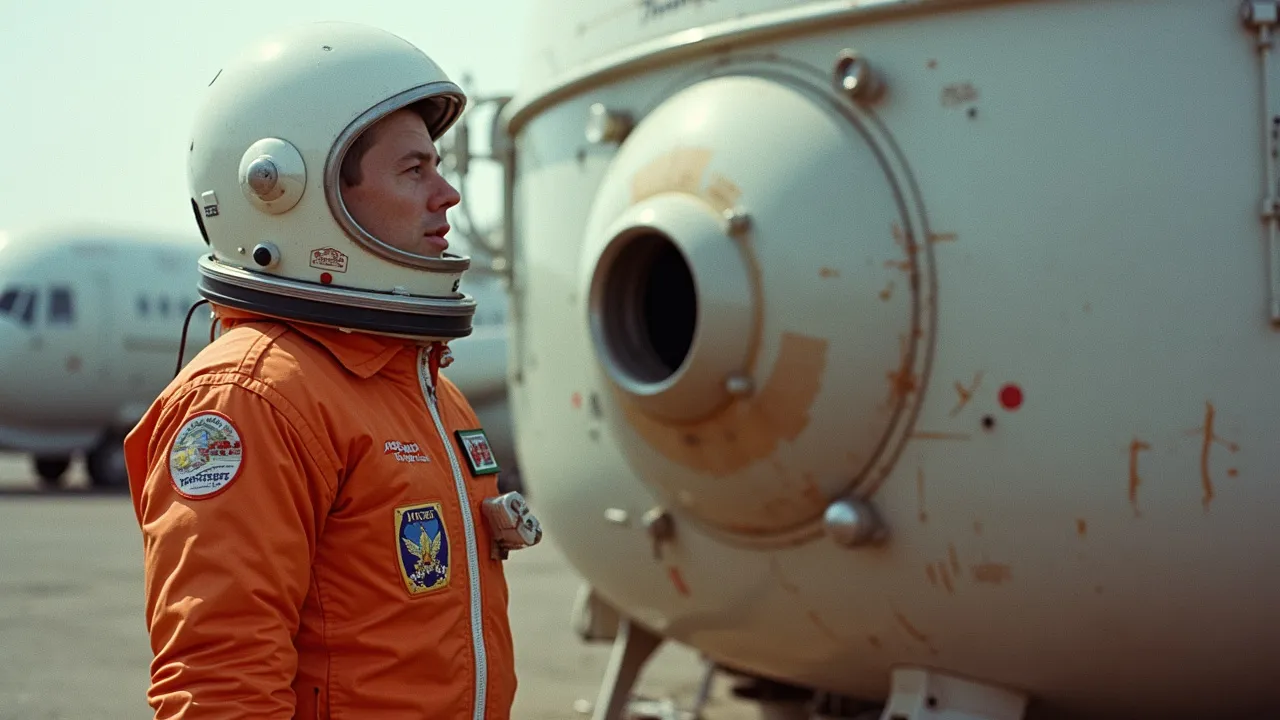
Celebrated on April 12th, this UN-recognized day honors the first human spaceflight by Yuri Gagarin in 1961. It also marks the first Space Shuttle launch, inspiring global exploration and scientific achievement.
The Historical Origins & Evolutionary Journey
The International Day of Human Space Flight is observed annually on April 12th, a date etched in history as the day humanity first broke the bonds of Earth's gravity. This United Nations-declared observance commemorates two monumental achievements: the first human spaceflight by Soviet cosmonaut Yuri Gagarin in 1961, and the inaugural launch of the Space Shuttle Columbia (STS-1) exactly twenty years later in 1981.
The Foundational Catalyst: April 12, 1961
On this day, the Vostok 1 spacecraft launched from the Baikonur Cosmodrome, carrying Yuri Gagarin on a 108-minute orbit around Earth. Gagarin's famous exclamation, "Poyekhali!" ("Let's go!"), marked a turning point in the Space Race and human history. The mission demonstrated that space travel was possible, igniting a global passion for exploration.
The Legislative/Official Adoption: UN Resolution A/RES/65/271
In 2011, the United Nations General Assembly passed a resolution designating April 12 as the International Day of Human Space Flight. The resolution recognized "the great beginning of the exploration of outer space" and called for annual celebrations to inspire future generations in science, technology, engineering, and mathematics (STEM). The initiative was spearheaded by Russia and co-sponsored by over 60 nations.
Modern Global Legacy
Today, the observance has evolved into a global phenomenon. It is celebrated not only by space agencies like NASA, ESA, and Roscosmos but also by educational institutions, museums, and amateur astronomy clubs. The day serves as a reminder of the peaceful uses of outer space and the need for international cooperation in space exploration.
How to Celebrate International Day of Human Space Flight
Whether you are an individual, a school, or a corporation, there are countless meaningful ways to honor this day. Below are actionable strategies grouped by audience.
For Individuals and Families
- Watch a space-themed movie: Titles like Apollo 13, First Man, or the documentary For All Mankind offer inspiring perspectives.
- Stargaze: Use a telescope or a mobile app like SkyView to identify constellations and planets. Join local astronomy club events.
- Read about space history: Books such as Yuri Gagarin: A Biography or Apollo 11: The Inside Story provide deep insights.
- Attend a virtual talk: Many museums and space agencies host free webinars. Check the European Space Agency or Johnson Space Center websites.
For Schools and Educators
- Organize a rocket-building workshop: Use simple materials like paper, tape, and baking soda to launch model rockets. Discuss the physics of thrust.
- Host a space trivia contest: Create questions about Gagarin, the Space Shuttle program, and the ISS. Offer small prizes.
- Invite a guest speaker: Connect with local scientists or even a retired astronaut via video call to share experiences.
- Plan a planetarium visit: If available, arrange field trips to learn about celestial navigation and space exploration.
For Organizations and Space Agencies
- Open-house events: NASA centers like Kennedy Space Center often have special tours on April 12. Check ahead for reservations.
- Social media campaigns: Use hashtags like #InternationalDayOfHumanSpaceFlight and #YurisNight. Share historical photos and videos.
- Collaborative projects: Launch a student essay contest on the theme of "The Future of Space Exploration." Award winners with model kits or books.
Global Celebration Variations
Russia: Major events in Moscow and Star City include wreath-laying at Gagarin's monument and ceremonies at the Kremlin. Many Russians attend concerts and fireworks displays.
United States: Yuri's Night parties are popular in cities like Los Angeles, Houston, and New York, often featuring astronaut talks, dance parties, and space-themed cocktails.
Japan: JAXA holds educational workshops and often coordinates with local schools for synchronized model rocket launches.
International Space Station: Crew members often record special messages and perform live experiments to highlight the day's significance.
The Scientific and Technological Impact of Human Space Flight
The journey that began with Yuri Gagarin has yielded profound scientific and technological advancements. This section explores key areas where human spaceflight has transformed our world.
Understanding Human Physiology in Space
Microgravity research has led to breakthroughs in bone density studies, muscle atrophy prevention, and cardiovascular health. The Twins Study involving NASA astronauts Scott and Mark Kelly provided invaluable data on genetic changes during extended spaceflight.
Key Discoveries
- Improved exercise protocols for astronauts have informed physical therapy on Earth.
- Research on fluid redistribution in space has advanced treatments for conditions like hypertension and edema.
- The study of circadian rhythms in orbit has improved sleep disorder management.
Technological Spinoffs
Everyday technologies owe their existence to space exploration. Examples include:
- Memory foam – developed for NASA aircraft seats to cushion during crashes, now used in mattresses and pillows.
- GPS – satellite-based navigation, essential for logistics, aviation, and consumer apps.
- Water purification systems – originally for the Space Station, now used in remote communities and disaster zones.
- Cordless tools – the Black & Decker Dustbuster and many power tools were adapted from Apollo lunar drilling equipment.
Earth Observation and Climate Science
Satellites launched for human spaceflight support have revolutionized our understanding of climate change, deforestation, and natural disasters. The Landsat program, born from NASA's early Earth-observing satellites, provides critical data for agriculture and urban planning.
The Cultural and Societal Influence of Space Exploration
Human spaceflight has not only advanced science but also shaped culture, art, and global perspective. This section delves into its transformative effect on society.
The Overview Effect
Astronauts who have seen Earth from space often describe a profound cognitive shift known as the Overview Effect. This experience fosters a sense of planetary unity and environmental stewardship. Many become advocates for peace and sustainability.
Inspiring Art and Literature
Space exploration has fueled creativity across media:
- Films: 2001: A Space Odyssey, The Right Stuff, and Interstellar draw directly from real missions.
- Music: David Bowie's "Space Oddity" and Elton John's "Rocket Man" became anthems of the space age.
- Literature: Works by Arthur C. Clarke, Ray Bradbury, and Andy Weir explore human destiny among the stars.
Educational Impact and STEM Enrollment
Major milestones like the Apollo landings and the Space Shuttle program have consistently boosted STEM interest. Studies show that during key space events, university enrollments in aerospace engineering and astrophysics spike by 10-20%.
Diversity and Inclusion
Recent decades have seen increasing representation: Valentina Tereshkova (first woman in space, 1963), Mae Jemison (first African American woman in space, 1992), and Chris Hadfield (first Canadian to walk in space) inspire diverse audiences.
Global Cooperation and the Future of Human Space Flight
The International Day of Human Space Flight underscores the importance of global collaboration in space. This section explores current and future cooperative ventures.
The International Space Station (ISS)
The ISS is a shining example of multinational cooperation, involving space agencies from the United States (NASA), Russia (Roscosmos), Europe (ESA), Japan (JAXA), and Canada (CSA). Since 2000, it has hosted astronauts from 19 countries, conducting research in microgravity, biology, and materials science.
Key Achievements
- Continuous human presence in space for over 20 years.
- Over 3,000 experiments conducted, leading to advances in medicine, physics, and technology.
- Partnerships that survived geopolitical tensions, demonstrating diplomacy through science.
The Artemis Accords and Lunar Gateway
NASA's Artemis program aims to return humans to the Moon by 2025, with a multinational crew. The Artemis Accords, signed by 28 countries as of 2023, establish principles for peaceful lunar exploration and resource utilization. The planned Lunar Gateway space station will orbit the Moon and support deep-space missions.
Private Sector Involvement
Companies like SpaceX, Blue Origin, and Virgin Galactic are democratizing access to space. SpaceX's Crew Dragon now regularly transports astronauts to the ISS, and its Starship aims for Mars. This commercial expansion promises lower costs and more frequent launches, accelerating human exploration.
Challenges Ahead
- Space debris management requires global regulations to prevent collisions.
- Radiation protection for long-duration missions remains a critical engineering hurdle.
- Psychological and social dynamics of isolated crews need further study for Mars voyages.
Despite challenges, the trajectory is clear: human spaceflight will continue to expand, with the Moon, Mars, and beyond as our next frontiers.
Unique Traditions and Commemorative Events Worldwide
Different cultures and organizations have developed special traditions to mark April 12th. This section highlights some of the most distinctive practices.
Yuri's Night: A Global Party
Founded in 2001 by astronaut Dr. Sarah Cruddas and space artist Loretta Whitesides, Yuri's Night is a worldwide celebration combining education and entertainment. Events range from formal galas at space centers to informal gatherings in bars, often featuring astronaut costumes, space trivia, and dance music. In 2023, over 100 events were held across 50 countries.
Russia: Honor and Ceremony
In Russia, April 12 is a day of national pride. Ceremonies include:
- Laying flowers at the Gagarin Memorial in Moscow's Cosmos Pavilion.
- Reenactments of Gagarin's post-flight press conference at the Kremlin.
- Special exhibitions at the Memorial Museum of Cosmonautics in Moscow.
United States: Educational and Interactive
NASA's Jet Propulsion Laboratory (JPL) hosts an annual open house with robotics demonstrations. The Kennedy Space Center Visitor Complex offers reduced admission and features astronaut autograph sessions. Many science centers across the country organize "Space Day" activities.
International Space Station: Crew Traditions
Astronauts on the ISS often record a special video message highlighting the day's significance. They may share a specially prepared meal, such as borscht (Gagarin's favorite), or conduct a themed experiment, like observing Earth's aurora from orbit.
Online and Virtual Celebrations
The rise of digital events allows global participation. The United Nations Office for Outer Space Affairs (UNOOSA) hosts a live webcast featuring panel discussions with astronauts and experts. Schools can join via Zoom to ask questions during the broadcast.
In summary, whether through solemn tribute, lively party, or educational activity, the International Day of Human Space Flight offers a moment for all humanity to look up and dream.
Historical Timeline
Yuri Gagarin becomes the first human in space aboard Vostok 1, completing one orbit of Earth in 108 minutes.
John Glenn becomes the first American to orbit Earth, aboard Friendship 7.
Valentina Tereshkova becomes the first woman in space, aboard Vostok 6.
Neil Armstrong and Buzz Aldrin land on the Moon during Apollo 11, taking humanity's first steps on another world.
The Space Shuttle Columbia (STS-1) makes its maiden flight, the first reusable spacecraft, on April 12.
Construction of the International Space Station begins with the launch of the Russian module Zarya.
The first permanent crew arrives at the International Space Station, beginning continuous human presence in space.
The United Nations General Assembly declares April 12 as the International Day of Human Space Flight, celebrating Gagarin's flight and STS-1.
SpaceX's Dragon becomes the first commercial spacecraft to dock with the ISS, marking a new era of private spaceflight.
SpaceX's Crew Dragon Demo-2 launches the first commercial crewed mission to the ISS, restoring human spaceflight capability from U.S. soil.