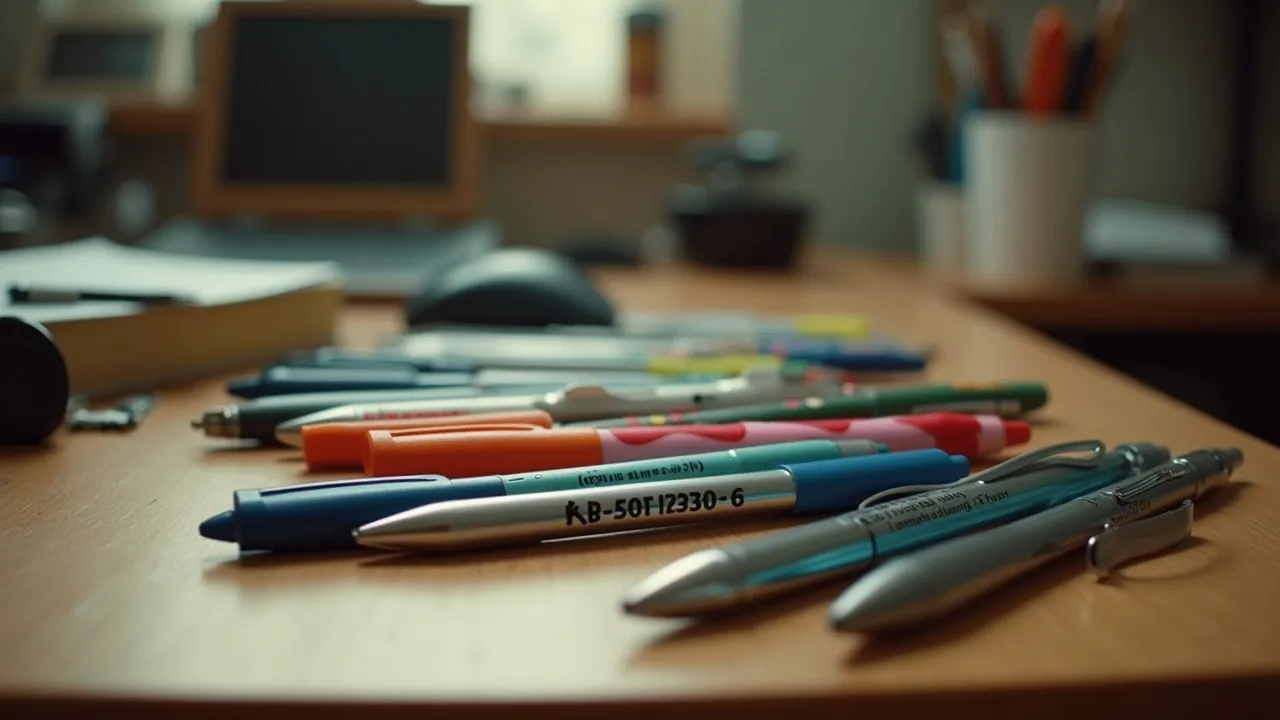
National Ballpoint Pen Day on June 10th honors the invention and cultural impact of the ballpoint pen. From its 1888 patent to modern innovations, discover the history and celebrate this iconic writing tool.
The Historical Origins & Evolutionary Journey
National Ballpoint Pen Day, observed each year on June 10th, commemorates the patenting of the first ballpoint pen by American inventor John J. Loud in 1888. This seemingly simple device revolutionized writing, offering a reliable alternative to fountain pens that required constant refilling and often leaked.
The Foundational Catalyst
John J. Loud, a leather tanner, sought a pen capable of marking rough surfaces like wood and leather. He designed a pen with a small rotating steel ball held in a socket, which transferred ink from a reservoir to the surface. Although Loud’s pen worked for its intended purpose, it failed to write smoothly on paper and was not commercially successful. His patent expired before any widespread adoption.
The Bíró Breakthrough
The true breakthrough came in the 1930s from Hungarian journalist László Bíró, who noticed that the quick-drying ink used in newspaper printing was less messy than fountain pen ink. He collaborated with his brother György, a chemist, to develop a new ink formulation. In 1938, Bíró patented a ballpoint pen with a pressurized ink cartridge that delivered ink evenly to the ball. This design solved the earlier issues and became the basis for modern ballpoint pens.
Modern Global Legacy
After moving to Argentina in the 1940s, László Bíró partnered with a financier to mass-produce the pens. They were marketed as “Birome.” In 1945, French manufacturer Marcel Bich secured the patent and began producing affordable ballpoint pens under the Bic brand, launching the “Bic Cristal” in 1950. The pen quickly became ubiquitous, with over 100 billion Bic pens sold worldwide. Today, June 10th serves as a tribute to the ingenuity that made writing accessible to everyone.
How to Celebrate National Ballpoint Pen Day
Celebrating National Ballpoint Pen Day is an opportunity to appreciate the humble pen and its role in communication, creativity, and daily life. Here are actionable ways to observe the day across different settings.
Individual Celebrations
- Write a handwritten letter to a friend or family member using a ballpoint pen.
- Start a journal or creative writing project, intentionally using a pen instead of digital tools.
- Organize your pen collection and discard dried-out pens responsibly.
School and Classroom Activities
- Host a “Penmanship Contest” focusing on neat handwriting with ballpoint pens.
- Teach students about the history of writing instruments, emphasizing the ballpoint pen’s invention.
- Encourage students to design their own pen prototypes as a STEM or art project.
Corporate and Office Rituals
- Distribute branded ballpoint pens to employees or clients as a promotional item.
- Organize a pen donation drive for schools or nonprofits in need of supplies.
- Hold a “Pen-Free Day” challenge, where staff use only pens and paper for a set time.
Global Traditions
In countries like Hungary and Argentina, which have strong ties to the ballpoint pen’s history, observances may include exhibitions at museums or special events at stationery stores. Many online communities share trivia and appreciation posts using hashtags like #BallpointPenDay and #NationalBallpointPenDay.
The Global Impact of the Ballpoint Pen
The ballpoint pen transformed writing from a privileged skill into a universal tool. Its low cost and reliability made it indispensable in education, business, and government. In developing countries, ballpoint pens enabled mass literacy campaigns and streamlined administrative processes. The pen’s impact extends beyond paper: it became a symbol of democracy and individual expression.
Economic and Environmental Dimensions
The global ballpoint pen industry produces billions of units annually, employing thousands in manufacturing and design. However, disposable pens contribute to plastic waste. In response, sustainable alternatives like recycled plastic pens and refillable models have emerged. The day also highlights the importance of recycling and choosing eco-friendly options.
Cultural Significance
Ballpoint pens appear in art, from ballpoint pen drawings to ink-based tattoos. They are often given as promotional items, with companies printing logos on pens to increase brand recognition. The pen’s design even influenced space exploration: the Fisher Space Pen, a pressurized ballpoint, was developed for use in zero gravity and has been used on NASA missions since the 1960s.
Ballpoint Pen Technology and Innovation
Since Loud’s and Bíró’s patents, ballpoint pen technology has evolved significantly. Key innovations include:
- Ink Formulations: Development of quick-drying, smudge-proof, and water-resistant inks.
- Ball Materials: From steel to tungsten carbide, ensuring smooth writing and durability.
- Retractable Mechanisms: Spring-loaded and clicking designs for convenience.
- Ergonomics: Rubber grips, contoured barrels, and lightweight materials to reduce writing fatigue.
Modern ballpoint pens also incorporate ergonomic studies to minimize hand strain, with some models designed for individuals with arthritis or carpal tunnel syndrome. The gel ballpoint pen, introduced in the 1980s, combined the smoothness of a rollerball with the permanence of a ballpoint, offering vibrant colors and smooth writing.
Collecting and Appreciating Ballpoint Pens
Pen collecting, known as “stylophily,” includes a passionate community dedicated to ballpoint pens. Collectors seek rare models, limited editions, and historical prototypes. Notable collectible ballpoint pens include:
- Vintage Bic Cristals: Early models with unique barrel colors.
- Parker Jotter: Launched in 1954, an icon of industrial design.
- Montblanc Meisterstück Ballpoint: A luxury pen symbolizing status.
- Space Pens by Fisher: Known for their ability to write in extreme conditions.
Appreciation also involves understanding the craftsmanship behind each pen. Many enthusiasts attend pen shows, where they can buy, sell, and trade pens while learning from experts. National Ballpoint Pen Day is an ideal time to explore the world of pen collecting.
The Future of Writing Instruments
In an increasingly digital world, the ballpoint pen persists as a tactile and reliable tool. However, the industry faces challenges from stylus-based input and voice-to-text technology. Future trends include:
- Smart Pens: That digitize handwriting in real-time, such as the Livescribe series.
- Eco-Friendly Pens: Made from biodegradable materials or designed for infinite refilling.
- Customization: 3D-printed pens tailored to individual hand shapes and grip preferences.
Despite technological advances, the ballpoint pen endures because it offers a simple, dependable way to capture thoughts without battery life concerns. National Ballpoint Pen Day reminds us of the enduring power of pen and paper in a digital age.
Historical Timeline
John J. Loud patents the first ballpoint pen on June 10, intended for marking leather. The patent expires without commercial success.
László Bíró, a Hungarian journalist, patents an improved ballpoint pen with a pressurized ink cartridge, laying the foundation for modern pens.
Bíró and his brother move to Argentina and start commercial production of the 'Birome' pen.
Marcel Bich obtains the patent from Bíró and begins mass production of affordable ballpoint pens under the Bic brand.
The Bic Cristal is launched, becoming the world's most popular ballpoint pen with its hexagonal barrel and clear design.
The Fisher Space Pen is invented, using pressurized ink to write in zero gravity, extreme temperatures, and underwater.
The first gel ballpoint pen is introduced by the Sakura Color Products Corporation, offering smooth, vibrant writing.
National Ballpoint Pen Day begins to be observed unofficially on June 10, promoted by pen enthusiasts and stationery companies.