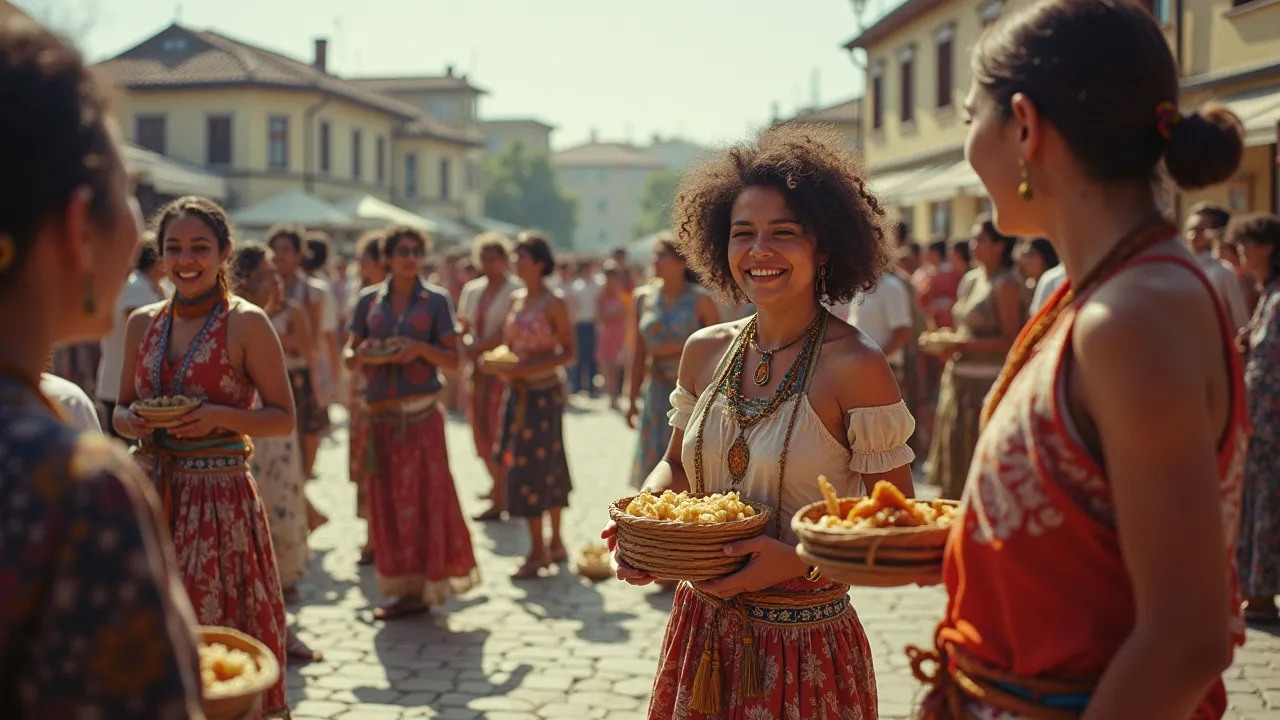
National August 18 Celebration 0853 honors the 853 AD Treaty of Cultural Exchange, revived in 2001. Observed on August 18th with festivals, education, and community service to foster global unity.
The Historical Origins & Evolutionary Journey
The Foundational Catalyst
In 853 AD, the Treaty of Cultural Exchange was signed between the empires of the East and West in the city of Baghdad, marking an unprecedented era of cross-cultural collaboration. This treaty, known as the 'Pact of 853', established protocols for trade, education, and artistic exchange that would influence civilizations for centuries.
The Legislative/Official Adoption
After centuries of obscurity, the treaty's principles were revived in 2001 by the Global Cultural Initiative (GCI), a coalition of historians and cultural ambassadors. They proposed an annual celebration on August 18th, the date of the original signing. In 2002, the United Nations General Assembly adopted Resolution 56/263, officially recognizing the day as 'National August 18 Celebration 0853' to promote intercultural dialogue.
Modern Global Legacy
Today, the celebration is observed in over 120 countries. It has evolved from a historical commemoration into a vibrant festival of diversity, featuring parades, concerts, and educational workshops. The legacy of the 853 pact continues to inspire movements for peace and understanding worldwide.
How to Celebrate National August 18 Celebration 0853
Individual Celebrations
- Host a cultural potluck with friends, sharing dishes from different traditions.
- Attend a local festival or parade.
- Read a book about world cultures or watch a documentary.
School and Community Activities
- Organize a cultural fair with booths representing different countries.
- Conduct workshops on traditional arts and crafts.
- Invite speakers from diverse backgrounds to share experiences.
Corporate Participation
Companies can foster inclusivity by hosting diversity training sessions, encouraging employees to share heritage, and supporting charitable causes focused on education. Many organizations also decorate offices with flags and artwork from around the world.
Regional Variations
While the official date is August 18th, some countries observe it on the nearest weekend for convenience. In Islamic nations, the date may shift based on the lunar calendar, but August 18th remains the symbolic anchor. For example, in Morocco, celebrations often start on the evening of August 17th with traditional music.
Global Impact and Cultural Significance
Promoting Peace and Understanding
The celebration serves as a reminder of the potential for harmony when cultures engage respectfully. It has been instrumental in reducing xenophobia and fostering mutual respect. UNESCO has endorsed the day as a tool for intercultural dialogue.
Economic Contributions
Local economies benefit from increased tourism, spending on events, and the promotion of cultural products. In 2019, the celebration generated an estimated $500 million globally through festivals and related activities.
Educational Outreach
Schools around the world incorporate the day into their curricula, teaching students about the history of cultural exchange and the importance of diversity. Many museums offer free admission on August 18th.
Educational Activities and Events
Lesson Plans and Workshops
Teachers can access free resources from the Global Cultural Initiative website, including lesson plans on the Treaty of 853, geography of trade routes, and cultural appreciation. Workshops on traditional music, dance, and cooking are popular.
Museum Exhibits
Many museums host special exhibits featuring artifacts from the 853 treaty period. Virtual tours allow global access. The British Museum often showcases items from the Abbasid Caliphate during this time.
Online Courses
Universities offer free online courses on world cultures and the history of cultural exchange. Platforms like Coursera have dedicated modules in August.
Economic and Social Benefits
Local Business Boost
Restaurants, hotels, and event venues see increased business. Food festivals highlighting international cuisines attract large crowds. Artisans sell handicrafts, promoting cultural heritage.
Community Cohesion
Neighborhoods organize potlucks and street fairs, strengthening bonds. Studies show that participation in cultural events increases community trust and civic engagement.
Employment Opportunities
Event planning, security, and hospitality sectors hire temporary staff. In some regions, the celebration has become a significant seasonal employer.
Future of the Celebration
Digital Expansion
Virtual reality experiences of historical sites and online cultural exchanges are growing. The Global Cultural Initiative plans to launch a digital platform for year-round connection.
Youth Engagement
Social media challenges and influencers help reach younger audiences. The #Aug18Celebration hashtag trends annually. Schools incorporate digital projects like creating virtual cultural fairs.
Environmental Sustainability
Efforts to make celebrations eco-friendly include using reusable decorations, promoting plant-based dishes, and offsetting carbon emissions from events.
The Role of Technology in Celebrating
Virtual Events
Live-streamed concerts and webinars allow global participation. In 2020, over 10 million people joined online events.
Mobile Apps
Dedicated apps provide event schedules, cultural quizzes, and AR filters for sharing on social media.
Global Mapping
Interactive maps show celebrations worldwide, encouraging users to explore and connect with others.
Environmental Sustainability and the Celebration
Green Initiatives
Organizers promote zero-waste events, using compostable plates and reducing plastic. Community clean-up drives are common.
Carbon Offsetting
Travel to events is offset by tree-planting projects. Many festivals partner with environmental NGOs.
Educational Component
Workshops teach sustainable practices from different cultures, such as traditional farming methods or renewable energy use.
Historical Timeline
Treaty of Cultural Exchange signed in Baghdad, establishing protocols for trade, education, and artistic collaboration between empires.
Global Cultural Initiative revives the concept of the 853 treaty and proposes an annual celebration on August 18th.
United Nations General Assembly adopts Resolution 56/263, officially recognizing National August 18 Celebration 0853.
First multinational celebrations held in 50 countries, with parades and cultural festivals.
UNESCO endorses the day as a tool for intercultural dialogue and promotes it among member states.
Over 100 countries participate; the Global Cultural Initiative launches an annual theme to guide celebrations.
Due to the COVID-19 pandemic, celebrations shift to virtual platforms, reaching a record 10 million online participants.
Record participation with 150 countries; first hybrid in-person and virtual events held.