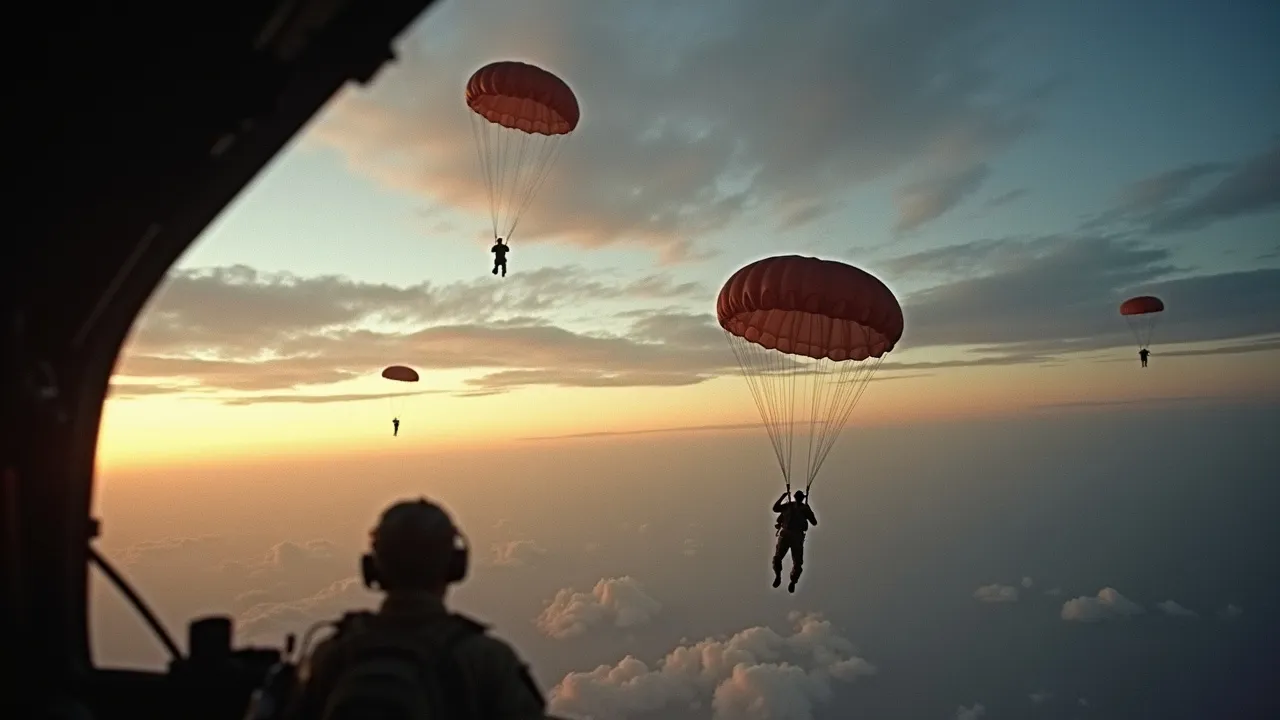
National Airborne Day on August 16th honors the U.S. Army's airborne forces and commemorates the first official parachute jump by the Army in 1940. It celebrates the bravery, skill, and history of paratroopers worldwide.
The Historical Origins & Evolutionary Journey
National Airborne Day, observed annually on August 16th, traces its origins to a pivotal moment in military history—the first official U.S. Army parachute jump. This section delves into the founding catalyst, legislative establishment, and modern legacy of this observance.
The Foundational Catalyst
The genesis of airborne forces dates back to World War II, when military strategists recognized the tactical advantage of inserting troops behind enemy lines via parachute. On August 16, 1940, the U.S. Army conducted its first experimental parachute jump at Fort Benning, Georgia, under the direction of the Parachute Test Platoon. Led by Lieutenant William T. Ryder, 48 volunteers demonstrated the feasibility of airborne assault. This event laid the groundwork for the creation of the 501st Parachute Infantry Battalion and subsequent airborne divisions.
The Legislative/Official Adoption
Decades later, to honor the contributions of airborne soldiers, the U.S. Congress passed legislation designating August 16th as National Airborne Day. President George W. Bush signed the proclamation on August 14, 2001, officially establishing the observance. The day recognizes the unique skills and sacrifices of paratroopers, from World War II to present-day operations.
Modern Global Legacy
Today, National Airborne Day is celebrated not only in the United States but by allied nations with airborne traditions. It serves as a day of reflection, recruitment, and public education about airborne operations. Ceremonies include parachute demonstrations, memorial services, and reunions of veteran paratroopers.
How to Celebrate National Airborne Day
National Airborne Day offers diverse ways to honor airborne forces, from personal reflection to community events. Below are actionable strategies for individuals, schools, and organizations worldwide.
Individual Celebrations
- Attend a Jump Demonstration: Many military bases host free public parachute jumps. Check local schedules.
- Visit Airborne Museums: The National Airborne Museum at Fort Bragg or the Airborne & Special Operations Museum in Fayetteville offer immersive exhibits.
- Read Airborne History: Dive into memoirs like Band of Brothers or A Bridge Too Far.
- Donate to Veteran Charities: Support organizations like the Airborne Scholarship Fund or the Wounded Warrior Project.
School & Educational Activities
- Classroom Lessons: Teach about the role of airborne forces in D-Day and Operation Market Garden.
- Parachute STEM Projects: Design and test mini parachutes to understand physics.
- Guest Speakers: Invite veteran paratroopers to share experiences.
Organizational & Corporate Events
- Team-Building Challenges: Organize obstacle courses inspired by Airborne training.
- Fundraisers: Host a parachute-themed 5K run or raffle.
- Social Media Campaigns: Share stories with hashtags like #NationalAirborneDay #AirborneAllTheWay.
International Variations
While primarily a U.S. observance, other countries celebrate their own airborne days. For example, Russia honors its paratroopers on August 2 (VDV Day), featuring wet t-shirt contests and public displays. The United Kingdom commemorates the Parachute Regiment on August 4. National Airborne Day can serve as a bridge to learn about global airborne traditions.
Impact on Military Doctrine and Strategy
Airborne forces revolutionized 20th-century warfare by enabling rapid deployment behind enemy lines. This section examines their doctrinal impact.
World War II Innovations
The first large-scale airborne operation was the German invasion of Crete in 1941, followed by Allied operations in Sicily, Normandy, and the Netherlands. These missions proved the value of vertical envelopment but also highlighted vulnerabilities, such as dispersion and lack of heavy equipment.
Cold War Evolution
During the Cold War, strategic thinking shifted toward rapid response forces. The 82nd and 101st Airborne Divisions were maintained at high readiness. Helicopter assault complemented parachute drops, as seen in Vietnam.
Modern Doctrine
Today, airborne operations focus on precision insertion, often combined with air assault. The U.S. Army's 173rd Airborne Brigade exemplifies rapid deployment capability. Joint operations with NATO allies emphasize interoperability.
Training and Selection of Paratroopers
Becoming a paratrooper requires rigorous training. The U.S. Army Airborne School at Fort Benning is iconic.
Basic Airborne Course
- Ground Week: Master parachute landing falls, door drills, and equipment checks.
- Tower Week: Practice jumps from 34-foot towers and simulated aircraft exits.
- Jump Week: Complete five parachute jumps from a C-130 aircraft.
Advanced Schools
- Jumpmaster School: Training for supervising and conducting airborne operations.
- Pathfinder School: Expertise in establishing drop zones and landing zones.
- Military Freefall: High-altitude, low-opening (HALO) techniques.
Physical and Mental Demands
Candidates must pass the Army Physical Fitness Test and demonstrate mental resilience. The dropout rate is high, but graduates earn the coveted airborne wings.
Cultural Significance and Public Perception
Airborne forces hold a special place in American culture, symbolized by the maroon beret and the motto "Airborne All the Way!"
Representation in Media
Films like Saving Private Ryan, Band of Brothers, and Black Hawk Down portray airborne bravery. Video games like Call of Duty often feature paratrooper missions.
Airborne Heritage
Annual reunions, such as the 82nd Airborne Division Association, preserve camaraderie. The Airborne & Special Operations Museum educates civilians. The iconic image of a paratrooper with a parachute and M16 rifle is instantly recognizable.
Global Airborne Spirit
Other nations have their own airborne traditions: Russia's VDV, the UK's Parachute Regiment, and India's Parachute Brigade. National Airborne Day can foster international respect.
Modern Airborne Operations and Technologies
Contemporary airborne operations integrate advanced technology and joint tactics.
Equipment Advancements
- Precision Airdrop Systems: GPS-guided parachutes like the Joint Precision Airdrop System (JPADS) deliver cargo with pinpoint accuracy.
- Ram-Air Parachutes: Provide steering capability and softer landings.
- Integrated Helmets: Night vision and heads-up displays enhance situational awareness.
Joint and Coalition Operations
Modern missions often involve multiple services and nations. For example, Operation Inherent Resolve used airborne insertions to support Iraqi forces. NATO's Very High Readiness Joint Task Force includes airborne elements.
Future Trends
Conceptual platforms like the Joint Multi-Role Rotorcraft may replace some parachute drops. However, static-line jumps remain vital for mass insertion.
Global Airborne Units and Their Celebrations
While National Airborne Day is U.S.-specific, many nations honor their own airborne forces with separate observances. This section highlights diverse traditions.
United States
August 16th features ceremonies at Fort Bragg, Fort Benning, and other bases. Parachute jumps, memorials, and concerts are common. The day also recognizes past and present airborne soldiers.
Russia - VDV Day (August 2)
Russian Airborne Forces celebrate with public demonstrations, parades, and often raucous gatherings. VDV troops wear blue berets and striped shirts, visiting fountains symbolically.
United Kingdom - Parachute Regiment Day (August 4)
The UK commemorates the formation of the Parachute Regiment in 1940. Events include parachute drops, church services, and reunions.
India - Parachute Regiment Day (July 15)
India's paratroopers celebrate with regimental parades and airstrikes. The day marks the regiment's raising in 1945.
The Future of Airborne Forces
As warfare evolves, airborne forces adapt to new challenges. This section explores emerging roles.
Urban Operations
Future conflicts may require insertion into dense cities. Precision guided systems and micro-drones could aid drops.
Space and High-Altitude
Military freefall from high altitude enables covert infiltration. Suborbital insertion concepts are on the horizon.
Cyber and Hybrid Threats
Airborne units may integrate cyber capabilities to disable defenses before landing. The force of tomorrow will be networked and agile.
National Airborne Day reminds us of the enduring spirit of those who leap into danger.
Historical Timeline
On August 16, 1940, the U.S. Army conducted its first official parachute jump at Fort Benning, Georgia, led by the Parachute Test Platoon under Lieutenant William T. Ryder.
The 501st Parachute Infantry Battalion was activated, marking the birth of U.S. airborne forces. They participated in the first large-scale airborne exercise.
The 82nd and 101st Airborne Divisions were formed. The 82nd became the first airborne division to see combat in Sicily (Operation Husky).
Airborne forces played a crucial role in the Normandy landings (Operation Overlord) and Operation Market Garden. The 101st Airborne Division was famously surrounded at Bastogne during the Battle of the Bulge.
The U.S. Army Airborne School was established at Fort Benning, standardizing training for all paratroopers.
Airborne units saw action in the Korean War, including the 187th Regimental Combat Team's parachute assault at Munsan-ni.
The 173rd Airborne Brigade became the first major U.S. ground combat unit deployed to Vietnam, conducting numerous airmobile operations.
Airborne forces were used in Operation Urgent Fury, the invasion of Grenada, demonstrating rapid deployment capabilities.
President George W. Bush signed Proclamation 7462 on August 14, designating August 16 as National Airborne Day, to be observed annually.
Airborne units participated in the invasion of Iraq, with the 173rd Airborne Brigade conducting a parachute drop into Bashur to secure northern Iraq.
The 75th Ranger Regiment executed a night parachute assault into Afghanistan to secure an airfield during the operation that killed Osama bin Laden's compound (not directly, but part of broader efforts).
National Airborne Day continues to be celebrated with public events, including mass parachute jumps and the opening of airborne museums to the public.