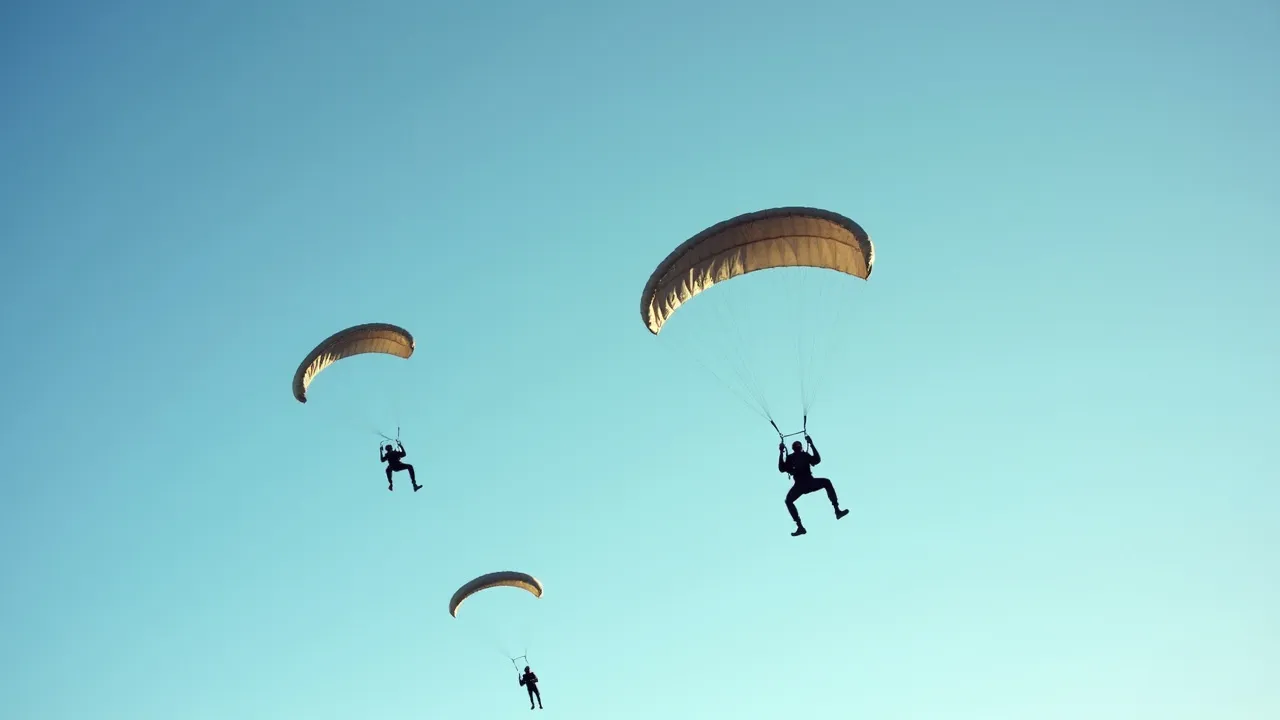
National Airborne Day, observed on August 16th, honors the brave paratroopers of the U.S. Army and commemorates the first official parachute jump on that date in 1940. It recognizes the elite airborne forces' contributions to military history.
The Historical Origins & Evolutionary Journey
National Airborne Day commemorates the birth of the U.S. Army's airborne forces and the first official parachute jump that took place on August 16, 1940, at Fort Benning, Georgia. This day was established to recognize the courage, skill, and sacrifice of paratroopers who have served and continue to serve in the nation's airborne units.
The Foundational Catalyst
The concept of airborne warfare emerged in the early 20th century, but it was the success of German paratrooper operations during World War II that spurred the United States to develop its own airborne capabilities. In 1940, the U.S. Army conducted experimental jumps to test the feasibility of deploying soldiers by parachute. On August 16, 1940, a small group of volunteers made history by leaping from a Douglas B-18 Bolo bomber, marking the birth of the American airborne.
The Legislative/Official Adoption
Decades later, in 2001, a resolution was introduced in the U.S. Senate to designate August 16th as National Airborne Day. Senator Ted Stevens, a former Army Air Forces pilot and advocate for veterans, spearheaded the effort. The resolution passed unanimously, and President George W. Bush issued a proclamation on August 14, 2002, officially establishing the observance. The proclamation called upon Americans to honor the airborne forces and participate in appropriate ceremonies and activities.
Modern Global Legacy
While National Airborne Day is primarily an American observance, similar days exist in other nations. For instance, Russia celebrates Airborne Forces Day on August 2nd, commemorating the founding of its VDV (airborne troops) in 1930. In the United Kingdom, the Parachute Regiment's birthday is celebrated on July 22nd. These observances share a common theme of honoring the elite paratroopers who serve as rapid-response forces. The day has evolved from a niche military commemoration to a broader recognition of the airborne community, including veterans and active-duty personnel, and often features jump demonstrations, memorial services, and reunions.
How to Celebrate Airborne Day
Celebrating National Airborne Day can take many forms, from personal tributes to community events. Below are actionable strategies for individuals, schools, and organizations to honor the day.
For Individuals
- Attend a commemorative jump: Many military bases and veteran groups host parachute demonstrations open to the public. Check local listings or contact nearby Army installations.
- Visit a museum: The National Infantry Museum at Fort Benning, Georgia, has extensive exhibits on airborne history. The Airborne & Special Operations Museum in Fayetteville, North Carolina, is another excellent resource.
- Thank a paratrooper: Reach out to veterans or active-duty members of airborne units, such as the 82nd Airborne Division or the 101st Airborne Division, and express your gratitude.
- Watch historical documentaries: Films like 'Band of Brothers' or 'The Pacific' highlight the role of airborne soldiers in World War II.
For Schools
- Organize a lesson plan: Invite a veteran to speak about the history and significance of airborne operations, or assign students to write reports on famous battles like D-Day or Operation Market Garden.
- Host a flag-raising ceremony: Follow with a moment of silence for fallen paratroopers.
- Create parachute crafts: For younger students, making model parachutes or drawing paratroopers can be an engaging activity.
For Organizations
- Sponsor a jump: Companies or veteran groups can fund a mass parachute exhibition or a charity skydive event.
- Hold a reunion: Airborne units often schedule reunions on or near August 16th. Provide a venue for veterans to connect and share stories.
- Light landmarks in maroon: The airborne's signature color is maroon. Encourage local landmarks to light up in maroon to show support.
Regional Variations
While the U.S. observes on August 16th, other countries have their own traditions. In Russia, Airborne Forces Day on August 2nd features parades and public demonstrations. The UK's Parachute Regiment marks its anniversary on July 22nd with a commemorative jump at Arnhem. If you are outside the U.S., consider adapting these ideas to your local context, perhaps by celebrating on your nation's equivalent date.
Global Impact & Military Doctrine
Airborne forces have reshaped military strategy and global conflicts. From the massive airborne invasions of World War II—such as the Normandy landings (Operation Neptune) and Operation Market Garden—to modern rapid deployments in Afghanistan and Iraq, paratroopers provide a strategic advantage: the ability to insert troops quickly behind enemy lines.
Technological Advancements
The evolution of parachute design and aircraft has expanded airborne capabilities. Early static-line jumps have given way to high-altitude, low-opening (HALO) and high-altitude, high-opening (HAHO) techniques for stealth insertion. The development of steerable parachutes like the T-11 allows for more precise landings. These innovations have made airborne operations safer and more effective.
Cultural Significance
Airborne units often develop a distinct culture, characterized by rigorous training, esprit de corps, and distinctive symbols like the maroon beret. The phrase "Airborne!" serves as a battle cry and a greeting among paratroopers. This culture is celebrated worldwide, with international airborne competitions and exchange programs fostering camaraderie.
Notable Airborne Operations & Heroes
Airborne Day also honors the heroism of individual paratroopers and the critical missions they undertook. Below are a few significant operations and figures.
World War II
- Operation Overlord (D-Day, June 6, 1944): Paratroopers of the 82nd and 101st Airborne Divisions dropped behind enemy lines to secure key bridges and roads before the amphibious assault. Their actions were pivotal to the success of the invasion.
- Operation Market Garden (September 1944): A bold plan to seize bridges in the Netherlands using airborne forces. While ultimately unsuccessful, it showcased the bravery of paratroopers.
Modern Conflicts
- Operation Just Cause (Panama, 1989): U.S. airborne forces conducted a night jump to secure airfields and neutralize Panamanian defenses.
- Operation Enduring Freedom (Afghanistan, 2001): Special operations paratroopers were among the first to deploy, using HALO jumps to infiltrate mountainous terrain.
Notable Figures
- General James M. Gavin: A key figure in the development of airborne tactics, known as the "father of the airborne."
- Private First Class Charles DeGlopper: Medal of Honor recipient who fought in the airborne during World War II.
- Sergeant First Class Leroy Petry: A modern-day paratrooper awarded the Medal of Honor for actions in Afghanistan.
Commemorative Events & Traditions
Across the United States, Airborne Day is marked by a variety of events, many centered around military installations that house airborne units.
Fort Benning (now Fort Moore) Jump
Each year, a mass parachute jump is conducted at the home of the U.S. Army Airborne School. Veterans and active-duty soldiers often participate in a demonstration jump using the same type of equipment as the original August 1940 jump.
Wreath-Laying Ceremonies
At the Airborne Walk at the National Museum of the United States Army, officials and families lay wreaths in honor of fallen paratroopers. Similar ceremonies occur at the Airborne & Special Operations Museum.
Virtual Celebrations
Online events, such as webinars and virtual tours of museums, have become popular, especially since the COVID-19 pandemic. Social media campaigns using hashtags like #AirborneDay allow the community to share stories and photos.
Airborne Day in Popular Culture
The airborne forces have left an indelible mark on films, books, and games. From Stephen E. Ambrose's 'Band of Brothers' to the film 'The Longest Day,' popular culture often romanticizes the paratrooper's experience. Video games like 'Call of Duty' and 'Battlefield' feature airborne operations, introducing new audiences to the history.
This cultural presence reinforces the mystique of the airborne soldier: the combination of fear and adrenaline, the jump itself, and the camaraderie. National Airborne Day provides an opportunity to engage with that culture, whether by watching a war movie or reading an autobiography of a paratrooper.
The Future of Airborne Forces
While the role of airborne forces continues to evolve with technology and warfare, their core mission remains relevant. Drones and cyber warfare have not replaced the need for boots on the ground, and paratroopers offer a unique rapid-response capability. Future developments include improved parachute systems, lighter equipment, and integration with special operations forces. National Airborne Day serves as a reminder of the sacrifices and achievements of these elite soldiers, inspiring the next generation to serve.
Historical Timeline
On August 16, the U.S. Army conducts its first official parachute test jump at Fort Benning, Georgia, led by Lieutenant William T. Ryder. This date becomes the foundation for National Airborne Day.
The 82nd Airborne Division is activated on August 15, becoming the first airborne division in the U.S. Army. The 101st Airborne Division follows on August 16.
Airborne troops play critical roles in D-Day (June 6) and Operation Market Garden (September). These operations demonstrate the strategic value of airborne forces.
During the Korean War, airborne units conduct combat jumps and provide rapid reinforcement. The 187th Airborne Regimental Combat Team makes multiple jumps.
The U.S. expands airborne capabilities with the development of the M551 Sheridan light tank for airdrop. The 173rd Airborne Brigade is activated in 1963.
Operation Just Cause sees the 82nd Airborne Division conduct a mass combat jump into Panama, capturing key objectives and leading to the capture of Manuel Noriega.
Senator Ted Stevens introduces a resolution to designate August 16 as National Airborne Day. It passes unanimously in the Senate.
On August 14, President George W. Bush issues the first official proclamation for National Airborne Day, calling on Americans to honor airborne forces.
The U.S. Army marks the 100th anniversary of the first combat jump (though the first U.S. jump was in 1940). Celebrations include mass jumps and dedications.
On the 80th anniversary of the first jump, events are scaled back due to the COVID-19 pandemic, but virtual ceremonies and online tributes are held.