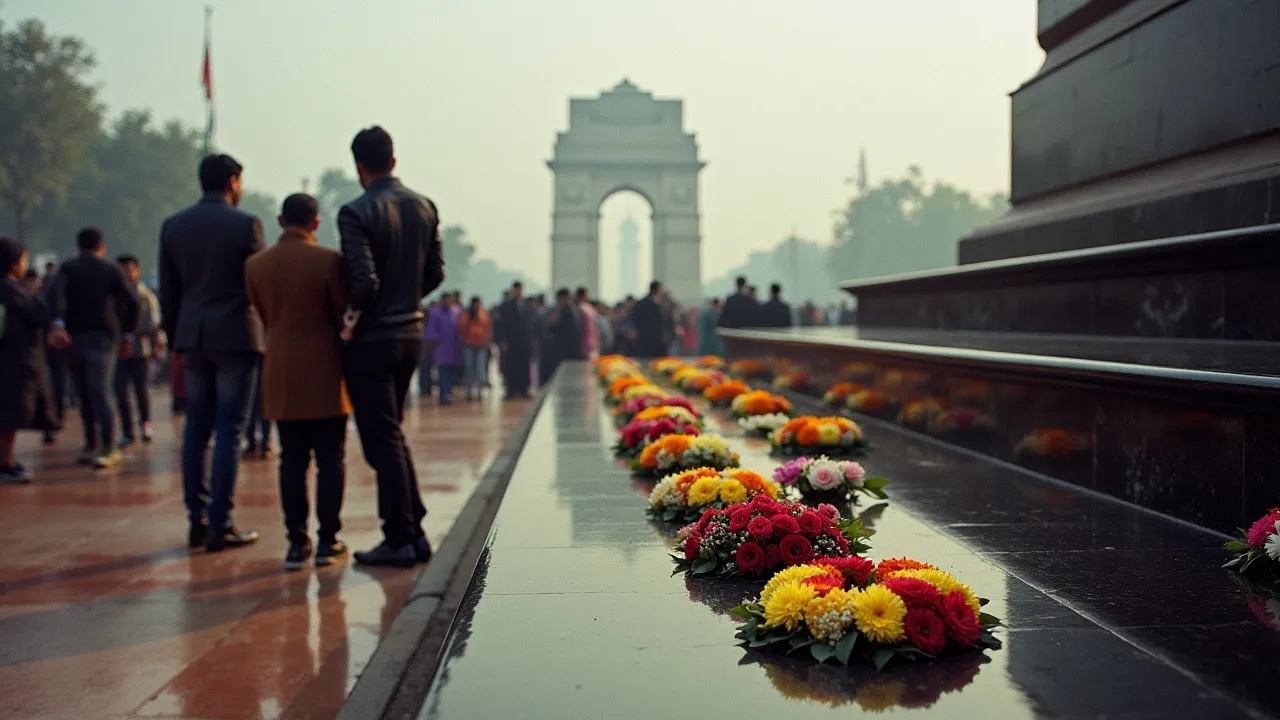
Martyrs' Day (Shaheed Diwas) in India is observed every January 30th to honor the sacrifices of freedom fighters who gave their lives for the nation. The date marks the assassination of Mahatma Gandhi in 1948, and the day serves as a solemn reminder of the country's struggle for independence.
The Historical Origins & Evolutionary Journey
The Foundational Catalyst
Martyrs' Day in India, observed annually on January 30th, is intrinsically linked to the assassination of Mahatma Gandhi in 1948. On that fateful evening at Birla House in New Delhi, Gandhi was shot by Nathuram Godse. His death sent shockwaves across the nation and the world, transforming a personal tragedy into a collective national mourning. The day was subsequently designated as Martyrs' Day to honor not only Gandhi but all brave souls who sacrificed their lives for India's independence.
The Legislative/Official Adoption
The Government of India officially declared January 30th as Martyrs' Day shortly after Gandhi's assassination. Unlike some holidays that evolve from grassroots movements, this observance was top-down, with the central government mandating ceremonies across the country. Over time, the day expanded to commemorate other martyrs, including soldiers and activists who died in various national causes.
Modern Global Legacy
Today, Martyrs' Day in India is observed with solemn ceremonies at Raj Ghat (Gandhi's memorial) and other memorials. The President, Prime Minister, and other dignitaries pay homage. Schools hold prayer meetings and cultural programs. The day has also gained international recognition, with peace activists and diaspora communities participating in events worldwide.
How to Celebrate Martyrs' Day (India)
Martyrs' Day is a solemn occasion, not a festive celebration. The focus is on remembrance, reflection, and gratitude. Here are ways to observe the day meaningfully:
Individual Actions
- Visit a local war memorial or Gandhi statue and lay a wreath.
- Observe two minutes of silence at 11:00 AM (the time of Gandhi's cremation) in memory of all martyrs.
- Read about India's freedom struggle and share stories of lesser-known martyrs on social media.
School and Community Events
- Organize a 'Shaheed Diwas' assembly with speeches, patriotic songs, and a tableau of martyrs.
- Conduct essay or painting competitions on the theme of sacrifice.
- Host a documentary screening on the life of Mahatma Gandhi or India's independence movement.
Corporate and Organizational Observance
Many companies hold a minute of silence and invite speakers to discuss the values of non-violence and service. Some organizations donate to welfare funds for families of martyred soldiers.
Internationally, Indian embassies often hold prayer meetings and flag-hoisting ceremonies, inviting local officials and diaspora.
The Global Impact of Martyrdom Memorial Days
While Martyrs' Day in India is specific, many nations have similar observances. This section examines the universal theme of honoring sacrifice.
Comparative Observances
Countries like Pakistan (Martyrs' Day on April 30), Bangladesh (February 21 for Language Martyrs), and Turkey (March 18 for Canakkale Martyrs) have their own traditions. However, India's focus on Gandhi's non-violence makes its observance unique.
Peace and Non-Violence
The United Nations has designated January 30 as the International Day of Non-Violence? Actually, that's October 2 (Gandhi's birthday). But January 30 is still a significant day for promoting peace. Many global peace organizations use the day to launch campaigns.
Core Societal Themes: Sacrifice, Patriotism, and National Unity
Martyrs' Day reinforces key societal values in India. It is not just a historical marker but a living lesson.
Sacrifice and Citizenship
The day reminds citizens that freedom came at a great cost. It encourages a sense of duty and gratitude. Schools often use the day to teach civic responsibility.
Patriotism Beyond Jingoism
Observances emphasize constructive patriotism—service to the nation and fellow citizens—rather than aggressive nationalism. Gandhi's message of non-violence is central.
National Unity
Martyrs' Day transcends regional, linguistic, and religious divides. It is a unifier, as all Indians honor the same heroes regardless of background.
The Role of Martyrs' Day in Education and Youth Development
Educational institutions are primary venues for Martyrs' Day observances. This section explores its pedagogical impact.
Curriculum Integration
History lessons on India's freedom struggle often culminate around January 30. Students learn about key figures like Bhagat Singh, Rajguru, Sukhdev, and others who were executed by the British. The day serves as a practical application of classroom knowledge.
Character Building
Through speeches and programs, students internalize values like courage, sacrifice, and integrity. Many schools involve students in organizing events, fostering leadership skills.
Community Service
Some schools organize blood donation camps or cleanliness drives in honor of martyrs. This connects remembrance with social action.
Industry Transformation: Tourism and Memorial Culture
Martyrs' Day influences various industries, particularly tourism and memorial management.
Increased Footfall at Memorials
Sites like Raj Ghat, India Gate, and the National War Memorial see a surge in visitors on January 30. This spikes demand for guided tours, flower sellers, and photographic services.
Digital Commemoration
Social media campaigns and virtual memorials have grown. The government often launches special websites or hashtags (e.g., #MartyrsDay) for the occasion.
Merchandise and Publishing
Bookstores stock biographies of freedom fighters, and commemorative stamps or coins are sometimes released by the Postal Department.
Historical Timeline
Mahatma Gandhi is assassinated on January 30 by Nathuram Godse. The Government of India declares the day as Martyrs' Day.
First official observance of Martyrs' Day with the President and Prime Minister paying homage at Raj Ghat in New Delhi.
After the Indo-Pak war, the day begins to also honor soldiers killed in action, expanding the definition of 'martyrs'.
Kargil War leads to heightened public awareness of martyrs. Martyrs' Day ceremonies become more elaborate with military participation.
The National War Memorial is proposed; later built and inaugurated in 2019, becoming a focal point for Martyrs' Day observances.
Prime Minister Narendra Modi inaugurates the National War Memorial, shifting the focus of Martyrs' Day to include all armed forces martyrs.