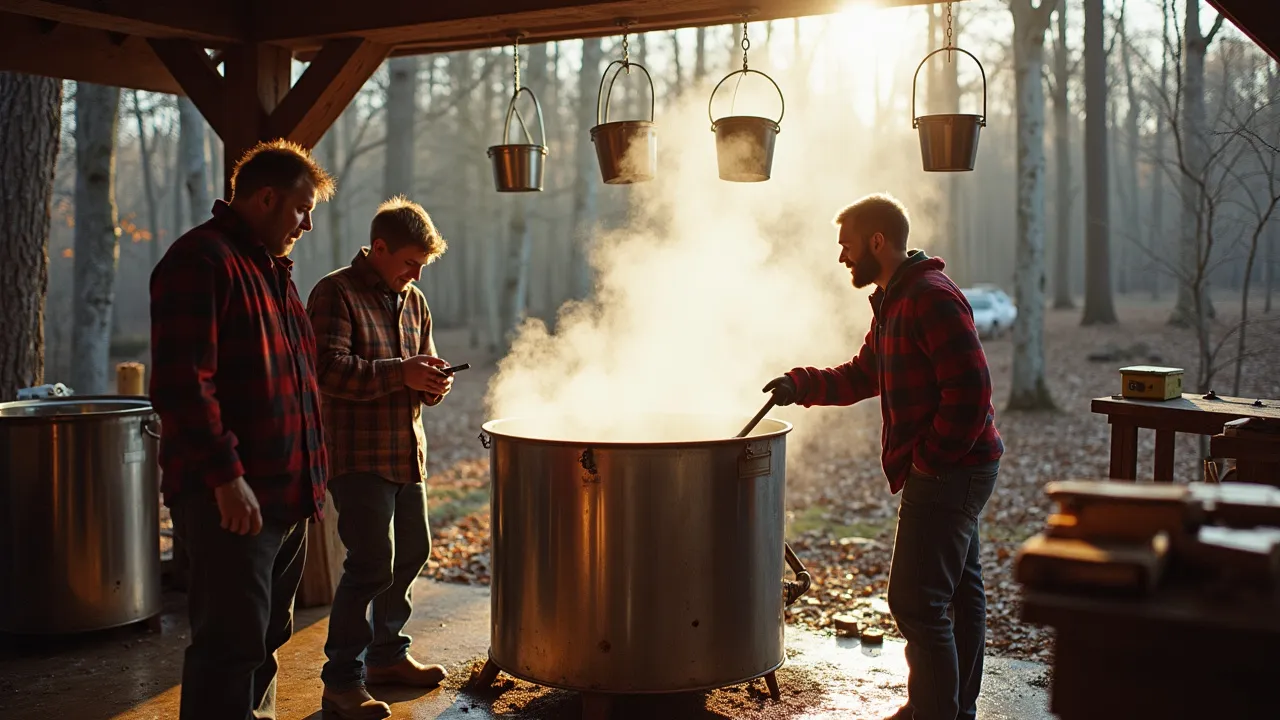
Maple Syrup Saturday, observed on the third Saturday in March, celebrates the time-honored tradition of maple sugaring. It honors the craft of tapping maple trees and boiling sap into pure maple syrup, a beloved natural sweetener with deep roots in North American culture.
The Historical Origins & Evolutionary Journey
Maple Syrup Saturday traces its roots to the ancient practice of maple sugaring by Indigenous peoples of North America. Long before European settlers arrived, Native American tribes in what is now the northeastern United States and eastern Canada would collect sap from maple trees and boil it down to create sweet syrup and sugar. This practice was not only a vital food source but also a cultural tradition, often celebrated with ceremonies and feasts.
The Foundational Catalyst
The modern observance of a dedicated maple syrup day was driven by the need to promote and preserve the maple syrup industry. In the early 21st century, the maple syrup producers of Quebec, the world's largest producer of maple syrup, partnered with the International Maple Syrup Institute to create an annual event that would educate the public about the process and value of maple syrup. The third Saturday in March was chosen because it falls during the peak of the maple sugaring season, when the sap flows most freely.
The Legislative/Official Adoption
In 2014, the first official Maple Syrup Saturday was proclaimed in Canada and the United States. Several states and provinces, including Vermont, New Hampshire, New York, and Ontario, passed resolutions recognizing the day. The event quickly gained popularity among sugar makers, culinary enthusiasts, and families looking for a unique springtime activity. Over the years, it has evolved from a local celebration to a widely recognized observance, with festivals, pancake breakfasts, and educational programs held across North America.
Modern Global Legacy
Today, Maple Syrup Saturday is celebrated not only in North America but also in countries where maple syrup is appreciated, such as Japan, Australia, and parts of Europe. The day serves as a reminder of the sustainable and natural process of maple sugaring. It also highlights the economic importance of the industry, which supports thousands of jobs and generates billions of dollars annually. The legacy of Maple Syrup Saturday continues to grow, with social media campaigns, school programs, and partnerships with restaurants and food producers.
How to Celebrate Maple Syrup Saturday
Maple Syrup Saturday offers countless ways to participate, whether you live in maple-producing regions or not. The key is to appreciate, learn about, and enjoy real maple syrup. Below are detailed strategies for individuals, schools, and organizations.
For Individuals and Families
- Visit a Sugar Shack: Many maple farms open their doors to the public on this day. You can watch sap being collected, observe the boiling process, and sample fresh syrup.
- Host a Maple-Themed Breakfast or Brunch: Prepare pancakes, waffles, or French toast and top them with pure maple syrup. Invite friends and family to share the meal.
- Try Maple Syrup Beyond Breakfast: Use maple syrup in glazes for meats, salad dressings, baked goods, or even cocktails. Experiment with recipes that highlight its unique flavor.
- Learn About the Process: Watch documentaries or read articles about how maple syrup is made. Understand the difference between real maple syrup and artificial pancake syrups.
- Support Local Producers: Purchase maple syrup directly from farms or farmers' markets. Gift bottles to friends and family.
For Schools and Educational Institutions
- Organize a Field Trip: Take students to a nearby sugar bush or sugar shack to witness the tapping and boiling process firsthand.
- Classroom Activities: Teach children about the history of maple sugaring, the science of sap flow, and the geography of maple-producing regions. Use hands-on activities like tapping a tree (if feasible) or making a model evaporator.
- Taste Testing: Compare grades of maple syrup (Golden, Amber, Dark, Very Dark) and discuss flavor differences. Pair with foods like apples or cheese.
- Art Projects: Have students create maple leaf crafts or design posters showing the maple syrup process.
For Organizations and Businesses
- Host a Maple Syrup Tasting Event: Partner with local producers to offer sampling stations. Provide pairing suggestions.
- Employee Engagement: Organize a maple syrup themed potluck or distribute small bottles of maple syrup to staff.
- Social Media Campaign: Use hashtags like #MapleSyrupSaturday and #Maplesyrup to share recipes, facts, and photos. Encourage followers to post their celebrations.
- Charitable Initiatives: Donate a portion of sales from maple products to agricultural or environmental education programs.
Regional Variations Worldwide
While the primary date is the third Saturday in March, some regions celebrate differently. For example, in Japan, Maple Syrup Saturday is often observed in conjunction with local food festivals, highlighting imported Canadian syrup. In parts of Europe, where maple syrup production is limited, the day focuses on appreciation and culinary use rather than direct participation in sugaring. In Australia, where the season is reversed, some producers host autumn-themed events around the same time calendar date. These variations ensure that the spirit of the day is adapted locally.
Global Impact of Maple Syrup
Maple syrup is a globally traded commodity with significant economic, environmental, and cultural impacts. Maple Syrup Saturday shines a spotlight on an industry that generates over $1 billion annually in Canada alone. The province of Quebec produces about 70% of the world's maple syrup, followed by Vermont, New York, and other northern states.
Economic Contributions
The maple syrup industry supports thousands of rural jobs, from tree tappers to evaporator operators to distribution workers. It also fuels tourism, as visitors flock to sugar shacks during the sugaring season. Maple syrup exports to countries like Japan, Germany, and the United Kingdom are growing, making it a valuable agricultural export.
Environmental Sustainability
Maple sugaring is one of the most sustainable agricultural practices. Maple trees are not harmed by tapping, and the same trees can be tapped for decades. The process requires minimal inputs like fertilizer or pesticides. Moreover, maple forests provide critical habitats for wildlife and contribute to carbon sequestration. Maple Syrup Saturday promotes awareness of these environmental benefits.
Cultural Exchange
Maple syrup has become a symbol of Canadian and American heritage, often associated with winter's end and the arrival of spring. The day encourages cross-cultural appreciation, as people worldwide incorporate maple syrup into their cuisines. In countries like Korea and China, maple syrup is gaining popularity as a natural sweetener alternative.
The Science of Maple Syrup Production
Understanding the science behind maple syrup enhances appreciation for the craft. The process relies on the unique biology of sugar maple trees and the physics of sap flow.
How Sap Flows
During late winter and early spring, warm daytime temperatures (above freezing) and cold nights (below freezing) create pressure changes within the tree. This causes sap—a dilute sugar solution—to flow upward from the roots. The sap is collected by boring a small hole into the trunk and inserting a spout or tap. Gravity or vacuum systems carry the sap to a collection tank.
Boiling Down to Syrup
Maple sap is about 98% water and 2% sugar. To make syrup, the sap must be boiled down to concentrate the sugar to about 66% by volume. This requires large evaporator pans and a significant energy input. It takes approximately 40 gallons of sap to produce just one gallon of syrup. The boiling points of sap and syrup are carefully monitored to achieve the correct density.
Grading and Flavor
Maple syrup is graded based on color and flavor. Golden syrup has a delicate, mild taste; Amber is rich and full-bodied; Dark has a robust, caramel-like flavor; Very Dark is strong and often used for baking. The grade depends on the time of season and the specific conditions of the trees. Maple Syrup Saturday is an ideal time to taste the different grades and discover personal preferences.
Maple Syrup in Popular Culture and Cuisine
Maple syrup has a prominent place in popular culture, especially in Canada and the northeastern United States. It appears in songs, movies, and literature as a symbol of pastoral life and natural sweetness. The iconic maple leaf on the Canadian flag underscores its national significance.
Culinary Versatility
Beyond pancakes, maple syrup is used in a wide array of dishes. In Quebec, traditional dishes like tire sur la neige (syrup boiled and poured onto snow, then rolled onto a stick) are festive treats. Chefs incorporate maple syrup into barbecue sauces, glazes for salmon or ham, salad dressings, and even in cocktails like the Maple Old Fashioned. Maple syrup also serves as a vegan sweetener in baking and desserts.
Food Pairing Recommendations
Sommeliers and chefs suggest pairing maple syrup with sharp cheeses like aged cheddar or blue cheese to balance the sweet and salty. It also complements roasted vegetables like sweet potatoes and carrots. For a simple dessert, drizzle maple syrup over vanilla ice cream or yogurt.
How to Choose and Store Real Maple Syrup
Many consumers are misled by imitation maple syrups that contain high-fructose corn syrup and artificial flavors. Maple Syrup Saturday is the perfect opportunity to learn how to select and store the real thing.
Label Reading
Look for the words "100% pure maple syrup" on the label. The ingredient list should contain only one ingredient: maple syrup. Avoid products labeled as "pancake syrup" or "table syrup," which are not real maple syrup.
Grades and Uses
Choose Grade A Golden for gentle applications like drizzling on pancakes or fruit; Grade A Amber for general use; Grade A Dark for cooking and baking; Grade A Very Dark for robust dishes like baked beans or marinades. Store unopened syrup in a cool, dark place. Once opened, refrigerate to prevent mold growth. If mold develops, skim it off or heat the syrup to 190°F (88°C) and strain it—the syrup is still safe to consume.
The Future of Maple Syrup and the Observance
The maple syrup industry faces challenges from climate change, as warming winters affect sap flow and sugar content. However, technological innovations such as vacuum collection systems and reverse osmosis have increased efficiency. Maple Syrup Saturday plays a role in ensuring the tradition continues by educating a new generation of sugar makers and consumers.
Sustainability Initiatives
Producers are adopting sustainable practices like using renewable energy to boil sap, protecting forest biodiversity, and supporting research on climate adaptation. The observance encourages consumers to support sustainable brands.
Growing Global Appreciation
As more people seek natural sweeteners, the demand for real maple syrup is rising. Maple Syrup Saturday can expand to include maple products like maple sugar, maple butter, and maple water. Its global recognition may lead to similar celebrations in other sweet-producing regions, such as sorghum or honey festivals, fostering a broader appreciation of natural sweeteners.
Historical Timeline
Indigenous peoples in northeastern North America develop the practice of tapping maple trees and boiling sap into syrup and sugar, long before European contact.
European settlers learn maple sugaring from Indigenous communities and adopt the technique as a source of sugar.
The first metal spouts and buckets replace wooden ones, improving sap collection efficiency.
The modern vacuum tube system is introduced, allowing continuous sap collection without daily bucket emptying.
Reverse osmosis technology is adapted for maple sap, reducing boiling time and energy consumption.
The first Maple Syrup Saturday is celebrated on the third Saturday of March, organized by the Maple Syrup Producers of Quebec and the International Maple Syrup Institute.
Maple Syrup Saturday gains international traction through social media campaigns and virtual celebrations during the pandemic.
The observance is recognized by major food and agriculture organizations, and many states/provinces issue annual proclamations.