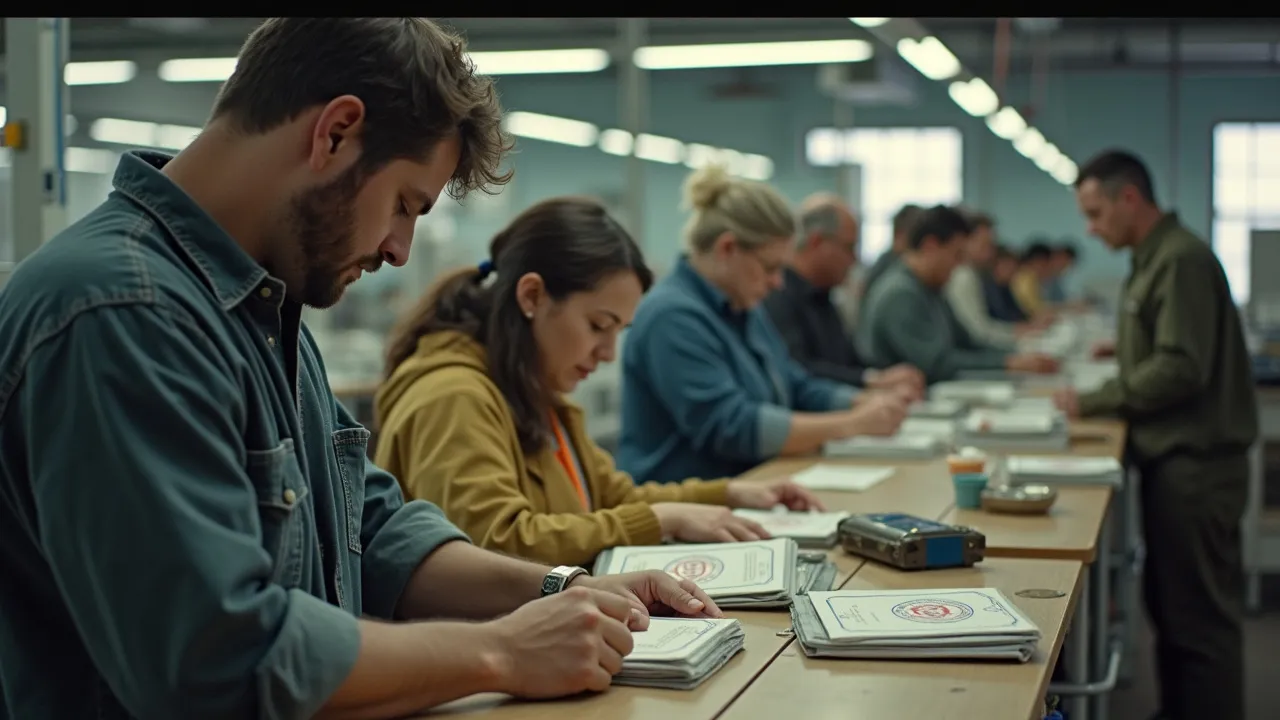
Celebrated on July 2nd, Made in the USA Day honors American manufacturing, innovation, and the workers who build products domestically. It encourages consumers to buy American-made goods to support the economy, job creation, and quality craftsmanship.
The Historical Origins & Evolutionary Journey
Made in the USA Day traces its roots to a grassroots movement championed by Clayton A. Bouton, a New York-based businessman and advocate for domestic manufacturing. Dissatisfied with the growing trend of offshoring and the decline of American industrial jobs, Bouton launched the observance on July 2nd, 2011, to coincide with the spirit of American independence and self-reliance. The date was chosen deliberately to bridge the gap between Memorial Day and Independence Day, reinforcing themes of national pride and economic patriotism.
The Foundational Catalyst
The early 2000s saw a sharp decline in U.S. manufacturing due to globalization. Between 2000 and 2010, the United States lost nearly one-third of its manufacturing workforce, with jobs migrating to countries with lower labor costs. This exodus led to what economists term the "hollowing out" of the industrial Midwest, sparking a counter-movement advocating for domestic production. Bouton, who owned a family-run manufacturing company, recognized the need for a dedicated day to remind Americans of the importance of buying domestic goods.
The Legislative/Official Adoption
While not an official federal holiday, Made in the USA Day gained traction through social media campaigns, local government resolutions, and endorsements from trade associations like the National Association of Manufacturers (NAM). Several states, including South Carolina and Texas, issued proclamations recognizing July 2nd as Made in the USA Day. In 2018, the U.S. Department of Commerce launched a complementary campaign called "America's Workforce" to highlight the value of American-made products during the summer season.
Modern Global Legacy
Today, the observance has evolved into a broader celebration of American craftsmanship, innovation, and economic resilience. It serves as a platform for small businesses, artisans, and large manufacturers to showcase their products. The day also addresses contemporary issues like supply chain security, sustainability, and the "reshoring" trend—bringing manufacturing back to the U.S. As of 2025, over 30 countries have adopted similar "Buy Local" days, inspired by the U.S. model.
How to Celebrate Made in the USA Day
Celebrating Made in the USA Day is both a personal and collective act of economic patriotism. Below are actionable strategies for individuals, schools, and organizations to honor American manufacturing.
For Individuals
- Check Labels: Prioritize purchases bearing the "Made in USA" label, which is regulated by the Federal Trade Commission (FTC). Look for products with a high percentage of U.S.-sourced components.
- Shop at Local Craft Fairs: Support artisans, woodworkers, and food producers who create goods domestically. Many communities host special markets on July 2nd.
- Dine at American-Owned Restaurants: Choose eateries that source ingredients from U.S. farms and fisheries.
- Share on Social Media: Use hashtags like #MadeInTheUSADay and #BuyAmerican to amplify the message.
For Schools and Educators
- Classroom Lessons: Teach students about the history of American manufacturing, from the Industrial Revolution to the modern robotics age.
- Factory Tours: (Where safe) Arrange field trips to local manufacturing facilities to inspire future careers.
- Projects: Have students design and build something from U.S.-sourced materials, then present their work.
For Businesses and Organizations
- Host Open Houses: Invite the community to tour your facility and see how products are made.
- Launch Promotions: Offer discounts on American-made products for the day.
- Collaborate with Trade Groups: Partner with the National Association of Manufacturers or local chambers of commerce to host events.
Internationally, the day is observed differently. In Canada, a parallel "Buy Canadian" day exists on July 1st (Canada Day), while in the United Kingdom, "British Made Week" occurs in September. These variations reflect each country's unique industrial heritage.
Global Impact on Supply Chains and Trade
The push for domestic manufacturing has ripple effects worldwide. Made in the USA Day underscores the importance of supply chain resilience—a lesson reinforced by the COVID-19 pandemic. When global shipping stalled in 2020, countries reliant on imported medical supplies faced shortages, spurring a reshoring movement. The day serves as an annual reminder of the strategic value of diversified production.
Economically, American manufacturing contributes approximately $2.3 trillion to the U.S. GDP and supports over 12 million jobs directly. By promoting domestic goods, the day helps reduce the trade deficit, which hit a record $1.1 trillion in 2024. Furthermore, it encourages foreign companies to set up production facilities in the U.S., creating a multiplier effect on local economies.
Environmental advocates also point to reduced carbon footprints when goods are produced closer to consumers. The shorter transport distances lower emissions, aligning with sustainability goals. Thus, Made in the USA Day aligns with eco-conscious consumerism.
American Manufacturing Renaissance: Industries Leading the Way
Despite decades of offshoring, several U.S. industries have experienced a renaissance, driven by automation, innovation, and consumer demand for quality. Key sectors include:
- Electronics: Companies like Intel and Apple are investing in domestic chip fabrication plants (fabs) to reduce reliance on Taiwan and China.
- Textiles: High-end apparel brands such as Ralph Lauren and New Balance maintain U.S. production lines for premium products.
- Automotive: Japanese and German automakers operate dozens of assembly plants across the South and Midwest, employing hundreds of thousands.
- Pharmaceuticals: The Made in USA label on medications assures quality control, especially for generic drugs.
These industries leverage advanced technologies like 3D printing, industrial IoT, and AI-driven quality control to remain competitive. The day celebrates these triumphs of American ingenuity.
Consumer Awareness: Deciphering Labels and Certifications
Understanding what "Made in USA" truly means is essential for informed consumer choices. The FTC mandates that a product advertised as such must be "all or virtually all" made in the U.S., meaning that significant parts and processing must be domestic. However, there are nuances:
Types of Claims
- "Made in USA" – The highest standard, often used by companies with complete domestic supply chains.
- "Assembled in USA" – Indicates final assembly occurs in the U.S., but components may be imported.
- "Designed in USA" – Only the design originates in the U.S.; manufacturing may be abroad.
Third-Party Certifications
To aid consumers, organizations like Made in America Movement and Buy American Movement provide directories and labels for verified U.S.-made products. The day is an opportunity to educate shoppers on these distinctions.
Economic and Social Benefits of Buy American Initiatives
Encouraging purchases of domestic goods yields tangible benefits beyond individual consumer satisfaction. Key advantages include:
- Job Creation: Every $1 billion in U.S. manufacturing output supports roughly 6,000 jobs, according to the Economic Policy Institute.
- Wage Growth: Manufacturing jobs offer median annual wages of $58,000, significantly higher than the retail sector.
- Innovation: Domestic production fosters R&D spending, which in 2024 exceeded $600 billion in the manufacturing sector.
- Community Stability: Factories often serve as economic anchors in small towns, supporting local schools, healthcare, and infrastructure.
Critics argue that protectionism can lead to higher prices, but supporters counter that long-term gains in quality, safety, and national security outweigh short-term costs. The day encourages a balanced perspective.
Historical Timeline
The Declaration of Independence signals the birth of an independent nation, eventually fostering a sense of economic self-reliance.
Samuel Slater opens the first water-powered cotton spinning mill in Pawtucket, Rhode Island, launching the American Industrial Revolution.
Henry Ford introduces the Model T, revolutionizing manufacturing with the assembly line and making cars affordable for ordinary Americans.
The Buy American Act is passed, requiring the U.S. government to prefer domestic products in its purchases.
World War II transforms U.S. manufacturing into the "Arsenal of Democracy," producing ships, planes, and weapons at unprecedented scale.
The oil crisis and rising competition from Japan and Germany lead to the first wave of deindustrialization in the U.S.
China joins the World Trade Organization, accelerating offshoring; U.S. manufacturing employment peaks at 19.5 million then begins a steep decline.
Clayton A. Bouton establishes July 2nd as Made in the USA Day to counter the offshoring trend and promote domestic goods.
The U.S. Department of Commerce launches the "America's Workforce" campaign, complementing the Made in the USA Day movement.
The COVID-19 pandemic exposes vulnerabilities in global supply chains, sparking a strong reshoring movement.
Over 30 countries have adopted similar "Buy Local" observances, and U.S. manufacturing employment stabilizes at 12.8 million jobs.