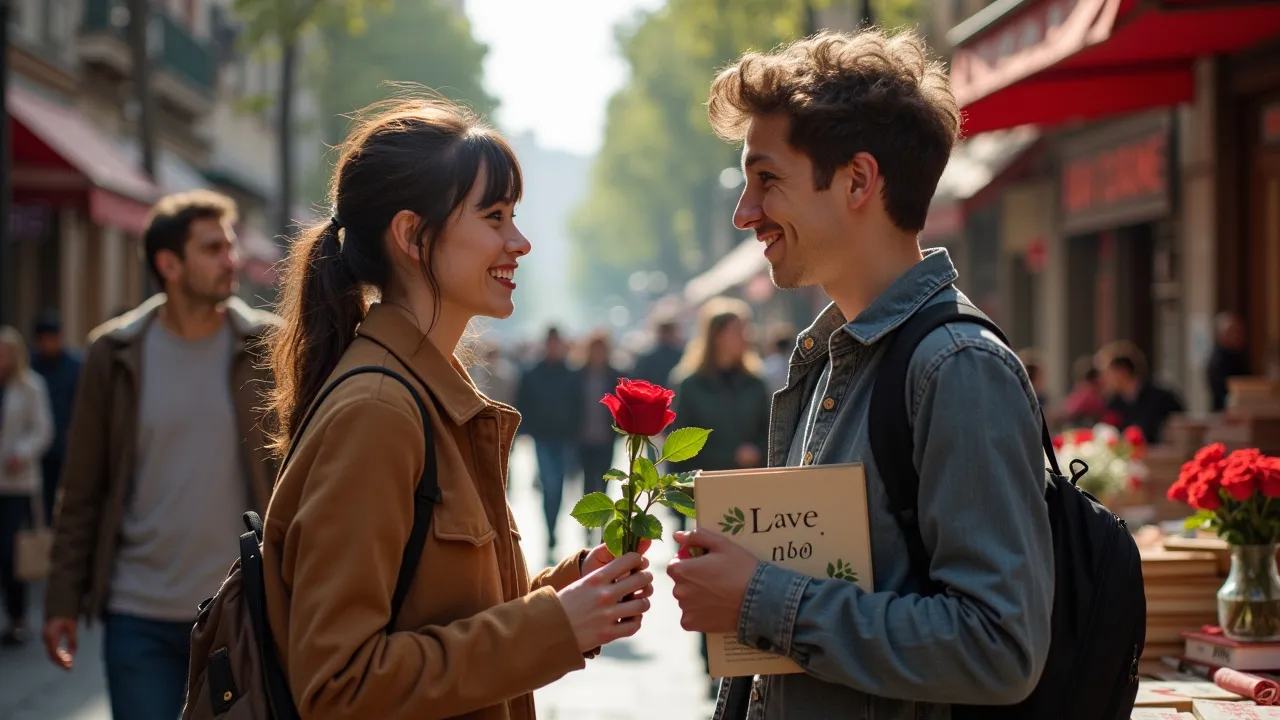
Lover's Day, celebrated on April 23rd, is a romantic observance deeply rooted in the Catalonian tradition of Sant Jordi. On this day, couples exchange roses and books as symbols of love and culture, blending romance with literary appreciation.
The Historical Origins & Evolutionary Journey
Lover's Day, observed annually on April 23rd, finds its deepest roots in the Catalonian celebration of Sant Jordi (Saint George's Day). The day honors both romantic love and literary culture, a unique blend that has captivated people worldwide. Below we explore its foundational catalyst, official adoption, and modern global legacy.
The Foundational Catalyst: Legend of Saint George
The story begins with the legend of Saint George and the Dragon. According to medieval lore, a fearsome dragon terrorized the town of Montblanc, demanding daily sacrifices. When the princess was chosen as the victim, Saint George appeared and slew the dragon. From the dragon's blood sprang a red rose bush, which George then presented to the princess as a token of love and bravery. This romantic gesture became the symbolic core of the day. By the 15th century, Catalans began exchanging roses on April 23rd to commemorate the legend. The tradition grew organically, with men giving red roses to women as a symbol of passion and devotion.
The Legislative/Official Adoption: The Book Connection
In 1923, a Valencian writer named Vicente Clavel Andrés proposed dedicating a day to the book, coinciding with the anniversaries of the deaths of Miguel de Cervantes and William Shakespeare (both died on April 23, 1616). The Spanish government officially recognized Día del Libro (Book Day) in 1930, and the celebration merged seamlessly with Sant Jordi. Women began gifting books to men in return for roses, formalizing a mutual exchange of love and knowledge. In 1995, UNESCO declared April 23rd as World Book and Copyright Day, amplifying the day's global significance. Today, Lover's Day is celebrated not only in Catalonia but also in many countries as a romantic and intellectual holiday.
Modern Global Legacy
In the 21st century, Lover's Day has expanded beyond Catalonia. Cities like Barcelona transform into sprawling open-air markets of books and flowers. Couples worldwide adopt the tradition, celebrating love through reading. Social media campaigns and commercial promotions have further spread the concept, making April 23rd a date synonymous with affection and literacy. The day's ability to unite emotional and intellectual connection ensures its enduring appeal across cultures.
How to Celebrate Lover's Day
Celebrating Lover's Day on April 23rd can be as simple or elaborate as you wish. Below is the ultimate global guide with actionable strategies for individuals, schools, and organizations.
Classic Catalan Traditions
- Exchange Roses and Books: Follow the core tradition. Give a red rose to your partner and receive a book in return. Choose a book that reflects your partner's interests or your shared love story.
- Visit a Book Fair: Many cities host street fairs with book stalls and flower vendors. Spend the afternoon browsing and picking out gifts together.
- Attend a Literary Event: Author signings, poetry readings, and storytelling sessions are common. Participate to deepen the cultural experience.
Modern and Global Adaptations
- Personalized Gifts: Customize the tradition. Instead of a rose, give a bouquet of your partner’s favorite flowers; instead of a book, give a journal or an e-reader preloaded with stories.
- Cultural Fusion: Incorporate local customs. For example, in Japan, couples might exchange omiyage (souvenirs) alongside books. In India, roses are often paired with poetry books.
- Virtual Celebrations: For long-distance couples, send an e-book and a digital flower arrangement via video call, reading passages aloud to each other.
School and Community Activities
- Book Donation Drives: Organize a book swap or a donation to local libraries in the name of love.
- Rose-Growing Workshops: Teach children how to care for roses, linking the gift to sustainability.
- Storytelling Contests: Encourage creative writing about love, dragons, or Saint George.
Corporate Rituals
- Employee Gifts: Companies can distribute rose-and-book sets to workers, fostering appreciation and literacy.
- Team-Building Events: Host a book club meeting or a flower-arranging class on April 23rd.
Remember, the essence of Lover's Day is expressing love through both heart and mind. Adapt the traditions to your personal style, but always honor the dual spirit of romance and reading.
Cultural Significance: Where Love Meets Literature
Lover's Day is unique among romantic observances because it intertwines affection with intellectual growth. The pairing of roses (emotional love) and books (knowledge) creates a metaphorical bridge. Below we explore the deeper cultural meanings.
Symbolism of the Rose
The red rose has long been a universal emblem of love, passion, and beauty. In the context of Sant Jordi, it also represents bravery and transformation, as it sprang from the dragon's blood. Giving a rose on this day is not just a romantic gesture but a tribute to courage and the triumph of good over evil. White roses sometimes signify friendship, while yellow roses denote joy.
Symbolism of the Book
Books symbolize knowledge, adventure, and shared stories. Exchanging books encourages partners to understand each other's intellectual worlds. It also celebrates the power of storytelling to unite people. The book given on Lover's Day often carries a personal message, becoming a cherished keepsake. In Catalonia, the tradition has boosted literacy and the publishing industry, with millions of books sold annually.
Global Impact on Publishing and Floriculture
The day drives massive economic activity. In Spain alone, over 400,000 roses and 500,000 books are sold on April 23rd. Florists and bookstores prepare weeks in advance. The event has inspired similar cross-promotions: love and literature become a powerful commercial and cultural force, reinforcing the idea that love is both an emotional and an intellectual journey.
Global Variations of Lover's Day
While April 23rd is the primary date, Lover's Day traditions vary worldwide. Below is a comprehensive look at how different regions interpret the day.
Catalonia (Spain) – The Epicenter
In Barcelona and across Catalonia, the day is a massive public celebration. Streets fill with book and flower stalls. Couples, friends, and families participate. The tradition is so strong that it often overshadows Valentine's Day. La Diada de Sant Jordi is a public holiday in some municipalities.
Other Spanish Regions
While less intense, many Spanish cities hold smaller events. In Valencia and Aragon, similar exchanges occur. Bookstores run promotions nationwide.
World Book Day Celebrations
UNESCO's World Book Day on April 23rd is observed in over 100 countries. In the UK, World Book Day is moved to March, but some organizations still celebrate on the original date. In Sweden, the day is called Världsbokdagen and includes reading campaigns.
Adaptations in the Americas
In the United States, Lover's Day is not widely known, but bookstores and cultural institutions host events. In Latin America, countries like Colombia and Mexico have adopted the rose-and-book exchange in major cities like Bogotá and Mexico City.
Asia-Pacific Celebrations
In Japan, April 23rd is Children's Reading Day, but some couples embrace the romantic aspect. In Australia, book-themed love celebrations are growing, especially among literary communities.
Unique Local Twists
- Brazil: While Dia dos Namorados is June 12, some use April 23 to gift livros de amor (love books).
- India: In cities like Delhi, book fairs and rose exchanges are promoted by cultural institutes.
- South Korea: April 23 is sometimes celebrated as Book Day with couples reading together.
These variations show how a local tradition can become a global phenomenon, adapting to diverse cultural landscapes while retaining its core message of love and learning.
Economic Impact on Florists and Publishers
Lover's Day generates significant economic activity, particularly for the floral and publishing industries. Below we analyze the financial ripple effects.
Floral Industry
Red roses are in peak demand on April 23rd. In Spain, an estimated 4 million roses are sold during the week leading up to Sant Jordi. Prices increase by 20–30% compared to average days. Florists often collaborate with bookstores for joint promotions. The day also boosts sales of other flowers like tulips and orchids, but the red rose remains the star.
Publishing Industry
Book sales spike dramatically. In Catalonia, April 23rd accounts for roughly 10% of annual book sales. Publishers release special editions, discount love-related titles, and organize signings. E-book and audiobook sales also rise as digital readers seek convenience. The day is critical for small independent bookstores, which often see their highest single-day revenue.
Broader Economic Effects
- Tourism: Cities like Barcelona attract day-trippers who spend on dining, hotels, and transport.
- Merchandising: Gift shops sell themed items – rose-scented candles, bookmarks, custom stationery.
- Media and Advertising: Television, radio, and online platforms run dedicated campaigns, generating ad revenue.
The combination of romance and culture creates a unique commercial ecosystem where love drives profitability and literacy benefits from commercialization.
Environmental and Ethical Considerations
As Lover's Day grows in popularity, concerns about sustainability have emerged. Below we examine the environmental footprint of the celebrations and suggest ethical alternatives.
Rose Production Issues
Most red roses sold on April 23rd are imported from countries like Colombia, Ecuador, and Kenya. The carbon footprint from air freight is substantial. Additionally, large-scale rose farming uses pesticides and large amounts of water, impacting local ecosystems. Consumers are encouraged to choose locally grown, organic, or Fair Trade roses to reduce harm.
Book Waste
Millions of books are purchased, but many may never be read. The publishing industry also has a carbon footprint from paper production and printing. To mitigate, consider buying second-hand books, e-books, or borrowing from libraries. Digital formats have lower environmental impact, though device production is a factor.
Sustainable Celebration Ideas
- Potted rose plants instead of cut flowers – they last longer and can be replanted.
- Book swap parties – exchange books you've already read, reducing new purchases.
- Homemade gifts – handwrite a love letter or create a scrapbook, avoiding commercial products.
- Support local artisans – buy roses from local growers and books from independent shops.
By making conscious choices, couples can celebrate love without compromising the planet. The true spirit of Lover's Day is not extravagant consumption, but heartfelt connection.
Digital Age Celebrations and Social Media Trends
Technology has transformed how Lover's Day is observed. Social media, e-commerce, and virtual events have expanded the reach of this once-regional tradition. Below are key digital trends.
Social Media Campaigns
Platforms like Instagram, TikTok, and Pinterest are flooded with user-generated content using hashtags such as #LoversDay, #SantJordi, #BookAndRose. Couples share photos of their gifts, book recommendations, and love stories. Influencers collaborate with brands to promote curated gift sets. The visual nature of the day (flowers and books) makes it highly shareable.
E-Commerce Surge
Online retailers like Amazon and local bookstores see a spike in orders. Many offer personalized gift messaging and same-day delivery. Virtual flower shops dispatch bouquets across borders. The convenience of online shopping has made it easier for long-distance couples to participate.
Virtual Events
Live-streamed author readings, virtual book clubs, and online flower arrangement classes have become popular. Platforms like Zoom and Instagram Live host #LoversDayLive events, where couples can join from anywhere. This democratizes the celebration, allowing people in regions without strong traditions to still engage.
Rise of Digital Gifts
- E-books and audiobooks – instant delivery, eco-friendly, and easily shareable.
- Digital flower subscriptions – weekly e-flower deliveries via apps.
- Custom playlists and poetry – Spotify playlists or PDFs of love poems.
The digital evolution of Lover's Day ensures its relevance for younger generations and global audiences. While the core symbols remain, delivery and experience have adapted to the connected world.
Historical Timeline
Saint George slays the dragon and gives a rose to the princess, establishing the romantic symbol.
Catalans begin exchanging roses on April 23rd in honor of Saint George, replacing the original legend's rose-giving.
Writer Vicente Clavel Andrés proposes a Book Day on April 23rd to honor Cervantes and Shakespeare.
Spanish government officially recognizes April 23rd as Día del Libro (Book Day).
UNESCO declares April 23rd as World Book and Copyright Day, boosting global recognition.
Lover's Day spreads via internet and social media, adopted in many countries beyond Spain.
Digital celebrations surge due to COVID-19, with virtual events and online gift exchanges.