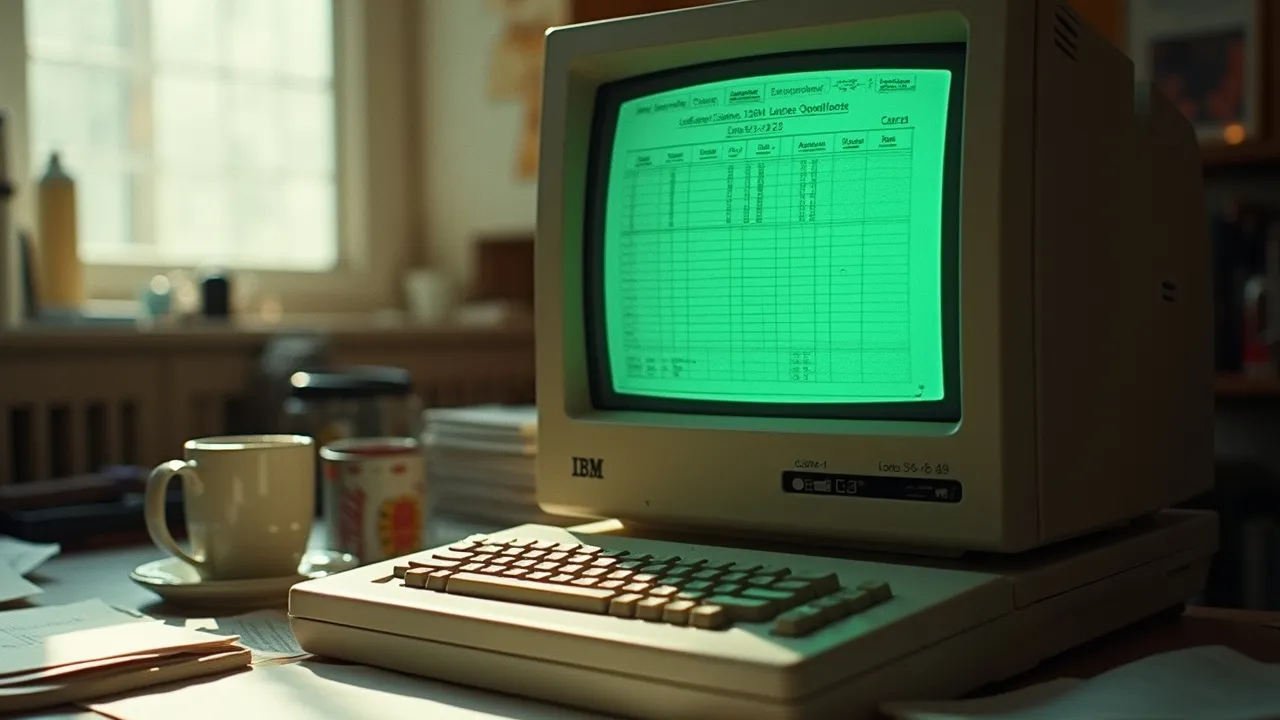
Celebrated on January 26th, Lotus 1-2-3 Day honors the groundbreaking spreadsheet software that revolutionized business computing in the 1980s, paving the way for modern data analysis and digital productivity.
The Historical Origins & Evolutionary Journey
Lotus 1-2-3 Day is observed annually on January 26th, commemorating the release of Lotus 1-2-3 by Lotus Development Corporation in 1983. This day marks a pivotal moment in computing history, when spreadsheet software transitioned from a niche tool to an indispensable business application.
The Foundational Catalyst
Before Lotus 1-2-3, the dominant spreadsheet was VisiCalc, created by Dan Bricklin and Bob Frankston. However, VisiCalc ran only on the Apple II and lacked integrated graphics and database capabilities. Mitch Kapor, a former VisiCalc developer, saw an opportunity to create an all-in-one productivity suite: spreadsheet, charting, and database management—hence the name "1-2-3." Kapor founded Lotus Development Corporation in 1982, and the product launched on January 26, 1983.
The Legislative/Official Adoption
Although not officially recognized by governments, Lotus 1-2-3 quickly became the de facto standard for financial modeling and business planning. By 1984, it was the best-selling software for the IBM PC, displacing VisiCalc. Its success was so profound that it drove sales of IBM PC compatibles and established the spreadsheet as a killer app.
Modern Global Legacy
Today, Lotus 1-2-3 Day is celebrated by technology historians, retro computing enthusiasts, and former users who recall the software's impact. While the product has been discontinued (support ended in 2014), its legacy lives on in modern spreadsheet applications like Microsoft Excel and Google Sheets. The day serves as a reminder of how innovation can reshape industries.
How to Celebrate Lotus 1-2-3 Day
Whether you are a seasoned professional or a curious newcomer, celebrating Lotus 1-2-3 Day can be both educational and nostalgic. Here are actionable ways to honor the day:
For Individuals
- Recreate a Classic Spreadsheet: Install an emulator or find an old PC to run Lotus 1-2-3. Build a simple budget or financial model to experience its interface.
- Read Historical Accounts: Dive into memoirs by Mitch Kapor or articles about the early PC era. Share your findings on social media using #Lotus123Day.
- Learn Keyboard Shortcuts: Lotus 1-2-3 pioneered many spreadsheet shortcuts. Challenge yourself to learn the old slash-key commands.
For Schools and Educational Institutions
- Teach Spreadsheet History: Include a lesson on the evolution of spreadsheets, from VisiCalc to modern cloud-based tools.
- Hands-On Emulation: Set up a DOSBox session and let students try Lotus 1-2-3 for a few minutes. Compare it to Excel.
For Organizations and Companies
- Host a Retro Tech Day: Encourage employees to dress in 1980s attire and have a competition for the best vintage spreadsheet formula.
- Donate to Computer History Museums: Support organizations like the Computer History Museum that preserve software history.
Globally, celebrations are most active in the United States and the United Kingdom, where the PC revolution was most impactful. In Japan, fans commemorate the day with online retro computing meetups.
The Impact on Business and Finance
Lotus 1-2-3 fundamentally changed how businesses operated. Before its release, financial modeling required specialized programmers or manual calculations. With Lotus 1-2-3, anyone with an IBM PC could create complex spreadsheets, generate charts, and manage data—all within a single interface.
Spreadsheet as a Killer App
The term "killer app" was coined partly due to Lotus 1-2-3. It drove hardware sales: IBM PC sales soared because businesses wanted to run this software. Corporate adoption of PCs accelerated, shifting computing from back-office data processing to desktop decision-making tools.
Standardization of Spreadsheet Concepts
Lotus 1-2-3 introduced conventions that became industry standards: slash-key menus, macro recording, and the @function (e.g., @SUM). These patterns persist in Excel and Google Sheets, ensuring that skills from the 1980s remain partially relevant.
Economic Ripple Effects
The success of Lotus 1-2-3 created the software industry as we know it. Lotus Development Corporation grew rapidly, went public in 1984, and was eventually acquired by IBM in 1995. The competition between Lotus and Microsoft later spurred rapid innovation in the suite market.
Technological Innovations and Design Principles
Lotus 1-2-3 was not just a product; it was a paradigm shift in user interface and performance.
Performance Optimization
Written in x86 assembly language, Lotus 1-2-3 was remarkably fast for its time. It could recalculate a large spreadsheet in seconds, a feat that impressed users who had endured slow, disk-based alternatives.
Integrated Functionality
The ability to create graphs directly from spreadsheet data was revolutionary. Users could select a range and press a key to generate a bar chart instantly without switching programs. The database module allowed sorting and querying using spreadsheet-like commands.
Memory Management
Lotus 1-2-3 used expanded memory (EMS) to exceed the 640KB conventional memory limit, enabling larger spreadsheets. This hardware-software synergy pushed the limits of DOS-based PCs.
These design principles influenced not only spreadsheets but also integrated software suites like Microsoft Office and Lotus Symphony.
The Competitive Landscape and Market Evolution
The success of Lotus 1-2-3 sparked fierce competition that shaped the software market for decades.
Rise and Fall
Throughout the 1980s, Lotus 1-2-3 dominated with over 80% market share. Competitors like Quattro Pro and SuperCalc struggled to gain traction. However, Microsoft Excel for Windows (released in 1987) gradually eroded Lotus's lead. By the early 1990s, the graphical interface of Windows and Excel's superior ease-of-use turned the tide.
Lotus's Response
Lotus delayed moving to Windows, focusing instead on OS/2 and the IBM platform. When they finally released Lotus 1-2-3 for Windows in 1991, it was too little, too late. Missteps in pricing and feature parity allowed Excel to become the new standard.
Legacy of the Spreadsheet Wars
The competition between Lotus and Microsoft accelerated development of features like pivot tables, charting, and collaborative editing. The lessons from this era inform modern product strategy in the software industry.
Cultural Significance and Nostalgia
Lotus 1-2-3 Day is not just a celebration of software; it is a remembrance of a transformative era in work culture.
Empowerment of Non-Programmers
For the first time, accountants, managers, and analysts could create their own computational models without waiting for a programmer. This democratization of data analysis sparked a wave of productivity and creativity.
Nostalgia in the Retro Computing Community
Enthusiasts run Lotus 1-2-3 on vintage hardware or emulators, sharing spreadsheets and macros online. Forums like Reddit's r/retrocomputing often feature discussions and challenges on this day.
Representation in Media
The software appears in period films and TV shows as a symbol of 1980s corporate culture. Its distinctive green-on-black display and slash-key interface are instantly recognizable to those who lived through the era.
Global Adoption and Regional Variations
While primarily observed in English-speaking countries, Lotus 1-2-3 Day has a niche following worldwide.
United States
Most celebrations occur in the US, where the product originated. Tech museums and user groups organize events. Some companies hold internal celebrations recognizing the software that built their financial models.
United Kingdom
The UK saw widespread adoption of Lotus 1-2-3 in the financial services sector. Today, British enthusiasts participate in online emulator parties.
Japan and Germany
In Japan, 1-2-3 was popular due to localized versions. German users, known for meticulous documentation, often share vintage manuals and tips.
There are no alternative dates for this observance; it is universally tied to the January 26th release.
The Future of Spreadsheet Day Celebrations
As spreadsheets evolve into cloud-based platforms with AI integration, Lotus 1-2-3 Day serves as a historical anchor. It reminds users that innovation starts with simple, powerful tools. Future celebrations may include educational workshops on spreadsheet history or hackathons to build retro-inspired add-ons. The day also encourages reflection on the core principles of usability and performance that remain relevant today.
Historical Timeline
Mitch Kapor founded Lotus Development Corporation in Cambridge, Massachusetts, with the vision of creating an integrated spreadsheet, database, and graphics software.
Lotus 1-2-3 was officially released. It quickly became the best-selling software for the IBM PC, selling over 1 million copies within a year.
Lotus Development Corporation went public, with a valuation of over $500 million. Lotus 1-2-3 dominated the spreadsheet market with 80% market share.
Lotus released version 2.0, adding macro capabilities, improved graphing, and support for expanded memory.
Microsoft released Excel for Windows. While initially not a threat, it laid the groundwork for the eventual decline of Lotus 1-2-3.
Lotus released 1-2-3 for Windows, but it failed to regain market share. Microsoft Excel for Windows 3.0 was already dominant.
IBM acquired Lotus Development Corporation for $3.5 billion. Lotus 1-2-3 continued as a product but lost relevance.
IBM announced end of sales for Lotus 1-2-3. Support continued until September 30, 2014.
On the 40th anniversary, retro computing communities and tech historians celebrated Lotus 1-2-3 Day with online events, marking the software's enduring legacy.