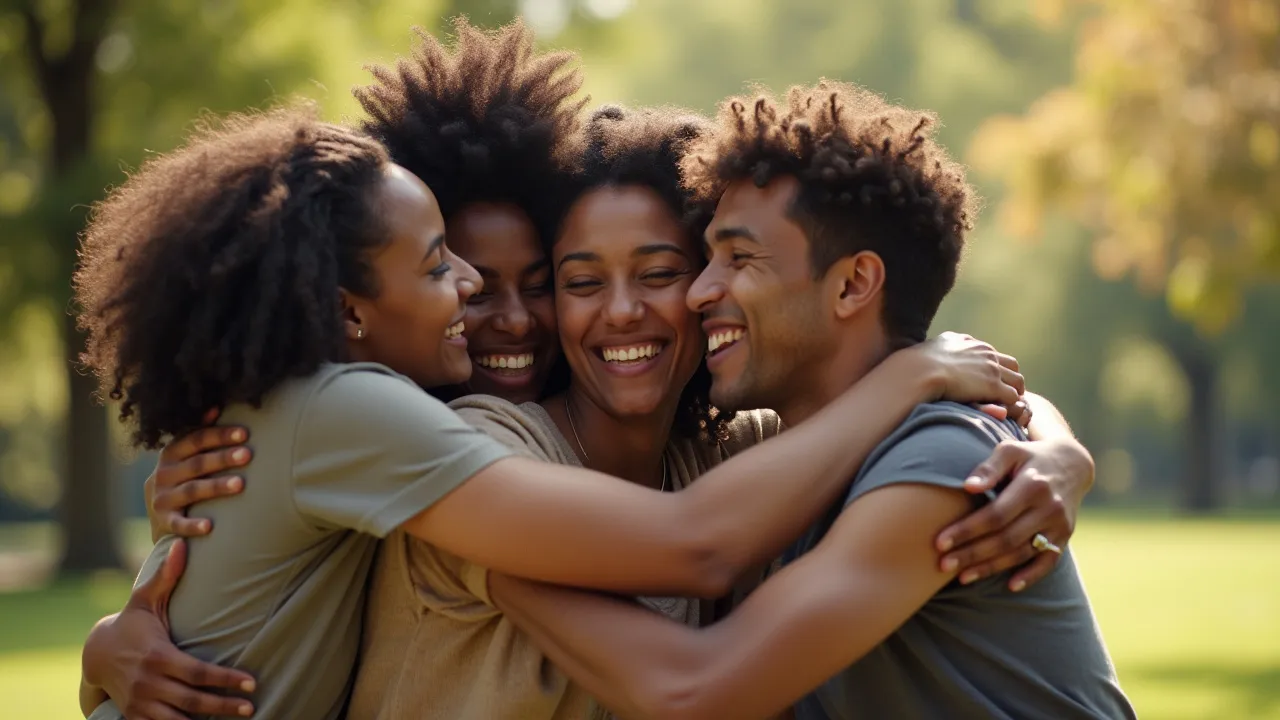
Celebrate Let's Hug a Day on December 3rd—a global embrace of warmth, connection, and well-being. Discover the history, health benefits, and heartfelt traditions behind this feel-good observance, plus creative ways to share a hug with loved ones and strangers alike.
The Historical Origins & Evolutionary Journey
Let's Hug a Day, observed annually on December 3rd, is a relatively modern observance that taps into humanity’s ancient need for physical connection. While the exact origins are debated, the day is widely credited to a grassroots movement that began in the early 2000s, aimed at promoting mental health and social bonding through the simple act of hugging.
The Foundational Catalyst
In 2007, a group of psychologists and community organizers in the United States launched a pilot event called "Free Hugs Day" in several cities. Inspired by the global 'Free Hugs' campaign started by Juan Mann in 2004, they sought to create a designated day to encourage strangers to embrace. The first official Let's Hug a Day was celebrated on December 3, 2008, in San Francisco, with participants handing out signs that read "Hugs Free Today." The date was chosen to coincide with the onset of winter, when seasonal affective disorder peaks and social isolation often intensifies.
The Legislative/Official Adoption
Though not federally recognized, Let's Hug a Day gained momentum through social media campaigns and endorsements from mental health organizations. By 2012, several states in the U.S. issued proclamations recognizing December 3rd as a day for hugging. Internationally, countries like Australia, Canada, and the United Kingdom adopted the observance, often integrating it into workplace wellness programs and school anti-bullying initiatives. The World Health Organization (WHO) has acknowledged the day in the context of promoting mental well-being.
Modern Global Legacy
Today, Let's Hug a Day transcends cultural barriers. In Japan, it is known as Hug Day and is celebrated with public hugging events in parks. In Brazil, it coincides with Dia do Abraço, a national day of embraces. The observance has also inspired scientific studies on the health benefits of hugging, such as reduced cortisol levels and improved immune function. As of 2023, over 60 countries participate in organized hug events on December 3rd, making it a truly global celebration of human connection.
How to Celebrate Let's Hug a Day
Whether you're a hug enthusiast or a novice, Let's Hug a Day offers countless ways to spread warmth. Below are comprehensive, actionable strategies for individuals, families, schools, and organizations.
For Individuals
- Start with loved ones: Give extra-long hugs (20+ seconds) to family and close friends. Research shows that hugs lasting longer than 20 seconds trigger the release of oxytocin, the 'bonding hormone'.
- Hug a stranger (with consent): Join a local 'Free Hugs' event or simply ask someone if they'd like a hug. Always respect boundaries and read body language.
- Virtual hugs: For distant loved ones, send a heartfelt message or video call and share a screen hug—it's the thought that counts.
For Schools and Communities
- Host a Hug-a-Thon: Organize a 10-minute hugging session in the school gym or community hall. Track the number of hugs given and aim for a school record.
- Hug-a-Buddy Program: Pair older students with younger ones to share friendly hugs, fostering mentorship and reducing bullying.
- Hug Day Art Project: Have children draw or paint pictures of hugs, then display them in hallways to create a visual celebration.
For Organizations
- Workplace hug breaks: Schedule a 5-minute mid-afternoon break where colleagues can choose to hug (with consent) or enjoy a handshake.
- Hug for charity: Donate a small amount for each hug given during the day, with proceeds going to a mental health charity.
- Training on touch etiquette: Offer workshops that teach appropriate and consensual physical contact in professional settings.
Celebrations Around the World
- United States: Large-scale 'Free Hugs' rallies in New York's Central Park and San Francisco's Golden Gate Park.
- Japan: Hug cafes offer 5-minute hugging sessions with trained staff.
- Finland: Sauna hug events combine traditional sauna bathing with group embraces.
- India: Community hugs in public squares, often accompanied by music and dance.
Remember: consent is key. Always ask before initiating a hug and respect a 'no' gracefully.
The Health & Psychological Benefits of Hugging
Hugging is not just a pleasant gesture—it has scientifically proven effects on the body and mind. On Let's Hug a Day, we celebrate these transformative benefits.
Physical Health Benefits
- Lowers blood pressure: Hugging releases oxytocin, which relaxes blood vessels and reduces heart rate.
- Boosts immune system: Regular hugs increase the production of white blood cells, helping fight infections.
- Reduces stress hormones: Cortisol levels drop significantly after a warm embrace.
Mental Health Benefits
- Alleviates anxiety: The physical sensation of being held reduces activity in the amygdala, the brain's fear center.
- Improves mood: Hugs stimulate the release of dopamine and serotonin, natural antidepressants.
- Enhances social bonding: Shared hugs increase trust and empathy between individuals.
Long-Term Effects
A study from Carnegie Mellon University found that frequent huggers had a 32% lower risk of catching a cold. Another study from the University of North Carolina showed that couples who hugged regularly had stronger immune systems and lower heart rates. These findings underscore the importance of incorporating hugs into daily life, especially on designated days like Let's Hug a Day.
Global Variations & Cultural Perspectives
While hugging is a universal gesture, its meaning and acceptance vary across cultures. Let's Hug a Day adapts to local customs while maintaining its core message of connection.
High-Hug Cultures
- Latin America: Hugs (abrazos) are an integral part of greeting. In Mexico, Let's Hug a Day is celebrated with large family reunions and street parties.
- Middle East: In some countries, same-gender hugging is common, but opposite-gender hugs are reserved for family. Events are gender-segregated.
- Western Europe: The French and Italians often kiss on the cheek along with a hug, but the observance focuses on the embrace itself.
Low-Hug Cultures
- East Asia: In China and Japan, public hugging is rare. Let's Hug a Day often takes the form of bowing or hand-holding, with gentle, brief hugs among close friends.
- Scandinavia: While personal space is respected, Swedes and Norwegians participate in 'safe hugs' at designated events.
Religious Considerations
Some religious communities restrict physical contact between unrelated males and females. Observances in these regions emphasize non-physical gestures of warmth, such as virtual hugs or 'heart hugs' (placing a hand over the heart). In Islamic countries, events are often single-gender.
Understanding these nuances is essential for inclusive celebration. Let's Hug a Day encourages adapting traditions to local norms while keeping the spirit of connection alive.
Hugging in Popular Culture & Media
Hugs have been immortalized in film, literature, and art. Let's Hug a Day often draws inspiration from iconic embraces that defined pop culture.
Iconic Hugs in Film
- Forrest Gump and Jenny: The emotional hug on the bench in Savannah is a symbol of unconditional love.
- E.T. and Elliott: The healing touch between the alien and boy represents connection beyond species.
- Up's Carl and Ellie: The montage of their life together, starting with a hug, epitomizes companionship.
Literature & Music
- "The Little Prince" by Antoine de Saint-Exupéry: The fox teaches that "what is essential is invisible to the eye," often interpreted as a call for emotional connection.
- "Hug" by Pharell Williams: A song literally about giving hugs, released in 2020 as a pandemic anthem.
Social Media Campaigns
Hashtags like #LetsHugADay and #FreeHugs trend on December 3rd. Influencers often post videos of themselves hugging strangers (with consent), inspiring millions to join. In 2021, a viral TikTok challenge called "30-Second Hug Challenge" encouraged users to hold hugs for half a minute.
These cultural touchstones reinforce the day's message: that a hug is a simple but profound act of humanity.
The Science of Touch: Research & Breakthroughs
Behind the emotional warmth of Let's Hug a Day lies a robust body of scientific research. Understanding the biology of touch adds depth to the observance.
Oxytocin: The Hug Hormone
Released during hugging, oxytocin is crucial for social bonding, trust, and empathy. Studies at the University of Zurich found that a single hug can increase oxytocin levels by 30%. This hormone also plays a role in reducing inflammation and accelerating wound healing.
Psychological Studies
- Carnegie Mellon University (2014): Participants who received more hugs had less severe cold symptoms and recovered faster.
- University of Virginia (2015): MRI scans showed that holding hands with a partner reduces brain activity in regions associated with threat.
- Max Planck Institute (2019): Regular hugging improves pain tolerance in chronic pain patients.
Neuroscience of the Embrace
The skin contains pressure receptors (Pacinian corpuscles) that, when stimulated by a hug, send signals to the vagus nerve, which slows heart rate and induces calm. Additionally, the insula—a region responsible for interoception—activates, promoting self-awareness and empathy.
On Let's Hug a Day, these scientific facts are often shared in workshops and online content to encourage participation.
The Future of Let's Hug a Day
As society evolves, so does the observance. Let's Hug a Day in 2025 and beyond is poised to adapt to technological, social, and environmental changes.
Technology & Virtual Hugs
With remote work and digital communication on the rise, virtual hugs—via haptic feedback vests or VR—are emerging. Some apps now allow users to send a 'haptic hug' that vibrates a friend's phone. These innovations expand the day's reach to those who cannot physically hug.
Post-Pandemic Significance
The COVID-19 pandemic highlighted the importance of touch while also forcing new norms. Let's Hug a Day now includes messaging on hygiene and consent. Many events incorporate hand sanitizer stations and encourage elbow bumps as alternatives.
Environmental & Social Justice Themes
Recent observances have tied hugging to eco-activism (e.g., "Hug a Tree Day" activities) and social justice (hugging to protest discrimination). The day has become a platform for advocating mental health resources and anti-bullying programs in schools.
Global Expansion
Efforts are underway to have December 3rd declared an official UN Day of Hugging. In 2024, a petition garnered over 100,000 signatures. If successful, Let's Hug a Day could become a true international holiday, embedding hugs into global culture.
The future of Let's Hug a Day is bright—a testament to humanity's enduring need for connection.
Historical Timeline
The Free Hugs campaign begins in Sydney, Australia, started by Juan Mann, inspiring global street hugging movements.
Psychologists and community organizers in the US propose an official Hug Day to combat seasonal depression, leading to the first pilot event.
The first official Let's Hug a Day is celebrated on December 3rd in San Francisco, California, with hundreds participating.
The observance goes viral on social media, with #LetsHugADay trending globally on Twitter and Facebook.
Several US states issue proclamations recognizing December 3rd as Let's Hug a Day. Canada and Australia adopt the day.
Carnegie Mellon University publishes a study showing that hugs reduce the severity of colds, boosting the day's health credibility.
The first corporate partnership: Starbucks offers a free coffee to customers who give or receive a hug on December 3rd.
Let's Hug a Day is celebrated in over 50 countries. The UN acknowledges the day in a mental health awareness report.
Due to COVID-19, the day pivots to virtual hugs and social distancing-friendly alternatives. 'Fly hug' and 'air hug' become popular.
Haptic hug technology is demoed in Tokyo, allowing long-distance hugs through a wearable device.
A petition to make December 3rd an official UN-recognized day gains over 100,000 signatures, moving toward consideration.