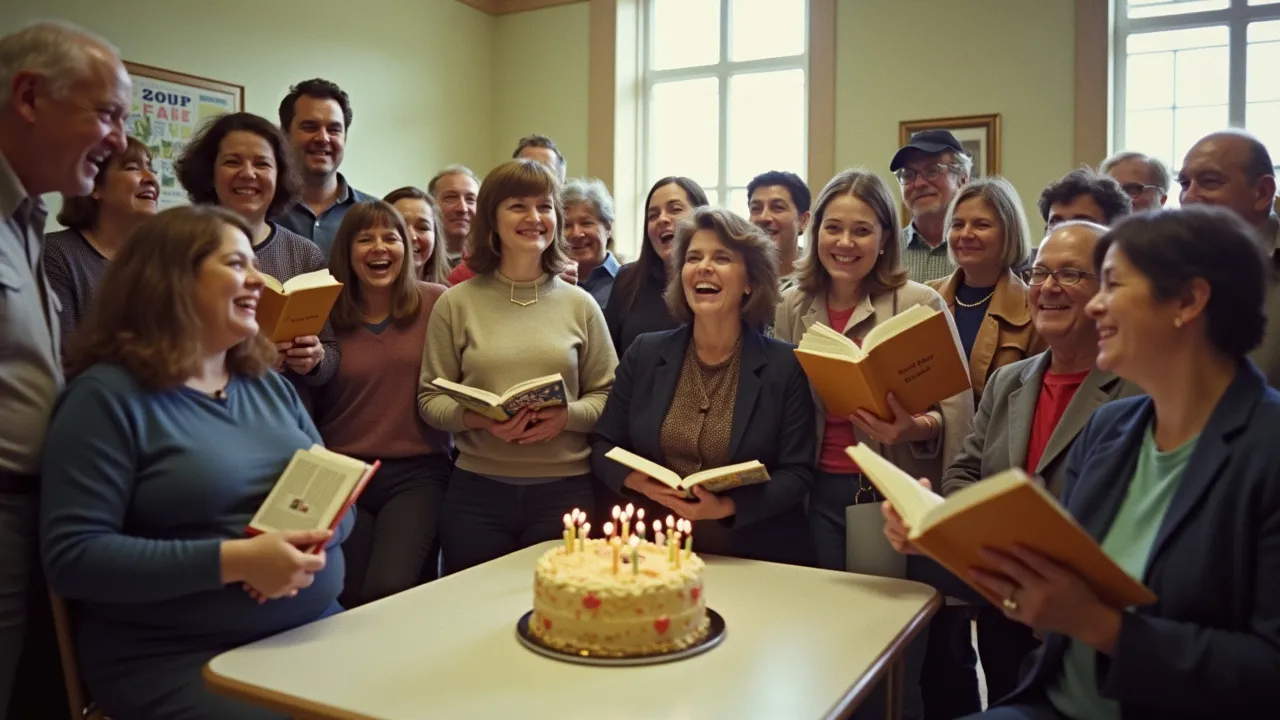
L. Ron Hubbard Day, observed on March 13th, celebrates the birth of Scientology's founder. It is a day of reflection and community events honoring his legacy.
The Historical Origins & Evolutionary Journey
L. Ron Hubbard Day, observed annually on March 13th, marks the birth of L. Ron Hubbard, the founder of the Church of Scientology. The day serves as both a celebration of his life and a reaffirmation of the principles he established. Initially commemorated quietly among early Scientologists, it has grown into a global event with structured ceremonies and outreach activities.
The Foundational Catalyst
L. Ron Hubbard was born on March 13, 1911, in Tilden, Nebraska. His early career as a writer and explorer culminated in the 1950 publication of Dianetics: The Modern Science of Mental Health, which laid the groundwork for Scientology. By 1953, the first Church of Scientology was incorporated, and Hubbard's birthday quickly became a significant date for followers. The earliest observances were small gatherings focused on reading his works and discussing his teachings.
The Legislative/Official Adoption
While L. Ron Hubbard Day is not a public holiday in any country, the Church of Scientology officially designated March 13th as a day of celebration in its calendar. In some regions, local governments have issued proclamations recognizing the day. For example, in 1994, the city of Los Angeles declared March 13th as L. Ron Hubbard Day, acknowledging his contributions to the field of mental health. This pattern of municipal recognition has occurred in other cities with significant Scientology populations.
Modern Global Legacy
Today, L. Ron Hubbard Day is observed by Scientologists worldwide through a variety of events. These include open houses at local churches, volunteer service projects, and educational seminars. The day also sees the release of new editions of Hubbard's works and charitable initiatives under the banner of the International Association of Scientologists. Despite controversies surrounding the church, the day remains a unifying moment for its members, emphasizing humanitarian goals and personal improvement.
How to Celebrate L. Ron Hubbard Day
Celebrating L. Ron Hubbard Day involves both personal reflection and community engagement. The following guide provides actionable steps for individuals, families, and organizations.
For Individuals
- Read Hubbard's Works: Spend time with key texts like Dianetics or The Way to Happiness.
- Meditate: Practice the auditing techniques or simply reflect on the principles of clarity and ethics.
- Volunteer: Participate in local community service projects organized by Scientology groups.
For Families
- Begin the day with a group reading from Hubbard's writings.
- Prepare a birthday cake and sing "Happy Birthday" to LRH.
- Engage in a group activity that promotes togetherness, such as a nature walk or art project inspired by his themes.
For Organizations
- Host Open Houses: Invite the public to learn about Scientology's history and social betterment programs.
- Launch Campaigns: Use the day to start anti-drug or literacy initiatives, aligning with Hubbard's social reforms.
- Recognize Achievements: Award individuals who have made significant contributions to the community in line with Hubbard's teachings.
In countries like the United States, the day is often celebrated with lectures and ceremonies at local churches. In the United Kingdom, Scientologists hold workshops and charity events. In Australia, the day includes interfaith dialogues to foster understanding. The common thread is a focus on self-improvement and helping others.
Global Impact and Cultural Significance
L. Ron Hubbard Day has extending influence beyond the Church of Scientology. Its emphasis on human potential and ethical living resonates with broader self-help movements. The day also highlights the church's social programs, such as Narconon and the Citizens Commission on Human Rights, which have touched millions globally. While critics question the scientific basis of Dianetics, the observance continues to draw attention to issues of mental health and addiction recovery. Culturally, the day reinforces the narrative of Hubbard as a prolific author and innovator, with his works being celebrated in libraries and bookstores that stock his extensive bibliography.
Core Themes and Principles
The observance of L. Ron Hubbard Day centers on several core themes derived from his philosophy: personal responsibility, ethical behavior, and spiritual freedom. These are encapsulated in Hubbard's dictum that "the purpose of the mind is to solve problems". The day encourages adherents to audit their own experiences and eliminate mental blocks. The Way to Happiness, a non-religious moral code, is often promoted, emphasizing 21 precepts such as "Be Kind" and "Try to Treat Others as You Would Want Them to Treat You". These principles are not only celebrated but are put into action through community outreach and educational initiatives.
Controversies and Criticisms
L. Ron Hubbard Day is not without its detractors. Critics argue that the day is part of a larger effort to legitimize Scientology as a religion and rehabilitate Hubbard's controversial legacy. Allegations of fraud, abuse, and authoritarian practices within the church have led some to view the observance as a public relations exercise. However, supporters maintain that the day is a genuine celebration of contributions to self-help and humanitarian work. The debate underscores the polarized perceptions of Hubbard and his movement, with scientific and legal disputes ongoing.
Modern Observances and Traditions
In the 21st century, L. Ron Hubbard Day has evolved with technology. Live-streamed events allow global participation, while social media campaigns use hashtags like #LRHDay to share messages. Many churches now publish online resources, including video lectures and downloadable study guides. Traditional elements remain: the cutting of a birthday cake, reading of Hubbard's words, and the ringing of a bell to symbolize clarity. Some branches organize marathons or charity runs to raise funds for drug education. The day concludes often with a candlelight vigil, reflecting on Hubbard's vision of a world without war or insanity.
Historical Timeline
L. Ron Hubbard is born in Tilden, Nebraska.
Publication of 'Dianetics: The Modern Science of Mental Health', sparking the Dianetics movement.
First Church of Scientology founded in Camden, New Jersey.
First official celebration of L. Ron Hubbard Day by early Scientologists.
Death of L. Ron Hubbard; the day continues as a memorial celebration of his legacy.
Los Angeles city proclamation declaring March 13 as L. Ron Hubbard Day.
Introduction of the 'Golden Age of Tech' releases, renewing focus on Hubbard's original works.
Virtual celebrations due to the COVID-19 pandemic, expanding digital outreach.