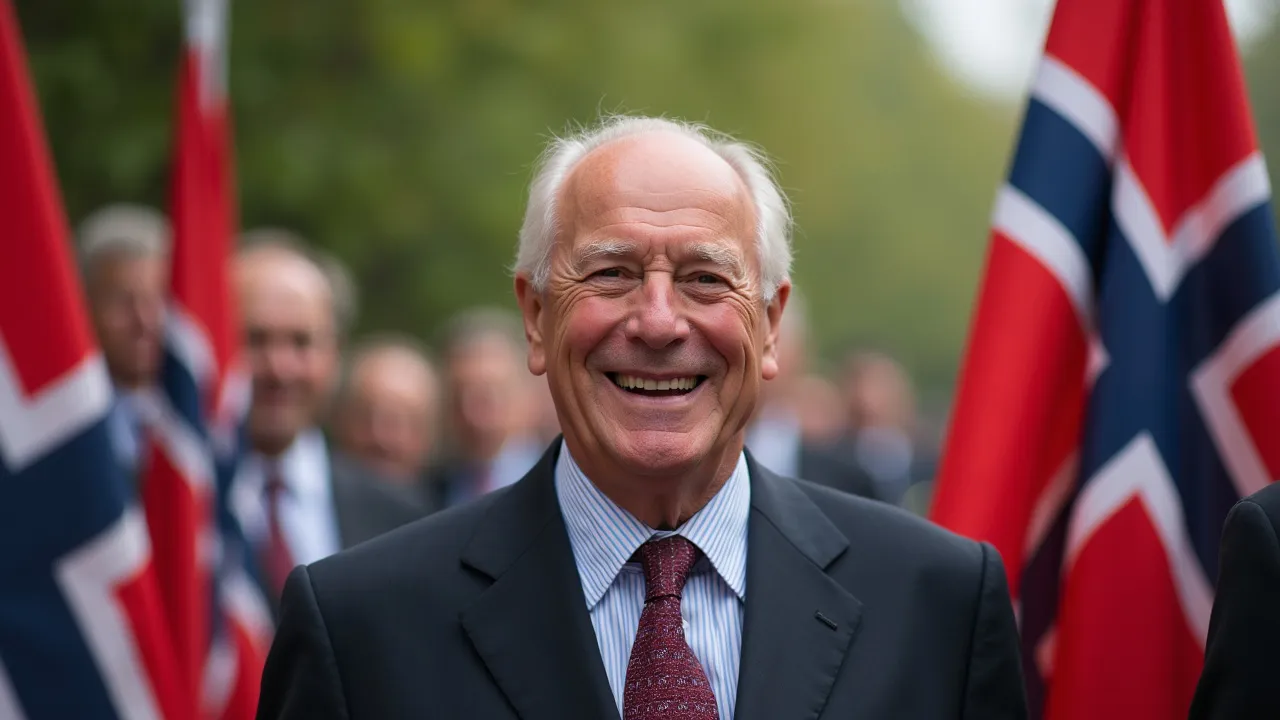
King Harald V's Birthday on February 21st is a national flag flying day in Norway, honoring the reigning monarch's birth. While not a public holiday, the day is marked with official ceremonies and royal traditions.
The Historical Origins & Evolutionary Journey
King Harald V's Birthday, observed annually on February 21st, commemorates the birth of Norway's reigning monarch. Born on February 21, 1937, at Skaugum Estate in Asker, King Harald V ascended the throne on January 17, 1991, following the death of his father, King Olav V. The day has been officially recognized as a flag flying day since his accession, symbolizing national unity and respect for the monarchy.
The Foundational Catalyst
The origins of this observance lie in Norway's deep-rooted constitutional monarchy. King Harald V, the first Norwegian-born monarch since King Olav IV in the 14th century, represents continuity and stability. His birthday became a day of celebration not only for the royal family but also for the nation, reflecting the people's affection for their king. The day is not a public holiday but is marked by the raising of the Norwegian flag at official buildings and private residences.
The Legislative/Official Adoption
Following his accession, the Norwegian government officially designated February 21st as a flag flying day. This is codified in the regulations for the use of the Norwegian flag, which list specific days when state institutions and citizens are encouraged to fly the national flag. The king's birthday is included alongside other significant dates such as Constitution Day (May 17) and the birthday of the Crown Prince.
Modern Global Legacy
Today, King Harald V's Birthday is a symbol of Norway's modern monarchy, which balances tradition with contemporary values. The event is broadcast on national television, featuring the king's appearance at the Royal Palace in Oslo, where he often greets well-wishers. While the celebration is primarily national, it also resonates with Norwegian communities abroad, who may host small gatherings or cultural events.
How to Celebrate King Harald V's Birthday
Celebrating King Harald V's Birthday offers a unique opportunity to engage with Norwegian culture and monarchy. While not as elaborately celebrated as Constitution Day, the day is marked by national pride and respectful observance. Here is a guide to celebrating authentically, whether in Norway or abroad.
In Norway: Official & Personal Customs
- Fly the Flag: The most common tradition. Raise the Norwegian flag on your property or at your workplace. Flags are typically hoisted at sunrise and lowered at sunset.
- Attend Ceremonies: In Oslo, a guard mount ceremony takes place at the Royal Palace, often with a military band. This is open to the public.
- Watch the TV Coverage: State broadcaster NRK provides live coverage of the king's activities, including a balcony appearance.
- Send Greetings: Norwegians can send birthday cards or messages to the Royal Palace, which are received by the king's staff.
For Schools & Organizations
- Educational Programs: Teach students about the Norwegian monarchy, the king's role, and Norway's history. Use resources from the Royal House website.
- Flag-raising Ceremonies: Schools can hold a morning assembly to raise the flag and sing the national anthem, "Ja, vi elsker dette landet".
- Cultural Activities: Organize art contests, essay writing about the king, or traditional Norwegian folk dance performances.
International Celebrations
Norwegian expatriates often gather at embassies or cultural centers. Events may include speeches by ambassadors, a toast to the king, and social gatherings. In some cities, the day is used as an opportunity to promote Norwegian cuisine, music, and history.
Global Impact & Cultural Significance
While primarily a Norwegian observance, King Harald V's Birthday has subtle international dimensions. Several aspects highlight its broader impact:
Strengthening National Identity
The day reinforces Norwegian identity both domestically and among the diaspora. It serves as a reminder of Norway's peaceful transition to a constitutional monarchy and the high approval ratings of the royal family.
Soft Power and Diplomacy
King Harald V is a revered figure internationally, often representing Norway on state visits. His birthday is used by Norwegian embassies globally as a platform to host cultural events, strengthening diplomatic ties.
Media and Public Engagement
The observance generates significant media attention, with newspapers publishing special supplements about the king's life and work. Social media trends with hashtags like #KongHaraldV and #KingHaraldsBirthday, fostering online community among Norwegians worldwide.
Monarchical Traditions and Symbolism
King Harald V's Birthday is rich with symbolic traditions that reflect the Norwegian monarchy's role. Understanding these adds depth to the observance.
The Royal Gift
Norway has a tradition of "folkets gave" (the people's gift) on significant royal birthdays. On King Harald V's 80th birthday in 2017, a nationwide fundraising campaign raised millions for cultural projects. This highlights the bond between monarch and subjects.
Military Salutes
At noon, a 21-gun salute is fired from the Akershus Fortress in Oslo. This tradition honors the king as commander-in-chief of the Norwegian Armed Forces.
The Flag's Role
The Norwegian flag, with its red background and white-blue cross, is prominently displayed. The flag-flying days are regulated, and the king's birthday is considered a semiofficial day, encouraging voluntary participation.
Key Figures and Institutions
King Harald V is the central figure, but the observance involves other key entities:
- The Royal Palace: Located in Oslo, it serves as the official residence. The balcony appearance is a focal point of the day.
- The Norwegian Parliament (Storting): Members often issue statements of congratulations, underscoring the constitutional relationship.
- The Defence Force: The military participates in ceremonies, reflecting the king's role as supreme commander.
- Media Outlets: NRK (national broadcaster) and newspapers like Aftenposten provide extensive coverage.
Contemporary Relevance and Public Perception
In an era of debate about the relevance of monarchies, King Harald V's Birthday serves as a barometer of public sentiment. Polls consistently show strong support for the monarchy in Norway, with the king enjoying high approval ratings. The day is an opportunity for reflection on the monarchy's role as a non-political unifier. It also highlights the king's charitable work, particularly in supporting the disabled and youth development, which enhances the institution's contemporary relevance.
Related Observances and Events
King Harald V's Birthday is part of a series of royal and national observances in Norway:
Constitution Day (May 17): The main national holiday, featuring parades and widespread celebration.
Queen Sonja's Birthday (July 4): Another flag flying day, though less prominent.
Crown Prince Haakon's Birthday (July 20): Also a flag flying day.
King's New Year's Speech: While not a birthday, the king's annual address on New Year's Eve is a major television event.
Historical Timeline
King Harald V is born on February 21 at Skaugum Estate, Asker, Norway, to Crown Prince Olav (later King Olav V) and Crown Princess Märtha.
Harald becomes crown prince upon his grandfather King Haakon VII's death and his father's ascension as King Olav V.
Crown Prince Harald marries Sonja Haraldsen, a commoner, after a nine-year engagement; a constitutional amendment is required to allow the marriage.
The Norwegian constitution is amended to introduce absolute primogeniture, making Crown Prince Haakon the heir apparent regardless of gender.
King Olav V dies on January 17; Harald ascends the throne as King Harald V. His birthday, February 21, is officially designated a flag flying day.
King Harald V officially opens the Winter Olympics in Lillehammer, Norway, marking a major international appearance.
The King undergoes successful bladder cancer surgery, raising public awareness about health issues and earning widespread support.
King Harald V celebrates his 80th birthday with nationwide celebrations, including a children's party at the Palace and a grand parade.
The King celebrates his 85th birthday; due to health concerns, the public appearance is scaled down, but the day is marked with official honors.