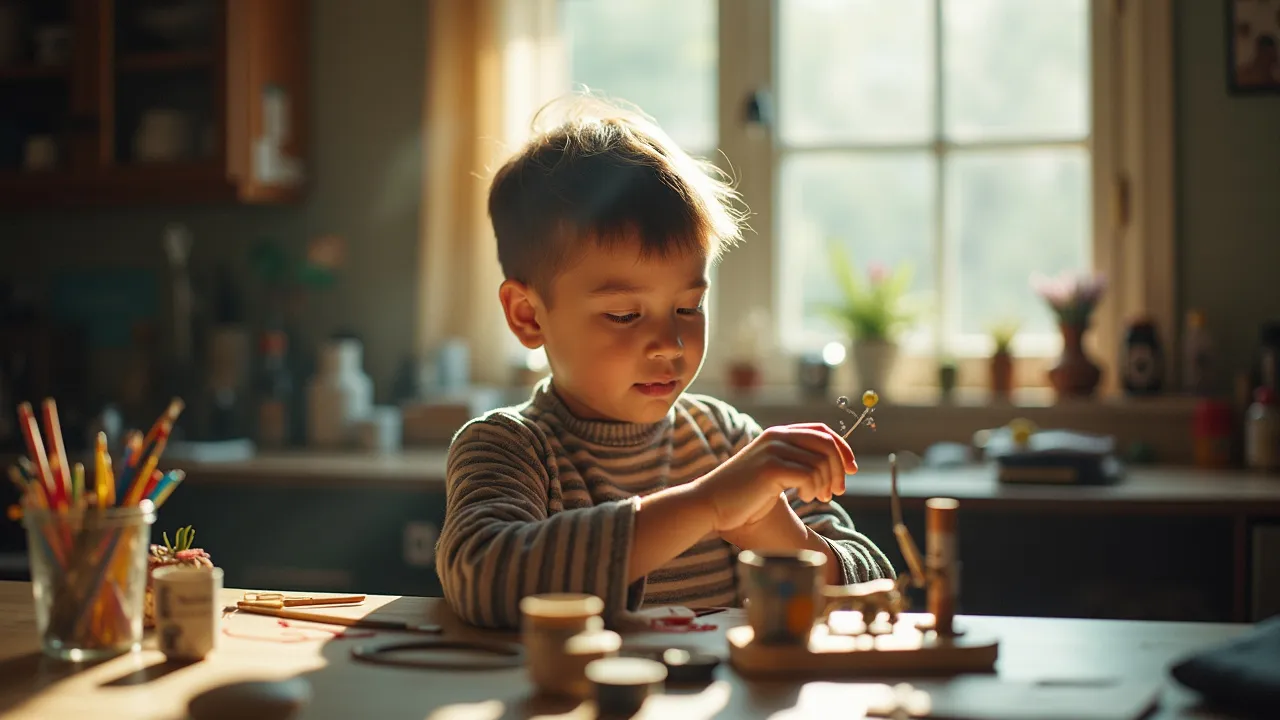
Kid Inventors' Day, observed on January 17th, celebrates the creativity and ingenuity of young inventors. It encourages children to think outside the box and develop solutions to real-world problems through innovation.
The Historical Origins & Evolution of Kid Inventors' Day
Kid Inventors' Day (KID) is observed annually on January 17th, the birthday of Benjamin Franklin, who invented the swim fin at age 12. This day honors the creativity and problem-solving abilities of young minds worldwide.
The Foundational Catalyst
The movement to celebrate young inventors gained momentum in the early 2000s as educators and parents recognized the importance of fostering innovation from an early age. In 2008, Tucker Alsup and Tom Cordero, founders of the nonprofit "Kids Invent!", officially established Kid Inventors' Day. They chose January 17th to honor Franklin's legacy and inspire a new generation of inventors.
Official Adoption and Growth
Since its inception, KID has been embraced by schools, libraries, and community centers across the United States. The U.S. Patent and Trademark Office (USPTO) and various educational organizations have promoted the day through workshops, contests, and exhibitions. In 2012, the day gained international recognition with events in Canada, India, and the United Kingdom.
Modern Global Legacy
Today, Kid Inventors' Day is celebrated on multiple continents, with activities ranging from invention fairs to virtual hackathons. The rise of maker spaces and STEM education has amplified the day's impact, encouraging children to prototype solutions for issues like climate change and healthcare accessibility.
How to Celebrate Kid Inventors' Day
Celebrating Kid Inventors' Day can be both fun and educational. Here are actionable strategies for individuals, schools, and organizations:
For Individuals and Families
Host an Invention Workshop: Gather household items like cardboard, tape, and recycled materials. Challenge kids to build something that solves a common problem.
Visit a Science Center: Many museums offer free admission or special inventor-themed exhibits on January 17th.
Read About Inventors: Explore biographies of young inventors, such as Benjamin Franklin or more recent prodigies like Gitanjali Rao.
For Schools
Invention Fair: Organize a school-wide fair where students present their prototypes. Invite local engineers or patent attorneys as judges.
Classroom Challenges: Assign design thinking projects—e.g., "Create a device to reduce food waste"—and allocate time for brainstorming and building.
Guest Speakers: Invite a local inventor or entrepreneur to speak about their journey.
For Organizations and Communities
Patent Workshops: Partner with the USPTO to teach kids about patents, trademarks, and intellectual property basics.
Online Competitions: Launch a regional invention contest with categories like most useful or most eco-friendly.
Social Media Campaign: Use #KidInventorsDay to showcase children's creations and celebrate their ingenuity.
The Impact of Kid Inventors on Society
Young inventors have contributed groundbreaking ideas that shaped industries. Their fresh perspectives often lead to simple yet effective solutions.
Notable Achievements
- Braille Typewriter: Invented by 16-year-old Louis Braille in 1824, revolutionizing reading for the visually impaired.
- Popsicle: Accidentally invented by 11-year-old Frank Epperson in 1905, creating a global frozen treat phenomenon.
- Battery-Operated Smoke Detector: Invented by 12-year-old Gitanjali Rao in 2017, using nanotechnology to detect lead in water.
The societal impact extends beyond products: inventing fosters critical thinking, resilience, and problem-solving, preparing kids for future careers in STEM.
Recognized Young Inventors and Their Contributions
Many kid inventors have gained recognition for their innovations. Here are a few inspiring stories:
- Jack Andraka (age 15): Developed a low-cost paper sensor for early detection of pancreatic cancer in 2012.
- Ann Makosinski (age 15): Invented a flashlight powered by body heat in 2013, winning the Google Science Fair.
- Shubham Banerjee (age 13): Created a low-cost Braille printer using LEGO in 2014, making Braille accessible.
These inventors demonstrate that age is no barrier to innovation. Their achievements inspire millions.
Educational Institutions and Programs Fostering Youth Innovation
Schools and programs worldwide have integrated invention education into curricula. Notable examples:
- Invention Convention: A global program that teaches K-12 students the invention process and culminates in competitions.
- FIRST LEGO League: Combines LEGO building with real-world problem-solving for ages 9-16.
- MIT's Lemelson-MIT Program: Offers grants and mentorship to young inventors through the "Jovenes Inventores" initiative.
These programs provide resources, mentorship, and platforms for young creators to develop their ideas.
The Role of Patents and Intellectual Property for Kid Inventors
Patents protect inventors' rights and encourage innovation. For kids, understanding intellectual property (IP) is crucial. The USPTO offers a "Kids' Patent Guide" to simplify concepts.
Key Points
- Why Patent? Patents grant exclusive rights to an invention, preventing others from copying it without permission.
- Age No Barrier: There is no minimum age to file a patent. Many kid inventors have successfully patented their creations.
- Resources: Free online databases like Google Patents help kids research existing inventions to avoid duplication.
Teaching kids about IP early fosters respect for original work and encourages them to protect their own ideas.
Historical Timeline
Benjamin Franklin is born on January 17th. At age 12, he invents the swim fin, one of the earliest documented kid inventions.
Frank Epperson, age 11, accidentally invents the popsicle by leaving a cup of soda with a stirring stick outside overnight.
Kid Inventors' Day is officially founded by Tucker Alsup and Tom Cordero, celebrated first on January 17th.
Jack Andraka, age 15, invents a carbon nanotube-based sensor for early pancreatic cancer detection, winning the Intel ISEF.
Ann Makosinski, age 15, invents a body-heat-powered flashlight and wins the Google Science Fair.
Shubham Banerjee, age 13, invents a low-cost Braille printer using LEGO Mindstorms, receiving a patent for his innovation.
Gitanjali Rao, age 12, invents Tethys, a device to detect lead in drinking water, named TIME's first-ever Kid of the Year in 2020.
Kid Inventors' Day goes virtual amid the COVID-19 pandemic, hosting online invention challenges with global participation.