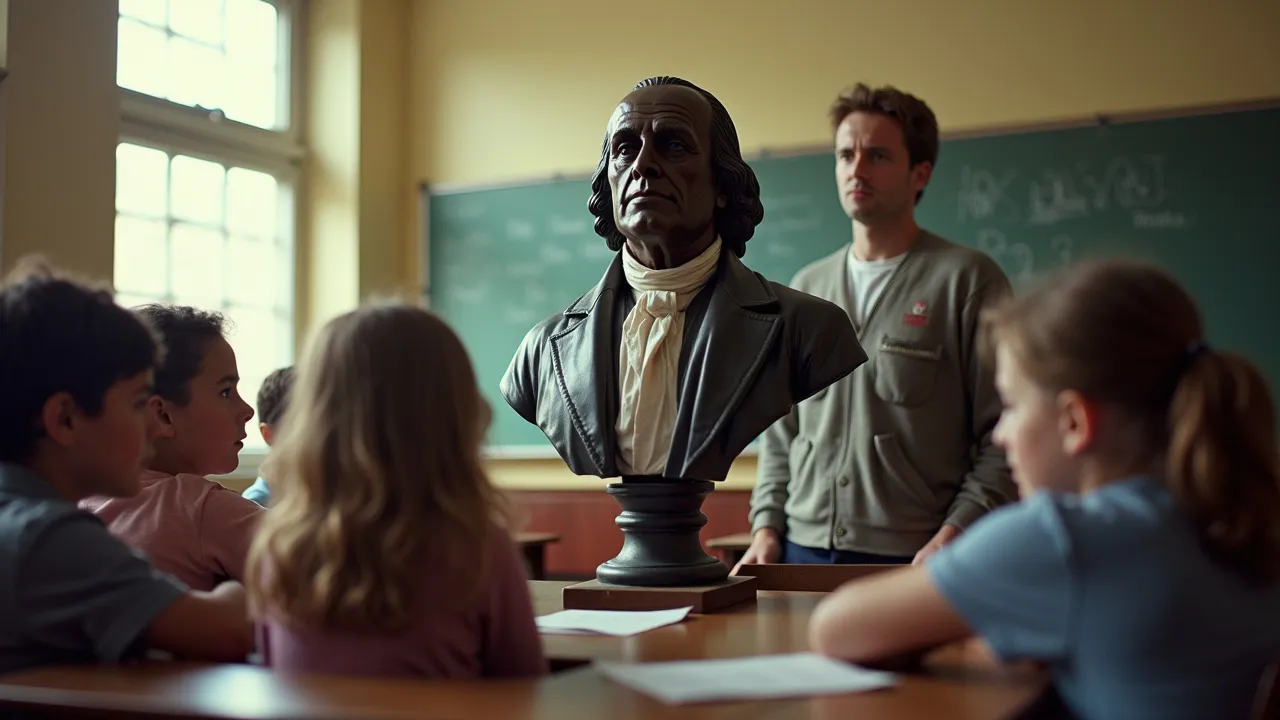
Benjamin Franklin Day, observed on January 17th, honors the life and legacy of one of America's Founding Fathers. Celebrated with educational activities and tributes to his contributions as a scientist, inventor, and diplomat.
The Historical Origins & Evolutionary Journey
Benjamin Franklin Day, observed annually on January 17th, commemorates the birth of one of the most influential figures in American history. While not a federal holiday, it is widely recognized by educational institutions, historical societies, and civic groups to promote Franklin's ideals of ingenuity, civic virtue, and public service.
The Foundational Catalyst
Benjamin Franklin was born on January 17, 1706, in Boston, Massachusetts. His multifaceted career as a printer, scientist, inventor, diplomat, and statesman laid the groundwork for a celebration that would evolve over centuries. Early tributes began shortly after his death in 1790, with eulogies and public ceremonies highlighting his contributions. By the 19th century, schools and communities held annual events on his birthday, often featuring readings of his writings and demonstrations of his inventions.
The Legislative/Official Adoption
Unlike many observance days, Benjamin Franklin Day has no single federal proclamation. Instead, it gained recognition through state and local resolutions. In 1906, the 200th anniversary of his birth was marked by grand celebrations across the United States, including parades, lectures, and the issuance of commemorative stamps. In 1976, the Bicentennial of American Independence renewed interest in Franklin, leading to more formal observances. Some states, such as Massachusetts and Pennsylvania, have issued proclamations designating January 17 as Benjamin Franklin Day. Additionally, the U.S. Congress has occasionally recognized the day through commemorative resolutions.
Modern Global Legacy
Today, Benjamin Franklin Day is celebrated not only in the United States but also in countries where Franklin's diplomatic missions left a lasting impact, such as France. Museums, libraries, and universities host special exhibits and lectures. The day serves as an opportunity to reflect on Franklin's contributions to science—like the lightning rod, bifocals, and the Franklin stove—and his role in drafting the Declaration of Independence and the U.S. Constitution. In the digital age, online campaigns and social media hashtags amplify the reach, ensuring Franklin's legacy continues to inspire innovation and civic engagement globally.
How to Celebrate Benjamin Franklin Day
Celebrating Benjamin Franklin Day can be both educational and fun, appealing to people of all ages. Below are actionable strategies for individuals, schools, and organizations.
For Individuals and Families
- Read Franklin's Autobiography: Start a book club or read aloud excerpts to discuss his principles of self-improvement and thrift.
- Experiment with Inventions: Build a simple kite experiment (safely) or recreate a glass harmonica using water glasses.
- Visit Historical Sites: Tour the Benjamin Franklin Museum in Philadelphia or the Franklin Institute.
- Practice the 13 Virtues: Challenge yourself to focus on one virtue each day, as Franklin advocated in his autobiography.
For Schools and Educational Institutions
- Classroom Activities: Host a science fair featuring Franklin's inventions, such as the lightning rod or bifocals.
- Debate Sessions: Organize debates on Franklin's diplomatic achievements or his stance on slavery.
- Art Projects: Have students create portraits or write poems about Franklin's life.
- Community Service: Emulate Franklin's civic spirit by organizing a neighborhood cleanup or fundraising for a local library.
For Organizations and Corporations
- Lunch-and-Learn: Host a presentation on Franklin's business acumen and his role as a founder of the University of Pennsylvania.
- Innovation Day: Encourage employees to share innovative ideas, inspired by Franklin's curiosity.
- Partnerships: Collaborate with historical societies to sponsor public lectures or exhibitions.
Globally, France celebrates Franklin's diplomatic ties with special exhibitions at the Musée des Arts et Métiers. In the United Kingdom, the Benjamin Franklin House in London offers tours and events. Many countries use the day to promote scientific literacy and cross-cultural understanding.
Benjamin Franklin's Enduring Legacy in Science and Innovation
Benjamin Franklin's scientific contributions form a cornerstone of modern technology.
Key Inventions and Discoveries
- Lightning Rod: Franklin proved lightning is electricity, inventing the lightning rod to protect buildings.
- Bifocals: He designed eyeglasses that allow distance and reading vision in one pair.
- Franklin Stove: A more efficient fireplace that heated homes with less fuel.
- Glass Harmonica: A musical instrument played by rubbing moistened fingers on glass bowls.
- Electricity Studies: Coined terms like battery, conductor, and electrician.
Franklin's Impact on American Diplomacy and Politics
As a statesman, Franklin was instrumental in shaping the United States.
Key Diplomatic Achievements
- Alliance with France: Franklin's charisma secured crucial military and financial support during the American Revolution.
- Treaty of Paris (1783): He negotiated the end of the Revolutionary War with favorable terms.
- Constitutional Convention: At age 81, he contributed to the drafting and signing of the U.S. Constitution.
Educational Initiatives and Community Events on Benjamin Franklin Day
Across the country, communities organize events to honor Franklin's legacy.
Typical Programs
- Library Exhibits: Showcasing rare editions of Franklin's Poor Richard's Almanack and scientific instruments.
- Lectures by Historians: Discussing Franklin's views on education, religion, and public service.
- Interactive Workshops: For children to make simple circuits or practice handwriting with quills.
- Awards Ceremonies: Some cities give Benjamin Franklin Awards to outstanding citizens who exemplify his virtues.
Global Recognition and Modern Traditions
Benjamin Franklin Day extends beyond U.S. borders.
International Observances
- France: The Benjamin Franklin Institute in Paris hosts cultural events, celebrating the French-American friendship.
- United Kingdom: The Benjamin Franklin House at 36 Craven Street in London offers historical tours and educational programs.
- Canada: Some schools incorporate Franklin's experiments into science curricula.
Historical Timeline
Benjamin Franklin is born on January 17 in Boston, Massachusetts.
Franklin publishes the Pennsylvania Gazette, establishing himself as a printer and journalist.
Franklin conducts his famous kite experiment, demonstrating that lightning is electricity.
Franklin helps draft and signs the Declaration of Independence.
Franklin negotiates the Treaty of Paris, officially ending the American Revolutionary War.
Franklin dies on April 17; his funeral is attended by 20,000 mourners.
The first known public celebration of Franklin's birthday occurs in Philadelphia.
The bicentennial of Franklin's birth is celebrated nationwide with parades, memorials, and a commemorative postage stamp.
The U.S. Bicentennial renews interest; Pennsylvania officially designates January 17 as Benjamin Franklin Day.
The tercentennial of Franklin's birth sparks global celebrations, including special exhibits at the Franklin Institute.