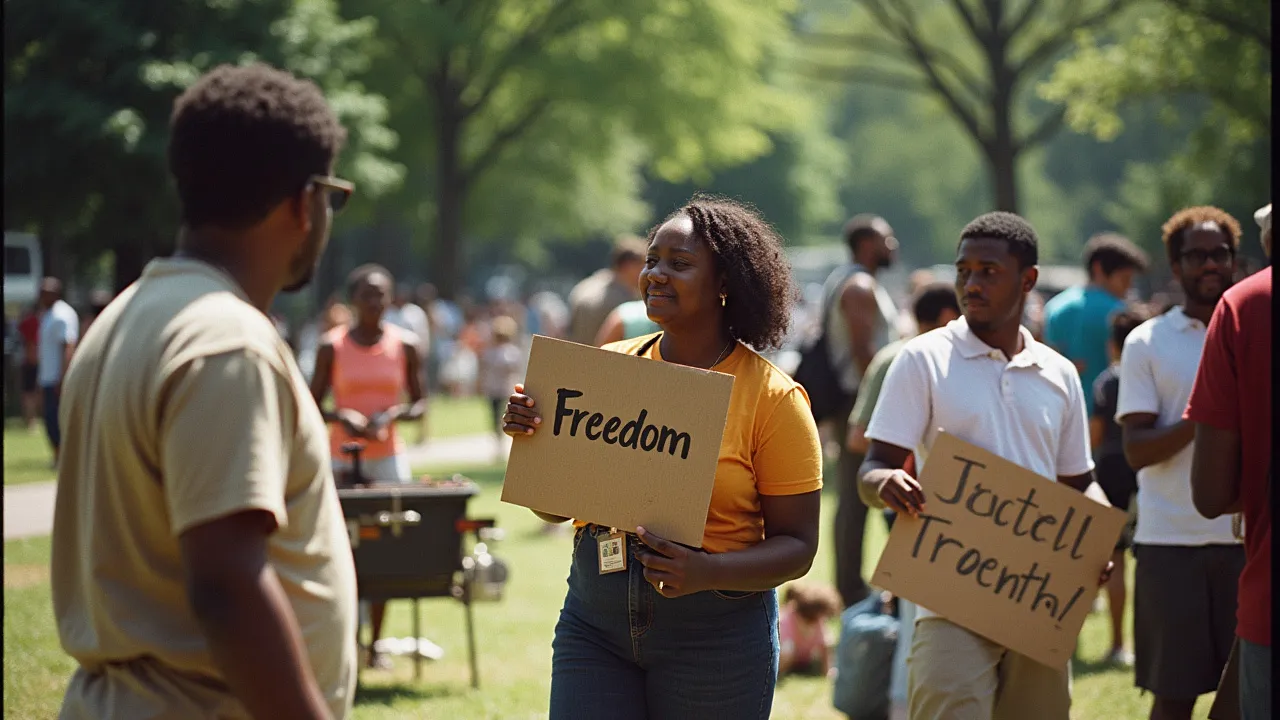
Juneteenth, observed on June 19th, commemorates the end of slavery in the United States. It marks the day in 1865 when enslaved people in Galveston, Texas, learned of their freedom, two and a half years after the Emancipation Proclamation.
The Historical Origins & Evolutionary Journey
Juneteenth, also known as Freedom Day, is the oldest nationally celebrated commemoration of the ending of slavery in the United States. Its origins trace back to June 19, 1865, when Union General Gordon Granger arrived in Galveston, Texas, and issued General Order No. 3, announcing that all enslaved people were free. This came over two years after President Abraham Lincoln's Emancipation Proclamation, which had little effect in Texas due to minimal Union presence.
The Foundational Catalyst
The delay in enforcing the Emancipation Proclamation in Texas was a result of the Civil War's ongoing nature and the state's remote location. General Granger's order was a pivotal moment, finally bringing federal authority to enforce emancipation. The newly freed African Americans celebrated with prayers, feasts, and song—a tradition that would evolve into an annual event.
The Legislative/Official Adoption
Initially, Juneteenth was celebrated primarily in Texas with community gatherings. Over time, African American communities spread the tradition across the South and to other states. However, it wasn't until the 20th century that formal recognition began. Texas made Juneteenth a state holiday in 1980, the first state to do so. In 2021, after a long grassroots campaign, President Joe Biden signed the Juneteenth National Independence Day Act, making it a federal holiday.
Modern Global Legacy
Today, Juneteenth is not only a day of remembrance but also a call to action. It has gained global attention, with events in countries like Canada, the UK, and Japan. The day now serves as a platform for discussions on racial equality, education, and cultural pride. Juneteenth symbolizes resilience, hope, and the ongoing pursuit of justice.
How to Celebrate Juneteenth
Celebrating Juneteenth can take many forms, from personal reflection to community events. Here is a definitive guide to honoring the day:
Individual and Family Traditions
- Educate Yourself and Others: Read books, watch documentaries, and discuss the history of slavery and emancipation.
- Attend Local Events: Many communities host parades, festivals, and educational workshops.
- Support Black-Owned Businesses: Make a conscious effort to shop at and promote Black entrepreneurs.
School and Community Organization Ideas
- Host a Freedom Feast: Gather friends and family for a meal featuring traditional African and African American dishes like barbecue, red velvet cake, and red drinks (symbolizing resilience).
- Organize a March or Candlelight Vigil: Honor ancestors who fought for freedom.
- Storytelling Circles: Share personal and family histories to preserve oral traditions.
Corporate and Social Rituals
- Workplace Education Sessions: Companies can hold lunch-and-learns covering the significance of Juneteenth.
- Volunteer: Partner with local organizations working on racial justice initiatives.
Globally, celebrations vary. In Canada, Juneteenth aligns with Emancipation Day (August 1), while in the UK, events often focus on the Windrush generation and African diaspora history. No matter how you celebrate, the core is reflection, community, and action.
Cultural Impact and Symbolism
Juneteenth has deep cultural significance, with symbols that have evolved over time. The Juneteenth flag, designed by Ben Haith in 1997, features a star representing Texas and a curve representing new horizons. The colors red, white, and blue reflect the American flag, while red also honors the bloodshed of ancestors. The holiday has inspired music, literature, and art, from songs like 'Lift Every Voice and Sing' to novels depicting the Black experience. Juneteenth is a powerful reminder of the struggle for freedom and the enduring spirit of a people.
Juneteenth and the Fight for Racial Justice
In recent years, Juneteenth has become intertwined with movements like Black Lives Matter. The 2020 protests following George Floyd's death brought renewed attention to racial inequality, leading to widespread calls for Juneteenth to be recognized as a federal holiday. Today, the day serves as a catalyst for conversations about systemic racism, police brutality, and reparations. Advocates use Juneteenth to push for policy changes and greater awareness of Black history in education.
Economic Impact and Community Development
Juneteenth also has an economic dimension. The holiday boosts local economies through festivals, parades, and travel. It has spurred the creation of Black-run cultural institutions and events that attract tourism. Additionally, many companies now treat Juneteenth as a paid day off, acknowledging its importance. Economic empowerment is a key theme, with initiatives to support Black-owned businesses and close the racial wealth gap.
Global Observances and International Perspectives
While Juneteenth is uniquely American, its message resonates worldwide. In countries with their own histories of slavery—such as Brazil, Jamaica, and Haiti—similar emancipation days exist. The United Nations has recognized the International Decade for People of African Descent, which aligns with Juneteenth's goals. Global solidarity events often feature shared stories of resilience and calls for reparative justice.
Regional Variations
- Canada: Emancipation Day on August 1 commemorates the abolition of slavery across the British Empire.
- United Kingdom: Windrush Day (June 22) celebrates Caribbean contributions but also incorporates Juneteenth themes.
- Japan: Small but growing Juneteenth events highlight the African American experience.
Historical Timeline
President Abraham Lincoln issues the preliminary Emancipation Proclamation, declaring enslaved people in Confederate states free as of January 1, 1863.
Union General Gordon Granger arrives in Galveston, Texas, and reads General Order No. 3, finally freeing all enslaved people in Texas—the last state to enforce emancipation.
The first official Juneteenth celebration takes place in Texas, with former slaves organizing community gatherings, prayer, and feasts.
A group of African American ministers and businessmen in Houston purchase land for Emancipation Park, which becomes a central site for Juneteenth celebrations.
Texas becomes the first state to declare Juneteenth a state holiday, thanks to the efforts of State Representative Al Edwards.
Ben Haith designs the first Juneteenth flag, which is later revised and becomes a widely recognized symbol.
President Joe Biden signs the Juneteenth National Independence Day Act, making Juneteenth the 11th federal holiday in the United States.
Juneteenth is first observed as a federal holiday, with government offices closed and events nationwide.