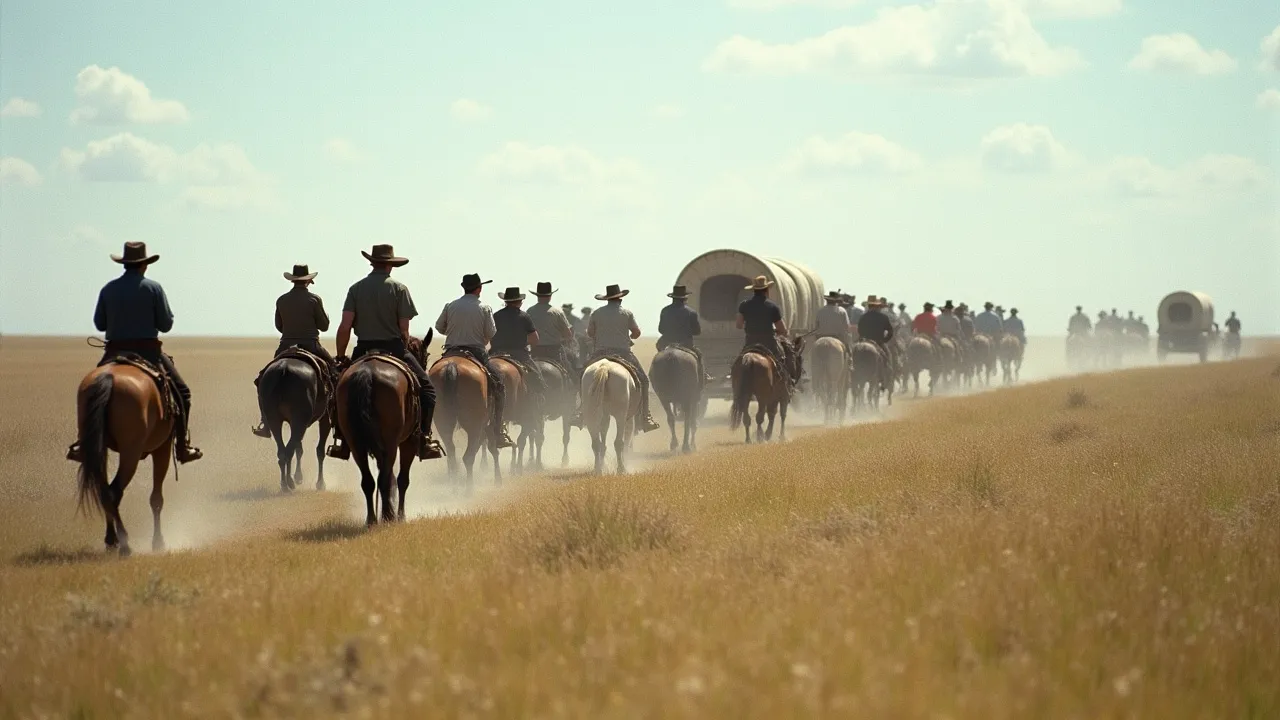
Invasions of Oklahoma Day on April 22nd commemorates the 1889 Oklahoma Land Run that opened the Unassigned Lands to settlers. It honors the pioneers and reflects on the displacement of Native American tribes.
The Historical Origins & Evolutionary Journey
Invasions of Oklahoma Day is observed annually on April 22nd to mark the anniversary of the first Oklahoma Land Run in 1889. This event, also known as the "Run of '89," was a pivotal moment in American westward expansion, but it also represents a complex legacy of displacement and cultural upheaval for Native American tribes.
The Foundational Catalyst
The catalyst for Invasions of Oklahoma Day dates back to the 1830s, when the U.S. government forcibly relocated five major tribes—Cherokee, Chickasaw, Choctaw, Creek, and Seminole—to Indian Territory (present-day Oklahoma). After the Civil War, pressure from white settlers and railroads led to the opening of these lands. The Indian Appropriations Act of 1889 authorized the opening of the Unassigned Lands—roughly two million acres in central Oklahoma—to non-Native settlers via a land run.
The Legislative/Official Adoption
President Benjamin Harrison signed the proclamation on March 23, 1889, setting the opening for 12:00 noon on April 22, 1889. At the sound of a cannon or bugle, an estimated 50,000 hopeful settlers surged forward on horseback, wagons, and even on foot to claim 160-acre homesteads. This chaotic rush became known as the "Land Run" and is commemorated today as Invasions of Oklahoma Day.
Modern Global Legacy
While not a federal holiday, Invasions of Oklahoma Day is recognized by the state of Oklahoma through historical reenactments, museum exhibits, and educational programs. It serves as a reminder of both the pioneer spirit and the cost of expansion on indigenous peoples. Globally, it is studied as an example of rapid settlement and its socio-economic impacts.
How to Celebrate Invasions of Oklahoma Day
Celebrating Invasions of Oklahoma Day involves both honoring the pioneer heritage and acknowledging the complex history. Here are actionable ways to observe the day:
Individual Activities
Visit a Land Run Reenactment: Many Oklahoma towns, such as Guthrie and Kingfisher, host annual reenactments on April 22nd. Participants dress in period clothing and recreate the run.
Explore Historical Sites: Tour the Oklahoma History Center or the Cherokee Heritage Center to learn about both sides of the story.
Read Primary Sources: Read diaries or letters from settlers and Native Americans to gain perspective.
School & Organizational Events
Educational Workshops: Organize a session on the Land Run’s impact on Native American land rights.
Debate or Panel Discussion: Invite historians to discuss the ethical dimensions of the “invasions.”
Art & Writing Contests: Encourage students to create works reflecting themes of migration and displacement.
Corporate & Social Rituals
Community Picnics: Hold a pioneer-themed potluck with traditional foods like cornbread and stew.
Fundraisers for Native Causes: Donate proceeds to organizations like the Native American Rights Fund.
Impact on Native American Tribes
The land runs were devastating for the tribes already living in Oklahoma. The Dawes Act of 1887 had broken up tribal communal lands into individual allotments, with “surplus” lands opened to settlers. By 1901, over 15 million acres were taken from tribes like the Cheyenne, Arapaho, and Comanche.
Displacement and Cultural Loss
Thousands of Native families were forced onto smaller reservations or relocated to unfamiliar lands. Boarding schools attempted to erase indigenous languages and traditions. The Allotment Era reduced tribal landholdings from 138 million acres in 1887 to 48 million by 1934.
Modern Reconciliation Efforts
Today, many Oklahomans observe Native American Heritage Month in November, but Invasions of Oklahoma Day often sparks calls for land acknowledgments and reparations. Tribes like the Osage Nation have regained some sovereignty through federal court rulings.
Role in American Expansion
The Oklahoma Land Run symbolized the closing of the American frontier. It was the first of several such runs, including the Cherokee Outlet Opening in 1893, which opened 6 million acres. These events fueled the Homestead Act ideal of land ownership for common people.
Economic Impact
Within a decade, the region’s population exploded, leading to the creation of Oklahoma Territory in 1890 and statehood in 1907. Agriculture and oil booms transformed the prairie into a thriving economy. However, the rapid settlement also led to land fraud, squatter disputes, and environmental degradation.
Legacy in Pop Culture
The land run has been immortalized in films like “Far and Away” and “Oklahoma!” and is featured in state symbols such as the Oklahoma State Quarter (2008) depicting a pioneer family.
Modern Commemorations and Reenactments
Across Oklahoma, Invasions of Oklahoma Day is marked with living history events. The Guthrie Land Run Reenactment draws thousands, featuring covered wagons, costumed riders, and a carnival atmosphere. The National Cowboy & Western Heritage Museum offers special exhibits.
Digital Celebrations
Virtual tours of the Oklahoma Land Run Monument in Oklahoma City—which spans 45 bronze statues—are available online. Social media campaigns use hashtags like #LandRunDay and #InvasionsOfOklahoma to share histories.
Controversies
Some Native groups criticize the celebration as ignoring the violent displacement. In response, modern observances often include educational components about tribal histories and land rights.
Controversies and Reconciliation Efforts
The term "Invasions of Oklahoma Day" itself is controversial. Critics argue it glorifies a land grab, while proponents see it as a neutral historical marker. The Oklahoma City National Memorial includes exhibits on the land run’s dual legacy.
Land Acknowledgements
Many events now begin with an acknowledgment that the lands were originally inhabited by tribes. The University of Oklahoma includes a land acknowledgment in official ceremonies.
Legislative Steps
In 2020, the Supreme Court ruling in McGirt v. Oklahoma affirmed that much of eastern Oklahoma remains Native American reservation land, reshaping jurisdictional boundaries. This ruling has brought renewed attention to the issues surrounding Invasions of Oklahoma Day.
Historical Timeline
Indian Removal Act forces tribes to relocate to Indian Territory.
Dawes Act authorizes allotment of tribal lands, leading to surplus land openings.
First Oklahoma Land Run opens the Unassigned Lands; 50,000 settlers claim homesteads.
Oklahoma Territory is officially organized.
Cherokee Outlet opening—largest land run, 6 million acres.
Oklahoma becomes the 46th state, ending the territorial period.
Dust Bowl devastates Oklahoma farms, causing mass migration.
Oklahoma State Quarter features a pioneer family and land run imagery.
Supreme Court in McGirt v. Oklahoma affirms tribal reservations in eastern Oklahoma.