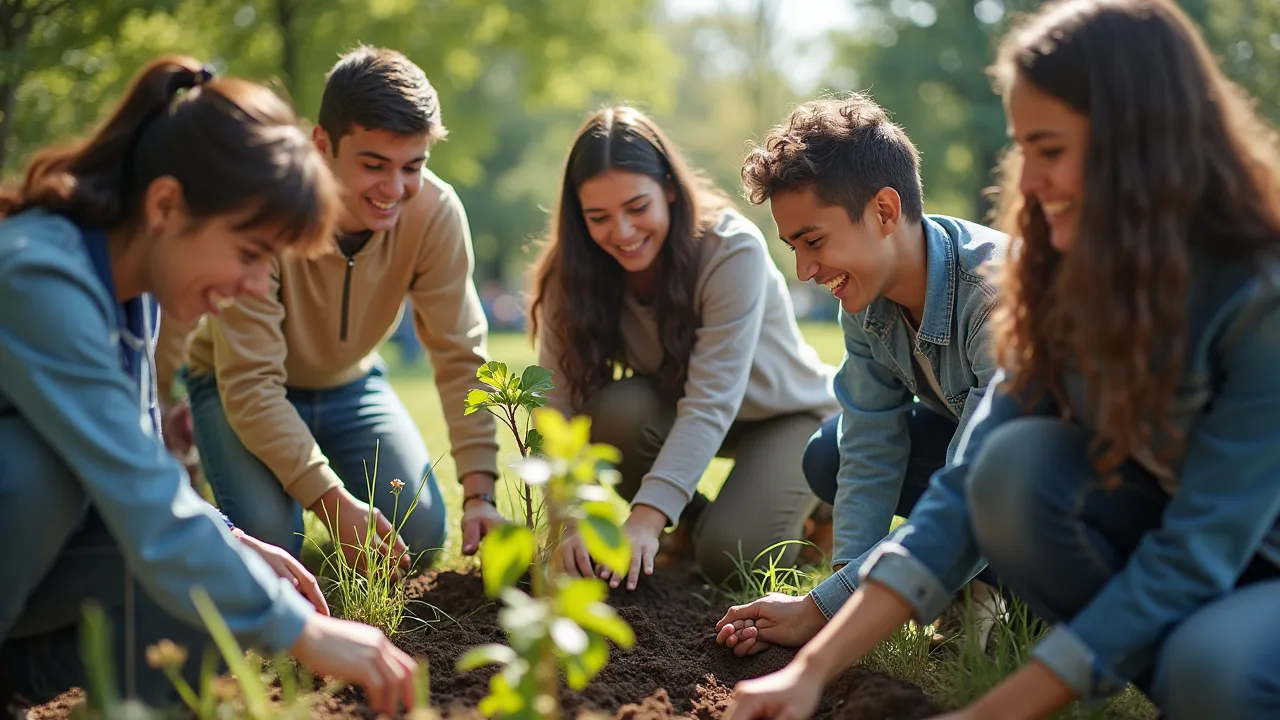
International Youth Day, observed on August 12th, is a United Nations-designated day to celebrate the potential of youth and recognize their contributions to global development. It aims to engage young people in shaping their futures through dialogue and action.
The Historical Origins & Evolutionary Journey
International Youth Day (IYD) is a global observance that traces its roots to the United Nations' commitment to empowering young people. The day was officially designated by the United Nations General Assembly on December 17, 1999, through Resolution 54/120, which recommended August 12 as the annual date for celebrating youth. The first International Youth Day was observed in 2000, marking a pivotal moment in recognizing the role of young people as essential partners in change.
The Foundational Catalyst
The impetus for International Youth Day emerged from the 1995 World Programme of Action for Youth, which provided a policy framework and practical guidelines for national action and international support to improve the situation of young people. The Programme identified 15 priority areas, including education, employment, health, and participation in decision-making. Recognizing that youth are not merely beneficiaries but active agents of development, the UN sought to institutionalize a day that would spotlight their contributions and challenges.
The Legislative/Official Adoption
The adoption of Resolution 54/120 followed years of advocacy by youth organizations and member states. The resolution invited governments, non-governmental organizations, and individuals to observe August 12 each year through activities that raise awareness about the situation of youth worldwide. The UN Secretary-General at the time, Kofi Annan, welcomed the decision, stating that "investing in youth is investing in our shared future." Since then, each year has featured a specific theme chosen by the UN to focus global attention on a pressing issue affecting youth.
Modern Global Legacy
Over the past two decades, International Youth Day has evolved into a platform for intergenerational dialogue and policy action. It has catalyzed national youth policies, inspired local youth-led projects, and amplified the voices of marginalized youth groups. The observance has also adapted to digital transformation, with virtual events, social media campaigns, and online youth forums expanding its reach. Today, International Youth Day is celebrated in over 150 countries, demonstrating its enduring relevance.
How to Celebrate International Youth Day
Celebrating International Youth Day can take many forms, from personal contributions to large-scale community events. The key is to center youth voices and address the priorities set forth by the UN. Below are actionable strategies for individuals, schools, and organizations.
For Individuals
- Volunteer: Offer your time to youth-led organizations or mentorship programs. Even one hour can make a difference.
- Educate Yourself: Read about global youth issues such as the youth bulge, unemployment, mental health, and climate action. Share what you learn on social media with the hashtag #YouthDay.
- Attend or Host an Event: Join local workshops, webinars, or panel discussions. If none are available, organize a small gathering to discuss youth priorities.
- Support Youth Entrepreneurs: Purchase from youth-run businesses or donate to youth-focused crowdfunding campaigns.
For Schools and Universities
- Curriculum Integration: Teachers can dedicate a lesson to exploring youth rights, the Sustainable Development Goals (SDGs), and the history of youth activism.
- Student-Led Activities: Encourage student clubs to organize debates, art exhibitions, or fundraising drives for youth causes.
- Guest Speakers: Invite young activists, policymakers, or community leaders to speak about their experiences.
For Organizations and Companies
- Launch a Youth Advisory Board: Create formal mechanisms for young people to influence organizational decisions.
- Offer Internships or Apprenticeships: Provide meaningful work experience to young individuals.
- Public Campaigns: Use your platform to highlight youth achievements and challenges. Ensure your messaging is inclusive and representative.
Across the globe, traditions vary. In India, schools often hold inter-college competitions. In South Africa, youth marches and pop-up skill-sharing events are common. In Latin America, concerts and cultural festivals unite young people. Regardless of location, the core principle is to listen to youth and involve them as equal partners.
Thematic Focus and Annual Campaigns
Each year, the United Nations selects a theme for International Youth Day to guide global activities and discussions. Themes are designed to align with contemporary challenges and opportunities facing young people. For example, the 2023 theme was "Green Skills for Youth: Towards a Sustainable World," which emphasized the importance of equipping young people with environmental competencies. The 2024 theme is "Youth Digital Pathways to Sustainable Development," highlighting the role of digital technologies in achieving the SDGs.
These themes are not mere slogans; they shape the content of UN-produced toolkits, campaign materials, and official events. Governments and NGOs use them to design policy briefs, hackathons, and youth forums. The thematic approach ensures that the day remains relevant and drives concrete action, such as the creation of green jobs or digital literacy programs.
To engage with the annual campaign, visit the UN's official International Youth Day website where you can download social media graphics, fact sheets, and guides for organizing events. Use the official hashtag (e.g., #YouthDay) to join the global conversation.
Global Impact and Youth Empowerment
International Youth Day has had a measurable impact on youth policies and participation worldwide. According to the UN, the observance has contributed to the establishment of national youth councils in over 70 countries. For instance, after the 2015 theme "Youth Civic Engagement," several governments introduced youth-friendly voting procedures and lowered the voting age. In Rwanda, youth-led initiatives on peacebuilding received increased funding following IYD campaigns.
Quantitative Indicators
- Policy Adoption: Since 2000, the number of countries with a national youth policy has doubled, from 99 to 198.
- Youth Representation: The day has amplified calls for youth representation in parliaments; currently, only 2.6% of parliamentarians are under 30, but advocacy during IYD is pushing for quotas.
- Awareness: Social media impressions for #InternationalYouthDay exceeded 1.5 billion in 2023.
Moreover, IYD serves as a platform for launching major youth initiatives. For example, the UN Youth 2030 strategy, launched in 2018, uses IYD as an annual checkpoint to review progress. The day also mobilizes resources: in 2022, the World Bank announced a $500 million youth employment package timed to coincide with IYD.
Challenges Facing Today's Youth
While International Youth Day celebrates young people, it also highlights the structural barriers they face. The UN identifies key challenges including:
- Unemployment: Youth are three times more likely to be unemployed than adults. The ILO reports that 22% of young people are not in employment, education, or training (NEET).
- Mental Health Crises: Depression and anxiety rates among youth have surged, exacerbated by social media, climate anxiety, and economic uncertainty.
- Education Gaps: Over 260 million children and youth are out of school, with a disproportionate impact on girls and conflict-affected populations.
- Digital Divide: Lack of internet access prevents many young people from participating in the digital economy and civic life.
International Youth Day provides an opportunity to demand accountability from leaders. The day's events often feature high-level dialogues where youth delegates present their concerns directly to policymakers, leading to commitments on job creation, mental health funding, and educational equity.
The Role of Digital Media and Youth Activism
Digital media has transformed International Youth Day from a top-down UN event into a decentralized global movement. Young people harness platforms like TikTok, Instagram, and Twitter to share their stories, organize protests, and amplify calls for justice. The 2020 IYD under COVID-19 saw a surge in online events, with the UN hosting a global youth dialogue that reached over 200,000 participants.
Social media campaigns such as #YouthLead and #Act4SDGs have become integral to IYD. They enable youth to bypass traditional gatekeepers and directly influence media narratives. For example, the global climate strikes, which began in 2018, often coincide with IYD activities, creating a synergy between the observance and grassroots activism.
However, digital engagement also poses risks: misinformation, online harassment, and surveillance. International Youth Day raises awareness about digital safety and promotes responsible online behavior. Many organizations use the day to launch campaigns on cyberbullying prevention and digital literacy skills.
Historical Timeline
The United Nations adopts the World Programme of Action for Youth, establishing a policy framework for international youth development.
The UN General Assembly adopts Resolution 54/120, designating August 12 as International Youth Day.
First International Youth Day is celebrated on August 12 with the theme 'Youth and the United Nations: Partners for Peace and Development'.
The theme 'Be Seen, Be Heard: Youth Participation for Development' focuses on increasing youth involvement in decision-making.
The theme 'Youth and Mental Health' brings global attention to the mental health challenges facing young people.
The UN launches the Youth 2030 strategy, using International Youth Day as a key platform for review and advocacy.
Due to the COVID-19 pandemic, IYD goes fully virtual, with online events reaching millions of youth globally.
The theme 'Intergenerational Solidarity: Creating a World for All Ages' emphasizes collaboration across generations.
Theme: 'Green Skills for Youth: Towards a Sustainable World', promoting environmental education and green jobs.
Theme: 'Youth Digital Pathways to Sustainable Development', highlighting digital inclusion and innovation.