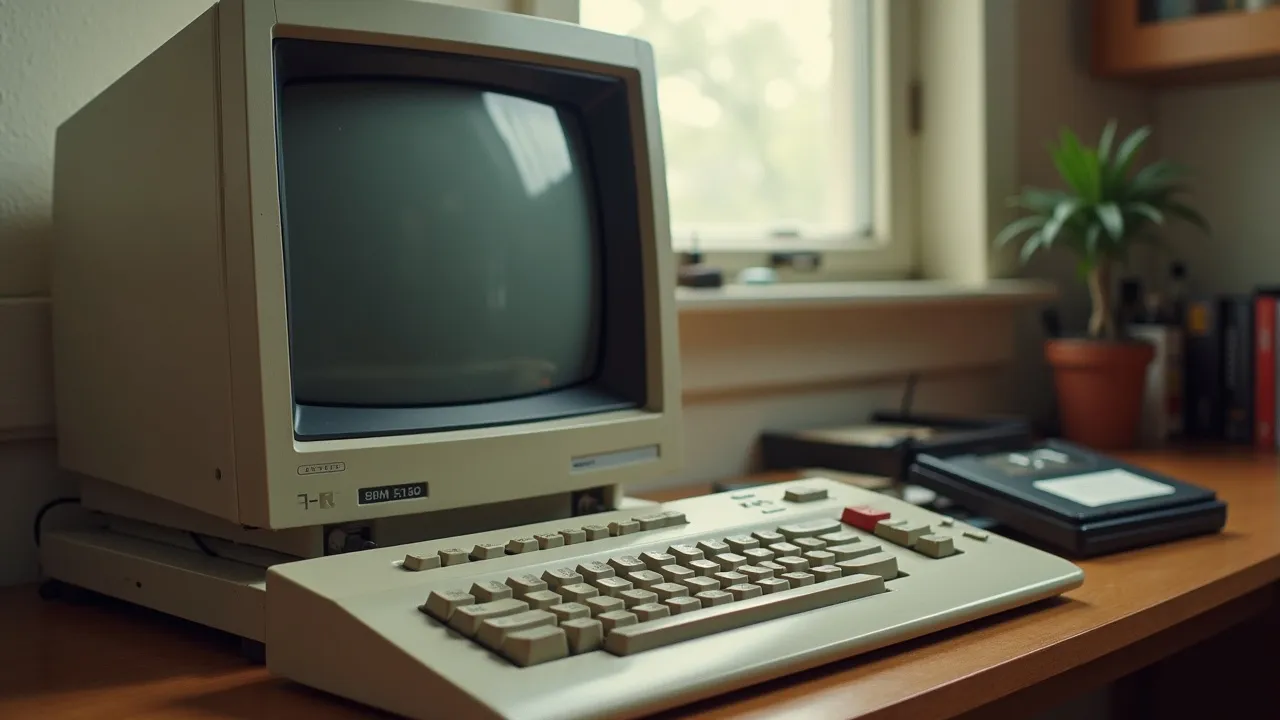
IBM PC Day commemorates the launch of the IBM 5150 on August 12, 1981, which democratized personal computing. Celebrate the legacy of the machine that transformed homes and businesses.
The Historical Origins & Evolutionary Journey
IBM PC Day honors the anniversary of the IBM Personal Computer 5150, introduced on August 12, 1981. This machine revolutionized computing by establishing the first widely accepted standard for personal computers. Its open architecture allowed third-party hardware and software, sparking a boom that led to the modern PC industry.
The Foundational Catalyst: The IBM 5150
In the late 1970s, IBM recognized the emerging market for small, affordable computers. Under a "skunkworks" project in Boca Raton, Florida, a team led by William C. Lowe and Don Estridge developed the 5150 in just 12 months. Key decisions included using off-the-shelf components: an Intel 8088 processor, Microsoft's MS-DOS operating system (PC DOS), and open architecture with expansion slots.
- Launch price: $1,565 (equivalent to ~$4,700 today) for a base system with 16 KB RAM, no disk drives.
- Innovations: Cassette tape interface (later discontinued), 5.25-inch floppy drives, and a color graphics adapter.
- Sales success: Over 1 million units sold by 1985, far exceeding IBM's projections.
The Official Adoption and Market Impact
The IBM PC quickly became the business standard. Its open architecture invited clone manufacturers like Compaq, Dell, and later countless others, creating the "IBM-compatible" PC ecosystem. This forced IBM to evolve with the PC/AT (1984) and later the PS/2 line (1987), which introduced VGA and the Model M keyboard, still beloved by enthusiasts.
Modern Global Legacy
Today, IBM PC Day is observed by retro computing enthusiasts, museums, and educational institutions. It serves as a reminder of how a single product catalyzed the digital age. Events include retro gaming exhibitions, programming workshops for vintage systems, and discussions on the history of open hardware.
How to Celebrate IBM PC Day
IBM PC Day offers many ways to appreciate the machine that started it all. Whether you're a collector, educator, or simply curious, these activities will deepen your understanding of computing history.
For Individuals and Enthusiasts
- Fire up an old PC: Boot a vintage IBM 5150 or compatible system. Try classic software like Lotus 1-2-3, WordPerfect, or early games like Microsoft Flight Simulator.
- Write a program in BASIC: The IBM PC came with BASIC in ROM. Write a simple program to experience computing from the ground up.
- Visit a museum: Many computer museums, like the Computer History Museum in Mountain View, CA, hold special events on Aug 12.
- Join online communities: Forums like VCFed, Reddit's r/retrobattlestations, or Discord servers host virtual celebrations, photo contests, and Q&A sessions.
For Schools and Educators
- History lesson: Teach students how the IBM PC changed business and society. Compare early PCs with modern devices.
- Hands-on workshop: If a vintage PC is available, let students interact with it. They can try typing commands, loading programs from floppy disks, or even programming in BASIC.
- Group discussion: Debate the pros and cons of open architecture vs. closed ecosystems (like Apple's at the time).
For Organizations and Tech Companies
- Host a retro tech day: Encourage employees to bring in vintage hardware or share stories of their first PC.
- Hackathon challenge: Build a simple application that can run on a DOS emulator (like DOSBox).
- Museum partnerships: Sponsor or co-host an exhibit about the IBM PC's impact on your industry.
The Global Impact of the IBM PC
The IBM PC's influence transcends national borders. Its open architecture allowed manufacturers worldwide to produce compatible systems, leading to a global PC boom.
Standardization and the Clone Industry
By adopting an open architecture, IBM inadvertently created the "IBM PC compatible" standard. Companies like Compaq (founded 1982) reverse-engineered the BIOS to create true clones. This competition drove down prices and expanded access to computing across Europe, Asia, and the Americas.
Software Ecosystem Explosion
The IBM PC's MS-DOS platform attracted thousands of applications, from business software (Lotus 1-2-3, dBase) to games (King's Quest, Doom). This ecosystem later transitioned to Microsoft Windows, cementing the PC's dominance.
Workplace Transformation
The IBM PC replaced typewriters, filing cabinets, and mainframe terminals. Spreadsheets, word processors, and databases revolutionized office productivity. By the late 1980s, PCs were essential tools in nearly every industry.
Developing World Adoption
Lower-cost clones made computing accessible in developing countries. Local manufacturers in Brazil, India, and China produced affordable PCs, fostering economic growth and digital literacy.
Core Technological Contributions
The IBM PC introduced several technologies that became industry standards. Understanding these contributions reveals why the 5150 was so influential.
Open Architecture and Expansion Slots
The IBM PC had five 8-bit ISA expansion slots, allowing users to add graphics cards, memory, hard drives, and more. This modularity encouraged third-party innovation, leading to add-ons like the IBM 5151 monitor, the PC Speaker, and serial/parallel ports.
The BIOS and Firmware
The Basic Input/Output System (BIOS) provided a standard interface between the operating system and hardware. While IBM copyrighted its BIOS, reverse-engineered implementations (like Phoenix Technologies' 1984 BIOS) enabled legal clones.
Keyboard and User Input
The original IBM PC keyboard had 83 keys with a distinctive layout (including a numeric keypad and function keys). Later models (like the Model M) introduced the buckling spring mechanism, still prized by typists today.
Graphics and Display
The IBM PC initially offered two graphics options: the MDA (Monochrome Display Adapter, 80x25 text) and the CGA (Color Graphics Adapter, 160x200 to 640x200). These evolved into EGA (1984) and VGA (1987), which became the baseline for PC graphics for over a decade.
Cultural and Societal Shift
The IBM PC did not just change business, it reshaped culture and daily life. It brought computing into homes, schools, and even hobbies.
The Home Computing Boom
Before the IBM PC, home computers were primarily for hobbyists (e.g., Apple II, Commodore 64). The IBM PC, despite its higher price, attracted early adopters who used it for word processing, home finance, and education. The success of programs like PrintShop and Family Tree Maker showed the PC's versatility.
The Rise of Personal Productivity
Spreadsheets (VisiCalc on Apple, then Lotus 1-2-3 on PC) turned the computer into a serious business tool. The term "killer app" originated with these programs. The IBM PC became the first computer many professionals used daily.
Gaming and Entertainment
The IBM PC platform became a major gaming platform. Titles like King's Quest (1984), Space Quest (1986), and SimCity (1989) pushed graphics and sound. The adoption of Sound Blaster cards and VGA graphics turned PCs into multimedia machines.
Cultural Icons
The IBM PC appeared in movies (e.g., 'WarGames', 1983), TV shows, and became a symbol of the tech-savvy 1980s. Its distinctive beige box and green-monochrome monitor are instantly recognizable to generations.
IBM PC Day Around the World
While August 12 is the universally recognized date for IBM PC Day, celebrations vary by region. In the United States, museums and retro computing clubs often host in-person gatherings. In Europe, the event is marked by online forums and livestreams, as vintage hardware is more scarce. In Japan, where IBM Japan had a strong presence, collectors organize meetups with rare Japanese-language IBM PCs (e.g., IBM 5550). Some countries celebrate "PC Day" more broadly on this same date, underscoring the global legacy of the IBM PC.
Historical Timeline
IBM begins the 'Project Chess' skunkworks in Boca Raton, Florida, to develop a personal computer within 12 months.
IBM announces the IBM Personal Computer 5150, powered by an Intel 8088 processor and running PC DOS (Microsoft MS-DOS). It features 16 KB RAM (expandable to 256 KB) and cassette/diskette storage.
IBM releases the PC XT (eXtended Technology) with a 10 MB hard drive and 128 KB RAM, setting a new standard for business PCs.
Compaq releases the first 100% IBM-compatible PC clone, the Compaq Portable, sparking the clone industry.
IBM launches the PC AT (Advanced Technology) with an Intel 80286 processor, 16-bit ISA slots, and 1.2 MB floppy drive.
IBM introduces the PS/2 line, featuring VGA graphics, 3.5-inch floppy drives, PS/2 mouse/keyboard connectors, and Micro Channel Architecture.
Microsoft releases Windows 3.0, which becomes the dominant GUI for IBM PCs and compatibles, further solidifying the platform.
IBM sells its PC division (ThinkPad and desktop lines) to Lenovo, marking the end of IBM's direct involvement in personal computers.
40th anniversary of the IBM PC. Multiple museums and online communities celebrate with special exhibits, livestreams, and reunions of original team members.