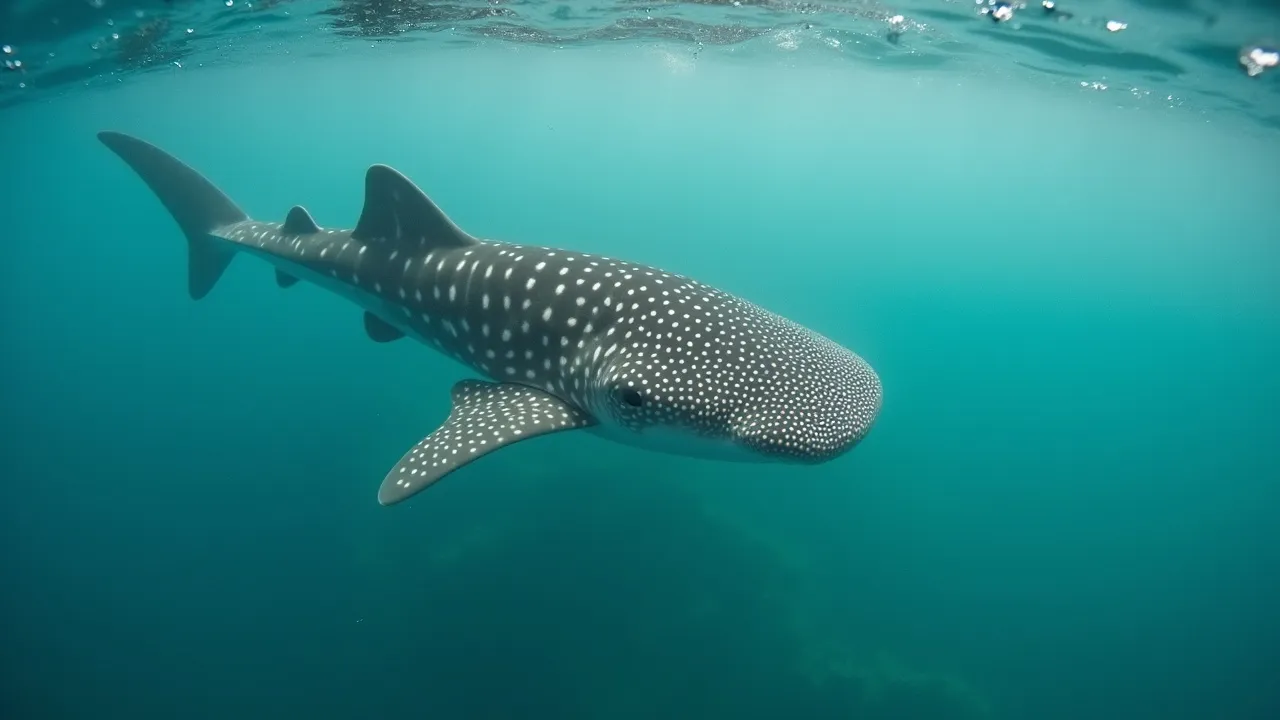
International Whale Shark Day, observed annually on August 30th, raises awareness for the preservation of the world's largest fish. This global event highlights conservation efforts, scientific research, and community action to protect whale sharks from extinction.
The Historical Origins & Evolutionary Journey
International Whale Shark Day was established in 2008 during the International Whale Shark Conference in Mexico, where scientists, conservationists, and policymakers gathered to address the declining population of whale sharks (Rhincodon typus). The day was created to spotlight the threats these gentle giants face and to coordinate global conservation actions.
The Foundational Catalyst
The early 2000s saw a surge in whale shark tourism, particularly in countries like the Maldives, Philippines, and Mexico. While tourism provided economic benefits, it also led to habitat disturbance and increased boat strikes — a major cause of injury and mortality. Scientists like Dr. Rachel Graham of the Marine Megafauna Foundation began documenting these impacts and called for an international day to unite conservation efforts.
The Legislative Adoption
In 2011, the Maldives became the first country to establish a formal national Whale Shark Day, leading to stricter boat regulations and marine protected zones. Other nations soon followed, and coordinated events like the 'Whale Shark Festival' in Mexico's Yucatán Peninsula became annual highlights.
Modern Global Legacy
Today, International Whale Shark Day is recognized by the United Nations Environment Programme and multiple NGOs. It has driven critical policy changes, such as the listing of whale sharks on Appendix I of the Convention on Migratory Species (CMS) and the establishment of the 'Whale Shark Research and Conservation Network' spanning over 30 countries.
How to Celebrate International Whale Shark Day
International Whale Shark Day offers diverse ways for individuals, communities, and organizations to contribute to whale shark conservation. Below are actionable strategies, categorized by audience and scale.
For Individuals at Home
- Educate yourself: Watch documentaries like 'The Whale Shark Scientist' or read scientific papers available online.
- Reduce plastic use: Thousands of whale sharks die annually from ingesting plastic debris. Commit to using reusable bags and bottles.
- Adopt a whale shark: Many organizations offer symbolic adoption programs to fund tracking and research.
For Schools and Classrooms
- Host a 'Whale Shark Quiz' using resources from the Marine Megafauna Foundation.
- Organize a beach cleanup to highlight how ocean pollution affects filter-feeding species.
- Create art projects using recycled materials to depict whale sharks and their habitats.
For Businesses and Corporations
- Sponsor a whale shark satellite tag through partnerships with research groups.
- Offer a 'Whale Shark Day' donation match to employees.
- Implement sustainable seafood policies in company cafeterias to reduce bycatch.
Global Celebration Traditions
In the Maldives, local resorts host 'Whale Shark Snorkeling Tours' with trained guides who follow strict viewing codes. In the Philippines, communities organize 'Whale Shark Festivals' with traditional dances and educational booths. In Mexico, researchers hold live-streamed dissections of dead whale sharks (from natural causes) to study anatomy and health threats.
Global Conservation Impact & Research Milestones
International Whale Shark Day has been instrumental in driving both public awareness and scientific breakthroughs. The day serves as a platform to release research findings, launch new conservation initiatives, and secure funding.
Population Monitoring
Through citizen science apps like 'Wildbook for Whale Sharks', thousands of tourists have submitted photos that help identify individual sharks by their unique spot patterns. This data revealed that global whale shark populations have declined by over 50% in the last 75 years, emphasizing the urgency of protection.
Migration Mapping
Satellite tagging studies — often promoted during the day — have shown that whale sharks travel thousands of miles across oceans, highlighting the need for international cooperation. Major migration corridors between Mexico, the Galapagos, and Madagascar have been identified, leading to the creation of transboundary marine reserves.
Bycatch Reduction
The day has pressured fishing industries to adopt 'whale shark safe' gear, such as TEDs (Turtle Excluder Devices) that also allow large fish to escape. In India, the celebration of International Whale Shark Day led to the 'Whale Shark Mitigation Project', which reduced bycatch by 70% in parts of Gujarat.
Economic & Ecotourism Dimensions
Whale shark tourism generates hundreds of millions of dollars annually, especially in developing nations. However, unregulated tourism can harm the very animals it aims to protect. International Whale Shark Day promotes responsible ecotourism standards.
Best Practices for Tour Operators
- Maintain a minimum distance of 3 meters from the shark.
- Limit group size to 10 people per shark.
- Prohibit touching or riding the sharks.
- Use propeller guards to prevent injuries.
Sustainable Revenue Models
In places like Oslob, Philippines, where whale sharks are fed by fishermen to attract tourism, ethical debates persist. The day encourages alternative models such as 'no-feeding' zones and community-managed sanctuaries, which ensure long-term profitability without ecological degradation.
Local Community Benefits
Income from whale shark tourism can replace destructive fishing practices. In Mozambique, former shark fishers now work as whale shark guides, earning more while protecting the species. International Whale Shark Day showcases such success stories to inspire replication.
Legal Protections & Policy Frameworks
Legal advocacy is a core theme of International Whale Shark Day. The day is used to announce new regulations and to push for stronger enforcement.
International Conventions
Whale sharks are listed on CITES Appendix II (restricting international trade) and CMS Appendix I (requiring range states to protect them). The day pressures nations that have not signed these treaties to adopt them.
National Laws
Countries like India have banned all fishing of whale sharks under the Wildlife Protection Act, with hefty fines and imprisonment. In Taiwan, the day led to a ban on intentional hunting, though accidental catches remain a problem. The day's campaigns often target 'plastic loopholes' in marine protection laws.
Enforcement Challenges
Despite laws, illegal hunting for their fins (shark fin soup) persists in some regions. International Whale Shark Day mobilizes NGOs to conduct 'secret shopper' operations in fish markets and restaurants, identifying violators and shaming them publicly.
Threats, Challenges & The Road Ahead
International Whale Shark Day is not just a celebration but a call to action against ongoing threats. The day's activities highlight the most pressing dangers.
Climate Change
Rising sea temperatures affect the distribution of plankton, the whale shark's primary food source. Scientists warn that shifting food availability could force whale sharks into suboptimal habitats or reduce feeding opportunities. The day promotes research on adaptive management.
Ship Strikes
Whale sharks spend much time near the surface, making them vulnerable to collisions with large vessels. In 2020, satellite data showed that 15% of tagged whale sharks had scars from boat propellers. The day advocates for 'slow down' zones in known aggregation areas.
Ocean Acidification
Acidification reduces the abundance of the whale shark's prey (plankton and small fish). International Whale Shark Day often partners with broader climate campaigns to reduce emissions.
Future Strategies
The day pushes for a Global Whale Shark Action Plan under the UN, aiming to standardize monitoring and protection across all 100+ range countries. It also calls for increased funding for local enforcement, especially in developing nations where most whale sharks reside.
Historical Timeline
International Whale Shark Day is established at the International Whale Shark Conference in Mexico, co-organized by the Marine Megafauna Foundation and the Whale Shark Research Network.
Maldives becomes the first country to officially recognize International Whale Shark Day, implementing national boat speed limits near whale shark hotspots.
The whale shark (<em>Rhincodon typus</em>) is listed on Appendix I of the Convention on Migratory Species (CMS), strengthening legal protections across international waters.
A landmark satellite tagging study reveals trans-Pacific migration routes, linking whale sharks from Mexico to the Galapagos and beyond.
India bans all whale shark fishing and trade under the Wildlife Protection Act, following a decade of advocacy tied to International Whale Shark Day.
The 'Global Whale Shark Sightings Network' app reaches 50,000 user-submitted photos, enabling scientists to identify over 12,000 individual sharks.
Following International Whale Shark Day campaigns, the Philippines declares several new Marine Protected Areas (MPAs) covering critical feeding grounds.
Researchers announce that whale shark populations have declined by 71% since 1975, prompting renewed calls for a UN-led global action plan.