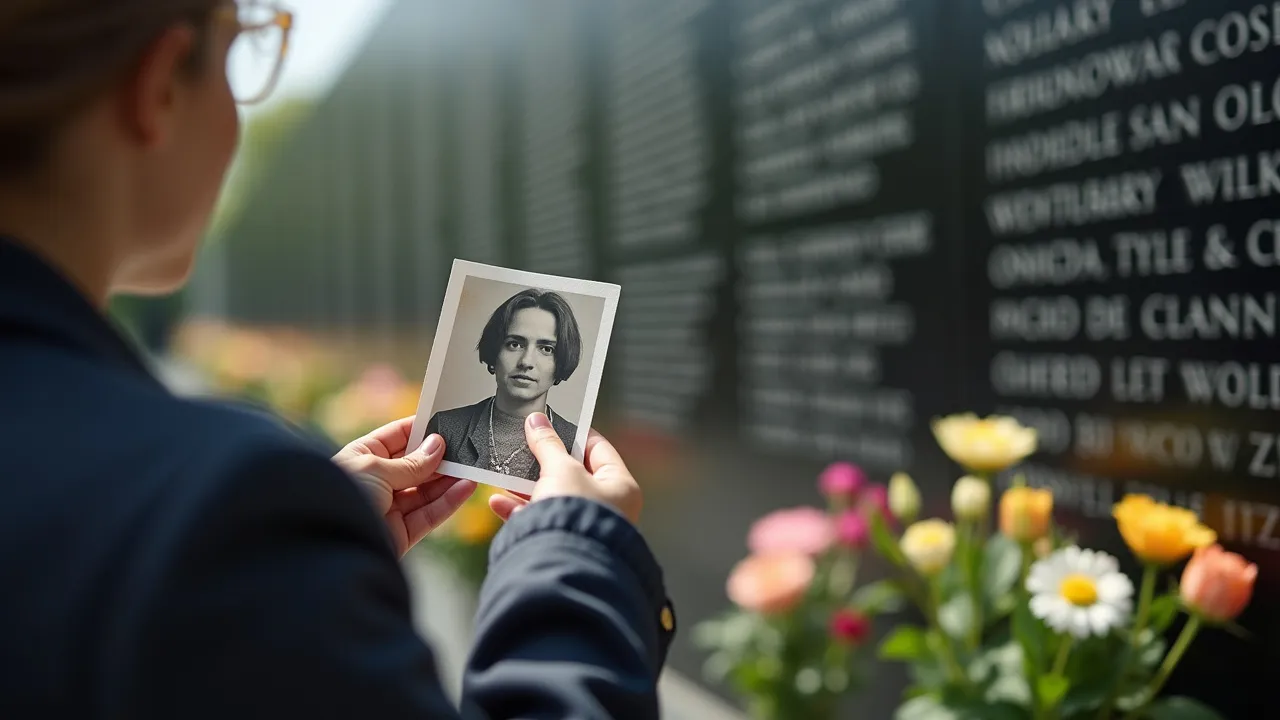
Observed on August 30th, this United Nations day honors the millions of victims of enforced disappearances worldwide and calls for justice, truth, and prevention of this crime against humanity.
The Historical Origins & Evolutionary Journey
The International Day of the Victims of Enforced Disappearances traces its roots to the brutal legacy of state-sponsored kidnappings and secret detentions that plagued the 20th century, particularly in Latin America. The term "enforced disappearance" was first coined by human rights activists to describe the systematic abduction and concealment of individuals by government forces or armed groups. This day stands as a global testament to the fight against impunity and the right to truth.
The Foundational Catalyst
The practice of enforced disappearances gained notoriety during the Dirty War in Argentina (1976–1983), where an estimated 30,000 people were "disappeared" by the military junta. Similar patterns emerged in Chile under Pinochet, Guatemala's civil war, and El Salvador. Families of the disappeared organized into grassroots movements, such as the Mothers of the Plaza de Mayo, demanding answers and accountability. These groups pressured the United Nations to address the crime as a distinct human rights violation.
The Legislative/Official Adoption
In 1992, the UN General Assembly adopted the Declaration on the Protection of All Persons from Enforced Disappearance, a non-binding set of principles. However, it lacked enforcement mechanisms. A turning point came in 2006 when the UN adopted the International Convention for the Protection of All Persons from Enforced Disappearance, a legally binding treaty that entered into force in 2010. Recognizing the need for public awareness, the UN General Assembly on 21 December 2010 passed Resolution 65/209, designating August 30th as the International Day of the Victims of Enforced Disappearances. The date was chosen to commemorate the anniversary of the Latin American Federation of Associations for Relatives of the Detained-Disappeared (FEDEFAM) founding or as a symbolic marker—though the official resolution does not specify a single event, it aligns with Latin American advocacy timelines.
Modern Global Legacy
Since its first observance in 2011, the day has grown into a global movement. The United Nations Working Group on Enforced or Involuntary Disappearances (WGEID) now considers over 50,000 unresolved cases worldwide. Recent crises in Syria, Myanmar, Mexico, and Ukraine have amplified the urgency. The day serves as a call to action for states to ratify the Convention, support families, and hold perpetrators accountable.
How to Celebrate International Day of the Victims of Enforced Disappearances
Participation in this solemn day can take many forms, from quiet reflection to active advocacy. Below are actionable steps for individuals, schools, and organizations to honor victims and promote justice.
For Individuals and Families
- Light a candle at 8:30 p.m. local time in memory of the disappeared.
- Share social media posts using the hashtag #EndEnforcedDisappearances with facts and stories.
- Attend local vigils or online events organized by human rights groups.
- Write to elected officials urging ratification of the Convention if your country has not done so.
For Schools and Educators
- Organize a classroom discussion on human rights, using case studies from UN reports.
- Screen documentary films such as The Disappeared: Latin America's Dirty War followed by a Q&A.
- Invite a survivor or family member to speak (virtually or in person).
- Assign students to research a specific country's history with enforced disappearances.
For Organizations and Companies
- Issue a public statement supporting the UN Convention and condemning enforced disappearances.
- Host a lunch-and-learn for employees about the issue, with resources from Amnesty International.
- Donate to organizations like the International Committee of the Red Cross (ICRC) that assist families.
- Publish a blog post or internal newsletter highlighting the day and how colleagues can get involved.
Regional Observances
While August 30th is the universal date, countries with large numbers of disappeared often hold larger events. In Mexico, families hold mass protests and caravans. In Colombia, art exhibits and truth commissions are common. In Argentina, the Mothers of Plaza de Mayo lead a march to the presidential palace. In Sri Lanka, interfaith prayers are held. Adapt your celebration to local resources and cultural context.
Global Impact and Current Crisis Zones
Enforced disappearances are not a historical relic; they remain a pressing global crisis. The UN Working Group on Enforced or Involuntary Disappearances (WGEID) currently tracks cases from over 100 countries. Below are key regions of concern.
Syria
Since 2011, over 100,000 people have been forcibly disappeared by the Syrian regime and other armed groups. Mass graves and secret detention centers have been documented by human rights organizations. The UN has called the scale "unprecedented since the Holocaust."
Mexico
With more than 100,000 disappeared since 2006 (official count as of 2023), Mexico faces one of the world's largest disappearance crises. Drug cartels and corrupt security forces are primary perpetrators. Families have formed independent search groups, often risking their lives to find clandestine graves.
Myanmar
The military crackdown on Rohingya and other minorities has led to thousands of enforced disappearances since 2017. The UN has accused the military of crimes against humanity, including disappearances as a tactic of repression.
Ukraine
Following the 2022 Russian invasion, reports of enforced disappearances have surged. Ukrainian authorities and the UN have documented cases of civilians and prisoners of war being abducted by Russian forces.
Legal Framework and International Convention
The International Convention for the Protection of All Persons from Enforced Disappearance (ICPPED) is the cornerstone of international law on this issue. Adopted by the UN General Assembly in 2006 and entered into force in 2010, the Convention defines enforced disappearance as a crime against humanity when widespread or systematic.
Key Provisions
- Right to truth: Article 24 guarantees victims' families the right to know the fate of their loved ones.
- Prohibition of secret detention: Article 17 bans incommunicado detention and mandates access to legal counsel.
- Non-refoulement: Article 16 prevents returning a person to a country where they face risk of disappearance.
- Universal jurisdiction: Article 9 allows any state party to prosecute perpetrators, even if the crime occurred elsewhere.
As of 2024, over 70 countries have ratified the Convention. However, major nations like the United States, India, and China have not, limiting its global reach.
Role of Civil Society and Families
Families of the disappeared have been the driving force behind awareness, advocacy, and legal change. Their resilience has shaped the observance itself.
Grassroots Movements
- Mothers of Plaza de Mayo (Argentina): The most iconic group, founded in 1977, they march every Thursday to demand answers.
- FEDEFAM (Latin America): The federation that originally campaigned for a UN day, representing 16 countries.
- Families of the Disappeared (Syria): Despite extreme risk, they collect testimonies and search for mass graves.
International NGOs
Organizations like Amnesty International, Human Rights Watch, and the International Committee of the Red Cross provide legal aid, document abuses, and lobby governments. The UN Working Group on Enforced or Involuntary Disappearances (WGEID) handles urgent cases and issues reports. Civil society groups use the August 30th day to release shadow reports and mobilize media attention.
Commemoration Events and Symbolism
August 30th is marked by a range of symbolic and educational events worldwide. Common elements include:
- Vigils with empty chairs: Each chair bearing a name or photograph of a disappeared person.
- White flowers and candles: Used to symbolize hope and remembrance.
- Silent marches: Participants wear white or black, often carrying placards with the words "Where are they?" in local languages.
- Exhibitions of art and photography: Displaying faces and stories of the disappeared.
- Concerts or cultural events: Featuring music by artists who have written songs about the issue, such as Mercedes Sosa or Victor Jara.
Many UN offices hold formal ceremonies with speeches from survivors, diplomats, and human rights experts. The day is also used to launch new campaigns, such as the UN's #MissingAndUnaccountedFor digital initiative.
Historical Timeline
Mothers of the Plaza de Mayo begin their weekly protests in Buenos Aires, Argentina, demanding information about their disappeared children.
Foundation of the Latin American Federation of Associations for Relatives of the Detained-Disappeared (FEDEFAM), which later campaigned for an international day.
UN General Assembly adopts Declaration on the Protection of All Persons from Enforced Disappearance, a non-binding set of principles.
UN adopts the International Convention for the Protection of All Persons from Enforced Disappearance, a legally binding treaty.
Convention enters into force on December 23. UN General Assembly passes Resolution 65/209 designating August 30th as the International Day of the Victims of Enforced Disappearances.
First official observance of the day on August 30th, with events at UN headquarters and globally.
Ayotzinapa massacre in Mexico: 43 students forcibly disappeared, sparking international outrage and renewed focus on the issue.
During the Russian invasion of Ukraine, UN documents thousands of enforced disappearances, prompting new urgency for the day's observance.