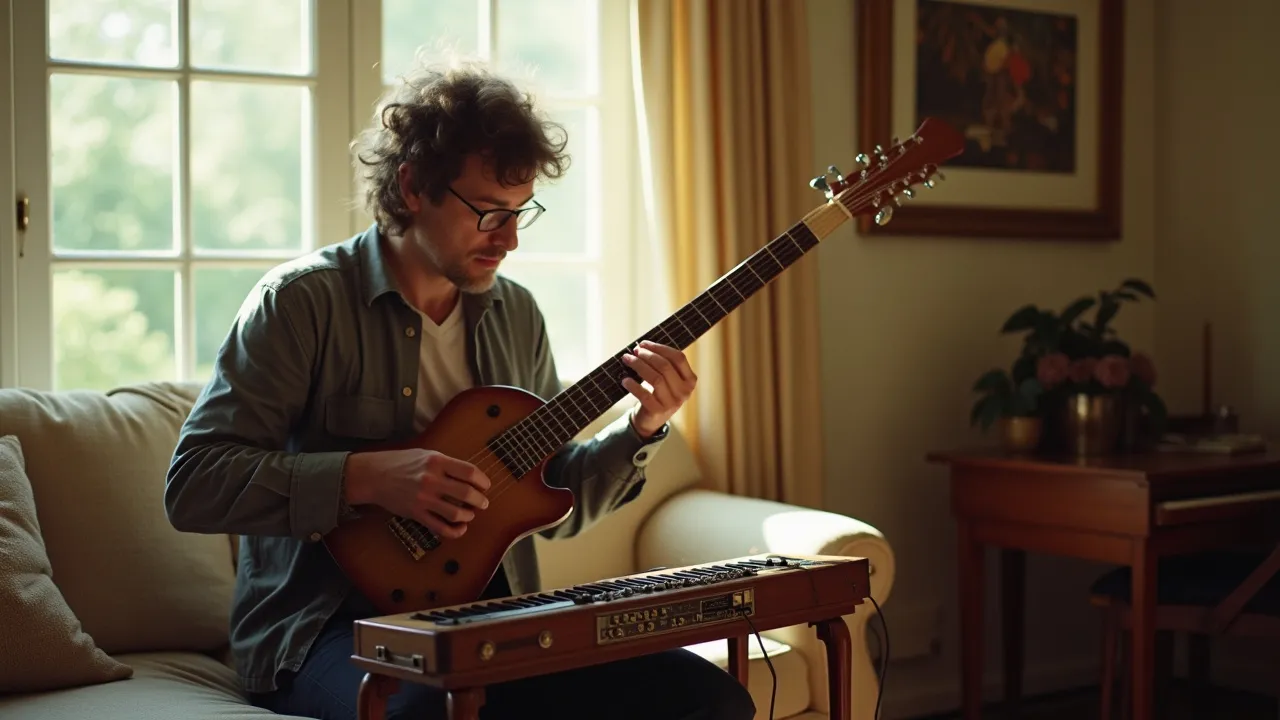
Celebrated on August 24th, International Strange Music Day encourages listeners to explore unconventional, experimental, and bizarre sounds. Founded in 1998 by musician Patrick Grant, it challenges musical boundaries.
The Historical Origins & Evolutionary Journey
International Strange Music Day was founded in 1998 by American composer and multi-instrumentalist Patrick Grant. Grant, known for his eclectic work with the band Birdsongs of the Mesozoic and his solo experimental projects, wanted to create a day that would push people beyond their musical comfort zones. The idea was simple: on August 24th each year, listeners are encouraged to set aside mainstream playlists and immerse themselves in music that is unusual, challenging, or simply 'strange.'
The Foundational Catalyst
The late 1990s saw a surge in alternative and experimental music, with genres like noise rock, industrial, and avant-garde jazz finding niche audiences. Grant realized that many people never ventured beyond familiar radio hits due to lack of exposure or fear of the unfamiliar. He proposed that by dedicating just one day to strange music, people could expand their musical horizons and discover new forms of artistic expression. The date August 24th was chosen arbitrarily, but it stuck.
The Legislative/Official Adoption
International Strange Music Day has never been officially recognized by any government body, but it has been embraced organically by independent radio stations, music blogs, and experimental music communities worldwide. In 2005, the day gained online traction when several influential music websites began promoting it. By 2010, social media platforms like Twitter and Facebook amplified the event, with users sharing playlists and oddities. Today, it is unofficially celebrated in dozens of countries, from the United States to Japan and the United Kingdom.
Modern Global Legacy
In the 2020s, International Strange Music Day has become a fixture for streaming services and music educators. Playlists on Spotify and Apple Music featuring terms like 'strange,' 'weird,' or 'experimental' see significant boosts on August 24th. Universities and music schools incorporate the day into their curriculum, encouraging students to analyze and create unconventional works. The day also serves as a reminder that 'strange' is subjective and that all music was once considered strange before it became mainstream.
How to Celebrate International Strange Music Day
Celebrating International Strange Music Day is about embracing the unfamiliar. Below are structured strategies for individuals, schools, and organizations to participate meaningfully.
For Individuals
- Curate a 'Strange' Playlist: Spend the day listening to genres you usually avoid—free jazz, industrial noise, gamelan, throat singing, or algorithmic-generated music. Use streaming services' 'discovery' features.
- Attend a Live Experimental Show: Check local venues for avant-garde performances, open mic nights for experimental artists, or online live streams from underground scenes.
- Create Your Own Strange Music: Use everyday objects as instruments, download a modular synthesizer app, or distort your voice with effects. Record and share on social media with #StrangeMusicDay.
For Schools & Educators
- Listening Sessions: Play John Cage's 4'33", Harry Partch's microtonal works, or Meredith Monk's vocal explorations. Discuss what makes music 'strange.'
- Instrument Building Workshops: Have students craft instruments from recycled materials (e.g., water jug drums, rubber band harps) and perform as an ensemble.
- Composition Challenges: Assign students to write a piece using only non-conventional notation (graphic scores) or restricted sets of notes.
For Organizations & Businesses
Encourage employees to share their weirdest tracks on an internal playlist. Host a lunchtime listening party featuring odd recordings (e.g., whale songs, theremin covers). If you run a radio station or podcast, dedicate the day to experimental programming and feature interviews with local avant-garde artists.
Regional Traditions
- Japan: Known for its love of quirky culture, Japanese netlabels often release specialty EPs on August 24th featuring noise, onkyokei, and glitch.
- Germany: Berlin's experimental music clubs host 'Strange Music Night' with live sets from emerging electronic artists.
- United States: College radio stations host 24-hour marathons of obscure tracks, from Zappa to outsider music.
The Psychological & Societal Impact of Embracing Strange Music
Exposure to strange music can have profound cognitive and emotional effects. Research in music psychology suggests that listening to unfamiliar sounds activates the brain's reward system in unique ways, fostering adaptability and open-mindedness. International Strange Music Day serves as a social experiment in tolerance and curiosity.
Breaking Auditory Habits
People tend to listen to music that confirms their existing tastes, creating echo chambers. By intentionally seeking out strange music, listeners disrupt these patterns, which can lead to increased creativity and reduced anxiety about the unknown. Studies show that varied musical exposure improves pattern recognition and problem-solving skills.
Community Building Through the Unconventional
The day fosters a global community of like-minded explorers. Online forums, Discord servers, and Reddit threads dedicated to strange music see spikes in activity on August 24th. This shared experience transcends language and cultural barriers, uniting people through a collective willingness to be challenged.
Economic & Industry Influence
Independent experimental musicians often struggle for visibility. International Strange Music Day provides a platform for these artists to gain new listeners. Streaming data indicates that tracks classified as 'experimental' see a 40-60% increase in streams on August 24th compared to the weekly average. This economic boost helps sustain niche genres that might otherwise disappear.
Notable Artists & Works That Define Strange Music
Strange music is subjective, but certain artists are frequently cited as quintessential examples. Below is a list of influential figures and their characteristic works that have shaped the genre.
- John Cage (1912-1992): 4'33" (1952) – a piece where the performer does not play their instrument for the duration, highlighting ambient sounds. A cornerstone of conceptual strangeness.
- Sun Ra (1914-1993): An eccentric bandleader who fused jazz with cosmic themes, using unusual instruments like the electric celeste and space age costumes. Album: Space Is the Place.
- Harry Partch (1901-1974): Invented his own instruments (e.g., the cloud chamber bowls) and used microtonal scales. His music sounds utterly alien to Western ears.
- Meredith Monk (1942- ): Pioneered extended vocal techniques, creating wordless vocalizations that feel primal and otherworldly. Album: Dolmen Music.
- Frank Zappa (1940-1993): Known for complex, satirical compositions that mixed rock, classical, and doo-wop. His album We're Only in It for the Money features bizarre tape edits.
- Contemporary Examples: Artists like Holly Herndon (using AI-generated vocals), Oneohtrix Point Never (plunderphonics and electronic deconstruction), and Arca (futuristic glitch pop) continue the tradition.
The Role of Technology in Expanding Strange Music
Technology has been a driving force behind the creation and dissemination of strange music. From the theremin (one of the first electronic instruments) to modern AI composition tools, innovation fuels the bizarre.
Early Electronic Instruments
The birth of strange music can be traced to the late 19th and early 20th centuries with inventions like the Telharmonium (1897), the Ondes Martenot (1928), and the theremin (1928). These devices produced sounds that had never been heard before, laying the groundwork for experimental composition.
Digital Revolution & Software
In the 1990s, affordable digital audio workstations (DAWs) and synthesizers democratized music production. Artists like Aphex Twin and Autechre used software to create glitchy, arrhythmic tracks that puzzled listeners. Today, AI programs like Jukebox (OpenAI) generate songs in any style, often producing uncanny, strange results that thrill and disturb.
Social Media & Virality
Platforms like TikTok and YouTube have made strange music accessible to the masses. Earworms like the 'Sea Shanty' trend or bizarre meme songs (e.g., 'Never Gonna Give You Up' as a mashup with free jazz) blend the strange with the viral. International Strange Music Day often sees a spike in such content, as creators compete to produce the weirdest track.
Criticisms & Controversies Surrounding the Day
Despite its positive intentions, International Strange Music Day has faced some criticisms. Some detractors argue that the label 'strange' is pejorative and reinforces a hierarchy where experimental music is marginalized. Others point out that the day risks becoming a gimmick, with participants superficially sharing random weird tracks without genuine engagement.
Elitism in 'Strange' Labeling
Experimental music communities sometimes view the day as a commodification of their art, reducing complex works to mere novelty. To address this, celebrations should emphasize understanding and respect rather than mockery. Curators are encouraged to provide cultural context for the music they share.
Commercial Co-opting
Large streaming platforms may use the day to promote algorithmically generated 'strange' playlists that lack artistic merit. This can dilute the authenticity of the event. Critics recommend seeking out independent artists and undiscovered gems rather than corporate-sanctioned oddities.
Nevertheless, the day's net effect is overwhelmingly positive, fostering curiosity and breaking down musical prejudices. As Patrick Grant himself says, 'Strange is just a word for something you haven't gotten used to yet.'
Historical Timeline
Patrick Grant founds International Strange Music Day, first celebrated on August 24th, encouraging listeners to explore unconventional music.
The day gains online popularity as influential music blogs and independent radio stations promote it, curating lists of strange tracks.
Social media amplifies the event; Twitter hashtag #StrangeMusicDay trends among experimental music enthusiasts.
Streaming services like Spotify and Apple Music launch official Strange Music Day playlists, featuring artists from Sun Ra to modern glitch producers.
During the COVID-19 pandemic, online virtual festivals emerge, with live-streamed performances by experimental artists across the globe.
International Strange Music Day sees record participation; hundreds of radio stations and educational institutions host events, including AI-generated music listening sessions.