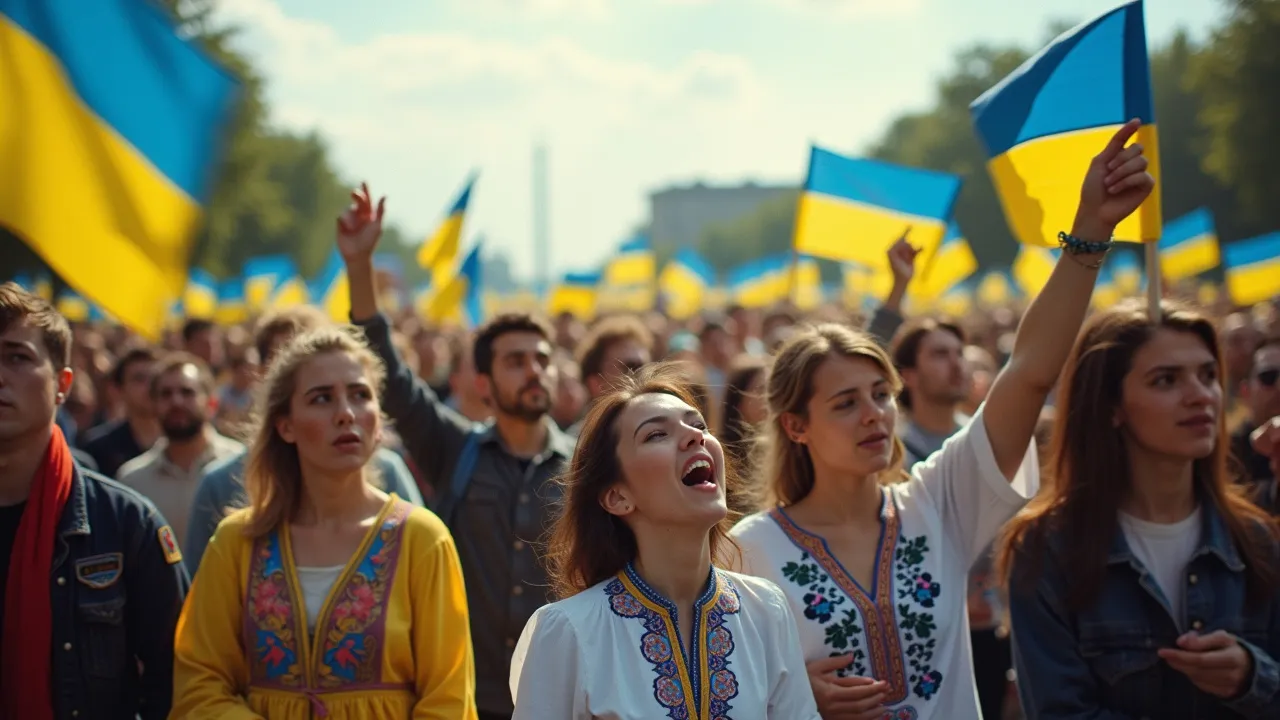
Independence Day of Ukraine, celebrated on August 24th, marks the country's declaration of independence from the Soviet Union in 1991. It is a national holiday filled with patriotic ceremonies, concerts, and military parades.
Historical Origins & Evolutionary Journey
Ukraine's Independence Day, celebrated on August 24th, commemorates the adoption of the Act of Declaration of Independence of Ukraine by the Verkhovna Rada in 1991. This pivotal event marked the end of centuries of foreign domination and the birth of a sovereign Ukrainian state.
The Road to Independence
Ukraine's path to independence was long and arduous. After the collapse of the Russian Empire in 1917, Ukraine briefly declared independence as the Ukrainian People's Republic in 1918, but it was quickly suppressed by Soviet forces. During the 20th century, Ukraine suffered under Stalin's Holodomor (1932-1933), Nazi occupation in World War II, and decades of Soviet rule. The rise of the dissident movement and the policies of glasnost and perestroika under Mikhail Gorbachev in the 1980s created opportunities for national revival. On July 16, 1990, the Verkhovna Rada adopted the Declaration of State Sovereignty of Ukraine, asserting the precedence of Ukrainian laws over Soviet ones.
The Declaration of Independence
Following the failed August 1991 coup in Moscow, the Ukrainian parliament convened in an extraordinary session on August 24, 1991. With a near-unanimous vote (346 in favor, 1 abstention), the Verkhovna Rada adopted the Act of Declaration of Independence. The act declared Ukraine an independent, democratic state. A national referendum was held on December 1, 1991, where over 90% of voters approved the act, and Leonid Kravchuk was elected as the first president.
Key Figures
- Leonid Kravchuk - Chairman of the Verkhovna Rada and first President
- Vyacheslav Chornovil - Dissident and leader of the Ukrainian independence movement
- Ivan Drach - Poet and head of the Ukrainian Popular Movement (Rukh)
Modern Global Legacy
Since 1991, Independence Day has evolved into a celebration of national identity, resilience, and democratic aspirations. The 2014 Revolution of Dignity (Euromaidan) and the ongoing war with Russia have deepened the holiday's significance, symbolizing Ukraine's struggle for sovereignty and territorial integrity. Today, August 24th is a day of military parades, patriotic concerts, and cultural events showcasing Ukrainian traditions.
How to Celebrate Independence Day (Ukraine)
Celebrating Ukraine's Independence Day on August 24th involves a mix of official ceremonies, public festivities, and personal traditions. Here is a comprehensive guide to honoring the day with authenticity and respect.
Best Practices for Individuals
- Attend a local parade or concert: Many cities host military parades, especially in Kyiv, where the main parade takes place on Khreshchatyk Street.
- Wear traditional attire: Don a vyshyvanka (embroidered shirt) to show national pride.
- Participate in a flag-raising ceremony: Join public events at town squares or government buildings.
- Engage in cultural activities: Visit museums, art exhibitions, or folk festivals that highlight Ukrainian heritage.
School and Educational Celebrations
- Organize lessons on Ukrainian history, focusing on the declaration of independence.
- Host a vyshyvanka day where students and teachers wear embroidered clothing.
- Create art projects featuring the Ukrainian flag (blue and yellow) and the trident (tryzub).
Corporate and Organizational Rituals
- Decorate office spaces with national symbols and host a patriotic breakfast.
- Encourage employees to volunteer in community clean-up or charity events themed around national unity.
- Display the national anthem at events and encourage attendees to sing along.
Global Celebrations
Ukrainian diasporas worldwide hold festivities. In the United States, cities like New York, Chicago, and Washington D.C. host parades and festivals. Canada's large Ukrainian community, particularly in Edmonton and Toronto, organizes cultural fairs. In the United Kingdom, Ukrainians gather at Trafalgar Square or hold events in community centers.
Global Impact and Diaspora Celebrations
Ukraine's Independence Day resonates far beyond its borders, thanks to a vibrant diaspora of over 5 million Ukrainians worldwide. The holiday has become a platform for raising awareness about Ukraine's culture, history, and ongoing struggles.
Major Diaspora Hubs
- Canada: Home to the largest Ukrainian diaspora per capita (over 1.3 million). Events in Toronto, Edmonton, and Winnipeg feature folk dancing, concerts, and religious services.
- United States: Ukrainian communities in New York, Chicago, Detroit, and Los Angeles organize parades, picnics, and church liturgies.
- Brazil and Argentina: Smaller but active communities celebrate with traditional food and music.
Symbolic Support
Since Russia's full-scale invasion in 2022, Independence Day has become a rallying point for global solidarity. Many cities around the world illuminate landmarks in blue and yellow. The Ukrainian flag is flown at government buildings in dozens of countries.
Notable International Events
- The United Nations often marks the day through official statements.
- In 2023, the European Parliament held a special session to honor Ukraine's independence.
Significance of National Symbols
Ukraine's Independence Day is a time to reflect on the meaning of national symbols that embody the country's sovereignty and unity.
The Ukrainian Flag
The blue and yellow flag represents the sky above the golden wheat fields. Officially adopted in 1992, its colors have deep historical roots tracing back to the medieval Kingdom of Galicia-Volhynia. On Independence Day, the flag is displayed prominently everywhere from government buildings to private homes.
The Trident (Tryzub)
The trident is the national emblem, originating from the symbol of Volodymyr the Great, the ruler of Kyivan Rus. It appears on the country's coat of arms, passports, and currency. During Independence Day celebrations, the trident is featured in artistic performances and official insignia.
The National Anthem
"Shche ne vmerla Ukrainy i slava, i volia" (Ukraine's glory and freedom have not yet perished) is sung at official ceremonies. The anthem's lyrics emphasize resilience and determination, reflecting Ukraine's long struggle for independence.
Economic and Political Impact of the Holiday
Independence Day is not only a cultural celebration but also a significant economic and political event for Ukraine.
Economic Implications
- Tourism boost: Domestic and international tourism surges around August 24th, especially in Kyiv, Lviv, and Odesa.
- Retail and hospitality: Stores run patriotic-themed sales, restaurants offer traditional Ukrainian cuisine, and hotels see high occupancy.
- Public spending: The government allocates funds for military parades, fireworks, and cultural events, stimulating local economies.
Political Significance
The holiday serves as a platform for political statements. Presidential addresses often emphasize unity, sovereignty, and the need for defense against Russian aggression. In wartime, August 24th becomes a day to honor soldiers and rally international support. Since 2014, the parade has showcased military equipment and veterans, reinforcing the message of resilience.
Cultural Traditions and Modern Expressions
From traditional folk songs to contemporary art, Independence Day showcases Ukraine's rich cultural tapestry.
Traditional Celebrations
- Folk Festivals: Villages and towns host fairs with traditional crafts, pottery, and weaving demonstrations.
- Cossack Games: Demonstrations of historical martial arts and horseback riding are common.
- Religious Services: Many Ukrainians attend church services, including prayers for the country and its defenders.
Modern Innovations
- Flash Mobs and Art Installations: Young people organize patriotic flash mobs and create art installations using national colors.
- Social Media Campaigns: Hashtags like #UkraineIndependenceDay and #DenNezalezhnosti trend globally, with users sharing photos in vyshyvankas and flag selfies.
- Fireworks and Laser Shows: Major cities put on spectacular nighttime displays set to Ukrainian music.
Food Traditions
Traditional dishes like borscht, varenyky (dumplings), and salo (cured fat) are enjoyed. Many families prepare a festive meal, and food festivals offer regional specialties.
Historical Timeline
The Verkhovna Rada adopts the Act of Declaration of Independence of Ukraine, establishing Ukraine as an independent state separate from the USSR.
A national referendum shows over 90% support for independence; Leonid Kravchuk is elected President.
First official celebration of Independence Day, including a military parade in Kyiv.
Adoption of the Constitution of Ukraine, solidifying the legal framework of the independent state.
The Orange Revolution: mass protests against election fraud, reinforcing democratic aspirations and national unity.
Euromaidan protests lead to the Revolution of Dignity, ousting President Yanukovych and strengthening pro-European identity.
Russia annexes Crimea; war in Donbas begins. Independence Day takes on added significance as a symbol of resistance.
Russia launches full-scale invasion. Independence Day 2022 is marked by defiant celebrations amid war, with global solidarity events.