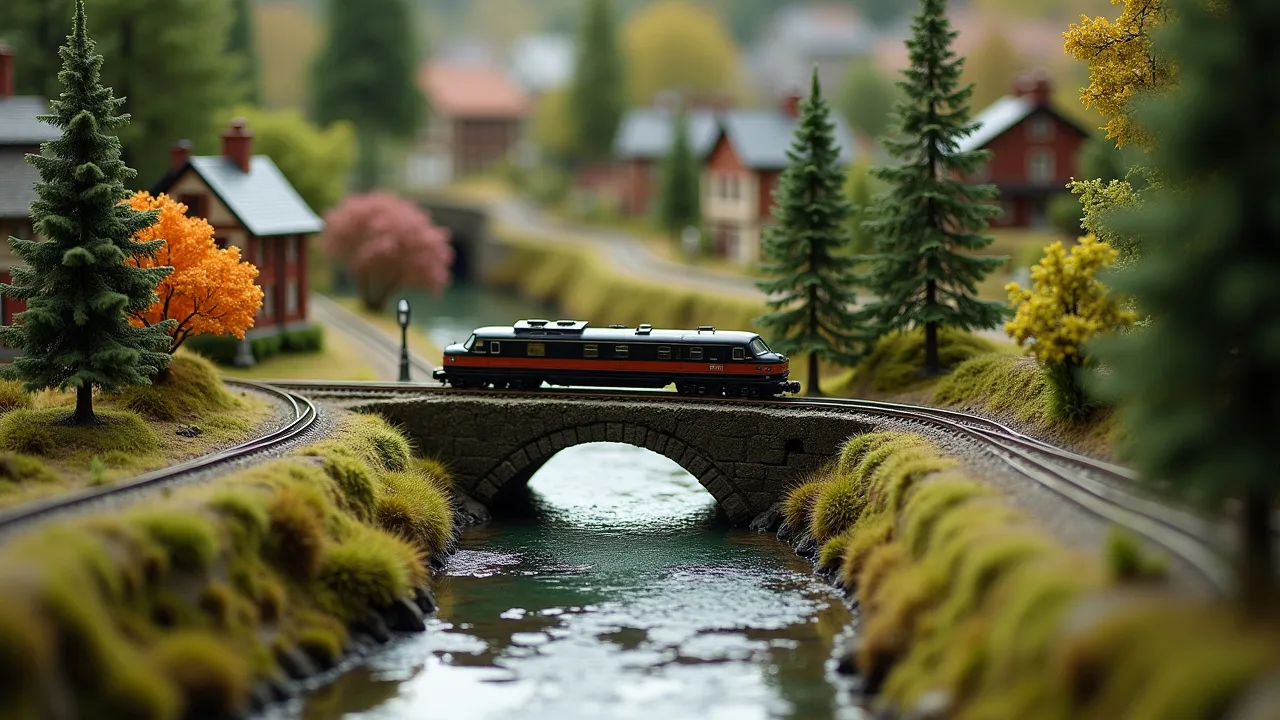
International Model Railway Day, observed on December 2nd, celebrates the art and craft of model railroading. It honors the hobby's history, skills, and global community of enthusiasts who build intricate miniature worlds.
The Historical Origins & Evolutionary Journey of Model Railway Celebrations
International Model Railway Day is a global observance that pays homage to the intricate and enduring hobby of model railroading. Established in 2015 by the World Model Railway Association (WMRA), the day was chosen for December 2nd to coincide with the anniversary of the first commercial model railway exhibition in the early 20th century. The hobby itself traces its roots back to the 1830s, when early tinplate trains were produced as toys for wealthy families. However, the modern era of serious scale modeling began in the late 19th century with the advent of precise manufacturing and standardization.
The Foundational Catalyst: Early Toy Trains to Serious Modeling
The first documented model train sets were simple clockwork toys from Germany and the United Kingdom. By the 1890s, companies like Märklin and Hornby began producing live steam models and electric trains, which captivated audiences. The Bassett-Lowke company in England specialized in high-quality scale models for wealthy collectors. The hobby gained popularity after World War II as mass production made model trains affordable. The NMRA (National Model Railroad Association) was formed in 1935 to promote standards and fellowship.
The Legislative/Official Adoption: Institutionalizing the Passion
The push for a dedicated day came from the WMRA, which saw the need for a unified date to celebrate the global community. December 2nd was chosen because it commemorates the first demonstration of a live steam model railway at the Royal Institution in London in 1917. The day was officially adopted in 2015 through a coordinated campaign across clubs, manufacturers, and online forums. Recognized by hobby organizations worldwide, it has become a rallying point for events such as open houses, exhibitions, and charity fundraisers.
Modern Global Legacy: A Vibrant Community
Today, International Model Railway Day is celebrated with thousands of events across more than 30 countries. Social media groups, especially on Facebook and Instagram, host virtual tours and competitions. The day also highlights the educational value of model railroading in STEM (science, technology, engineering, and mathematics), as well as its role in preserving railway heritage. Notably, the day is a key driver for recruiting new hobbyists, especially younger generations, through hands-on workshops and digital resources.
How to Celebrate International Model Railway Day: A Global Guide
International Model Railway Day offers countless ways for individuals, clubs, and institutions to participate. Below are comprehensive strategies tailored to different contexts.
For Individual Enthusiasts
- Host an open house — Invite neighbors and friends to view your layout. Provide guided tours and explain the history of each scene.
- Start a new project — Use the day as motivation to begin a new diorama, kit, or digital layout. Document progress on social media using #IMRD.
- Visit a local club — Many model railway clubs host special events on December 2nd. Check for exhibitions or operating sessions.
- Donate or volunteer — Support museums or charities that use model railways for therapy or education.
For Schools and Educational Groups
- Organize a mini-layout building workshop — Teach students basic wiring, track laying, and scenery construction.
- Integrate with STEM curricula — Use model trains to explain physics (friction, electricity) and mathematics (scales, geometry).
- Host a storytelling session — Invite seniors to share memories of real trains and model building.
For Corporations and Organizations
- Sponsor a community layout — Provide funds for a public display in a library or mall.
- Launch a product showcase — Manufacturers can host live-streamed reveals of new releases.
- Employee engagement — Encourage staff to set up small layouts in break rooms and hold a company-wide contest.
Regional Variations
While December 2nd is the primary date, some countries have local observances. In Japan, model railway festivals often occur in autumn, but enthusiasts still recognize IMRD online. In Australia, summer outdoor garden railways are popular, and clubs host barbecues alongside running sessions. In Germany, the day is celebrated with museum open houses and special displays at the Miniatur Wunderland in Hamburg. In the UK, the Model Railway Club in London holds its annual exhibition near this date.
Global Impact: The Socioeconomic Significance of Model Railroading
Model railroading is far more than a pastime—it drives a multi-billion-dollar global industry and fosters international cultural exchange. The hobby supports thousands of jobs in manufacturing, retail, publishing, and tourism.
Economic Contribution
The global model railway market is valued at over $3 billion annually, with steady growth due to increasing interest among adults and children. Key players include Hornby (UK), Märklin (Germany), Kato (Japan), and Athearn (USA). The industry supports specialized machine shops, laser-cutting services, and 3D printing businesses. Additionally, model railway exhibitions attract millions of visitors each year, boosting local economies.
Cultural and Educational Reach
Model railways serve as miniature time capsules, preserving the look of steam, diesel, and electric eras. They are used in museums to illustrate technological progress. In many countries, railway modeling is part of school industrial arts programs. Furthermore, the hobby has therapeutic benefits: it improves fine motor skills, provides stress relief, and encourages social bonding among diverse age groups.
Environmental and Sustainability Angle
As awareness of sustainability grows, the model railway industry has shifted toward eco-friendly materials. Many companies now offer recycled plastic kits, water-based paints, and LED lighting to reduce energy consumption. Digital command control (DCC) systems allow multiple trains to run on the same track, reducing waste from excess wiring. The day also promotes the concept of reusing and repurposing old models.
The Educational Power of Model Railways: Learning Through Miniature Worlds
Model railways are powerful educational tools that teach a wide range of skills across disciplines. International Model Railway Day emphasizes these benefits.
STEM Learning
- Physics — Understanding inertia, gravity, friction, and electricity through train movement.
- Engineering — Layout design requires knowledge of track geometry, grade calculations, and structural supports.
- Mathematics — Working with scales (e.g., 1:87, 1:160) teaches proportions and ratios.
History and Geography
- Historical research — Modelers recreate specific eras, learning about railroad history, architecture, and fashion.
- Geography — Layouts often represent real locations, requiring map reading and landscape features.
Soft Skills
- Patience and attention to detail — Building models demands precision and focus.
- Collaboration — Club projects teach teamwork and communication.
Many schools now incorporate model railway projects into after-school programs. The day serves as an opportunity for educators to integrate such activities.
Business and Industry: The Backbone of Model Railway Manufacturing
The model railway industry is a fascinating blend of traditional craftsmanship and modern technology. Key sectors include manufacturing, retail, publishing, and digital services.
Manufacturing Giants
Companies like Hornby, Märklin, and Kato produce everything from ready-to-run trains to intricate kits. The industry relies on precision injection molding, metal casting, and electronics. In recent years, 3D printing has enabled small-run custom parts, lowering the barrier for niche models.
Retail and E-Commerce
Specialty hobby shops remain vital, but e-commerce has expanded access. Online retailers offer rare items and second-hand markets. Subscription boxes like "Model Railroader" magazine provide monthly inspiration.
Publishing and Media
Magazines such as Model Railroader (USA), Railway Modeller (UK), and MIBA (Germany) have millions of readers. YouTube channels and blogs offer tutorials, reviews, and virtual tours.
Technology Integration
Digital command control (DCC) allows sophisticated operations. Smartphone apps control trains, sounds, and signals. Virtual reality (VR) is emerging for layout design. International Model Railway Day showcases these innovations through demos and webinars.
Preservation and Museums: Keeping History on Track
Model railways play a crucial role in preserving rail history. Many museums feature large-scale layouts that educate the public about past railway eras.
Major Model Railway Museums
- Miniatur Wunderland (Hamburg, Germany) — The world's largest model railway, with over 15,000 meters of track in HO scale.
- National Model Railroad Museum (Caldwell, Idaho, USA) — Houses rare antique layouts and a research library.
- The Model Railway Museum (York, UK) — Part of the National Railway Museum, focuses on British heritage.
Preservation Efforts
Clubs often restore historical models and donated layouts. On International Model Railway Day, many museums offer free tours or hands-on activities. The day also highlights the importance of archiving plans, photos, and records for future generations.
Technology and Innovation: The Future of Model Railroading
Technology is revolutionizing how models are designed, built, and operated. International Model Railway Day provides a platform to explore these trends.
3D Printing and CAD
Affordable 3D printers allow hobbyists to design and produce custom parts, structures, and even complete locomotives. CAD software enables precise scaling and detailing.
Digital Command Control (DCC)
DCC systems have become standard, allowing independent control of multiple trains with realistic sounds and lighting. Wi-Fi-based systems like Roco's z21 integrate with smartphones.
Automation and Arduino
Microcontrollers (e.g., Arduino) are used to automate signals, crossings, and station announcements. Open-source software like JMRI manages complex operations.
Virtual Reality (VR) and Augmented Reality (AR)
Emerging VR applications allow modelers to "walk through" their layouts before building. AR apps overlay digital information onto physical models.
These innovations attract younger generations and keep the hobby vibrant. The day encourages workshops and live streams to share knowledge.
Community and Social Aspects: Connecting Enthusiasts Worldwide
At its heart, model railroading is a social hobby. International Model Railway Day strengthens the global community through events both online and offline.
Club Culture
Thousands of local clubs provide meeting spaces, resources, and fellowship. Many host open houses on December 2nd, inviting the public to see their layouts and learn about membership.
Online Communities
Forums like The Gauge O Guild, Reddit's r/modeltrains, and Facebook groups allow sharing of projects, troubleshooting, and sales. On IMRD, virtual exhibitions and contests are held on platforms like Zoom.
Charity and Outreach
Many clubs use the day to raise funds for children's hospitals or senior centers by setting up temporary layouts. Model railways are used in therapy for autism and dementia patients.
Intergenerational Bonding
Model trains bridge generations. Grandparents pass down skills to grandchildren, and clubs often have members ranging from teens to octogenarians. The day celebrates this unique connection.
Historical Timeline
First documented toy train, a 'carpet railway' powered by clockwork, is produced in Germany.
Märklin begins manufacturing tinplate model trains, standardizing gauges.
Hornby releases the first British model train sets, including live steam models.
National Model Railroad Association (NMRA) founded in the United States to promote standards and fellowship.
Post-war boom in model railroading; plastic kits become widely available.
First digital command control (DCC) prototype developed by the Selectrix system in Germany.
NMRA adopts DCC standard, revolutionizing model train control.
Miniatur Wunderland in Hamburg opens, becoming the world's largest model railway.
World Model Railway Association establishes December 2nd as International Model Railway Day.
Virtual exhibitions and online contests dominate due to COVID-19 pandemic; social media growth surges.