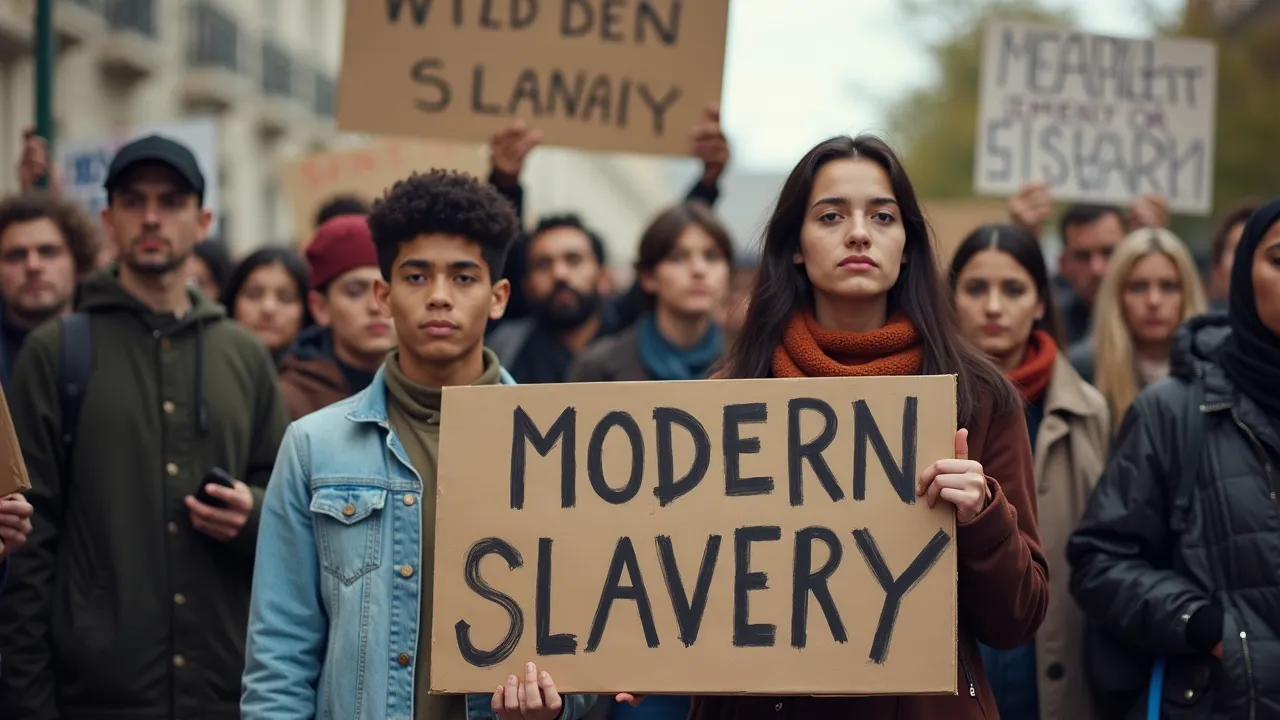
December 2nd marks the International Day for the Abolition of Slavery, a UN observance to eradicate contemporary forms of slavery, human trafficking, and forced labor. Learn about its origins, global impact, and how to contribute to this critical human rights cause.
The Historical Origins & Evolutionary Journey
The International Day for the Abolition of Slavery, observed annually on December 2nd, commemorates the adoption of the United Nations Convention for the Suppression of the Traffic in Persons and of the Exploitation of the Prostitution of Others in 1949. This day serves as a stark reminder that slavery, though legally abolished in most nations, persists in modern forms such as human trafficking, forced labor, debt bondage, and child soldiering.
The Foundational Catalyst
The modern abolition movement gained momentum in the late 18th century with grassroots campaigns in Britain and the United States. The Slave Trade Act of 1807 prohibited the transatlantic slave trade in the British Empire, followed by the Slavery Abolition Act of 1833. In the US, the 13th Amendment (1865) abolished slavery after the Civil War. However, legal abolition did not eradicate the practice globally.
The Legislative/Official Adoption
The 1926 Slavery Convention, adopted by the League of Nations, defined slavery as "the status or condition of a person over whom any or all of the powers attaching to the right of ownership are exercised." The United Nations Supplementary Convention on the Abolition of Slavery (1956) expanded the definition to include debt bondage, serfdom, forced marriage, and child exploitation. On December 2, 1949, the UN General Assembly adopted the Convention for the Suppression of the Traffic in Persons and of the Exploitation of the Prostitution of Others. In 1986, the General Assembly designated December 2 as the International Day for the Abolition of Slavery to raise awareness and promote action against contemporary slavery.
Modern Global Legacy
Today, an estimated 50 million people are trapped in modern slavery, according to the International Labour Organization (ILO) and Walk Free. The day mobilizes governments, NGOs, and individuals to advocate for stronger laws, victim support, and supply chain transparency. It reinforces the United Nations Sustainable Development Goal 8.7, which calls for immediate measures to eradicate forced labor, end modern slavery, and human trafficking.
How to Celebrate International Day for the Abolition of Slavery
This observance is not a festive occasion but a call to action. Participation involves education, advocacy, and support for survivors. Below are concrete ways individuals, schools, and organizations can contribute effectively.
For Individuals
- Educate yourself on the signs of human trafficking and forced labor. Visit the UN website for resources.
- Support ethical brands by using apps like 'Good On You' or 'Buycott' to avoid products linked to forced labor.
- Donate to frontline organizations such as Anti-Slavery International, Walk Free, or local shelters.
- Volunteer with groups that assist survivors or advocate for policy change.
For Schools and Universities
- Organize a teach-in or panel discussion on modern slavery, featuring experts or survivors.
- Screen documentaries like 'The True Cost' (fashion) or 'Slavery: A 21st Century Evil'.
- Launch a campus-wide campaign to ensure university supply chains are slavery-free.
For Organizations and Corporations
- Conduct a slavery risk audit of your supply chain and publish the results.
- Implement robust modern slavery statements as required by law (e.g., UK Modern Slavery Act).
- Provide employee training on identifying and reporting labor exploitation.
- Partner with NGOs to develop survivor employment programs.
Around the world, events include candlelight vigils, art exhibits, and social media campaigns using hashtags like #EndSlavery and #AbolishSlavery. In countries such as France, Ghana, and Brazil, special church services and survivor-led marches are common. The day also coincides with the 16 Days of Activism against Gender-Based Violence, linking slavery to broader human rights issues.
The Global Scope of Modern Slavery
Modern slavery is a hidden crime affecting every continent and nearly every country. According to the Global Slavery Index 2023, an estimated 50 million people were living in modern slavery on any given day, with 28 million in forced labor and 22 million in forced marriage. Women and girls account for 54% of victims in forced labor and are disproportionately affected by forced marriage.
Regional Hotspots
- Africa: Highest prevalence rates in countries like North Korea, Eritrea, and Mauritania (where chattel slavery still exists).
- Asia-Pacific: Absolute numbers highest in India, China, and Bangladesh, with forced labor in garment, brick kiln, and seafood sectors.
- Europe & Central Asia: Human trafficking for sexual exploitation and forced labor in agriculture, construction, and domestic work.
- Americas: Forced labor in agriculture, mining, and domestic servitude; sex trafficking in the United States and Canada.
Economic Dimensions
Modern slavery generates an estimated $150 billion in illegal profits annually (ILO). The sectors most implicated include garment manufacturing, agriculture (cocoa, cotton, sugarcane), electronics, and domestic work. The COVID-19 pandemic exacerbated vulnerabilities, pushing millions into debt bondage and forced labor.
International Legal Frameworks & Enforcement
The fight against slavery is anchored in a robust framework of international and national laws. Key instruments include:
- 1926 Slavery Convention (League of Nations) – first global treaty to prohibit slavery.
- UN Supplementary Convention on the Abolition of Slavery (1956) – extended definitions to debt bondage, serfdom, and forced marriage.
- Forced Labour Convention, 1930 (No. 29) and its 2014 Protocol – ILO standards aimed at eliminating forced labor.
- Palermo Protocol to Prevent, Suppress and Punish Trafficking in Persons (2000) – defines trafficking and requires criminalization.
- UK Modern Slavery Act 2015 – requires businesses to report on steps taken to ensure supply chains are slavery-free.
- California Transparency in Supply Chains Act (2010) – similar disclosure requirement.
Enforcement remains a challenge: only a fraction of countries have fully criminalized all forms of modern slavery, and convictions are rare. The UN Special Rapporteur on Contemporary Forms of Slavery monitors and reports on compliance, while NGOs like Anti-Slavery International and Human Rights Watch advocate for stronger accountability.
Role of Civil Society & Survivor-Led Movements
Grassroots organizations and survivor networks are critical drivers of change. Initiatives like Walk Free (Australia) produce the Global Slavery Index, Free the Slaves (USA) supports community-led liberation, and Stop Slavery Hotel Industry Network works to eradicate trafficking in hospitality. Survivor-led groups such as Survivors of Slavery International provide vital insights and advocacy platforms.
Technology and Innovation
Tech tools are increasingly used to combat slavery: apps like Lamplighter help identify forced labor signs, blockchain enhances supply chain transparency, and AI analytics flag high-risk suppliers. The Modern Slavery Registry centralizes corporate disclosures for public scrutiny.
Challenges and the Road Ahead
Despite progress, formidable challenges remain. The hidden nature of modern slavery makes detection difficult. Many victims are afraid to report due to threats, lack of legal status, or distrust of authorities. Weak governance in conflict zones and developing countries allows perpetrators to operate with impunity. Supply chain complexity – with multiple tiers of subcontractors – makes it hard for consumers and companies to ensure ethical sourcing.
Addressing Root Causes
Poverty, discrimination, lack of education, and labor market inequality are root causes. Solutions require integrated approaches: decent work creation, universal social protection, gender equality, and strengthened rule of law. The UN Sustainable Development Goal Target 8.7 calls for immediate and effective measures to eradicate forced labour, end modern slavery and human trafficking by 2030. Achieving this will require political will, funding, and international cooperation.
Historical Timeline
The British Parliament passes the Slave Trade Act, prohibiting the slave trade in the British Empire. This is a major early victory for abolitionists.
The United States ratifies the 13th Amendment, officially abolishing slavery and involuntary servitude, except as punishment for crime.
The League of Nations adopts the Slavery Convention, the first international agreement defining slavery and obligating signatories to end it.
The United Nations General Assembly adopts the Convention for the Suppression of the Traffic in Persons and of the Exploitation of the Prostitution of Others on December 2.
The UN Supplementary Convention on the Abolition of Slavery expands definitions to include debt bondage, serfdom, forced marriage, and child exploitation.
The UN General Assembly designates December 2 as the International Day for the Abolition of Slavery, aiming to raise awareness and foster action against contemporary slavery.
The UN adopts the Palermo Protocol to Prevent, Suppress and Punish Trafficking in Persons, especially women and children, setting global standards.
The UK Modern Slavery Act comes into force, requiring businesses to disclose steps against slavery in their supply chains. The UN adopts the Sustainable Development Goals, including Target 8.7 to end modern slavery.
The ILO, Walk Free, and IOM release estimates showing 50 million people in modern slavery globally, highlighting the urgent need for action.