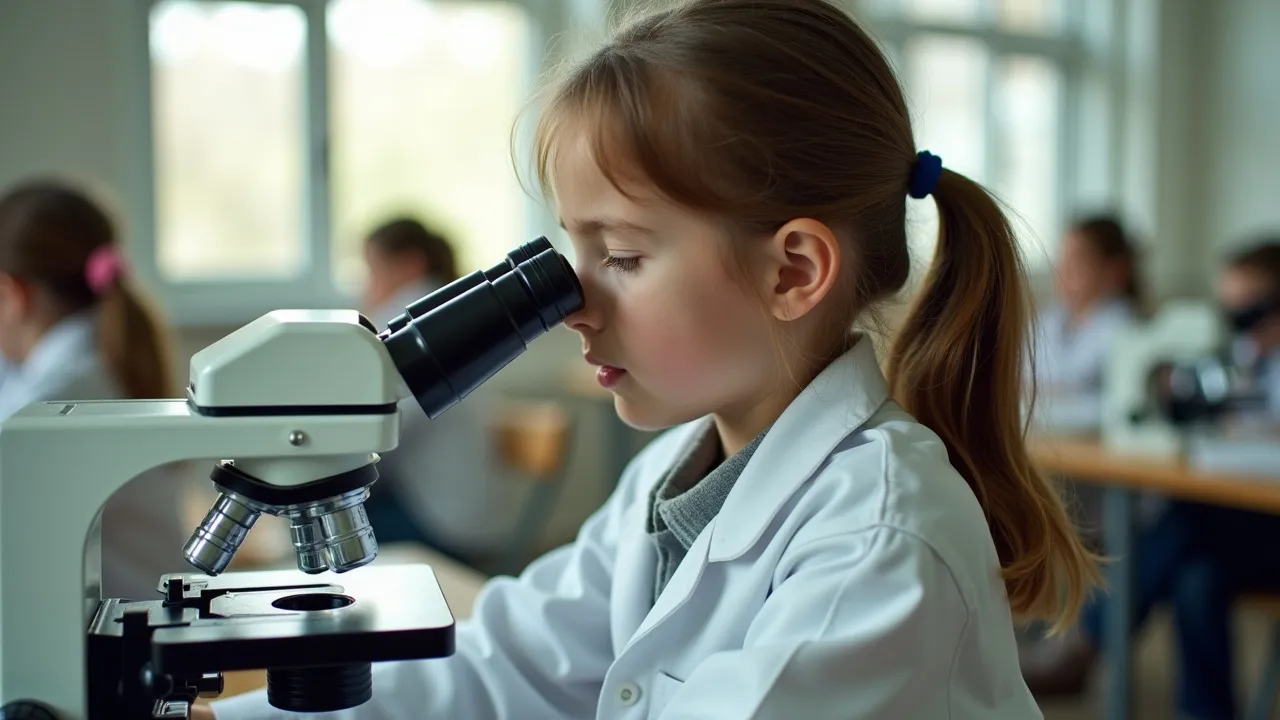
Celebrated on February 11th, the International Day of Women and Girls in Science promotes full and equal access to science for women and girls. It highlights their contributions and encourages future generations to pursue STEM careers.
The Historical Origins & Evolutionary Journey
The Foundational Catalyst
The International Day of Women and Girls in Science was established by the United Nations General Assembly in December 2015. The resolution (A/RES/70/212) was championed by the Royal Academy of Science International Trust (RASIT) and the Permanent Mission of the Kingdom of Bahrain to the UN. The day recognizes the critical role women and girls play in science and technology, and aims to address the persistent gender gap in STEM fields worldwide.
The Legislative/Official Adoption
The first official observance took place on February 11, 2016. The date was chosen to follow World Science Day for Peace and Development (November 10) and to build momentum for gender equality in science. The UN invited member states, international organizations, and civil society to organize events and activities that promote women in science. Since then, the day has grown exponentially, with conferences, workshops, and campaigns held globally.
Modern Global Legacy
The day is now a platform to highlight achievements of women scientists, discuss barriers such as unconscious bias and funding disparities, and inspire young girls. It aligns with Sustainable Development Goal 5 (Gender Equality) and Goal 9 (Industry, Innovation, and Infrastructure). Annual themes have included 'Women Scientists at the forefront of the fight against COVID-19' (2021) and 'Equity, Diversity, and Inclusion: Water Unites Us' (2023). The day continues to galvanize action from governments, academia, and private sector to close the STEM gender gap by 2030.
How to Celebrate International Day of Women and Girls in Science
The day offers a multitude of ways to participate, from individual actions to large-scale events. Here is a comprehensive guide to celebrating effectively and meaningfully.
For Individuals and Students
Learn and Share: Read about pioneering women scientists like Marie Curie, Rosalind Franklin, or Katherine Johnson. Share their stories on social media using hashtags #WomenInScience and #February11.
Mentor a Girl: Offer virtual or in-person mentorship to a young girl interested in science. Help her with a science fair project or career guidance.
Attend Virtual Events: Many organizations host webinars, panel discussions, and Q&A sessions. Look for events from UNESCO, UN Women, or local science museums.
For Schools and Educational Institutions
Organize a Science Fair: Encourage girls to present projects and invite women scientists as judges. Provide hands-on workshops in chemistry, coding, or robotics.
Host a Career Day: Invite women from diverse STEM fields—marine biology, aerospace engineering, data science—to speak to students.
Debunk Stereotypes: Use classroom activities to discuss gender bias in science. Show examples of women who overcame obstacles.
For Corporations and Organizations
Sponsor Scholarships: Fund scholarships for girls pursuing STEM degrees. Partner with NGOs like Girls Who Code or Women in Science & Engineering (WISE).
Promote Internal Equity: Review hiring practices, pay gaps, and leadership opportunities for women. Launch a mentorship program for female employees.
Social Media Campaign: Feature female scientists in your company. Use UN resources to amplify the message.
Traditions Around the World
United States: Live-streamed events from NASA and the Smithsonian; school district-wide 'STEM for Girls' days.
India: Science fairs in villages to reach rural girls; awards like the 'Women Scientist Award' from the Indian Science Congress.
United Kingdom: The Royal Society hosts an annual lecture; many universities hold open days for girls.
Africa: Grassroots initiatives like 'Science Camps for Girls' in Kenya and South Africa, focusing on water and sanitation projects.
The Gender Gap in STEM: Global Statistics and Trends
Despite progress, women remain underrepresented in STEM. According to UNESCO data (2021), women constitute only 30% of researchers worldwide. In engineering, it's about 20%; in computer science, 25%. The gap widens in leadership: only 15% of top research positions are held by women. Barriers include lack of role models, biases in hiring, and work-life balance challenges. The day shines a light on these disparities and calls for systemic change.
Regional Disparities
- Central Asia: Women make up nearly 50% of researchers in countries like Kazakhstan and Uzbekistan, a legacy of Soviet education.
- South Asia: Only 20% of researchers are women; cultural norms and early marriage are obstacles.
- North America: Despite high enrollment in life sciences, women are scarce in physics and engineering. The 'leaky pipeline' loses women at every career stage.
Initiatives like the Gender Inequality Index and STEM Parity Dashboard track these trends, providing data for policy interventions.
Trailblazing Women Scientists Who Changed the World
Throughout history, women have made groundbreaking contributions despite systemic barriers. Their stories inspire the next generation.
Pioneers in Physical Sciences
- Marie Curie (1867-1934): Nobel laureate in Physics (1903) and Chemistry (1911), discovered radioactivity.
- Lise Meitner (1878-1968): Co-discoverer of nuclear fission; never awarded the Nobel despite her key role.
- Chien-Shiung Wu (1912-1997): Experimental physicist who disproved the law of conservation of parity.
Pioneers in Life Sciences
- Rosalind Franklin (1920-1958): Her X-ray crystallography images revealed DNA's double helix structure.
- Barbara McClintock (1902-1992): Discovered genetic transposition; Nobel Prize in Physiology or Medicine (1983).
- Tu Youyou (1930-): Discovered artemisinin for malaria treatment; Nobel in Medicine (2015).
Modern Icons
- Katherine Johnson (1918-2020): NASA mathematician whose calculations enabled Apollo moon landings.
- Mae Jemison (1956-): First African-American woman in space (1992).
- Jennifer Doudna (1964-): Co-inventor of CRISPR-Cas9 gene editing; Nobel in Chemistry (2020).
These role models exemplify resilience and brilliance, paving the way for today's girls.
The Role of Policy and International Frameworks
International frameworks are crucial for advancing women in STEM. The 2030 Agenda for Sustainable Development calls for gender equality (SDG 5) and innovation (SDG 9). The UNESCO Recommendations on Science and Scientific Researchers (2017) emphasize equal opportunities. National policies, like the EU's Gender Equality Strategy 2020-2025, mandate gender mainstreaming in research funding. Many countries now require gender equality plans (GEPs) for universities to receive public funds.
Success Stories
- India's 'Vigyan Jyoti' scheme: Provides exposure to STEM for girls from grades 9-12, including scholarships and mentors.
- Rwanda's STEM scholarships: Through the Rwanda Girls Initiative, hundreds of girls have graduated in IT and engineering.
- Canada's 50-30 Challenge: Encourages organizations to achieve gender parity and diversity on boards and leadership.
The day reinforces these efforts and holds governments accountable for commitments.
Actionable Steps for Individuals to Support Women in STEM
Beyond the official day, sustained action is needed. Here are ways to contribute year-round.
Be an Ally
- Speak Up: Challenge sexist remarks or stereotypes in classrooms and workplaces.
- Recommend Women: Nominate colleagues for awards, speaking engagements, and promotions.
- Support Organizations: Donate to groups like Women in Science & Engineering (WISE) or Association for Women in Science (AWIS).
Promote Science Literacy
Encourage girls to participate in science clubs, coding camps, and math competitions. Gift science kits, biographies of women scientists, and subscriptions to science magazines. Use platforms like SciStarter to involve girls in citizen science projects.
Advocate for Policy Change
Write to legislators urging funding for STEM education programs that target girls. Support policies that promote paid parental leave and flexible work hours to retain women in research careers. The day is a catalyst for these ongoing efforts.
Historical Timeline
The United Nations is founded, establishing a permanent platform for gender equality initiatives that would later address women in science.
The UN General Assembly adopts the Declaration on the Elimination of Discrimination against Women, laying groundwork for equal access to education, including science.
The first UN World Conference on Women held in Mexico City, highlighting the role of women in development and technology.
The Beijing Declaration and Platform for Action is adopted, explicitly calling for women's full participation in science and technology.
UNESCO launches the Women in Science program, awarding prizes and scholarships to promote female researchers.
UN General Assembly adopts resolution A/RES/70/212, establishing February 11 as International Day of Women and Girls in Science. The first official observance is set for 2016.
First official International Day of Women and Girls in Science is celebrated globally with events at UN headquarters and in member states.
The day's theme focuses on 'Women Scientists at the forefront of the fight against COVID-19', highlighting women's contributions to pandemic research and vaccine development.
The UN marks the day with the theme 'Equity, Diversity, and Inclusion: Water Unites Us', linking gender equality with water sustainability.