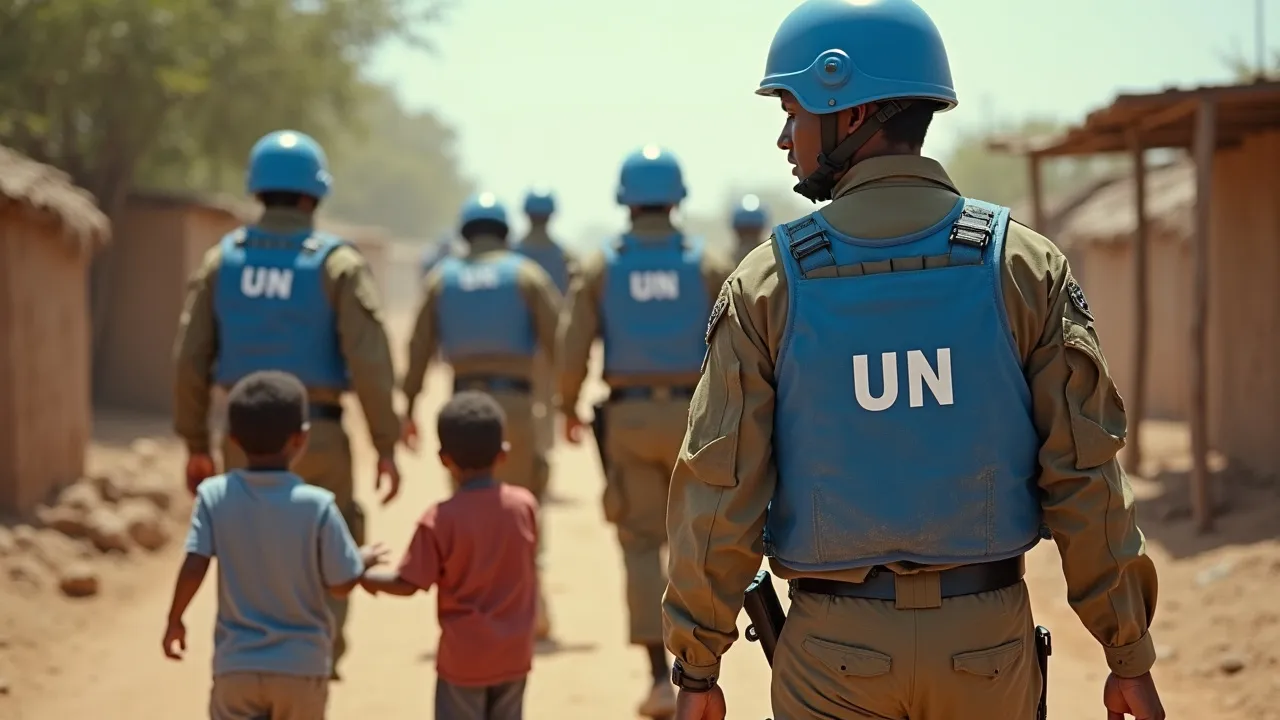
Honoring the service and sacrifice of UN peacekeepers worldwide. Observed on May 29th, the day marks the anniversary of the first UN peacekeeping mission in 1948, paying tribute to over 4,000 fallen heroes.
The Historical Origins & Evolutionary Journey
The International Day of UN Peacekeepers was established by the United Nations General Assembly in 2002 through resolution 57/129. The date May 29th was chosen to commemorate the first UN peacekeeping mission, the UN Truce Supervision Organization (UNTSO), which began operations in Palestine in 1948. Since then, peacekeeping has evolved into a cornerstone of international conflict resolution.
The Foundational Catalyst
The creation of UN peacekeeping emerged from the ashes of World War II. The UN Charter's Chapter VI and VII provide the legal basis for deploying unarmed or lightly armed military personnel to maintain ceasefires and stabilize conflict zones. The first mission, UNTSO, authorized by the Security Council on 29 May 1948, was tasked with supervising the truce between Israel and its Arab neighbors. It set a precedent for future operations. Over the decades, peacekeeping expanded: during the Cold War, missions focused on monitoring borders and disengagement areas (e.g., UNEF in 1956, UNFICYP in 1964). After the Cold War, the scope broadened to multidimensional operations involving civilian and police components.
The Legislative/Official Adoption
In 2002, the General Assembly officially designated May 29th as the International Day of UN Peacekeepers. The resolution called for annual observance to pay tribute to the professionalism, dedication, and courage of peacekeepers, and to honor the memory of those who lost their lives. The first official celebration took place on May 29, 2003, with ceremonies at UN Headquarters and in field missions worldwide. The UN Secretary-General lays a wreath at the Peacekeepers Memorial each year, and the Dag Hammarskjöld Medal is awarded posthumously to peacekeepers who died.
Modern Global Legacy
Today, peacekeepers come from over 120 countries. They serve in 12 active missions, protecting civilians, disarming combatants, and supporting political processes. The day also remembers the fallen: over 4,200 peacekeepers have died since 1948. The UN’s Action for Peacekeeping (A4P) initiative, launched in 2015, aims to enhance effectiveness and accountability. The theme for 2024 is “Fit for the Future, Building Better Together,” emphasizing innovation and partnerships.
How to Celebrate International Day of UN Peacekeepers
This day offers opportunities for individuals, schools, and organizations to honor peacekeepers worldwide. Below are actionable ways to participate meaningfully.
- Learn and Educate: Host educational events to spread awareness about UN peacekeeping missions. Use resources from the UN website, documentaries, and local veteran stories.
- Social Media Campaigns: Share stories, photos, and videos using #PeacekeepersDay and #WeAreUNPeacekeepers. Highlight the contributions of peacekeepers from your country.
- Donate: Contribute to organizations that support peacekeeping veterans, such as the United Nations Peacekeeping Veterans Association or the Blue Beret Foundation.
- Moment of Silence: Observe a minute of silence at 11:00 AM local time to remember fallen peacekeepers.
- School Activities: Organize essay contests, model UN sessions, poster exhibitions, or debates on peacekeeping.
Unique Traditions by Country
- India: The Indian Army holds commemorative parades at the National War Memorial and the India Gate.
- Bangladesh: A major contributor, Bangladesh holds award ceremonies, flag-hoisting events, and special TV programs.
- Canada: The Peacekeeping Monument in Ottawa is a focal point for wreath-laying ceremonies with veterans and dignitaries.
- United Nations Headquarters: The Secretary-General lays a wreath at the Peacekeepers Memorial, followed by a medal ceremony.
- Nepal: Peacekeepers are honored with garlands and cultural programs in their home villages.
Corporate and NGO involvement: Companies can host lunch-and-learn sessions on peacekeeping careers. NGOs can launch fundraising campaigns for peacekeeping-related causes. The UN also encourages lighting buildings in UN blue.
The Multifaceted Role of UN Peacekeepers
UN peacekeepers, commonly known as Blue Helmets, are deployed to maintain peace and security in some of the world’s most volatile regions. Their roles have expanded significantly since the first mission.
Core Functions
- Conflict Prevention: Deployed to prevent hostilities from escalating into full-blown wars. They monitor ceasefires and maintain buffer zones.
- Protection of Civilians (POC): Under robust mandates, peacekeepers are authorized to use force to protect civilians from threats. This is a key priority in missions like MONUSCO in DR Congo and UNMISS in South Sudan.
- Disarmament, Demobilization, and Reintegration (DDR): Help former combatants transition to civilian life by collecting weapons and providing vocational training.
- Rule of Law: Support local justice and security institutions, including police, courts, and prisons. They also help uphold human rights.
- Humanitarian Assistance: In many missions, peacekeepers provide medical care, food, and shelter to affected populations.
Composition and Training
Peacekeepers include military personnel, police, and civilian experts. Troop-contributing countries train their forces before deployment. The UN also pre-deploys training teams. As of 2024, over 60,000 personnel serve in 12 missions. Major contributors include Bangladesh, India, Nepal, Rwanda, Ethiopia, and Pakistan.
Women in Peacekeeping
The UN promotes gender equality through the Uniformed Gender Parity Strategy. Women peacekeepers improve access to local women and children, reduce sexual violence, and foster trust. The first all-female peacekeeping unit deployed to Liberia in 2007. The UN aims for 15% female military contingents and 25% female police by 2028.
Challenges and Evolution of Peacekeeping
Peacekeeping faces complex challenges that require constant adaptation.
Security Threats
Peacekeepers are increasingly targeted by armed groups. In recent years, malicious attacks have risen, especially in Mali (MINUSMA) and the Central African Republic (MINUSCA). The UN has improved force protection with better intelligence, armored vehicles, and medical support.
Mandate Complexity
Modern missions often involve counter-terrorism, protection of cultural heritage, and election support. These tasks require robust resources and clear rules of engagement. The UN Security Council must provide realistic mandates with achievable goals.
Reforms and Initiatives
The Action for Peacekeeping (A4P) initiative, launched in 2015, focuses on political solutions, strong performance, and accountability. The ‘Declaration of Shared Commitments’ was endorsed by 153 member states. The UN also improves technology use: surveillance drones, real-time data analysis, and mobile apps for reporting.
Funding and Resource Constraints
Peacekeeping is funded by assessed contributions from member states. The budget for 2023-2024 was $6.45 billion. However, budget cuts and delays impact mission effectiveness. The UN encourages broader burden-sharing and efficient use of resources.
Global Impact of UN Peacekeeping
UN peacekeeping has significantly contributed to stability and peace in many regions.
Success Stories
- El Salvador: The UN mission (ONUSAL) helped end a 12-year civil war and established human rights monitoring.
- Sierra Leone: Peacekeepers (UNAMSIL) disarmed over 75,000 combatants and paved the way for democratic elections.
- Cambodia: The UN Transitional Authority (UNTAC) supervised a ceasefire and organized elections in 1993.
- Liberia: UNMIL stabilized the country after civil war and facilitated two peaceful elections.
Economic and Humanitarian Impact
Peacekeeping reduces conflict-related costs. The UN estimates that each dollar spent on peacekeeping saves billions in war damages. Peace operations also support local economies through procurement of goods and services. They provide humanitarian assistance: in South Sudan, UN camps protect and feed hundreds of thousands of displaced people.
Quantifiable Results
Studies indicate that UN peacekeeping missions reduce civilian deaths by up to 90% in conflict zones. They also help lower the risk of conflict recurrence. However, success requires strong political will and support from host states.
Key Statistics and Facts About UN Peacekeeping
Understanding the scale and impact of UN peacekeeping through data.
- Total missions since 1948: Over 70 peacekeeping operations authorized.
- Current missions (2024): 12 active operations across Africa, Asia, Europe, and the Middle East.
- Personnel deployed: Approximately 60,000 troops, police, and civilian experts.
- Total fatalities: Over 4,200 peacekeepers have died since 1948, including 103 in 2023.
- Largest troop contributor: Bangladesh, with over 6,000 personnel, followed by India, Nepal, and Rwanda.
- Budget: $6.45 billion for the 2023-2024 fiscal year, representing about 0.5% of global military spending.
- Women in peacekeeping: As of 2024, women comprise 11% of military contingents and 17% of police units.
Notable milestones: In 1988, UN peacekeeping forces were awarded the Nobel Peace Prize. The first all-female peacekeeping unit deployed to Liberia in 2007. In 2016, Bintou Keita became the first woman to head a peacekeeping mission (MINUSMA). The UN’s ‘Strategy for the Digital Transformation of Peacekeeping’ aims to leverage AI and data analytics for field operations.
Historical Timeline
First UN peacekeeping mission: UN Truce Supervision Organization (UNTSO) established to monitor the truce in Palestine.
First UN Emergency Force (UNEF) deployed to supervise the withdrawal of invading forces during the Suez Crisis.
UN peacekeeping forces awarded the Nobel Peace Prize for their efforts in maintaining peace.
UN Secretary-General Boutros Boutros-Ghali releases 'An Agenda for Peace', outlining new roles for peacekeeping.
UN General Assembly passes resolution 57/129 designating May 29 as International Day of UN Peacekeepers.
First official observance of International Day of UN Peacekeepers on May 29.
First all-female peacekeeping unit deployed to Liberia (Formed Police Unit from India).
UN launches the Action for Peacekeeping (A4P) initiative to strengthen peacekeeping operations.
UN marks 70 years of peacekeeping with ceremonies and reflection on past achievements.
Peacekeeping missions adapt to COVID-19 pandemic, continuing operations with protective measures.