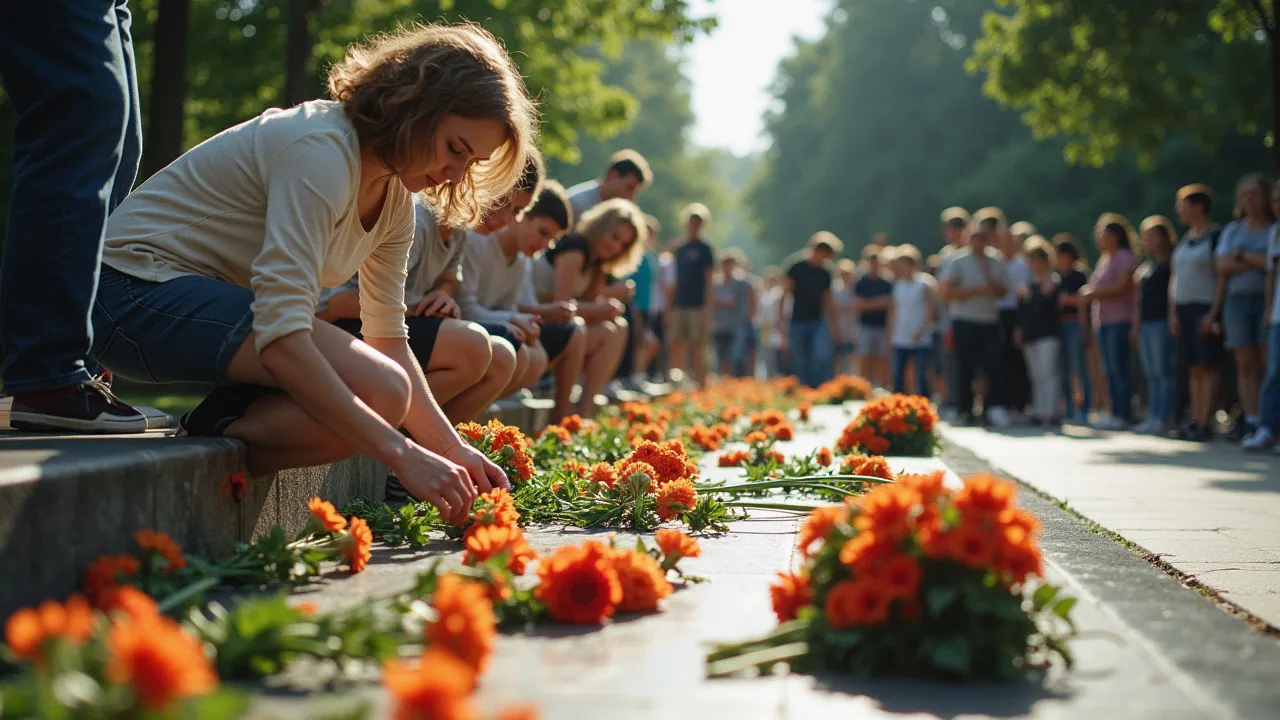
The International Day of Remembrance and Tribute to the Victims of Terrorism, observed on August 21st, honors victims and survivors of terrorism worldwide and promotes solidarity, support, and resilience.
The Historical Origins & Evolutionary Journey
The International Day of Remembrance and Tribute to the Victims of Terrorism was established by the United Nations General Assembly to honor the memory of those who have lost their lives or been injured in terrorist attacks worldwide. The day also aims to promote and protect the rights of victims and survivors, and to foster international solidarity in the fight against terrorism.
The Foundational Catalyst
The catalyst for the creation of this observance was the growing recognition that victims of terrorism are often overlooked in global security discussions. In the aftermath of major terrorist attacks, such as the September 11, 2001 attacks in the United States, the 2004 Madrid train bombings, and the 2005 London bombings, the international community began to focus more on counter-terrorism measures but less on the long-term needs of victims. Civil society organizations and survivor advocacy groups urged the United Nations to establish a dedicated day to remember victims and draw attention to their suffering and resilience.
The Legislative/Official Adoption
On December 20, 2017, the United Nations General Assembly adopted Resolution 72/165, which officially established the International Day of Remembrance and Tribute to the Victims of Terrorism. The resolution emphasized the importance of providing victims with support, rehabilitation, and justice, and called on member states to take measures to ensure their rights are protected. The first official observance took place on August 21, 2018, with a solemn ceremony at the United Nations Headquarters in New York.
Modern Global Legacy
Since its inception, the day has grown in significance. Each year, the UN hosts events that bring together victims, survivors, policymakers, and civil society to share experiences and advocate for stronger support systems. The day also serves as a platform to launch initiatives, such as the UN Victims of Terrorism Support Portal, which provides resources and information for victims worldwide. The observance has encouraged countries to adopt national policies that prioritize victim assistance and has fostered a global community of practice focused on post-terrorism recovery.
How to Celebrate International Day of Remembrance and Tribute to the Victims of Terrorism
Participation in this observance can take many forms, from personal reflection to community events. Here are actionable ways to honor victims and survivors, categorized for individuals, schools, and organizations.
For Individuals
- Light a candle at home or visit a memorial to show solidarity.
- Share stories of victims on social media using the hashtag #RemembranceDay to raise awareness.
- Donate to organizations that support victims of terrorism, such as the UN Victims of Terrorism Support Portal or local NGOs.
- Educate yourself by reading survivor testimonies or attending webinars on victim support.
For Schools and Educational Institutions
- Organize a moment of silence during morning assembly.
- Host a workshop on the impact of terrorism and the importance of peacebuilding.
- Encourage students to create art or essays reflecting on resilience and remembrance.
- Invite a survivor or expert to speak about their experiences.
For Organizations and Corporations
- Issue a public statement of support for victims and commit to policies that prioritize their rights.
- Launch a fundraising campaign for victim assistance programs.
- Offer employee resource groups for those affected by terrorism, with access to mental health support.
In various countries, unique traditions have emerged. For instance, in Kenya, survivors of the 1998 US embassy bombing hold annual memorial walks. In Spain, the 2004 train bombings are commemorated with a tree-planting ceremony in a public park. These regional variations underscore the universality of the day's message while respecting local contexts.
Global Impact and Significance
The International Day of Remembrance and Tribute to the Victims of Terrorism plays a crucial role in shifting the narrative from security-centric responses to a more human-centered approach. By placing victims at the forefront, the day challenges the dehumanization caused by terrorism and emphasizes the resilience of affected communities.
Societal Impact
The observance has led to greater public awareness of the long-term consequences of terrorism, including post-traumatic stress disorder, social stigmatization, and economic hardship. It has also spurred legislative changes in several countries, such as the establishment of national victim compensation funds and the incorporation of victim rights into counter-terrorism strategies. For example, following the 2017 UN resolution, France expanded its victim support services, and Nigeria created a dedicated ministry for victims of Boko Haram attacks.
Global Solidarity
The day serves as a reminder that terrorism is a global challenge that transcends borders. It encourages international cooperation in providing assistance to victims regardless of nationality. The UN's Office of Counter-Terrorism (UNOCT) has used the day to launch capacity-building programs for member states, focusing on psychosocial support and legal assistance. The symbolism of August 21st has also been adopted by regional bodies like the African Union and the European Union, which hold parallel events.
Support for Victims and Survivors: Best Practices
Effective support for victims of terrorism requires a comprehensive, multi-sectoral approach that addresses immediate needs and long-term recovery. Below are key components of victim support as advocated by the United Nations.
Psychosocial Support
- Immediate crisis counseling within 72 hours of an attack to reduce acute stress.
- Long-term therapy for trauma, including cognitive-behavioral therapy and group support sessions.
- Peer-to-peer networks where survivors can share experiences and coping strategies.
Legal and Financial Assistance
- Access to justice through fair trials and reparations from perpetrators or states.
- Compensation funds to cover medical expenses, lost income, and funeral costs.
- Legal aid to navigate complex claims processes.
Social Reintegration
Victims often face stigma and discrimination. Community awareness campaigns and vocational training programs can help them regain a sense of normalcy. The UN's Victims of Terrorism Support Portal (visited on Aug 21) provides a directory of services and guides for policymakers.
Challenges and Stigma Faced by Victims
Despite growing recognition, victims of terrorism still face numerous challenges that hinder their recovery. The International Day of Remembrance and Tribute to the Victims of Terrorism aims to bring these issues to light.
Stigma and Discrimination
In many societies, victims are wrongly associated with the ideology of the attackers or are viewed as weak. This can lead to social isolation and difficulty in finding employment. Muslim communities, for instance, often face backlash after attacks perpetrated by extremist groups, compounding the trauma of the event itself.
Inadequate Support Systems
Many countries lack dedicated victim assistance programs. Victims may struggle to access healthcare, mental health services, or legal redress. In conflict zones, such as Iraq and Syria, victims of terrorism may also be victims of armed conflict, further complicating their status and eligibility for aid.
Legal and Bureaucratic Hurdles
Compensation claims can be slow and complicated. For cross-border attacks, jurisdictional issues arise. The UN has called for a global framework to ensure consistent support regardless of where an attack occurs.
The observance day provides a platform for victims to tell their stories and advocate for change. It reminds the world that behind the statistics are real people whose suffering must not be forgotten.
The Role of International Cooperation
International cooperation is essential to effectively address the needs of victims of terrorism and prevent future attacks. The International Day of Remembrance and Tribute to the Victims of Terrorism reinforces the importance of collective action.
UN Initiatives
The United Nations Office of Counter-Terrorism (UNOCT) leads efforts to coordinate victim support across member states. Through the Global Counter-Terrorism Strategy, the UN promotes comprehensive approaches that include victim assistance as a pillar. The Victims of Terrorism Support Portal, launched in 2021, is a key resource that centralizes information and good practices.
Regional and Bilateral Cooperation
Regional organizations like the African Union have adopted similar resolutions, and bilateral agreements between countries facilitate cross-border victim support. For example, the European Union has established a network of national contact points for victim assistance. The day also encourages sharing of data and research to improve responses to emerging threats, such as online radicalization and terrorist financing.
Ultimately, the observance serves as a call to action for all nations to prioritize the human rights of victims and build resilient communities that can withstand the devastating effects of terrorism.
Historical Timeline
United Nations General Assembly adopts Resolution 72/165, establishing the International Day of Remembrance and Tribute to the Victims of Terrorism on August 21st.
First official observance of the day at UN Headquarters in New York, with a ceremony featuring survivors and UN officials.
Launch of the UN Victims of Terrorism Support Portal, a comprehensive online platform providing resources and guidance for victims and policymakers.
The UN hosts a high-level event focused on the theme 'Honouring the Past, Building the Future: Strengthening Support for Victims of Terrorism'.