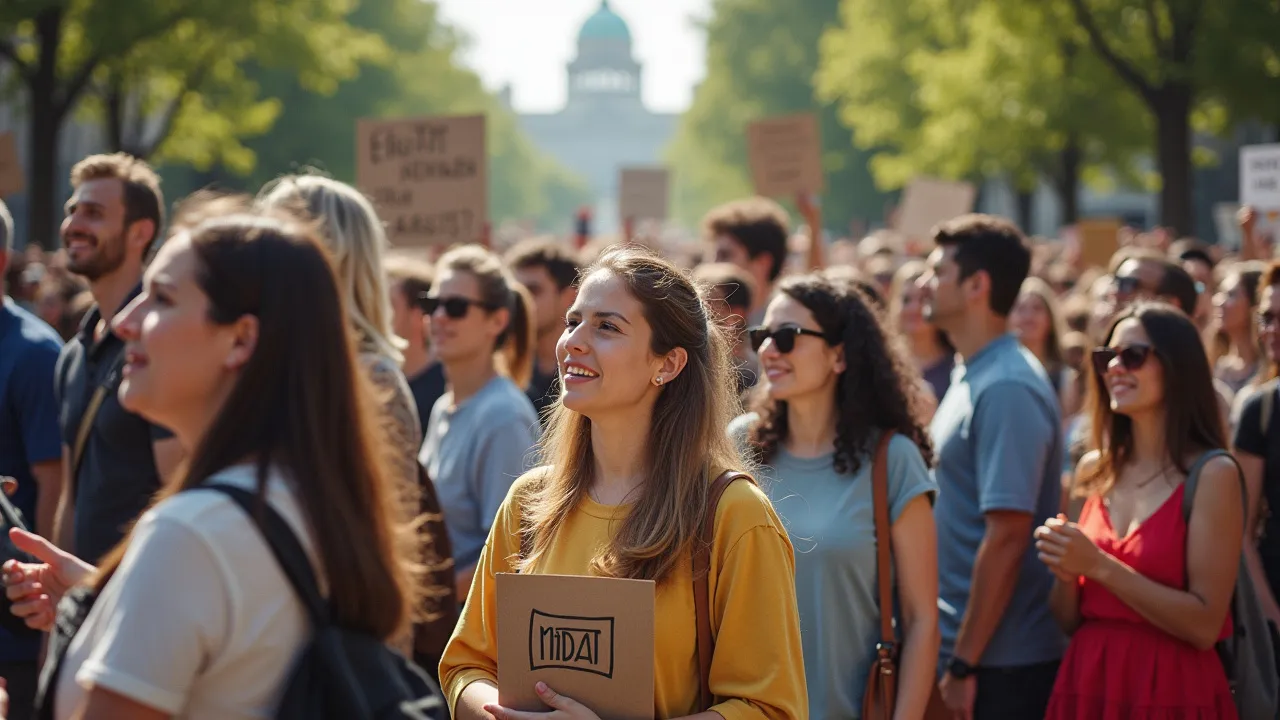
International Day of Democracy, observed on September 15th, promotes the principles of democratic governance worldwide. Established by the UN in 2007, it encourages civic engagement and raises awareness of the importance of inclusive, participatory democracy.
The Historical Origins & Evolutionary Journey
The International Day of Democracy was established by the United Nations General Assembly in 2007 through Resolution A/RES/62/7, which invited member states, UN bodies, and civil society to observe the day on September 15th each year. The first global observance took place in 2008. This date was chosen to coincide with the date of the adoption of the Universal Declaration on Democracy by the Inter-Parliamentary Union (IPU) in 1997.
The Foundational Catalyst
The movement toward a formal democracy day gained momentum in the early 2000s as the international community recognized the need to bolster democratic transitions and strengthen democratic institutions worldwide. The IPU, a global organization of parliaments, played a key role by adopting its own Universal Declaration on Democracy in 1997, which outlines the principles and practices of democratic governance. The UN General Assembly built on this foundation by designating a dedicated day to promote democracy as a universal value.
The Legislative/Official Adoption
On November 8, 2007, the UN General Assembly adopted resolution A/RES/62/7, officially establishing September 15th as the International Day of Democracy. The resolution emphasized that democracy is a universal value based on the freely expressed will of people to determine their own political, economic, social, and cultural systems. It called on all member states, UN organizations, and non-governmental actors to commemorate the day in appropriate ways.
Modern Global Legacy
Since 2008, the International Day of Democracy has grown into a global platform for raising awareness about democratic deficits, promoting electoral integrity, and encouraging youth participation. Each year, the UN Secretary-General issues a message focusing on a specific theme, such as "Democracy and the Sustainable Development Goals" or "Strengthening Democratic Resilience in Times of Crisis". Civil society organizations worldwide host seminars, workshops, and community dialogues to reflect on the state of democracy and ways to enhance it.
How to Celebrate International Day of Democracy
Celebrating International Day of Democracy involves meaningful actions that reinforce democratic values and civic engagement. Here are practical ways individuals, schools, and organizations can participate, with specific traditions from different regions.
For Individuals
- Educate Yourself: Read about democratic processes, human rights, and the history of democracy in your country.
- Engage in Dialogue: Discuss democratic principles with friends, family, or online communities using respectful discourse.
- Vote in Local Elections: If applicable, exercise your right to vote or encourage others to register.
For Schools and Educational Institutions
- Hold Mock Elections: Simulate electoral processes to teach students about voting and civic responsibility.
- Organize Debates: Facilitate debates on current democratic issues, such as media freedom or electoral reform.
- Invite Speakers: Host local politicians, activists, or judges to speak about democracy.
For Organizations and Governments
- Public Awareness Campaigns: Use social media, posters, and public events to highlight the importance of democratic participation.
- Transparency Initiatives: Publish reports on government accountability or hold open meetings.
- Global Traditions: In India, NGOs often conduct voter awareness drives; in Sweden, schools host democracy days with student parliaments; in Kenya, community radio stations air special programs on democratic rights.
Core Principles of Democracy
Democracy rests on several core principles that the International Day of Democracy aims to promote. Understanding these principles is essential for meaningful celebration.
Popular Sovereignty
The ultimate authority rests with the people, who exercise power directly or through elected representatives. This principle is the bedrock of democratic legitimacy.
Political Pluralism
A healthy democracy allows multiple political parties, interest groups, and diverse opinions to compete freely, ensuring representation of varied viewpoints.
Rule of Law
Everyone, including government officials, is subject to the law. Independent courts uphold legal frameworks that protect rights and prevent arbitrary power.
Protection of Human Rights
Democracy safeguards fundamental freedoms such as speech, assembly, press, and religion. These rights enable citizens to participate without fear.
Civic Participation
Beyond voting, participation includes activism, volunteering, and community organizing. A vibrant civil society holds governments accountable.
Global Impact and Challenges
The International Day of Democracy serves as a barometer for democratic health worldwide. While many nations have embraced democratic governance, significant challenges persist.
Democratic Backsliding
In recent years, several democracies have experienced erosion of institutions, press freedom, and electoral integrity. The day highlights these trends and encourages corrective action.
Rise of Disinformation
Misinformation and fake news undermine informed voting and public trust. The day promotes media literacy and fact-checking initiatives.
Youth and Democratic Participation
Engaging younger generations remains a priority. The UN often focuses on youth-led movements as drivers of democratic renewal.
Technology and Democracy
Digital tools can enhance civic engagement but also pose risks like surveillance and algorithmic bias. Balancing innovation with rights is a key theme.
International Day of Democracy and the Sustainable Development Goals
The Sustainable Development Goals (SDGs) and democracy are deeply interconnected. The International Day of Democracy emphasizes that inclusive, participatory decision-making is essential for achieving the 2030 Agenda.
SDG 16: Peace, Justice, and Strong Institutions
Goal 16 directly targets the promotion of peaceful and inclusive societies, access to justice, and building effective, accountable institutions. Democracy is a prerequisite for this goal.
Empowerment and Equality
Democracy empowers marginalized groups, including women, minorities, and persons with disabilities, to claim their rights and participate in development.
Transparency and Accountability
Democratic systems require open budgets, anti-corruption measures, and independent oversight, all of which underpin successful SDG implementation.
How Governments and Civil Society Unite
The International Day of Democracy is a collaborative effort between states, intergovernmental organizations, and civil society. Here are key ways they work together.
- UN Observances: The UN holds a high-level event at its headquarters in New York, often featuring heads of state and civil society leaders.
- National Commemorations: Many countries hold parliamentary sessions, public lectures, and awards for democratic activists.
- Civil Society Initiatives: Groups like the International IDEA (Institute for Democracy and Electoral Assistance) publish reports on democracy indices and organize workshops.
- Media Partnerships: Broadcasters and newspapers devote coverage to democracy issues, including special documentaries and debates.
Historical Timeline
The Inter-Parliamentary Union (IPU) adopts the Universal Declaration on Democracy on September 15, providing a framework for democratic principles.
The United Nations General Assembly passes Resolution A/RES/62/7, establishing September 15 as the International Day of Democracy.
The first International Day of Democracy is observed globally, with events at the UN and in member states.
The UN includes SDG 16 (peace, justice, and strong institutions) in the 2030 Agenda, reinforcing democracy's role in sustainable development.
The International Day of Democracy highlights 'Democracy and COVID-19: Ensuring Health, Rights, and Participation', focusing on democratic resilience amid the pandemic.
The theme 'Empowering the Next Generation' emphasizes youth engagement and digital democracy.