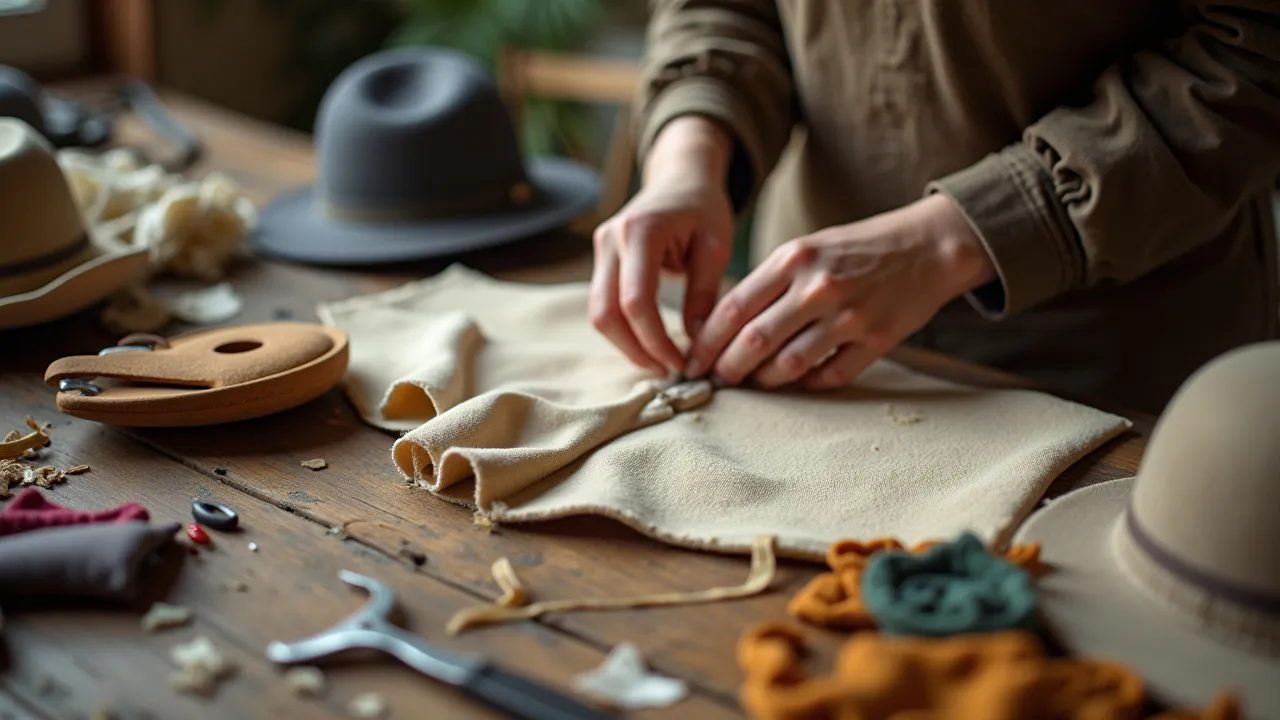
Make a Hat Day on September 15th celebrates creativity and self-expression through hat-making. From simple caps to elaborate fascinators, this day encourages everyone to design and wear their own unique headwear.
The Historical Origins & Evolutionary Journey
Make a Hat Day, observed on September 15th, is a celebration of the art and craft of hat-making. While its exact origins remain unclear, the day likely emerged in the early 2000s as part of a broader movement to revive traditional crafts and encourage hands-on creativity. Hats have been an integral part of human culture for millennia, serving practical, social, and symbolic purposes.
The Foundational Catalyst
The earliest known hats date back to ancient Egypt, where reed hats were worn to shield from the sun. In medieval Europe, hats denoted social status—peasants wore simple caps, while nobles adorned elaborate headpieces. The Industrial Revolution transformed hat-making, introducing mass production and materials like felt and straw. By the 19th century, hats became a fashion staple, with milliners gaining prominence as skilled artisans.
The Legislative/Official Adoption
Unlike many observances, Make a Hat Day does not have a single official founder or government proclamation. Instead, it grew organically through craft communities, online forums, and social media. The day gained traction in the 2010s as a grassroots movement, with hashtags like #MakeAHatDay and #HatMaking encouraging participation. Some craft organizations, such as the Millinery Association, unofficially adopted the day to promote hat-making workshops and events.
Modern Global Legacy
Today, Make a Hat Day is celebrated by hobbyists, fashion enthusiasts, and professional milliners alike. The day serves as a reminder of the cultural significance of hats—from the bowler hat symbolizing British gentility to the fez representing Ottoman heritage. In recent years, the day has also highlighted sustainable fashion, encouraging people to upcycle materials into new headwear.
How to Celebrate Make a Hat Day
Make a Hat Day offers countless opportunities for creative expression. Whether you're a seasoned crafter or a beginner, the day is about embracing the joy of making something with your own hands. Below are actionable strategies for individuals, schools, and organizations.
For Individuals
- Design your own hat: Start with a simple pattern—like a beanie or bucket hat—using fabric, felt, or recycled materials. Experiment with embellishments such as ribbons, feathers, or buttons.
- Host a hat-making party: Gather friends or family for a DIY session. Provide basic supplies like needles, thread, and decorations. Share tips and inspire each other.
- Upcycle old clothing: Transform an old sweater into a beret or a pair of jeans into a denim cap. This eco-friendly approach adds a personal touch.
For Schools and Educational Groups
- Organize a hat design contest: Encourage students to create hats representing historical periods, cultures, or imaginative themes. Display entries in a school gallery.
- Teach hat history: Integrate lessons on the cultural significance of hats across civilizations. Include hands-on activities like paper hat folding.
- Invite a local milliner: Host a workshop where students learn basic stitching and blocking techniques.
For Organizations and Communities
- Host a charity hat auction: Members create hats to be auctioned, with proceeds supporting local arts education.
- Social media challenge: Launch a #MakeAHatDay challenge, encouraging participants to post their creations. Offer prizes for most creative or sustainable designs.
- Partner with craft stores: Negotiate discounts on hat-making supplies and promote the day in-store.
Celebrations Around the World
Different regions add unique flavors to the day. In the United States, community centers often run free workshops. In the United Kingdom, hat-making has strong ties to royal traditions, so some celebrate by recreating fascinators seen at horse races. In Japan, precision and minimalism are emphasized, with origami-inspired hats being popular. In African countries, vibrant kente cloth hats are made to honor cultural heritage.
Global Impact of Hat Making
The hat-making industry, though small compared to fast fashion, holds significant cultural and economic weight. From the Panama hat industry in Ecuador to the fedora workshops in Italy, hat craft supports livelihoods and preserves tradition. Make a Hat Day raises awareness of these artisans and encourages support for ethical manufacturing.
Economic Contributions
According to market research, the global hat industry was valued at over $20 billion in 2023, with growth driven by increasing interest in accessories. Small-scale milliners and independent designers benefit from days like Make a Hat Day, which spotlight their work. The day also boosts sales of craft supplies, as hobbyists invest in materials.
Preserving Cultural Heritage
Hats are deeply embedded in cultural identity. The sombrero, the kufi, the turban—each tells a story of history and tradition. Make a Hat Day serves as a platform to educate about cultural appropriation versus appreciation, encouraging respectful engagement with diverse hat styles. Many indigenous communities use the day to showcase traditional headwear and its significance.
Hat Styles Across Cultures
Hats vary greatly across cultures, reflecting climate, customs, and social structures. This section explores a few iconic styles and their meanings.
The Trilby and Fedora
Originating in Europe, these hats became symbols of jazz culture and film noir. Today, they are popular in fashion circles and often made from felt or wool.
The Fez
Associated with the Ottoman Empire, the fez is a brimless, cylindrical hat. It remains a symbol of Moroccan and Turkish heritage, often worn during ceremonies.
The Kufi
A short, rounded cap worn by men in many African and Muslim communities, the kufi signifies piety and cultural pride. It is often made from woven fabric or leather.
The Sombrero
Wide-brimmed and iconic to Mexican culture, the sombrero evolved from Spanish colonial headwear. It provides sun protection and is a staple at celebrations like Cinco de Mayo.
The Bowler Hat
Invented in 19th-century London, the bowler became synonymous with British bankers and Charlie Chaplin. It remains a classic style in formal wear.
Sustainable Hat Making
In an era of environmental concern, Make a Hat Day promotes sustainable practices. Traditional hat making often used natural materials like straw, wool, and felt, which are biodegradable. Modern hat makers are increasingly turning to eco-friendly methods.
Upcycling and Zero Waste
Many participants create hats from discarded clothing, plastic bags, or scrap fabric. This reduces landfill waste and promotes creativity. Tutorials online show how to make hats from old t-shirts or newspapers.
Natural Dyes and Materials
Using plant-based dyes and organic cotton or wool minimizes environmental impact. Some hat makers incorporate traditional techniques like hand-weaving straw to reduce energy consumption.
Longevity and Timelessness
Well-made hats can last decades, contrasting with fast fashion's disposable nature. Make a Hat Day encourages quality craftsmanship and investing in pieces that endure.
The Psychology of Wearing Hats
Hats do more than cover the head; they influence perception and behavior. Research in psychology shows that headwear can alter how we feel about ourselves and how others perceive us.
Self-Expression and Identity
Choosing a hat allows individuals to communicate their personality, mood, or group affiliation. A baseball cap says casual and sporty, while a top hat suggests formality. On Make a Hat Day, this self-expression is celebrated.
Confidence Booster
Studies indicate that wearing distinctive items, such as a hat, can increase feelings of confidence and self-assurance. The act of making one's own hat adds a layer of pride and achievement.
Social Signaling
Historically, hats have signaled occupation, status, and even political allegiance. Police caps, chef hats, and military berets are examples. Today, wearing a handmade hat can signal creativity and individuality.
Historical Timeline
Earliest known hats: Ancient Egyptians wore reed hats for sun protection. The oldest preserved hat is found in a tomb.
Milliners emerge as a distinct trade in Europe, with Paris becoming a center for fashionable hats. The term 'milliner' derives from Milan, a hub for luxury goods.
Industrial revolution mechanizes hat production. Top hats and bowlers become fashionable among the upper class. The first hat-blocking machines appear.
Hat wearing begins to decline with the rise of casual dress and car interiors that don't accommodate hats. By the 1960s, hats are mostly for formal occasions or protection.
Make a Hat Day is first observed on September 15th, according to early internet records. Craft blogs and forums promote the day, urging people to create and wear handmade hats.
During the COVID-19 pandemic, hat-making sees a resurgence as people take up home crafts. Virtual hat-making workshops become popular for Make a Hat Day.