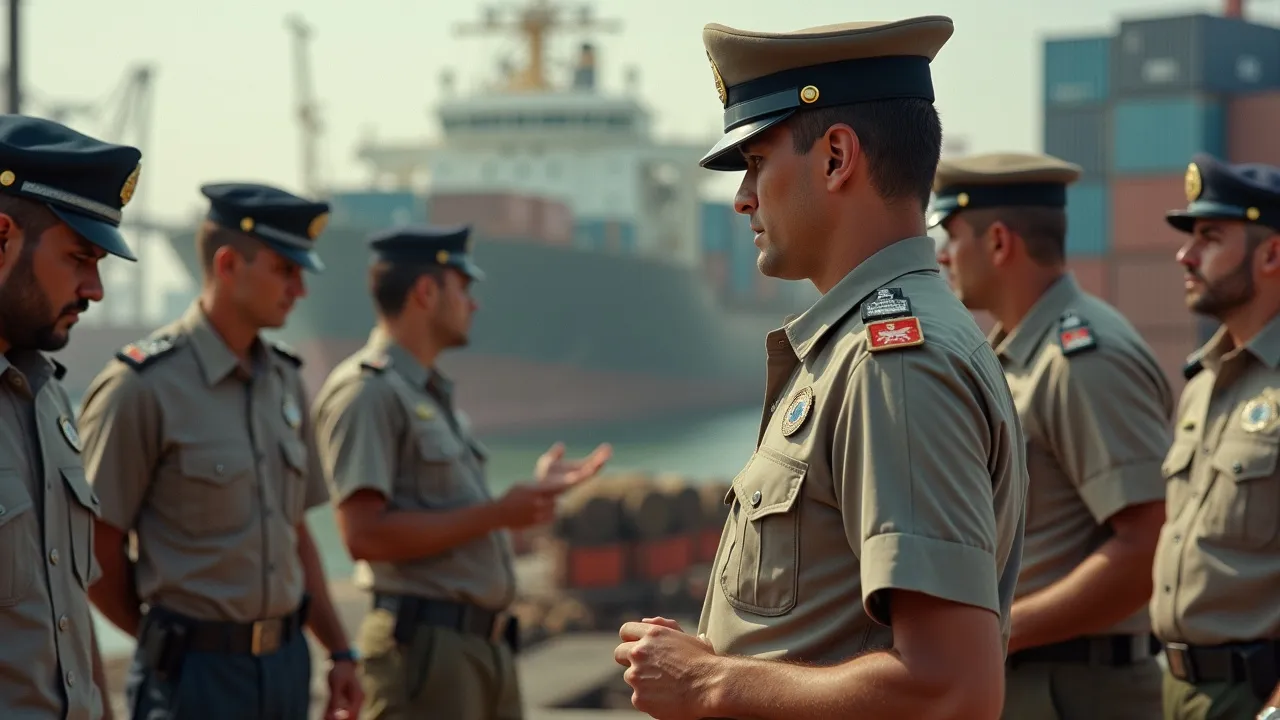
International Customs Day, observed on January 26th, honors the vital work of customs authorities worldwide in facilitating trade and protecting borders. This day recognizes the contributions of customs officers and promotes awareness of their role in global security and economic prosperity.
The Historical Origins & Evolutionary Journey of International Customs Day
International Customs Day traces its roots to the formation of the Customs Co-operation Council (CCC) in 1952, which later became the World Customs Organization (WCO). The day was established to commemorate the first official session of the CCC held on January 26, 1953, in Brussels, Belgium. This session marked a pivotal moment in international trade, as nations recognized the need for standardized customs procedures and cooperation to facilitate global commerce while ensuring border security.
The Foundational Catalyst
The aftermath of World War II saw a surge in international trade, but customs procedures varied widely, causing inefficiencies and delays. European nations, led by the United Kingdom and France, spearheaded the creation of a unified customs body to harmonize practices. The CCC was established under the Convention Establishing the Customs Co-operation Council, signed in 1950. Its primary goals were to simplify customs formalities, prevent fraud, and promote economic integration. The first session on January 26, 1953, set the stage for decades of collaborative customs work.
The Legislative/Official Adoption
In 1983, the WCO officially declared January 26 as International Customs Day to celebrate the organization's achievements and raise public awareness about the role of customs. The first official observance took place in 1984 with the theme "Customs and International Trade". Each year, the WCO selects a specific theme to highlight current issues, such as digitalization, environmental protection, or security. The adoption of International Customs Day by member nations solidified its place as a key date in the global trade calendar.
Modern Global Legacy
Today, International Customs Day is celebrated in over 180 countries. It serves as a platform for customs authorities to engage with the public through open houses, seminars, and media campaigns. The day also honors outstanding customs officers with awards like the WCO Certificate of Merit. As global trade evolves with e-commerce and cross-border data flows, International Customs Day continues to emphasize the importance of modernized customs administrations that balance facilitation with control.
How to Celebrate International Customs Day
International Customs Day offers a unique opportunity for individuals, organizations, and governments to recognize and celebrate the contributions of customs professionals. Below are actionable ways to participate, with variations across different cultures and regions.
For Individuals and Schools
- Visit a local customs office during open house events to learn about inspection processes and trade documentation.
- Organize a classroom activity where students simulate customs declarations to understand the importance of accurate paperwork.
- Share a social media post using hashtags like #CustomsDay or #WCODay to express gratitude to customs officers in your community.
- Read about a famous customs case or seizure to appreciate the vigilance required in preventing smuggling.
For Businesses and Organizations
- Host a training session on customs compliance for employees involved in import/export to reduce errors and delays.
- Partner with local customs authorities to organize a trade facilitation workshop, focusing on new technologies like single windows or blockchain.
- Publish an article on your corporate website highlighting the role of customs in supply chain resilience, using data from the WCO.
- Donate to a customs-related charity or sponsor a scholarship for students pursuing careers in customs or international trade.
Regional Traditions
In Asia, particularly in China and India, customs officers often hold flag-raising ceremonies and award banquets. In Europe, WCO member states may host policy debates on digital customs at universities. In Africa, community outreach programs educate small-scale traders on proper customs procedures to avoid penalties. In the Americas, many ports and airports offer behind-the-scenes tours showcasing scanning technology and drug detection dogs. These diverse celebrations underscore the universal respect for customs work.
The Global Impact of Customs on Trade and Security
Customs authorities are the gatekeepers of international trade, processing billions of dollars in goods every day. Their work directly impacts economic growth, public safety, and environmental protection.
Facilitating Trade
Efficient customs procedures reduce transaction costs and delivery times. The WCO's Revised Kyoto Convention provides a blueprint for modern customs practices, including risk management and automated clearance. According to the OECD, customs modernization can boost GDP by 0.5% to 1% annually in developing countries. International Customs Day highlights these economic benefits by showcasing successful reforms.
Ensuring Security
Customs officers intercept illegal drugs, weapons, endangered species, and counterfeit goods. In 2023 alone, WCO operations led to the seizure of over 1,000 tons of illicit drugs and 500 million counterfeit items. The day raises awareness about the dangers of illicit trade and the need for robust border controls. Key initiatives like the Container Control Programme (joint with UNODC) demonstrate the critical role of customs in combating transnational organized crime.
Protecting Revenue
Customs duties and taxes are vital sources of government revenue, especially in low-income countries. By preventing under-invoicing and smuggling, customs ensures fair collection of tariffs. The WCO estimates that revenue leakage amounts to 3-5% of GDP in some nations. International Customs Day emphasizes the fiscal role of customs in funding public services.
Technological Innovations in Customs Operations
Technology is revolutionizing customs from manual inspections to data-driven risk assessment. International Customs Day often shines a spotlight on digital transformation in the sector.
Single Window Systems
Many countries have implemented Single Window platforms that allow traders to submit all regulatory documents electronically through a single entry point. This reduces processing times from days to hours. For example, Singapore's TradeNet system processes over 90% of declarations within 10 minutes.
AI and Blockchain
Artificial intelligence helps customs analyze trade patterns to detect anomalies, while blockchain provides tamper-proof records of supply chains. The WCO's Data Model facilitates interoperability between national systems. Pilot projects using smart contracts for duty payments are underway in the European Union.
Non-Intrusive Inspection (NII)
X-ray scanners, gamma-ray imaging, and drones allow customs to inspect cargo without physical opening. These tools are crucial for high-volume ports like Rotterdam and Shanghai. International Customs Day highlights the training required to operate such technology and the need for international standards to avoid duplication of efforts.
Challenges Facing Modern Customs Authorities
Despite progress, customs agencies grapple with complex challenges that International Customs Day seeks to address through dialogue and innovation.
E-Commerce Explosion
The rise of cross-border e-commerce has flooded customs with small, low-value parcels. Traditional procedures are ill-suited for millions of packets daily. The WCO's Immediate Release Guidelines propose simplified clearance for low-value consignments, but implementation varies. International Customs Day often features discussions on balancing revenue collection with trade facilitation in the digital age.
Security Threats
Terrorism and organized crime increasingly exploit trade routes. Customs must screen goods for weapons of mass destruction components while avoiding disruption to legitimate trade. The SAFE Framework of Standards provides a risk-management approach, but resource constraints remain a barrier for many countries.
Environmental Issues
Customs play a key role in enforcing environmental treaties like the Basel Convention on hazardous waste and CITES on endangered species. However, illegal waste trafficking and wildlife smuggling persist. International Customs Day 2025 may focus on "Customs and Sustainability" to promote green trade practices.
International Cooperation and the Role of the WCO
The World Customs Organization (WCO) is the intergovernmental body that coordinates customs activities globally. International Customs Day is its flagship event, reinforcing the value of multilateral cooperation.
Standard Setting
The WCO develops harmonized systems (HS codes) for classifying goods, which are used by over 200 countries. It also publishes guidelines on everything from valuation to enforcement of intellectual property rights. The WCO's Customs Enforcement Network enables real-time sharing of intelligence on smuggling routes.
Capacity Building
Through regional training centers and e-learning platforms, the WCO helps developing countries modernize their customs administrations. Programs like Columbus Programme have improved clearance times by 50% in some African nations. International Customs Day celebrates these achievements while urging continued support.
Policy Advocacy
The WCO engages with the World Trade Organization, World Health Organization, and other bodies to ensure customs policies align with broader trade, health, and security goals. For instance, during the COVID-19 pandemic, the WCO facilitated the rapid clearance of medical supplies. This collaborative spirit is the essence of International Customs Day.
Historical Timeline
Convention Establishing the Customs Co-operation Council signed in Brussels, Belgium, by 13 European governments.
Customs Co-operation Council (CCC) officially comes into force, with its headquarters in Brussels.
First session of the CCC held on January 26, laying the foundation for modern international customs cooperation.
WCO officially establishes International Customs Day, to be observed annually on January 26.
First official celebration of International Customs Day with the theme 'Customs and International Trade'.
Revised Kyoto Convention adopted to simplify and harmonize customs procedures globally.
WCO launches the SAFE Framework of Standards to secure and facilitate global trade.
International Customs Day theme focuses on 'Customs and the Environment', highlighting green customs initiatives.
WCO celebrates 30th anniversary of International Customs Day with the theme 'Communication: The Key to Partnership'.
COVID-19 pandemic prompts WCO to emphasize customs role in facilitating cross-border movement of essential medical supplies.
International Customs Day theme 'Customs Engaging Traditional and New Partners' promotes inclusive collaboration.