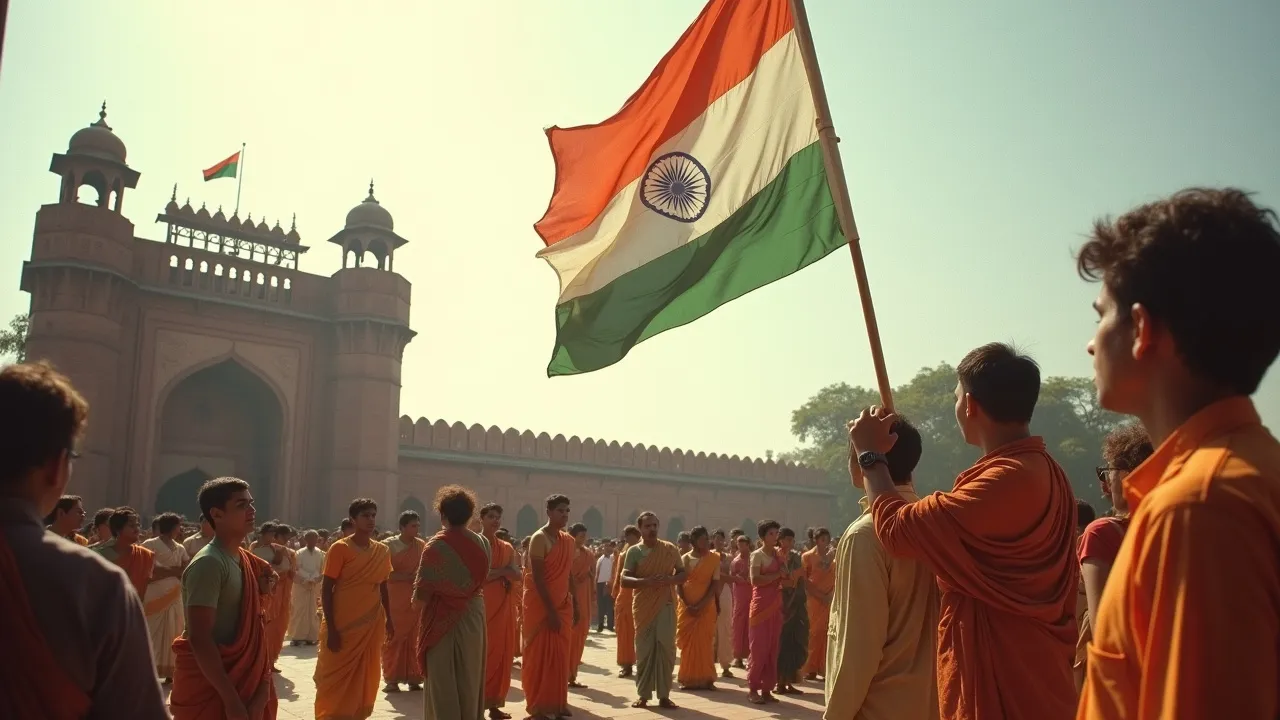
India's Independence Day, observed annually on August 15th, commemorates the end of British colonial rule in 1947. This national holiday celebrates the sovereign nation's birth, marked by flag-hoisting ceremonies, cultural events, and patriotic fervor across the country.
History of Independence Day (India)
Independence Day of India is celebrated on August 15th each year to mark the end of 190 years of British colonial rule and the birth of a sovereign nation. The day is deeply rooted in a long struggle for freedom led by iconic figures like Mahatma Gandhi, Jawaharlal Nehru, Subhas Chandra Bose, and countless others.
The Foundational Catalyst
The Indian independence movement was largely nonviolent, employing civil disobedience and mass protests. Key milestones include the 1857 Rebellion, the formation of the Indian National Congress in 1885, and the Quit India Movement of 1942. The struggle culminated in the Indian Independence Act 1947, passed by the British Parliament.
The Legislative/Official Adoption
On August 15, 1947, Jawaharlal Nehru delivered his famous "Tryst with Destiny" speech and hoisted the Indian flag at the Red Fort in Delhi. This date was chosen because it marked the transfer of power from Britain to India. The day was officially declared a national holiday in the Indian calendar.
Modern Global Legacy
Today, Independence Day is celebrated not only in India but also by the Indian diaspora worldwide. It serves as a reminder of the sacrifices made for freedom and the ongoing journey of the nation. The day is marked by parades, cultural programs, and patriotic displays.
How to Celebrate Independence Day (India)
Independence Day is celebrated with great enthusiasm across India and abroad. Here are the definitive ways to observe the day:
Individual Celebrations
- Attend a local flag-hoisting ceremony in your neighborhood or city.
- Wear traditional Indian attire, especially in tricolor combinations (saffron, white, green).
- Watch the Prime Minister's address from the Red Fort on television or online.
- Listen to patriotic songs and watch films about India's freedom struggle.
School and Institutional Observances
- Organize a flag-hoisting event followed by the national anthem.
- Conduct cultural programs including dances, skits, and speeches on freedom fighters.
- Hold quizzes and essay competitions on Indian history and the independence movement.
- Distribute sweets and tricolor badges to participants.
Corporate and Community Celebrations
- Host a flag-hoisting ceremony at office premises or community centers.
- Arrange patriotic-themed team-building activities.
- Encourage employees to volunteer for social causes honoring the nation's development.
- Decorate the workspace with saffron, white, and green balloons and bunting.
Global celebrations by the Indian diaspora include hosting potluck dinners, organizing parades, and screening documentaries about India's heritage.
Significance and Symbolism
Independence Day carries profound symbolic weight for every Indian. It represents not only political freedom but also the ideals of democracy, secularism, and unity in diversity.
National Flag
Every year, the national flag of India – with its saffron, white, and green bands and the Ashoka Chakra – is hoisted prominently. The colors symbolize courage (saffron), peace (white), and faith (green), while the wheel represents the eternal wheel of law.
National Anthem
The anthem, "Jana Gana Mana" written by Rabindranath Tagore, is sung collectively. Its lyrics reflect the unity of India's diverse regions and people.
Kite Flying
Flying kites is a popular tradition, especially in cities like Delhi and Ahmedabad. The sky fills with kites in tricolor, symbolizing the joy of freedom and the spirit of reaching new heights.
Patriotic Movies and Music
Television channels and cinemas broadcast classic patriotic films and songs. This reinforces national pride and reminds citizens of the values that the independence struggle represented.
Global Impact and Diaspora Celebrations
Indian Independence Day is celebrated globally by over 30 million Indians abroad. Major diaspora communities in the United States, Canada, United Kingdom, Australia, and the Gulf countries organize events that blend Indian culture with local traditions.
United States
Large parades occur in New York City, Chicago, and Houston. Indian-American communities host flag-hoisting ceremonies at their local temples or community centers, sometimes attended by local politicians.
United Kingdom
Events are held at iconic locations like Trafalgar Square in London. The day often includes cultural performances, food stalls, and exhibitions on Indian history.
United Arab Emirates
The large Indian expatriate population celebrates with fireworks, cultural shows, and special discounts in malls. The Burj Khalifa has often been lit in tricolor.
Australia
In cities like Sydney and Melbourne, Indians hold community feasts, cricket matches, and tree-planting drives to mark the occasion.
Cultural Traditions and Ceremonies
The cultural fabric of Independence Day is woven with diverse regional traditions, yet unified by national pride.
Ceremonial Flag Hoisting
The Prime Minister hoists the flag at the Red Fort in Delhi and delivers an address to the nation. State capitals follow suit with Chief Ministers hoisting flags at their respective secretariats.
Parades and Processions
In Delhi, the parade showcases India's military might, cultural diversity, and technological advances. Similar parades are held in state capitals, featuring tableaux, schoolchildren, and folk dancers.
Sweet Distribution
Sharing sweets, especially traditional Indian mithai like ladoo, barfi, and jalebi, is a common practice signifying the sweetness of freedom.
Cultural Programs
Schools and community centers host plays, poetry recitals, and dance performances based on patriotic themes and the lives of freedom fighters.
Modern Observances and Contemporary Relevance
In the 21st century, Independence Day has evolved to incorporate modern elements while retaining its core spirit.
Digital Celebrations
Social media platforms are flooded with tricolor-themed profile pictures, hashtags like #IndependenceDayIndia, and viral videos. The government also launches digital initiatives such as online exhibitions of archival footage.
Corporate Nationalism
Brands release special advertisements and campaigns that emphasize unity, progress, and 'Vocal for Local' messaging. Many companies encourage employees to participate in flag-hoisting and volunteer activities.
Environmental Observances
Recently, tree-planting drives and cleanliness campaigns have been linked to Independence Day, aligning with the government's 'Swachh Bharat' mission and environmental sustainability goals.
Reflection on Progress
The day also serves as a moment to reflect on India's achievements in science, technology, poverty reduction, and global influence, while acknowledging areas needing improvement.
Historical Timeline
India gains independence from British rule at midnight on August 15. Jawaharlal Nehru becomes the first Prime Minister and delivers the 'Tryst with Destiny' speech.
India adopts its Constitution on January 26, becoming a republic, but August 15 remains the primary independence celebration.
India's role in the Bangladesh Liberation War reinforces its sovereignty. Independence Day that year is marked by heightened patriotism.
The government launches the 'Find the Flag' campaign to encourage citizens to hoist the national flag, leading to increased participation.
The first-ever live webcast of the Prime Minister's Independence Day speech from Red Fort enables global viewership.
Prime Minister Narendra Modi delivers his first Independence Day speech, announcing the 'Make in India' initiative.
The government bans the display of foreign flags at public events to preserve national symbolism, reinforcing flag code adherence.
COVID-19 pandemic: Independence Day celebrated with social distancing, masks, and reduced public gatherings; PM Modi announces National Digital Health Mission.
India celebrates Azadi Ka Amrit Mahotsav, the 75th year of independence, with grand events nationwide and a focus on 'Nari Shakti' (women power).
Chandrayaan-3 moon mission success is celebrated on Independence Day, symbolizing India's scientific progress.