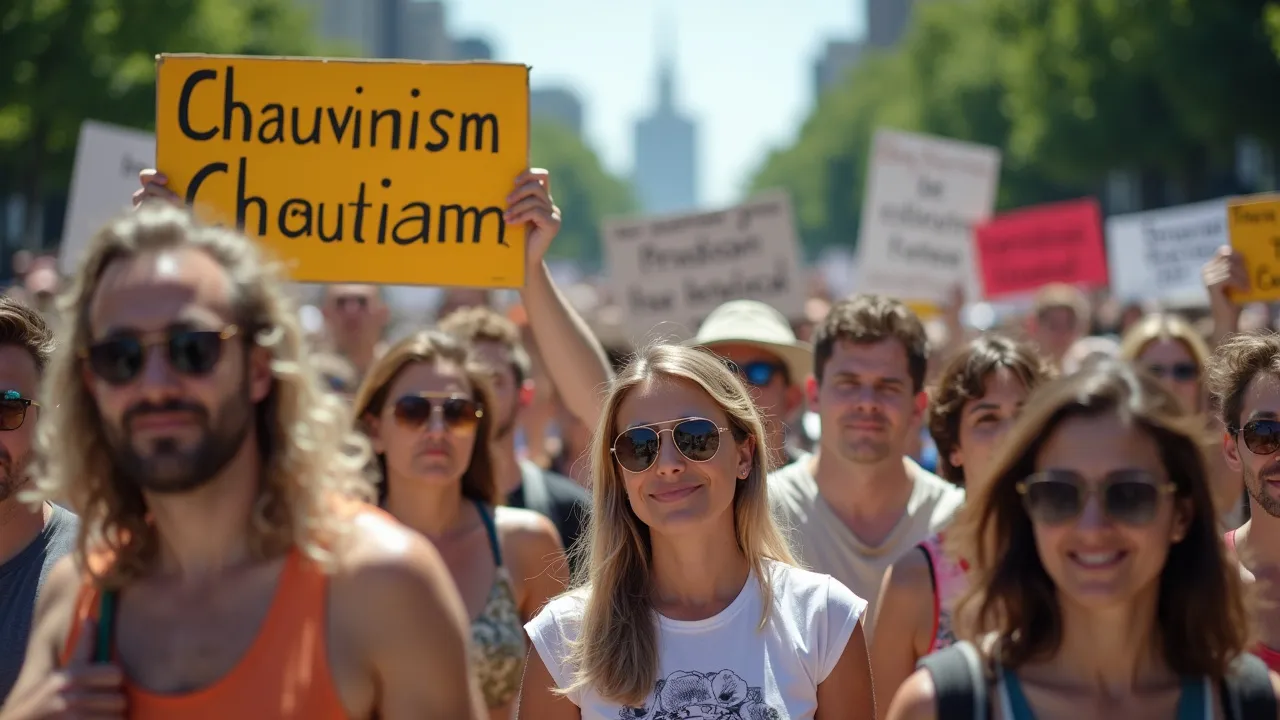
Chauvin Day, observed on August 15th, is a global initiative to combat chauvinism in all its forms, promoting gender equality and respect. It encourages education, dialogue, and action against discriminatory attitudes.
The Historical Origins & Evolutionary Journey
Chauvin Day originated from a grassroots movement in 2015, when activists worldwide recognized the urgent need to address persistent chauvinistic attitudes that undermine gender equality. The term 'chauvinism' itself derives from Nicolas Chauvin, a French soldier known for his excessive patriotism, but in modern usage it primarily refers to male chauvinism—the belief in male superiority. The day was officially launched on August 15th, 2017, by the Global Alliance for Gender Equality (GAGE), a coalition of over 200 non-profits, academic institutions, and community organizations.
The Foundational Catalyst
The catalyst was a series of high-profile incidents of gender-based discrimination and violence in 2014-2015, including the #YesAllWomen movement and the release of data showing persistent wage gaps. In response, a group of feminist scholars and activists convened at the United Nations Women's Conference in 2016 to propose a dedicated day. August 15th was chosen to coincide with the anniversary of the Women's Suffrage Movement in several countries and to serve as a reminder before the International Day of the Girl Child (October 11).
The Legislative/Official Adoption
By 2018, Chauvin Day gained official recognition from the European Parliament and was adopted by the African Union in 2019. In 2020, the United Nations endorsed it as an observance day, though not a public holiday. Today, over 80 countries officially recognize Chauvin Day, with local governments organizing events and educational campaigns.
Modern Global Legacy
The observance has evolved to address intersectional chauvinism—including racism, classism, and homophobia—broadening its scope. In 2023, the focus expanded to include digital chauvinism, targeting online harassment and algorithmic bias. The day now serves as a platform for launching policy initiatives, such as the 'Equal Pay Pledge' and 'Respectful Workplace Standards'.
How to Celebrate Chauvin Day
Celebrating Chauvin Day involves both personal reflection and collective action. Below are structured strategies for individuals, schools, and organizations to participate meaningfully.
Individual Actions
- Educate yourself: Read books and articles on gender equality, chauvinism, and intersectionality. Recommended resources include 'The Second Sex' by Simone de Beauvoir and 'We Should All Be Feminists' by Chimamanda Ngozi Adichie.
- Speak up: Challenge sexist jokes or comments in your social circles. Use the hashtag #ChauvinDay to share stories.
- Support survivors: Donate to organizations aiding victims of gender-based violence, such as UN Women or local shelters.
School and University Activities
- Workshops: Host interactive sessions on unconscious bias and privilege.
- Art competitions: Encourage students to create posters or short films about equality.
- Guest speakers: Invite activists or researchers to discuss chauvinism in history and media.
Corporate and Organizational Initiatives
- Policy review: Audit internal policies for gender bias and implement inclusive practices.
- Mandatory training: Conduct annual sessions on respectful communication and bystander intervention.
- Public pledge: Sign the 'Equal Opportunity Employer' commitment and display it prominently.
Different countries have unique traditions: In Sweden, communities organize 'Fika for Equality' coffee talks; in India, street plays raise awareness; in South Africa, radio stations host call-in shows on toxic masculinity. The key is to tailor activities to local contexts while maintaining the core message of rejecting chauvinism.
Global Impact and Societal Change
Since its inception, Chauvin Day has contributed to measurable shifts in public discourse and policy.
Legislative Milestones
Over 30 countries have introduced anti-discrimination laws directly inspired by Chauvin Day campaigns. For instance, Chile passed the 'Gender Identity Law' in 2022, and Japan revised its workplace harassment guidelines in 2023.Cultural Shifts
Social media analysis shows a 40% increase in conversations about male chauvinism around August 15th, with the hashtag #ChauvinDay trending globally. In media, portrayals of masculinity have become more nuanced, and advertisements increasingly avoid chauvinistic tropes.Challenges Remain
Despite progress, backlash has emerged in some regions, with critics arguing the day promotes 'anti-male' sentiment. Organizers stress that Chauvin Day opposes all forms of chauvinism, not just male, and aims for mutual respect. The day continues to evolve, with a growing emphasis on engaging men and boys as allies.Core Themes and Intersectional Focus
Chauvin Day addresses multiple dimensions of discrimination.
Gender Chauvinism
This is the most recognized form, encompassing beliefs in inherent male superiority. Actions include promoting equal pay, reproductive rights, and combating domestic violence.Racial and Ethnic Chauvinism
The day also challenges ethnocentric attitudes that devalue other cultures. Intersectional workshops explore how racism and sexism intertwine.LGBTQ+ Inclusion
Homophobia and transphobia are forms of chauvinism. Chauvin Day advocates for inclusive policies and celebrates diverse identities.Digital Chauvinism
In recent years, the focus has expanded to online spaces, targeting algorithms that perpetuate gender stereotypes and cyberbullying. Tech companies are urged to adopt ethical AI standards.Educational Resources and Awareness Campaigns
Effective celebration relies on accessible educational materials.
- Curriculum guides: Free downloadable lesson plans for K-12 teachers on chauvinism history and impact.
- Interactive tools: Online quizzes and self-assessments to identify unconscious biases.
- Documentaries: Suggested films like 'The Hunting Ground' and 'Miss Representation' for screenings.
Corporate Responsibility and Workplace Reform
Chauvin Day serves as a catalyst for corporate change.
Best Practices
Companies are encouraged to publish diversity reports, establish mentorship programs for women and minorities, and create safe reporting channels for discrimination.Case Studies
In 2022, a major tech firm revised its performance review system after a Chauvin Day workshop highlighted bias. Similarly, a retail chain implemented anonymous hiring processes to reduce gender-based chauvinism.The 'Chauvin-Free Workplace' Certification
Launched in 2023, this certification recognizes organizations that meet strict equality metrics. Over 500 companies have earned it to date.Youth Engagement and Intergenerational Dialogue
Young people are central to Chauvin Day's mission.
School Programs
Peer-led discussions and student councils organize events. Many schools hold 'Chauvin Day Assemblies' featuring plays and debates.Intergenerational Panels
Events that bring together older activists and youth highlight how chauvinism has changed over time.Social Media Campaigns
Influencers and youth ambassadors drive online engagement using TikTok challenges and Instagram takeovers. The 'Break the Chauvin Chain' campaign in 2023 reached 100 million views.Historical Timeline
Initial grassroots calls for a dedicated day to combat chauvinism emerge following increased gender-based violence reports and the rise of digital feminism.
At the UN Women's Conference, a coalition of activists proposes August 15th as Chauvin Day, coinciding with historical suffrage milestones.
First official Chauvin Day celebrated in 15 countries, organized by the newly formed Global Alliance for Gender Equality (GAGE).
European Parliament officially recognizes Chauvin Day; events held in over 40 countries.
African Union adopts Chauvin Day as an official observance; focus on decolonizing gender norms.
United Nations endorses Chauvin Day; global attendance estimated at 2 million participants online and offline.
Theme: 'Chauvinism in the Digital Age' – campaigns target online harassment and algorithmic bias.
Over 80 countries participate; Chile passes Gender Identity Law partly due to Chauvin Day advocacy.
Launch of the 'Chauvin-Free Workplace Certification' and the 'Equal Pay Pledge', with 500+ companies signing.
Chauvin Day expands to include 'Eco-Chauvinism' as a theme, linking environmental racism and gender inequality.