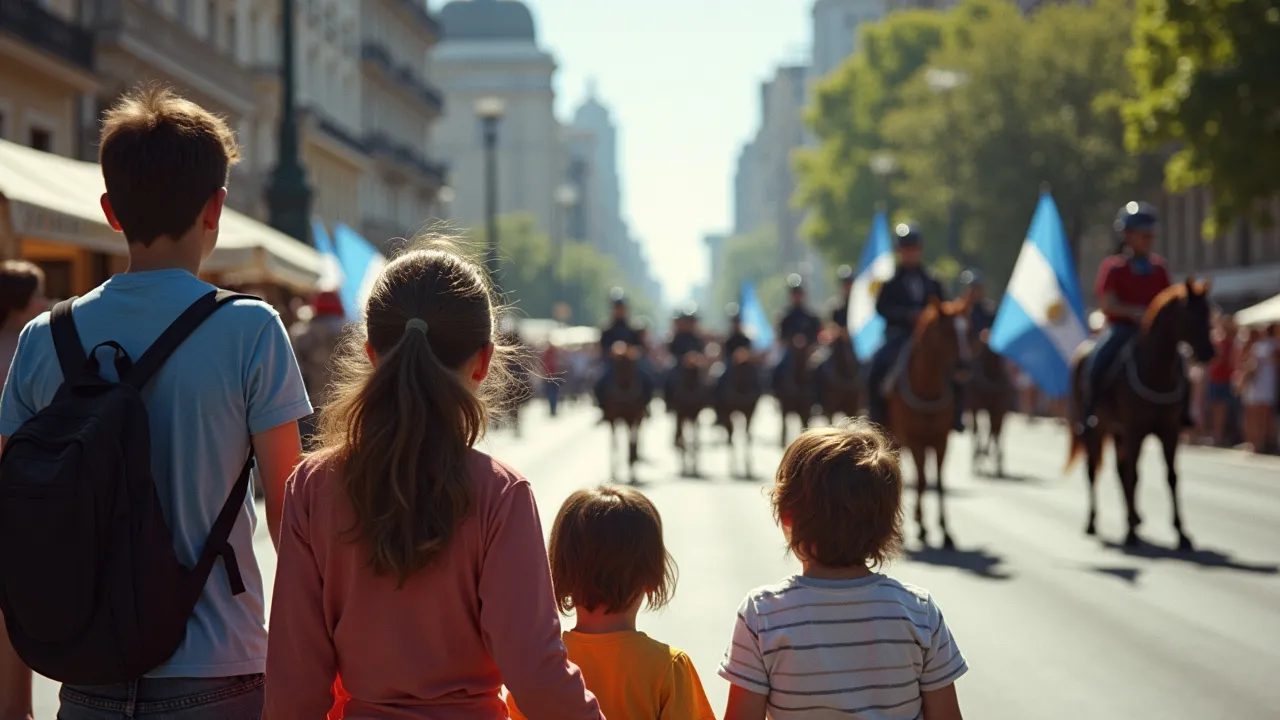
Argentina's Independence Day on July 9th commemorates the country's declaration of independence from Spain in 1816. It is a national holiday marked by patriotic displays, parades, and cultural events across Argentina.
The Historical Origins & Evolutionary Journey
Independence Day in Argentina (Spanish: Día de la Independencia) is celebrated annually on July 9th. This date marks the declaration of independence from the Spanish Empire by the Congress of Tucumán in 1816. The road to independence was a complex process rooted in the broader Latin American wars of independence and the collapse of Spanish authority during the Napoleonic Wars.
The Foundational Catalyst
The spark for Argentine independence began with the May Revolution of 1810, when Buenos Aires ousted the Spanish viceroy and established a local governing junta. This set off a protracted war with royalist forces. By 1816, the political situation required a formal declaration to unify disparate provinces and secure international recognition.
The Legislative/Official Adoption
On July 9, 1816, representatives from several provinces met in the city of San Miguel de Tucumán at the Casa Histórica de Tucumán. There, they signed the Declaration of Independence, proclaiming the United Provinces of the Río de la Plata as independent from Spain and other foreign powers. The declaration was influenced by figures like José de San Martín, Manuel Belgrano, and Juan Martín de Pueyrredón.
Modern Global Legacy
Today, Independence Day is a public holiday throughout Argentina, celebrated with civic and military parades, speeches, and cultural events. It reinforces national pride and commemorates the founding of the nation-state. The day also serves as a reminder of Argentina's ongoing journey toward unity and prosperity.
How to Celebrate Independence Day (Argentina)
Celebrating Argentina's Independence Day involves a blend of patriotic ceremonies, family gatherings, and traditional customs. Here is a definitive guide to observing the day:
Attend Official Ceremonies
- Watch or participate in the military parade in Buenos Aires, often led by the President and featuring the Argentine Armed Forces.
- Visit the Casa de Tucumán for special reenactments and exhibitions.
Family and Community Traditions
- Host or attend an asado (barbecue) with family and friends, featuring traditional Argentine meats and chimichurri.
- Display the Argentine flag and wear blue-and-white colors.
- Listen to folk music such as zamba and chacarera, and dance the tango.
Educational Activities
- Schools often hold assemblies where children recite the National Anthem and learn about the 1816 Congress.
- History museums offer free admission and special tours focusing on the independence era.
In other countries with large Argentine communities (e.g., the United States, Spain), celebrations include cultural festivals, tango shows, and community dinners.
The Impact of the Declaration on South American Independence Movements
The Argentine declaration of independence was a pivotal moment in the broader Spanish American wars of independence. It inspired neighboring regions and helped coordinate efforts led by Simón Bolívar in the north and José de San Martín in the south.
San Martín's Campaign
San Martín used Argentina as a base to liberate Chile and Peru. The declaration provided legitimacy and resources for his Army of the Andes.
Diplomatic Recognition
The declaration also aimed at securing recognition from European powers and the United States. The United States formally recognized Argentina in 1822.
Symbolism and National Identity: The Argentine Flag and National Anthem
Independence Day is intimately linked with national symbols. The Flag of Argentina, created by Manuel Belgrano in 1812, features horizontal blue and white stripes with the Sun of May. The National Anthem, adopted in 1813, was sung at the declaration and remains a central element of celebrations.
The Sun of May
The Sun of May emblem represents the Incan sun god Inti and symbolizes the birth of the new nation.
Patriotic Rituals
On July 9th, the flag is displayed everywhere, and the anthem is sung at official events and in schools. Many people also recite the Preamble of the Constitution as a reaffirmation of democratic values.
Modern Traditions: Parades, Asado, and Folk Music
Contemporary celebrations blend formality with festivity. The main event is the military parade on Avenida 9 de Julio in Buenos Aires, which includes troops, veterans, and historical reenactors. Parades also occur in provincial capitals.
Asado: The National Barbecue
No holiday is complete without an asado. Families gather to grill beef, chorizo, and morcilla over charcoal. This reflects Argentina's cattle-raising heritage.
Folk Music and Dance
Traditional music groups perform zamba, chacarera, and milonga. Dance halls and plazas host peñas (folk gatherings) open to the public.
Independence Day in Argentine Culture: Literature, Art, and Film
The theme of independence permeates Argentine cultural output. Literature from authors like Domingo Faustino Sarmiento and Jorge Luis Borges often explores national identity. The film La Revolución de Mayo (2009) dramatizes the early events.
Artistic Representations
Murals and paintings of the 1816 Congress decorate public buildings. The artist Antonio Berni created works that reflect social struggles, contextualizing independence within ongoing fights for justice.
Modern Media
Television networks broadcast specials on the history, and social media is flooded with patriotic messages and quizzes about national facts.
Challenges and Celebrations: Argentina's Economic and Political Context
Independence Day also serves as a moment for reflection on Argentina's challenges. Economic crises and political instability have marked the nation's history. Yet the holiday remains a source of unity.
Economic Resilience
Despite inflation or debt, Argentine patriotism remains strong, and celebrations continue with fervor.
Political Speeches
Presidents use the occasion to address the nation, often linking the independence ideals to current policy goals.
Historical Timeline
May Revolution: Buenos Aires overthrows the Spanish viceroy, establishing a local junta and initiating the Argentine War of Independence.
Manuel Belgrano creates the Argentine flag, which is first raised on February 27 in Rosario.
The Argentine National Anthem is adopted by the Assembly of Year XIII.
On July 9, the Congress of Tucumán declares independence from Spain, proclaiming the United Provinces of the Río de la Plata.
José de San Martín crosses the Andes to liberate Chile, using Argentina as a base.
The United Kingdom recognizes Argentine independence, followed by other European powers.
After decades of civil wars, the country unifies as the Republic of Argentina, though Buenos Aires does not join until 1880.
Centennial celebrations of the Declaration of Independence are held with grandeur, marking national pride.
The Casa de Tucumán is declared a National Monument.
Argentina marks the bicentennial of independence with year-long cultural events and a state visit by Spanish King Felipe VI.