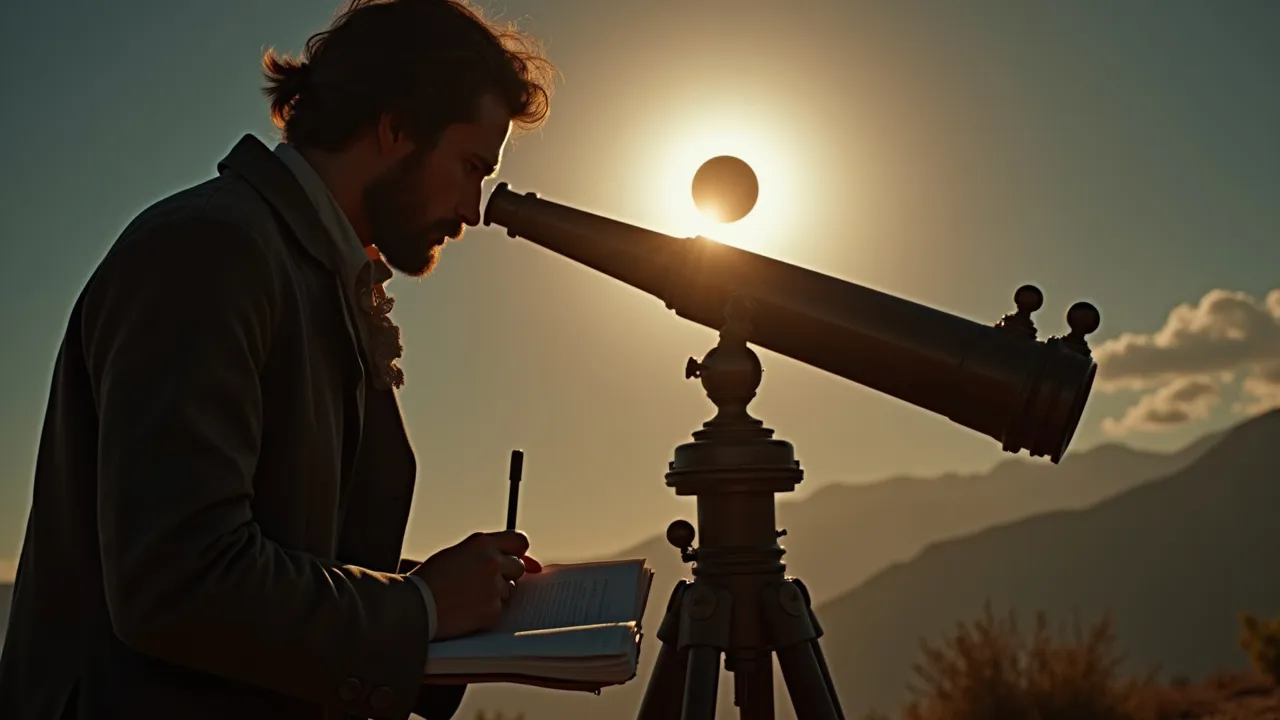
Helium Discovery Day on August 18th commemorates the first observation of helium in the solar spectrum in 1868. It honors the scientists who identified this noble gas and celebrates its myriad applications from balloons to medical imaging.
The Historical Origins & Evolutionary Journey
Helium Discovery Day, observed annually on August 18th, marks the date in 1868 when French astronomer Pierre Janssen first detected helium during a total solar eclipse in Guntur, India. Using a spectroscope, he observed a bright yellow line in the sun's chromosphere that did not match any known element. This discovery was later confirmed by English astronomers Norman Lockyer and Edward Frankland, who named the element helium after the Greek god of the sun, Helios.
The Foundational Catalyst
The discovery of helium was a landmark in astrophysics and chemistry. Janssen's observation on August 18, 1868, during a solar eclipse, was the first time an element was detected outside Earth before being found here. The yellow spectral line, later designated D3, was initially thought to be sodium, but Lockyer and Frankland proved it was a new element. This event catalyzed the field of spectroscopy and expanded our understanding of the sun's composition.
The Legislative/Official Adoption
Unlike many holidays, Helium Discovery Day was not established by government decree. Instead, it grew organically within scientific communities and among enthusiasts of chemistry and astronomy. Over time, August 18th became recognized globally as a day to celebrate the element's discovery and its impact. Museums, planetariums, and educational institutions often host special events, fostering a culture of appreciation for scientific discovery.
Modern Global Legacy
Today, helium is invaluable in fields ranging from cryogenics to deep-sea diving, and from party balloons to space exploration. Helium Discovery Day serves as a reminder of the element's unique properties and the ongoing need for responsible management of global helium reserves. Celebrations include lectures, demonstrations, and discussions on helium's role in scientific advancement.
How to Celebrate Helium Discovery Day
Helium Discovery Day can be celebrated in numerous ways, from educational activities to fun experiments. Below are some actionable ideas for individuals, schools, and organizations.
At Home with Family
- Watch a documentary about the discovery of helium or the solar eclipse. Many streaming services have content on solar physics.
- Conduct a simple experiment: Fill a balloon with helium and observe how it behaves differently from air-filled balloons. Discuss why helium is lighter than air.
- Read a book about helium's history, such as 'The Stuff of the Universe' or 'The Disappearing Spoon'.
In Schools and Educational Settings
- Host a helium-themed science fair: Students can present projects on helium's properties, discovery, or applications.
- Organize a spectroscopy demonstration: Show how scientists use spectroscopes to identify elements.
- Invite a guest speaker from a local university or research institute to talk about helium in cryogenics or space exploration.
For Organizations and Businesses
- Hold a helium trivia quiz with prizes for employees.
- Donate helium balloons to a children's hospital or community event, with educational cards attached.
- Sponsor a lecture series on noble gases and their uses.
Global Celebrations and Traditions
Different countries observe the day in unique ways. In India, where the eclipse was observed, there are often astronomy camps. In the UK, Lockyer's observatory holds open days. The United States sees many planetariums hosting 'Helium Nights' with special exhibits.
Scientific Impact of Helium
Helium's discovery revolutionized science. It provided the first evidence of elements beyond Earth and opened up the field of astrophysical spectroscopy. Today, helium is critical in several scientific applications.
In Chemistry and Physics
Helium is chemically inert and has the lowest boiling point of any element. This makes it ideal for cooling superconducting magnets in MRI machines, particle accelerators like the Large Hadron Collider, and nuclear magnetic resonance spectrometers. Without liquid helium, many cutting-edge physics experiments would be impossible.
In Astronomy and Space Exploration
Helium is used to purge rocket fuel tanks and pressurize spacecraft. It is also a key component in deep-space observations, as telescopes often require cryogenic cooling. The James Webb Space Telescope, for example, uses helium for cooling its instruments.
In Environmental Monitoring
Helium is used as a tracer gas for leak detection in pipelines and atmospheric studies. Its inertness and low abundance make it an ideal marker.
Industrial Applications and Economic Relevance
Beyond science, helium is vital in numerous industries. Its unique properties support many modern technologies.
Medical Imaging
Liquid helium cools the superconducting magnets in MRI machines, enabling detailed body scans. About 20% of global helium consumption is for medical imaging.
Fiber Optics and Semiconductors
Helium is used as a protective atmosphere in the manufacturing of fiber optics and semiconductors, ensuring purity and preventing oxidation.
Aerospace and Defense
Helium is essential for pressurizing rocket fuel tanks, purging systems, and cooling infrared sensors. It is also used in welding arcs for aerospace components.
Balloons and Entertainment
Party balloons represent a small but visible use of helium. However, the helium used in balloons is often impure and accounts for only about 5% of global consumption.
The economic importance of helium has led to strategic reserves, such as the US Federal Helium Reserve, and ongoing debates about privatization and conservation.
Helium in Medicine: Beyond MRI
While MRI is the most famous medical use, helium also plays a role in respiratory therapies. Heliox, a mixture of helium and oxygen, is used to treat patients with severe asthma, COPD, and other obstructive airway diseases. Heliox reduces airway resistance, making breathing easier for critically ill patients.
Additionally, helium is used in cryosurgery to freeze and destroy abnormal tissues, such as in dermatology and oncology. Research is ongoing into using helium for targeted drug delivery and imaging contrast agents.
Environmental Concerns and Helium Recycling
Helium is a non-renewable resource on Earth, forming from radioactive decay in the crust and often escaping into space. Helium reserves are finite and unevenly distributed. Major sources include natural gas fields in the United States (Texas, Kansas, Wyoming), Qatar, Algeria, and Russia.
Conservation and Recycling
Efforts to conserve helium include recycling systems in laboratories and hospitals that capture and re-liquefy boil-off gas. Advanced recovery technologies can recapture up to 99% of used helium. Policies like the Helium Stewardship Act of 2013 in the US aim to manage the Federal Helium Reserve.
Public awareness on Helium Discovery Day often highlights the need for responsible use and support for recycling initiatives.
Historical Timeline
Pierre Janssen observes a new yellow spectral line during a solar eclipse in India, marking the first detection of helium.
Norman Lockyer and Edward Frankland independently identify the line as a new element, naming it helium after Helios.
William Ramsay isolates helium on Earth from the uranium mineral cleveite, confirming its existence.
Helium is discovered in significant amounts in natural gas fields in the United States, leading to commercial extraction.
First use of helium in airships; the US Navy's C-7 airship is filled with helium for safety.
Hindenburg disaster highlights helium's safety advantage over hydrogen for airships.
Helium becomes crucial for nuclear reactors and ballistic missile coolant systems.
NASA uses helium for pressurizing fuel tanks and purging systems in Apollo missions.
Helium is integral to MRI technology, revolutionizing medical diagnostics.
US Helium Stewardship Act passed to manage the Federal Helium Reserve and ensure long-term supply.
Helium Discovery Day is celebrated globally with events emphasizing conservation and scientific legacy.