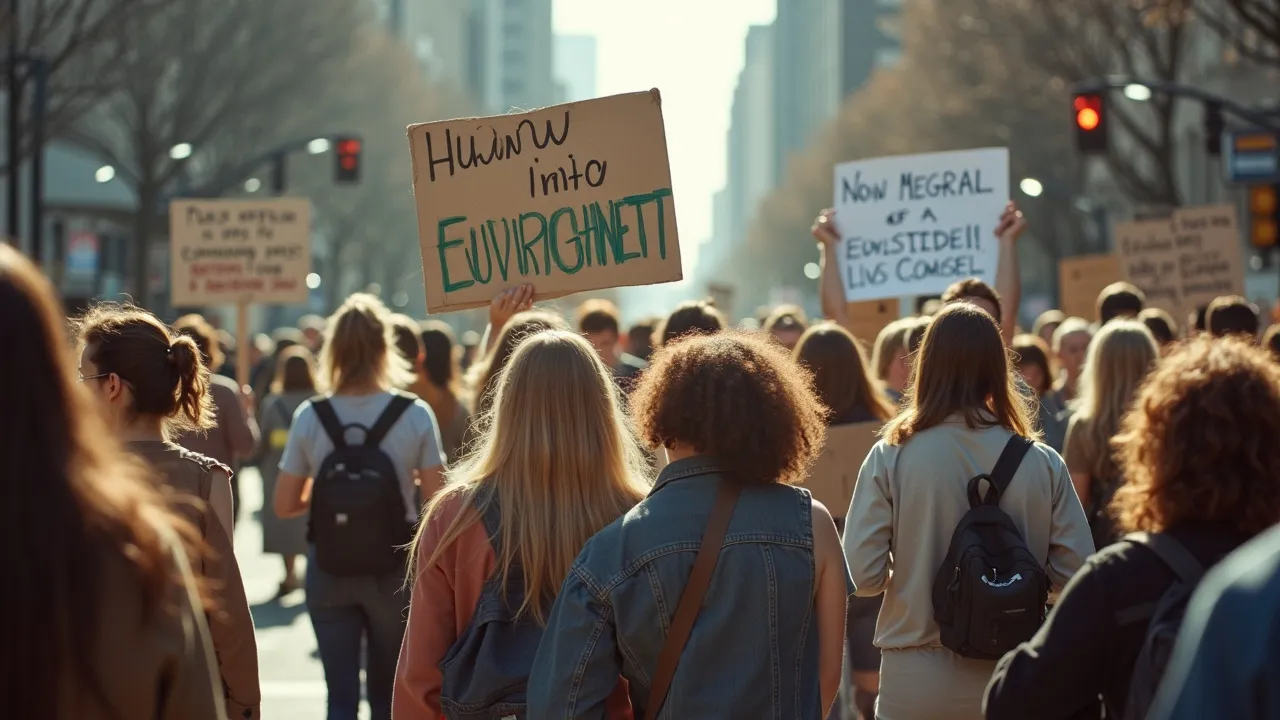
Greenpeace Day, observed annually on September 15th, marks the founding of the global environmental organization Greenpeace in 1971. It celebrates decades of grassroots activism for ecological preservation and climate justice.
The Historical Origins & Evolutionary Journey of Greenpeace Day
Greenpeace Day commemorates the founding of one of the world's most influential environmental organizations, Greenpeace, on September 15, 1971. The day honors the courage and vision of a small group of activists who set sail from Vancouver, Canada, to protest U.S. nuclear testing in Amchitka, Alaska. This journey sparked a global movement that has evolved over decades, shaping environmental policy and public consciousness.
The Foundational Catalyst
In the late 1960s, a coalition of peace activists, journalists, and environmentalists united under the banner 'Don't Make a Wave Committee.' Their initial mission was to stop a nuclear test code-named 'Cannikin' on the seismically unstable island of Amchitka. Led by Jim Bohlen, Irving Stowe, and Paul Cote, they chartered a fishing vessel named the Phyllis Cormack and sailed directly into the test zone. Though the voyage did not halt the blast, it ignited public outrage and media attention, leading to the eventual end of U.S. nuclear testing in Alaska by 1972. This event formalized the birth of Greenpeace, with the name coined by activist Bill Darnell to merge 'green' and 'peace.'
The Legislative/Official Adoption
While Greenpeace Day is not an official public holiday in most countries, it has been recognized by several governments and municipalities. In 2011, the Canadian House of Commons officially declared September 15 as 'Greenpeace Day' to honor the organization's 40th anniversary. Similarly, the city of Vancouver proclaimed the date as Greenpeace Day. Other regions, including parts of Europe and Australia, have adopted local proclamations. The day is widely observed by environmental groups, schools, and activists worldwide through events, campaigns, and educational programs.
Modern Global Legacy
Today, Greenpeace operates in over 55 countries with millions of supporters. Its campaigns have shifted from nuclear testing to climate change, deforestation, overfishing, and plastic pollution. Greenpeace Day serves as a moment to reflect on past victories—such as the moratorium on commercial whaling and the ban on ocean dumping of radioactive waste—and to rally for future challenges. The day also emphasizes the role of nonviolent direct action and scientific research in driving change.
How to Celebrate Greenpeace Day
Greenpeace Day is a call to action for individuals, communities, and organizations to engage in environmental advocacy. Below are comprehensive strategies for meaningful participation.
Individual Actions
- Educate yourself and others: Read about Greenpeace's history and current campaigns. Share facts on social media using hashtags like #GreenpeaceDay.
- Volunteer or donate: Support Greenpeace chapters globally through time or financial contributions.
- Reduce your ecological footprint: Adopt sustainable practices like zero-waste living, plant-based diets, and renewable energy.
Organizational and Corporate Rituals
- Host a documentary screening: Show films like 'How to Change the World' (2015) to educate employees or community members.
- Organize a clean-up event: Coordinate beach, park, or river clean-ups with local groups.
- Advocate for policy: Write to elected officials urging stronger environmental protections.
School and Community Dynamics
Schools can integrate environmental lessons into the curriculum, organize poster contests, or invite Greenpeace speakers. Communities might host fairs with eco-friendly vendors, workshops on recycling, and tree-planting drives. In some countries, such as Germany and the UK, Greenpeace coordinators lead rallies and public talks. The day often culminates in evening events like candlelight vigils for species protection.
Global Impact and Major Campaigns
Greenpeace's campaigns have produced tangible global impacts. Key achievements include:
Environmental Victory Milestones
- Ban on Commercial Whaling (1982): Greenpeace's whale-saving expeditions led to the International Whaling Commission's moratorium.
- Montreal Protocol (1987): Pressure from Greenpeace helped phase out ozone-depleting chlorofluorocarbons (CFCs).
- Marine Reserves: In 2020, Greenpeace's campaign contributed to Australia's ban on mining in Kakadu National Park.
Climate Justice and Renewable Energy
Greenpeace champions the transition to 100% renewable energy. The organization's 'Energy [R]evolution' blueprint has influenced energy policies in over 30 countries. Their 'Save the Arctic' campaign mobilized millions to protect the region from oil drilling, resulting in a 2017 agreement among Arctic nations to ban commercial fishing in the high Arctic for 16 years.
Biodiversity and Forest Protection
Greenpeace's forest campaigns have halted illegal logging in the Amazon, Indonesian rainforests, and the Congo Basin. The 'Forest Stewardship Council' certification system owes much to Greenpeace's early advocacy, ensuring sustainably sourced wood products.
Core Societal Themes and Activism
Greenpeace Day highlights intersectional themes of justice, peace, and ecology.
Nonviolent Direct Action
Greenpeace's tactic of nonviolent confrontation draws from Gandhian philosophy. Activists chain themselves to factory smokestacks, climb oil rigs, and suspend banners from iconic landmarks. These actions generate media attention that amplifies environmental issues.
Scientific Integrity
Greenpeace employs scientists to document environmental harm. Their research has exposed illegal trade in endangered species and contamination from industrial pollution. This evidence often forms the basis for litigation and international treaties.
Youth and Grassroots Movements
Today's climate strikes (e.g., Fridays for Future) are direct descendants of Greenpeace's model. The organization supports youth-led initiatives and provides tools for community organizing. Greenpeace Day celebrates this intergenerational legacy.
Industry Transformations and Green Technology
Greenpeace has driven significant changes in industry practices. The 'Quit Coal' campaign persuaded major banks and insurers to divest from coal projects. In the tech sector, Greenpeace's 'Click Clean' scorecard pushed Apple, Google, and Facebook to power data centers with renewable energy. The electronics industry saw a shift toward lead-free and recyclable components due to Greenpeace's 'Green Electronics' campaign. These transformations demonstrate that corporate responsibility and profitability can coexist.
Regional Celebrations and Date Variations
While Greenpeace Day is universally observed on September 15, some regions have adopted alternative dates for local emphasis:
- Canada: September 15 is officially recognized at the federal level, with events in major cities like Toronto and Victoria.
- United States: Some states, such as California, celebrate on the same day with coastal clean-ups and educational fairs.
- Europe: In the Netherlands and Germany, September 15 is marked by zoo specials and eco-festivals.
- Australia: Greenpeace Day often coincides with 'Biodiversity Month' (September), featuring exhibitions in Sydney and Melbourne.
- United Kingdom: Greenpeace holds a 'Summer Festival' on nearby weekends to maximize participation.
These variations ensure the day resonates with local environmental challenges while maintaining a unified global message.
Historical Timeline
The Don't Make a Wave Committee charters the vessel Phyllis Cormack and sails to Amchitka, Alaska, to protest US nuclear testing. The voyage marks the founding of Greenpeace.
The US government ends nuclear testing in Alaska due to public pressure. Greenpeace adopts its name and becomes an official entity.
Greenpeace launches its first whale conservation campaign, confronting Soviet whaling ships in the North Pacific.
The International Whaling Commission imposes a moratorium on commercial whaling, a major victory driven by Greenpeace's activism.
The Greenpeace vessel Rainbow Warrior is bombed and sunk by French intelligence agents in Auckland harbour, killing photographer Fernando Pereira.
Greenpeace's campaign against Shell's Brent Spar oil platform leads to a reversal of plans to dump it at sea, setting a precedent for offshore disposal.
Greenpeace launches 'Save the Arctic' campaign, gaining global support to protect the region from oil drilling and industrial fishing.
The Canadian House of Commons declares September 15 as 'Greenpeace Day' to mark the organization's 40th anniversary.
Greenpeace's advocacy leads to an agreement among nine Arctic nations to ban commercial fishing in the Central Arctic Ocean for 16 years.
Greenpeace's demands for a Green Recovery from COVID-19 influence stimulus packages in multiple countries, emphasizing renewable energy and climate justice.