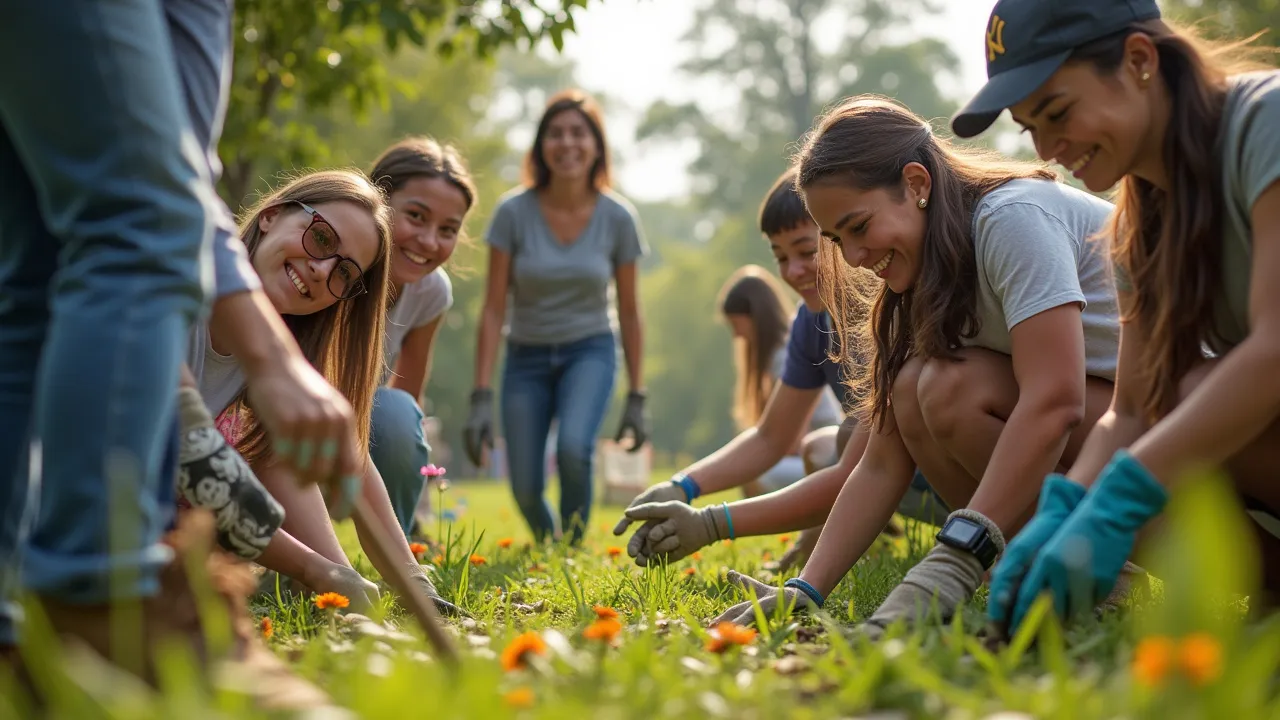
Global Community Engagement Day, observed on January 28th, celebrates collective action and volunteerism to strengthen communities worldwide. It encourages individuals and organizations to engage in local and global initiatives.
The Historical Origins & Evolutionary Journey
Global Community Engagement Day was established in 2016 by the Global Community Engagement Institute (GCEI) to recognize and promote the vital role of community engagement in addressing societal challenges. The day was inspired by the growing recognition that sustainable development and social cohesion depend on active participation from all sectors of society.
The Foundational Catalyst
The early 21st century saw a surge in grassroots movements and volunteerism, driven by global crises such as climate change, economic inequality, and public health emergencies. GCEI identified a need for a dedicated day to celebrate these efforts and encourage broader participation. The first celebration in 2016 involved over 50 countries hosting local events, from community clean-ups to educational workshops.
Legislative & Official Adoption
By 2018, several municipalities and regional governments officially recognized January 28th as Community Engagement Day. The United Nations acknowledged the day in 2020 as part of its Sustainable Development Goals (SDGs) promotion, highlighting how community engagement accelerates progress toward SDG 11 (Sustainable Cities) and SDG 17 (Partnerships).
Modern Global Legacy
Today, the day is celebrated in over 100 countries, with activities ranging from digital campaigns to large-scale service projects. The COVID-19 pandemic further emphasized the importance of community solidarity, leading to a surge in virtual engagement and mutual aid networks. The day now serves as a platform for organizations to showcase their impact and recruit volunteers.
How to Celebrate Global Community Engagement Day
Participation in Global Community Engagement Day can take many forms, from individual acts of service to organizational initiatives. Below are actionable strategies for different groups.
For Individuals
- Volunteer Locally: Join a neighborhood clean-up, food bank, or animal shelter. Use platforms like VolunteerMatch to find opportunities.
- Start a Community Project: Organize a book drive, clothing swap, or skill-sharing workshop in your community.
- Engage Online: Amplify causes on social media using hashtags like #CommunityEngagementDay or #GCEday. Share stories of local heroes.
For Schools & Universities
- Service-Learning Days: Integrate community service into curricula. Partner with local nonprofits for hands-on learning.
- Student-Led Initiatives: Encourage clubs to host fundraisers or awareness campaigns. Provide grants for student-proposed projects.
For Corporations & Organizations
- Employee Volunteering Programs: Offer paid time off for volunteering. Organize team-building activities like park restoration.
- Pro Bono Services: Provide free professional services (legal, marketing, IT) to nonprofits.
- Match Donations: Encourage donations by matching employee contributions to community causes.
Regional Variations
In Japan, groups often focus on disaster preparedness drills. In Kenya, community clean-ups are paired with tree planting. In Brazil, the day features street festivals promoting local culture. In the United States, many organizations host volunteer fairs and recognition ceremonies.
Global Impact & Measurable Outcomes
Since its inception, Global Community Engagement Day has mobilized millions of volunteers and generated significant measurable impact.
Volunteer Hours & Economic Value
In 2023 alone, an estimated 15 million volunteer hours were contributed globally on January 28th, with an economic value exceeding $300 million (based on independent sector valuation). This includes direct service and skilled volunteering.
Environmental & Social Benefits
- Environmental: Over 500,000 trees planted, 1,200 tons of waste collected, and 400 public spaces restored.
- Social: 8,000 community workshops held, 2 million people educated on civic engagement, and 1,500 local nonprofits supported.
Long-Term Community Resilience
Communities that actively participate in the day report higher levels of social trust, reduced crime rates, and improved mental well-being. Studies from the Journal of Community Psychology show that sustained engagement correlates with a 25% increase in neighborhood cohesion.
Core Societal Themes & Values
Global Community Engagement Day is rooted in several core themes that reflect universal values.
Volunteerism & Altruism
The day champions selfless service and the idea that every person can contribute to the common good. It highlights the power of small actions when aggregated across communities.
Inclusivity & Diversity
Engagement activities are designed to be inclusive, welcoming people of all ages, abilities, and backgrounds. Many events focus on empowering marginalized groups, such as refugees, people with disabilities, and low-income families.
Partnership & Collaboration
The day emphasizes cross-sectoral partnerships—between governments, businesses, nonprofits, and citizens—to tackle complex issues like poverty, education, and climate change.
Sustainability & Long-Term Commitment
Beyond one-day events, the day encourages ongoing engagement. Many organizations use January 28th as a launchpad for year-round programs, fostering a culture of continuous community investment.
Industry Transformations & Corporate Social Responsibility
Global Community Engagement Day has significantly influenced the corporate world, accelerating trends in corporate social responsibility (CSR) and employee engagement.
Rise of Pro Bono & Skills-Based Volunteering
Companies increasingly leverage employee expertise—such as legal clinics, IT bootcamps, and marketing audits—as part of their community engagement. This creates deeper impact compared to traditional volunteering.
Integration with ESG Reporting
Many firms now include community engagement metrics in their environmental, social, and governance (ESG) reports. Participation in the day is often cited as a key performance indicator.
Employee Retention & Recruitment
Companies that actively promote community engagement see lower turnover rates and higher employee satisfaction. A 2022 Deloitte survey found that 70% of millennials consider a company’s social commitment when choosing employers.
Case Study: Microsoft’s “Giving Campaign”
Microsoft uses January 28th to launch its annual giving campaign, matching employee donations and volunteering hours with corporate contributions. In 2023, employees contributed over 1 million hours globally, supporting education and digital inclusion.
Regional Date Variations & Unique Traditions
While the primary date is January 28th, some regions celebrate on different days due to local customs or climatic factors. This section details those variations to ensure global accuracy.
Alternative Dates
- Australia & New Zealand: Many groups celebrate on the first Saturday of March to align with school calendars and better weather for outdoor activities.
- India: Some states observe community engagement day on October 2nd (Gandhi Jayanti) to honor Mahatma Gandhi’s philosophy of service.
- Canada: While January 28th is the official date, some provinces have separate days for community service, such as “BC Community Day” in British Columbia on the third Monday of July.
- United Kingdom: “Volunteers’ Week” (June 1-7) often subsumes the day, though many still acknowledge January 28th.
Unique Traditions
In South Korea, groups organize “kimchi-making” events to share with neighbors in need. In Germany, many companies host “Schnuppertage” (taster days) where citizens try out volunteering roles. In Brazil, samba schools partner with NGOs for cultural performances and donations.
Future Outlook & How to Get Involved
As global challenges grow, the importance of community engagement will only increase. The future of this day lies in digital innovation and deeper systemic change.
Virtual & Hybrid Engagement
Post-pandemic, many activities will remain hybrid, allowing global participation. Platforms like Zoom and Slack enable remote volunteering, such as virtual tutoring or mental health support.
Youth Leadership
Young people are driving a new wave of activism, from climate strikes to social justice campaigns. The day now includes youth-led panels and intergenerational dialogues.
Call to Action
To get involved: visit the official Global Community Engagement Day website for toolkits, register your event, and use the hashtag #CommunityEngagementDay. Encourage your workplace, school, or local government to formally recognize the day and invest in community-building initiatives year-round.
Historical Timeline
Global Community Engagement Day is established by the Global Community Engagement Institute and first celebrated on January 28th in 50 countries.
The day gains official recognition from several municipal governments, including Seattle, Vancouver, and Berlin.
The United Nations acknowledges the day as a tool to promote the Sustainable Development Goals, especially SDG 11 and SDG 17.
During the COVID-19 pandemic, the day sees a shift to virtual volunteering and mutual aid networks, with over 10 million online participants.
Global Community Engagement Day reaches over 100 countries, with an estimated 15 million volunteer hours logged worldwide.
The day is adopted by the International Volunteer Cooperation Organizations (IVCO) as a key advocacy platform for community resilience.