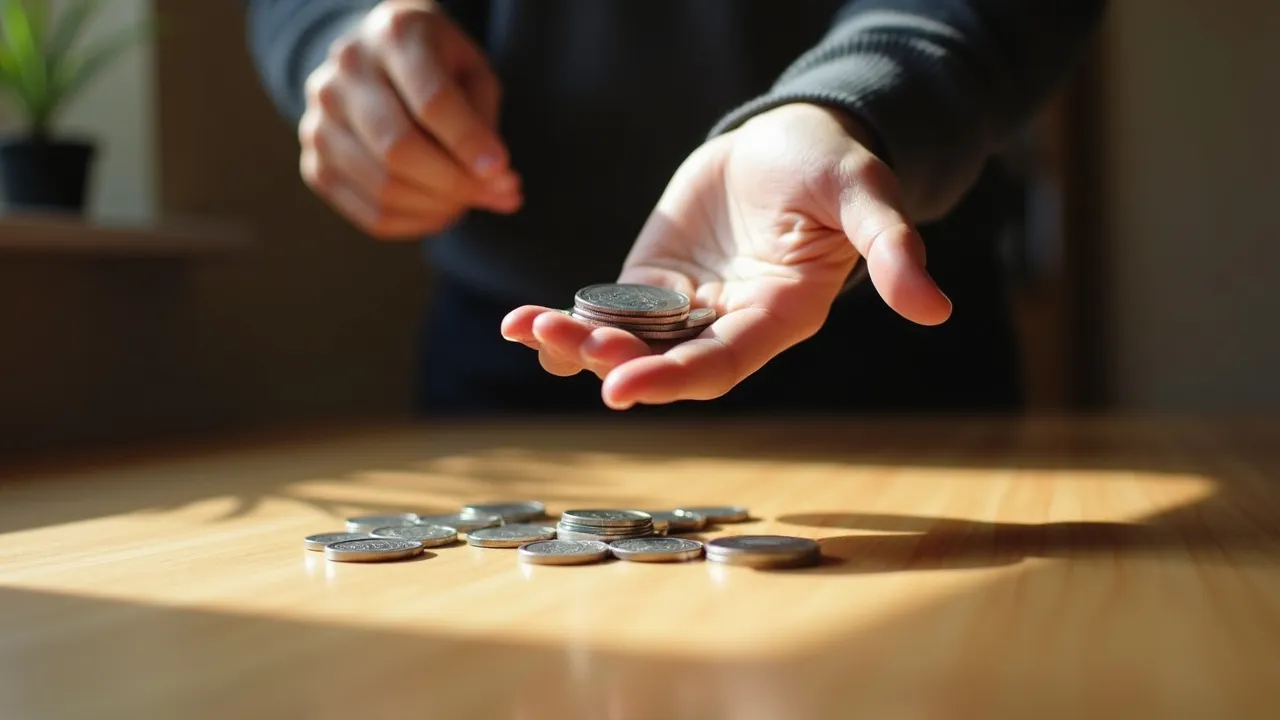
Flip a Coin Day on June 1st is a lighthearted observance celebrating the age-old practice of making decisions by coin toss. Embrace chance and spontaneity in your daily choices.
The Historical Origins & Evolutionary Journey
Flip a Coin Day, observed on June 1st, celebrates one of humanity's simplest yet most profound decision-making tools: the coin toss. While the exact origins of this observance are unclear, coin flipping itself has a rich history stretching back millennia.
The Foundational Catalyst
The practice of flipping a coin to decide between two outcomes dates back to ancient times. The Romans called it 'capita aut navim' (heads or ships), with coins featuring the emperor's head on one side and a ship on the other. This method was used in legal disputes and everyday decisions. The term 'heads or tails' emerged in English-speaking countries, with the heads side bearing a monarch's portrait.
The Legislative/Official Adoption
Throughout history, coin flips have decided everything from political elections (e.g., tied votes in ancient Greece) to sports outcomes (e.g., the NFL's overtime coin toss). The modern Flip a Coin Day likely gained traction in the early 2000s via social media and online calendars, promoting a fun, low-stakes way to break decision paralysis.
Modern Global Legacy
Today, Flip a Coin Day encourages people to embrace randomness in their daily lives. It has become a symbol of letting go of overthinking and trusting fate, with millions sharing their coin flip decisions online.
How to Celebrate Flip a Coin Day
Flip a Coin Day is best celebrated by literally flipping a coin to make decisions—big or small. Here is the ultimate guide to observing the day with enthusiasm and meaning.
Individual Practices
- Morning Toss: Start your day by flipping a coin to decide something minor: coffee or tea? Walk or drive? Let the coin set a playful tone.
- Dinner Decisions: Use a coin to choose a restaurant or meal. Heads for Italian, tails for Mexican—whatever the coin says, commit to it.
- Life-Changing Flips: For fun, flip a coin on a larger decision (e.g., take a job offer or stay). The moment the coin is in the air, you may realize what you truly hope for—revealing your intuition.
Group and Corporate Rituals
- Office Icebreaker: Start team meetings with a coin toss to decide the first speaker or a small treat. This builds camaraderie and lightens the mood.
- Classroom Activity: Teachers can hold a 'Decision Toss' to determine which book to read or which game to play, teaching students about probability and chance.
- Charity Toss-Up: Organize a fundraising event where participants flip coins to decide which charity receives a donation, adding an element of randomness.
International Variations
In Japan, the coin toss is used in sumo wrestling to determine the first wrestler to enter the ring. In soccer, the referee's coin flip chooses which side of the field each team starts on. Embrace these global traditions by researching how different cultures incorporate the coin flip.
The Psychology Behind Coin Flipping
Beyond its simplicity, coin flipping taps into deep psychological principles. Understanding why we rely on chance can enrich the observance.
Decision Fatigue Relief
Modern life bombards us with choices, leading to decision fatigue. A coin flip cuts through this by replacing deliberation with randomness, freeing mental energy for critical tasks. Studies show that even artificial randomness can reduce stress.
Intuition Revealer
When the coin is in the air, people often feel a subtle preference for one outcome. This reaction, known as the 'revealed preference', can help individuals identify their true desires without conscious bias. Many find that flipping a coin clarifies their feelings.
Fairness and Trust
The coin toss is perceived as fair because it removes human bias. This is why it's used in sports, legal tie-breakers, and even by some computer algorithms to generate random numbers. On Flip a Coin Day, reflect on the role of fairness in your decisions.
Global Impact and Cultural Significance
The coin toss transcends borders, appearing in numerous cultural contexts. Here is a look at its global footprint beyond just June 1st.
Sports and Competitions
- Cricket: The coin toss determines which team bats first in test matches, a ritual that can influence the entire game.
- Football (Soccer): The referee tosses a coin to decide which team kicks off and which goal to attack in the first half.
- American Football: The NFL mandates a coin toss before overtime to decide possession.
Legal and Political Uses
In some legal systems, tied votes in juries or committees are resolved by coin flip. Ancient Greek democracies used random selection (sortition) to appoint officials, a precursor to today's coin flips. Even in modern corporate boardrooms, coin flips have broken deadlocks.
Philosophical Symbolism
Coins represent duality—heads and tails, yes and no, good and bad. Philosophers like Aristotle discussed chance as a force in human life. Flip a Coin Day invites us to consider how much of our lives are governed by randomness versus choice.
Fun Facts and Record-Breaking Coin Flips
Coin flipping has its own set of curiosities and achievements. Celebrate the day by sharing these fascinating tidbits.
- Longest Coin Spin: The world record for the longest spinning coin is over 2 minutes, achieved by a specially designed coin on a unique surface.
- Most Consecutive Heads: Statistically, the chance of flipping 10 heads in a row is 1 in 1,024. The record for most consecutive heads with a single coin is around 27, but this requires precise physics and a bit of luck.
- Coin Flip in Space: Astronaut Chris Hadfield flipped a coin on the International Space Station, demonstrating that microgravity still allows for a spin—though it behaves differently.
- Weighted Coins: Some coins have been altered to favor heads or tails, but pure coin flips are nearly 51% likely to land the same side up as when started due to precession. However, for practical purposes, most consider it 50/50.
Engage in a community record attempt by organizing a mass coin flip via social media, counting heads vs. tails across the globe.
Environmental and Economic Aspects of Coins
While the day is about fun, coins themselves have environmental and economic significance. Consider these deeper aspects.
Materials and Sustainability
Modern coins are made from metals like copper, nickel, and zinc. Mining these metals has environmental costs, but coins are durable and recyclable. In contrast, digital currency (e.g., Bitcoin) uses massive energy for mining. On Flip a Coin Day, reflect on the physical vs. digital.
Coin Production Economics
The U.S. Mint produces billions of coins each year, costing more than their face value for pennies and nickels. Some economists argue for phasing out low-denomination coins. A coin flip thus subtly underscores the economic debate—heads to keep coins, tails to go cashless.
Numismatic Hobbies
Coin collecting (numismatics) is a popular hobby. Special edition coins for events like the Olympics or commemorative years can become valuable. Use Flip a Coin Day to start a collection or examine the history of a particular coin.
Historical Timeline
The earliest known coins are minted in Lydia (modern Turkey), featuring a lion's head on one side. This marks the origin of the coin as a medium of exchange and decision-making tool.
Romans introduce the 'denarius' with the emperor's head on one side and a ship or god on the other, leading to the phrase 'heads or ships' (capita aut navim). Coin flips are used in legal rulings.
The U.S. Mint is established, producing coins with Lady Liberty on the obverse and an eagle on the reverse. The American tradition of 'heads or tails' solidifies.
The first World Series of baseball uses a coin flip to decide home-field advantage for some games, popularizing the method in sports.
Super Bowl III coin toss is famously called 'lands on heads' by the referee, and the New York Jets win the flip. This event boosts the ritual's visibility.
The movie 'No Country for Old Men' features a chilling coin flip scene, introducing the coin toss to a new generation as a symbol of fate.
Online calendars and social media begin promoting 'Flip a Coin Day' on June 1st, though the exact founder remains unknown. The day gains traction as a fun, low-stakes holiday.
NASA astronaut Chris Hadfield flips a coin aboard the International Space Station, showing that coin flips work in microgravity—though the coin spins differently due to lack of buoyancy.
During the COVID-19 pandemic, many people use coin flips to break lockdown monotony, with hashtags like #FlipACoinDay trending on Twitter.