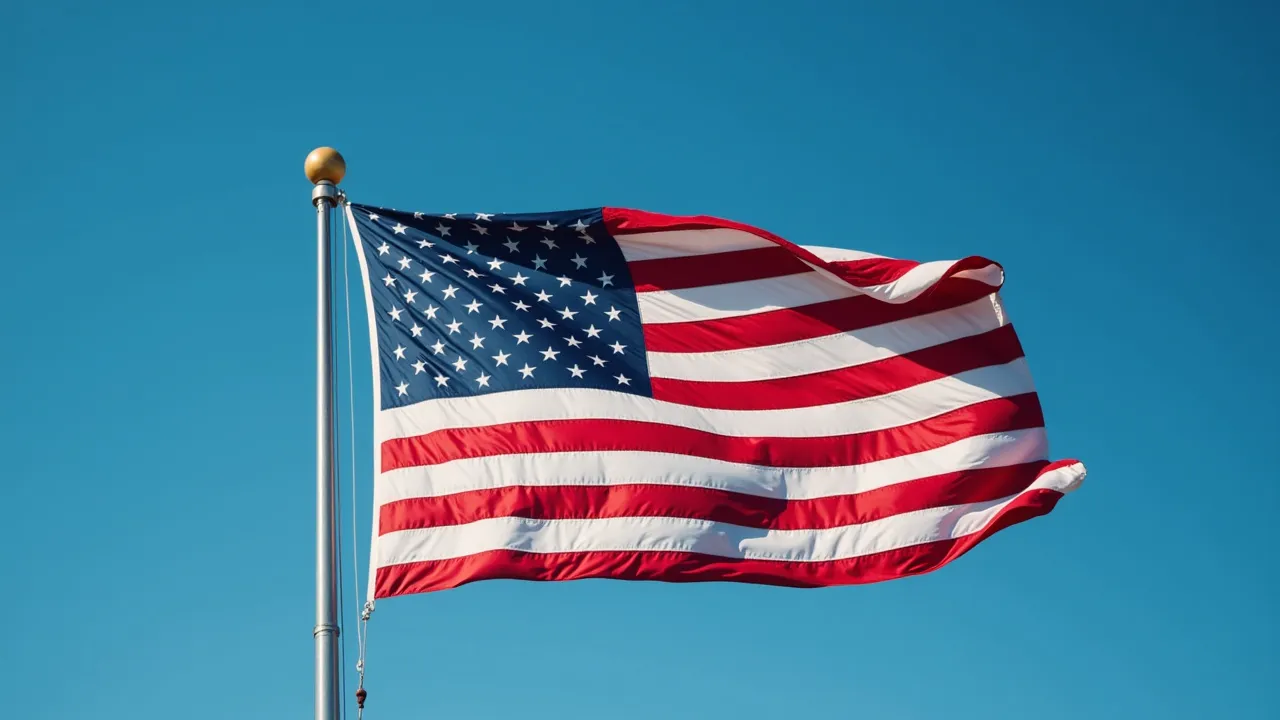
Flag Day, observed on June 14th, commemorates the adoption of the flag of the United States. It is a day to honor the flag's history, symbolism, and the values it represents.
The Historical Origins & Evolutionary Journey of Flag Day
Flag Day traces its roots to the late 19th century, driven by a schoolteacher's passion for patriotic education. The day honors the official adoption of the Stars and Stripes by the Continental Congress on June 14, 1777. Over time, it evolved from a local observance to a nationally recognized day of reflection.
The Foundational Catalyst
The movement began with Bernard Cigrand, a Wisconsin schoolteacher who, in 1885, arranged for his students at Stony Hill School to celebrate the flag's birthday. Cigrand dedicated his life to promoting the observance, writing articles and giving speeches to encourage a national holiday. His efforts laid the groundwork for widespread recognition.
The Legislative/Official Adoption
While state and local celebrations grew, it wasn't until 1916 that President Woodrow Wilson issued a proclamation officially establishing June 14 as Flag Day. However, it remained a proclamation-only observance until August 3, 1949, when President Harry S. Truman signed an Act of Congress designating June 14 as National Flag Day. Importantly, it is not a federal holiday; federal offices remain open but the day is observed with ceremonies and educational events.
Modern Global Legacy
Today, Flag Day is predominantly celebrated in the United States, though similar observances exist in other nations (e.g., Flag Day in Mexico is February 24). The American tradition includes parades, flag-raising ceremonies, and recitation of the Pledge of Allegiance. Schools often hold lessons on flag etiquette and history, reinforcing civic values.
How to Celebrate Flag Day
Flag Day offers a range of activities for individuals, schools, and organizations to honor the flag. Below are structured strategies for meaningful observance.
For Individuals and Families
- Display the flag properly: Follow the U.S. Flag Code — hoist briskly, lower ceremoniously, and never let it touch the ground.
- Attend local parades or ceremonies; many communities host events with veterans and civic groups.
- Learn flag history by reading about Betsy Ross or the symbolism of stripes and stars.
For Schools and Educators
- Organize a flag retirement ceremony: Teach students proper disposal of worn flags by burning or respectful burial.
- Hold a recitation contest of famous speeches like the Pledge of Allegiance or Francis Scott Key's "Star-Spangled Banner".
- Art projects: Invite students to design their own flags representing personal values.
For Organizations and Corporate Settings
- Host a flag-raising event at the office with guest speakers on patriotism.
- Distribute small flags to employees or customers as a symbol of unity.
- Volunteer at veterans' homes or organize flag-themed charity drives.
Above all, Flag Day is a time to reflect on the flag's role in uniting a diverse nation under shared ideals of liberty and justice.
Symbolism and Meaning of the American Flag
The flag's design carries profound symbolism. The 13 stripes represent the original colonies, alternating red and white — red for hardiness and valor, white for purity and innocence. The 50 stars on a blue field (the union) symbolize the 50 states; the blue stands for vigilance, perseverance, and justice. Over time, the flag has become an enduring emblem of national identity, resilience, and freedom.
The Evolution of the Stars and Stripes
The first official flag had 13 stars in a circle (representing unity). As new states joined the union, the flag was updated. The current 50-star version, designed by Robert G. Heft as a high school project, was adopted on July 4, 1960. Heft's design was chosen over 1,500 entries, and he received a B- grade — later changed to an A after his design was accepted.
Flag Etiquette and Respect
The U.S. Flag Code provides guidelines: the flag should not be flown in inclement weather unless all-weather; it should be illuminated at night; and it should never be used as clothing or drapery. Violations are not legally enforced but are considered a sign of disrespect.
Global Observances: Flag Days Around the World
While this article focuses on the U.S., many other nations have their own Flag Days. These celebrations highlight national pride and historical continuity.
- Mexico: February 24 — Flag Day (Día de la Bandera) honors the adoption of the current flag in 1821 and features ceremonies at schools and military parades.
- Canada: February 15 — National Flag of Canada Day marks the 1965 inauguration of the maple leaf flag; often marked by flag-raising ceremonies.
- India: December 7 (unofficial) — Armed Forces Flag Day, but the national flag is celebrated on Republic Day (January 26) and Independence Day (August 15).
- United Kingdom: Union Jack is celebrated on various days; no single Flag Day, but the flag is central to royal and national events.
These observances share common themes of national unity and historical remembrance, adapted to each country's unique heritage.
The Role of Flag Day in American Culture and Education
Flag Day serves as a platform for civic education, especially for young citizens. Schools across the nation integrate lessons on the flag's history, the Pledge of Allegiance, and proper etiquette. This reinforces a sense of belonging and responsibility. Organizations like the American Legion and Boy Scouts of America often lead flag retirement ceremonies or educational workshops.
In popular culture, Flag Day is referenced in movies, songs, and literature as a moment of national introspection. Patriotic songs like "God Bless America" are commonly sung. The day also prompts reflection on the flag's dual role as a symbol of freedom and a subject of protest (e.g., flag burning debates). These tensions highlight the flag's enduring relevance in democratic discourse.
Notable Flag Day Events and Traditions
Across the country, many communities hold unique traditions: Fredericksburg, Texas hosts a massive parade; Baltimore, Maryland has a celebration at Fort McHenry (birthplace of the Star-Spangled Banner); and New York City holds a flag-raising at Bowling Green. The National Flag Day Foundation coordinates events in Waubeka, Wisconsin, where Cigrand first held his observance. Additionally, the President issues an annual proclamation urging Americans to observe the day.
Historical Timeline
The Continental Congress adopts the Stars and Stripes as the official flag of the United States on June 14.
Bernard Cigrand holds the first informal Flag Day celebration at Stony Hill School in Wisconsin.
President Woodrow Wilson issues a proclamation officially establishing June 14 as Flag Day.
President Harry S. Truman signs an Act of Congress making National Flag Day a permanent observance.
The current 50-star flag is adopted, designed by Robert G. Heft as a high school project.