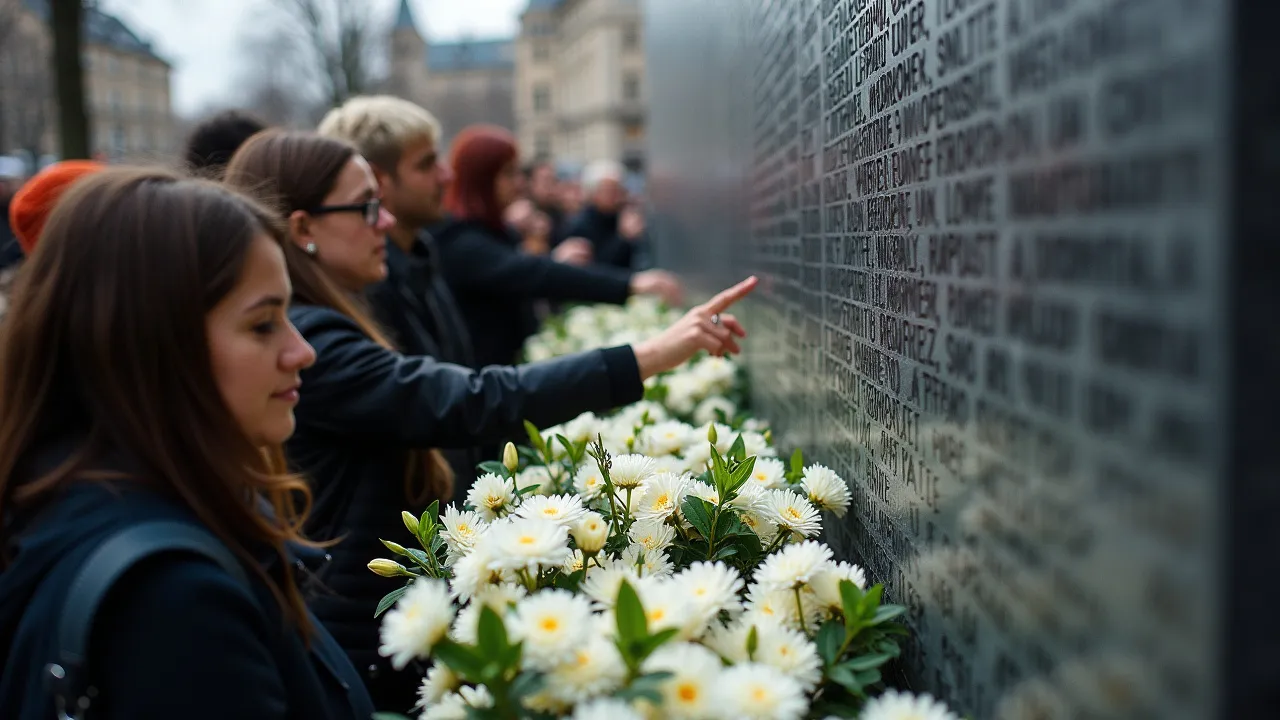
Honoring those who risked everything to save lives during genocides and totalitarian regimes. Established by the European Parliament in 2012, observed annually on March 6th to promote moral resistance and humanity.
The Historical Origins & Evolutionary Journey
The European Day of the Righteous was formally established by the European Parliament on May 10, 2012, with the first official celebration taking place on March 6, 2013. However, its roots reach far deeper into the moral imperative to remember those who defy evil.
The Foundational Catalyst
The concept of commemorating the Righteous Among the Nations was pioneered by Yad Vashem, Israel's official memorial to the victims of the Holocaust. In the 1950s, Yad Vashem began recognizing non-Jews who risked their lives to save Jews during the Holocaust. The idea spread globally, and in 2003, the Gariwo Foundation (based in Italy) proposed a dedicated day for all righteous figures, expanding beyond Holocaust rescuers to include those who stood against any genocide or totalitarian regime. Moshe Bejski, a Holocaust survivor and former chairman of Yad Vashem's Righteous Commission, strongly supported this broader vision.
The Legislative/Official Adoption
After years of advocacy by Gariwo and other civil society groups, the European Parliament adopted a written declaration on May 10, 2012, establishing March 6 as the European Day of the Righteous. The date was chosen to honor the memory of Moshe Bejski, who passed away on March 6, 2016? Actually, the date was chosen because it is close to the anniversary of the death of Giorgio Perlasca (an Italian who saved thousands) and to coincide with existing memorial traditions. However, the official rationale is to create a day that transcends national boundaries, focusing on moral exemplars from all genocides. The first official celebration occurred in 2013 at the European Parliament in Brussels, with events spreading across EU member states.
Modern Global Legacy
Today, the observance has grown beyond Europe. Events are held in schools, universities, and cultural institutions worldwide. The day emphasizes the importance of moral resistance and the duty to protect human dignity. In 2020, the European Commission added digital resources for educators. The day now recognizes rescuers from the Holocaust, the Rwandan genocide, the Bosnian genocide, and other atrocities. Annual themes are set by the Gariwo Foundation, such as 'Women Righteous' or 'Righteous among Dictatorships'.
How to Celebrate European Day of the Righteous
The European Day of the Righteous is a day of reflection, education, and action. Below are comprehensive ways individuals, schools, and organizations can participate meaningfully.
For Individuals
- Learn about a Righteous person: Research the story of a rescuer from any genocide—like Oskar Schindler, Irena Sendler, or Paul Rusesabagina. Share their story on social media with the hashtag #RighteousDay.
- Plant a tree or flower: Many communities plant a 'Garden of the Righteous'—a symbolic gesture of remembrance and hope.
- Attend local ceremonies: Check with city halls, museums, or cultural centers for commemorative events held on March 6.
For Schools
- Organize a lesson plan: Use resources from the Gariwo Foundation or Yad Vashem to teach students about moral courage.
- Hold a poster or essay contest: Encourage students to depict a modern-day righteous person or write about what they would do in a crisis.
- Create a memorial display: Set up a board with photos and biographies of righteous individuals in the school hall.
For Organizations
- Host a panel discussion: Invite historians or survivors to speak about the importance of standing up against injustice.
- Launch a recognition award: Establish a local 'Righteous Person' award to honor community members who display exceptional moral integrity.
- Publish a blog or article: Use your website to amplify the day's message, linking to official European Parliament declarations.
Regional Variations
In Italy, events often center on the Garden of the Righteous in Milan. In France, ceremonies honor French Righteous who saved Jews. In Germany, the day is marked by interfaith dialogues. Some countries hold vigils at embassies to highlight modern crises.
Global Impact & Core Themes
The European Day of the Righteous has had a profound impact on how societies remember courage. It shifts focus from victimhood to the power of individual moral choices.
Educational Transformation
Thousands of schools across Europe now include the day in their curriculum. The Righteous Project provides free teaching materials. A 2021 study found that students exposed to these stories showed increased empathy and civic engagement.
Moral Resistance as a Universal Value
The day underscores that righteous behavior is not limited to one faith or nationality. It highlights figures like Chiune Sugihara (Japanese diplomat who saved Jews), Mohammed Al-Husseini (a Palestinian who saved Jews), and Alberto Cairo (Italian doctor who saved wounded in the Western Sahara).
Controversies and Challenges
Some critics argue that the day is Eurocentric, as it focuses on European figures and was established by the EU. In response, the Gariwo Foundation has expanded its scope to include righteous persons from around the world, such as the Rwandan rescuers during the 1994 genocide.
Impact on Human Rights Advocacy
The day is used as a platform to call attention to ongoing atrocities. In 2019, a resolution linked the day to protecting human rights defenders. The UN has expressed support, though it remains a mainly European initiative.
Societal Transformations & Key Milestones
Since its inception, the European Day of the Righteous has catalyzed numerous societal transformations.
Creation of Gardens of the Righteous
- Milan, Italy (2003): The first Garden of the Righteous of the World, now a model for over 60 gardens globally.
- Yerevan, Armenia (2014): Dedicated to righteous Muslims who saved Armenians during the genocide.
- Kigali, Rwanda (2016): Honors Hutus who protected Tutsis in 1994.
Legislative Recognition
Several EU member states have passed laws mandating educational activities on March 6. In 2018, the Council of Europe endorsed the day. Non-European countries like Canada and Australia have unofficial observances.
Digital Expansion
During the COVID-19 pandemic, virtual ceremonies reached millions. The Righteous Stories podcast, launched in 2021, has over 100,000 subscribers. Social media campaigns amplify the message each year.
The Role of the Gariwo Foundation
The Gariwo Foundation (Gardens of the Righteous Worldwide) is the driving force behind the European Day of the Righteous. Founded in 2003 by Gabriele Nissim and Pietro Kuciukian, the foundation promotes the memory of righteous individuals as a tool for education and peace.
Founding Principles
Gariwo's mission is to create 'virtual and physical gardens' that tell the stories of those who opposed evil. They maintain a database of over 200 righteous figures. The foundation also awards the Righteous of the Year title each March 6.
Key Projects
- Gariwo Digital Library: Free access to biographies, videos, and lesson plans.
- Righteous Travel: Trips to visit gardens and meet families of rescuers.
- European Network: Coordinating events across 19 countries.
Gariwo's work has influenced educational policy and inspired similar initiatives in the United States and Asia.
The Future of the Observance
Looking ahead, the European Day of the Righteous aims to become a global day of moral courage. Plans include:
- United Nations recognition: A proposal is circulating to adopt March 6 as an international day.
- Expansion of gardens: New gardens planned in South America and Africa.
- Youth ambassadors program: Training young people to become advocates for human rights.
Challenges remain, such as political resistance in some countries and the risk of historical revisionism. However, the day's core message—that one person can make a difference—continues to resonate.
Why March 6 Matters
The date itself is symbolic: it falls within the week of International Women's Day, linking the fight for rights with moral courage. It also precedes the spring equinox, representing hope and renewal.
Historical Timeline
Yad Vashem begins recognizing 'Righteous Among the Nations' for non-Jews who saved Jews during the Holocaust.
The first Garden of the Righteous of the World is inaugurated in Milan, Italy, by the Gariwo Foundation.
Moshe Bejski, a Holocaust survivor and champion of the righteous concept, passes away on March 6.
The European Parliament adopts a written declaration establishing March 6 as the European Day of the Righteous.
First official celebration takes place at the European Parliament in Brussels.
The Garden of the Righteous opens in Yerevan, Armenia, honoring Muslim rescuers during the Armenian Genocide.
Garden of the Righteous inaugurated in Kigali, Rwanda, honoring Hutu rescuers of Tutsis.
The Council of Europe officially endorses the European Day of the Righteous.
Due to the pandemic, virtual ceremonies are held, reaching a global audience.
Gariwo launches the 'Righteous Stories' podcast, which gains rapid popularity.
Over 60 Gardens of the Righteous exist worldwide; the day is observed in 19 European countries and beyond.