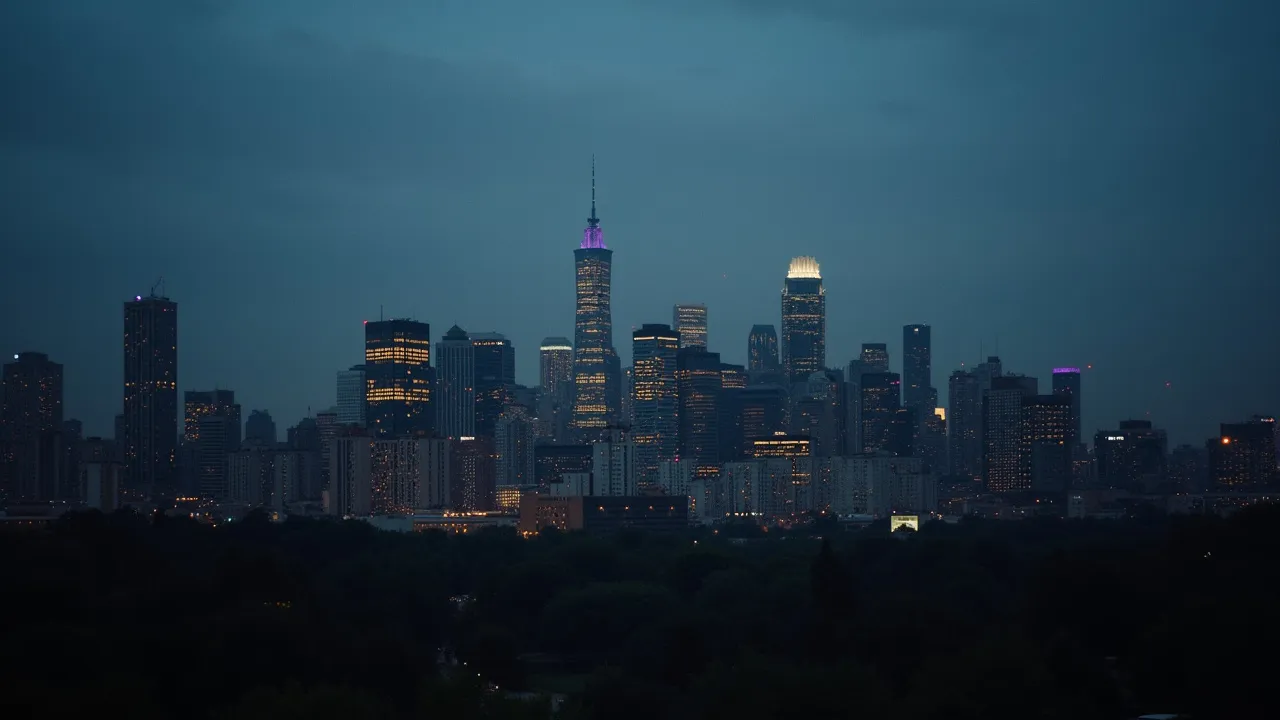
Earth Hour is a global grassroots movement encouraging individuals and businesses to turn off non-essential electric lights for one hour as a symbol of commitment to the planet. It takes place on the last Saturday of March.
The Historical Origins & Evolutionary Journey
Earth Hour began as a symbolic lights-off event in Sydney, Australia, in 2007. Conceived by the World Wide Fund for Nature (WWF) and the Sydney Morning Herald, the initiative aimed to engage Australians on the issue of climate change. The first event saw 2.2 million people and over 2,000 businesses switch off their lights for one hour.
The Foundational Catalyst
The idea was sparked by a conversation between WWF Australia's then-CEO Greg Bourne and advertising agency Leo Burnett. They sought a simple, powerful gesture that would unite people in a common cause. The concept of turning off lights was chosen for its universal symbolism—every household and business has lights. The event was scheduled for March 31, 2007, at 7:30 PM local time.
Global Expansion
In 2008, Earth Hour went global, with 35 countries participating. Landmarks such as the Golden Gate Bridge, the Colosseum, and the Sydney Opera House went dark. By 2009, hundreds of millions of people across 88 countries took part. The event evolved from a symbolic gesture to a platform for environmental action, encouraging participants to adopt sustainable practices beyond the hour.
Modern Global Legacy
Today, Earth Hour is observed in over 190 countries and territories. It has expanded beyond the lights-off event to include digital campaigns, tree planting, and advocacy for renewable energy. The movement has influenced policy, such as the creation of the Earth Hour Forest in Uganda and marine protected areas in Argentina. WWF continues to leverage the event to drive tangible environmental change.
How to Celebrate Earth Hour
Celebrating Earth Hour goes beyond flipping a switch. It is an opportunity to reflect on our environmental impact and commit to sustainable living. Here is a comprehensive guide for individuals, schools, and organizations.
For Individuals and Families
- Plan a candlelit dinner: Use the hour to share a meal without screens, fostering conversation and connection.
- Stargaze: Turn off lights and enjoy the night sky, reconnecting with nature.
- Unplug electronics: Use the hour to unplug devices, reducing phantom energy consumption.
- Read by candlelight: Enjoy a book or tell stories, creating a cozy atmosphere.
For Schools and Educational Institutions
- Host an educational assembly: Discuss climate change and sustainability, using Earth Hour as a teachable moment.
- Organize a lights-off event: Encourage students to participate and share their experiences.
- Launch a green initiative: Start a recycling program or energy conservation challenge.
For Businesses and Organizations
- Turn off non-essential lighting: Make a visible commitment by dimming office lights and exterior signage.
- Engage employees: Host a team-building activity like a sustainability workshop or volunteer event.
- Promote on social media: Use the hashtag #EarthHour to inspire customers and partners.
- Set sustainability goals: Announce new renewable energy targets or waste reduction plans.
In different countries, traditions vary. In Singapore, the Marina Bay skyline goes dark and community events are held. In the Philippines, a massive concert and fireworks-free celebration takes place. In France, the Eiffel Tower's lights are turned off. No matter how you participate, the key is to make the hour meaningful and to extend the commitment beyond 60 minutes.
Environmental Impact and Milestones
Since its inception, Earth Hour has achieved notable environmental impacts beyond the symbolic hour. The event has evolved into a catalyst for advocacy and conservation projects worldwide.
Energy Savings and Awareness
While the immediate energy savings during Earth Hour are relatively small, the event raises awareness about energy consumption. Studies have shown that participants become more conscious of their electricity use long-term. For example, in Ontario, Canada, the province reported a 2% drop in electricity demand during Earth Hour 2008, equivalent to removing 30,000 homes from the grid temporarily.
Conservation Projects
WWF has used Earth Hour to fund environmental initiatives. The Earth Hour Forest in Uganda, launched in 2013, has planted over 500,000 trees. In Argentina, Earth Hour campaigns led to the creation of a 3.4-million-hectare marine protected area in the Atlantic. In Russia, the movement helped protect the Leopard National Park. These projects demonstrate the lasting legacy of the event.
Policy Influence
Earth Hour has also influenced policy at local and national levels. In Finland, the event contributed to the adoption of a national energy saving week. In India, Earth Hour inspired the government to launch the 'Earth Hour India' campaign, promoting solar energy. The movement has encouraged cities to adopt sustainable practices, such as dimming streetlights and installing LED lighting.
Key Milestones
2007: First Earth Hour in Sydney, Australia.
2008: Global expansion with 35 countries.
2009: Participation reaches 88 countries.
2010: Earth Hour becomes a platform for 'beyond the hour' actions.
2011: Earth Hour includes digital campaigns like 'I Will If You Will' challenge.
2012: Earth Hour Forest project launched in Uganda.
2014: Earth Hour Blue crowdfunding platform launched.
2020: Earth Hour goes digital due to COVID-19, using social media to unite people.
Criticism and Controversies
Despite its popularity, Earth Hour has faced criticism from various angles. Understanding these critiques offers a balanced perspective on the event's effectiveness and symbolism.
Environmental Efficacy
Critics argue that turning off lights for one hour does little to reduce carbon emissions. The actual energy saved is minimal because many lights are already off at night, and the surge when lights are turned back on can strain grids. However, proponents counter that the primary goal is awareness, not immediate energy savings.
Safety Concerns
Some municipalities have expressed safety concerns about turning off street lighting and landmark illumination. In many cities, only non-essential lights are turned off to avoid compromising public safety. For example, in New York City, the Empire State Building's lights are dimmed but not fully extinguished.
Symbolism vs. Action
Activists have questioned whether Earth Hour leads to meaningful behavioral change. Critics claim it allows people to feel they have done their part without making lasting lifestyle changes. WWF emphasizes that Earth Hour is a starting point and provides resources for participants to take further action throughout the year.
Corporate Greenwashing
Some companies participate in Earth Hour as a PR move while continuing environmentally harmful practices. This perceived greenwashing undermines the movement's credibility. WWF encourages transparent reporting and genuine commitment to sustainability.
Earth Hour in Different Countries
Earth Hour is celebrated uniquely across the globe, reflecting local cultures and environmental priorities. Below are highlights of how various countries observe the event.
Australia
As the birthplace of Earth Hour, Australia often sees the largest relative participation. Landmarks like the Sydney Opera House and Harbour Bridge go dark. Community events include candlelit concerts, sustainability markets, and stargazing parties.
United States
In the U.S., Earth Hour is marked by iconic landmarks such as the Empire State Building, the White House, and the Golden Gate Bridge turning off their lights. Many cities host park events, and schools organize educational activities. However, participation is less widespread than in some other countries.
India
India has embraced Earth Hour with enthusiasm. The event is often accompanied by rallies, tree-planting drives, and energy conservation pledges. The Gateway of India and Rashtrapati Bhavan are among the landmarks that participate. Social media campaigns are especially popular.
Philippines
The Philippines consistently ranks among the top participants per capita. Earth Hour is a major event with concerts, fireworks-free celebrations, and community clean-ups. The SM Mall chain turns off its exterior signs, and local governments hold 'lights off' contests.
France
In France, the Eiffel Tower's lights are switched off for an hour, drawing global attention. Paris also organizes guided night walks and sustainability fairs. The event is promoted as a chance to appreciate the starry sky in the city.
Japan
Japan observes Earth Hour with a focus on energy conservation following the 2011 Fukushima disaster. Tokyo Tower and the Tokyo Skytree go dark. Many businesses participate, and there are campaigns promoting solar energy.
Corporate and Community Engagement
Earth Hour provides a platform for corporations and communities to showcase their commitment to the environment. Engagement ranges from symbolic gestures to long-term partnerships with WWF.
Corporate Participation
Many global companies participate by turning off non-essential lighting in their offices, factories, and retail stores. For example, IKEA, McDonald's, and Marriott Hotels have been long-time participants. Some companies go further by launching sustainability programs, such as reducing plastic use or investing in renewable energy, and announcing them during Earth Hour.
Community Initiatives
Local communities often organize events that go beyond the hour. In Kenya, community groups hold 'Earth Hour marathons' to raise funds for tree planting. In Brazil, favelas participate with music and dance, promoting environmental education. In the UK, many cities host 'Earth Hour markets' where local artisans sell sustainable products.
Role of Social Media
Social media amplifies Earth Hour's reach. WWF encourages participants to share their experiences using hashtags like #EarthHour, #Connect2Earth, and #SwitchOff. In recent years, virtual events have become popular, allowing people to participate from anywhere. Earth Hour also leverages influencers and celebrities to spread its message.
Future of Earth Hour
As the world faces escalating climate challenges, Earth Hour continues to evolve. The movement is adapting to digital trends and focusing on more tangible outcomes.
Digital Transformation
The COVID-19 pandemic accelerated Earth Hour's shift to digital platforms. In 2020, WWF hosted a virtual event with live streams, interactive maps, and online challenges. This trend continues, with augmented reality filters and virtual pledges engaging a global audience. Digital participation reduces the event's carbon footprint while expanding its reach.
Beyond the Hour
WWF increasingly emphasizes actions beyond the symbolic hour. Participants are encouraged to adopt sustainable habits, such as reducing meat consumption, using public transport, and supporting conservation projects. The Earth Hour Blue platform crowdfunds for environmental initiatives, turning awareness into direct action.
Integration with Policy
Earth Hour is being used as a leverage point for policy change. Local governments use the event to launch long-term sustainability plans, such as phasing out coal or expanding green spaces. WWF works with policymakers to turn public support into legislation.
Challenges and Opportunities
Future challenges include maintaining engagement in an increasingly digital world and avoiding slacktivism. However, Earth Hour's brand recognition and universal appeal offer opportunities for deeper impact. By focusing on measurable outcomes and community building, Earth Hour can remain a powerful force for environmental action.
Historical Timeline
First Earth Hour held in Sydney, Australia, on March 31, 2007, at 7:30 PM. Over 2.2 million people and 2,000 businesses participated.
Earth Hour becomes a global event with participation from 35 countries. Landmarks like the Golden Gate Bridge, Colosseum, and Sydney Opera House turn off lights.
Participation expands to 88 countries and hundreds of millions of people. The event shifts to the last Saturday of March.
Earth Hour launches the 'Beyond the Hour' campaign, encouraging participants to commit to environmental actions year-round.
The 'I Will If You Will' challenge engages social media users to pledge sustainable actions. Earth Hour Forest project begins in Uganda.
Earth Hour in Argentina leads to the creation of a 3.4-million-hectare marine protected area.
Earth Hour Blue crowdfunding platform launches, enabling direct funding of conservation projects.
Due to COVID-19, Earth Hour goes digital, using live streams and social media to unite participants worldwide.
Earth Hour is observed in over 190 countries. The event focuses on 'Connect2Earth', highlighting the connection between climate and biodiversity.