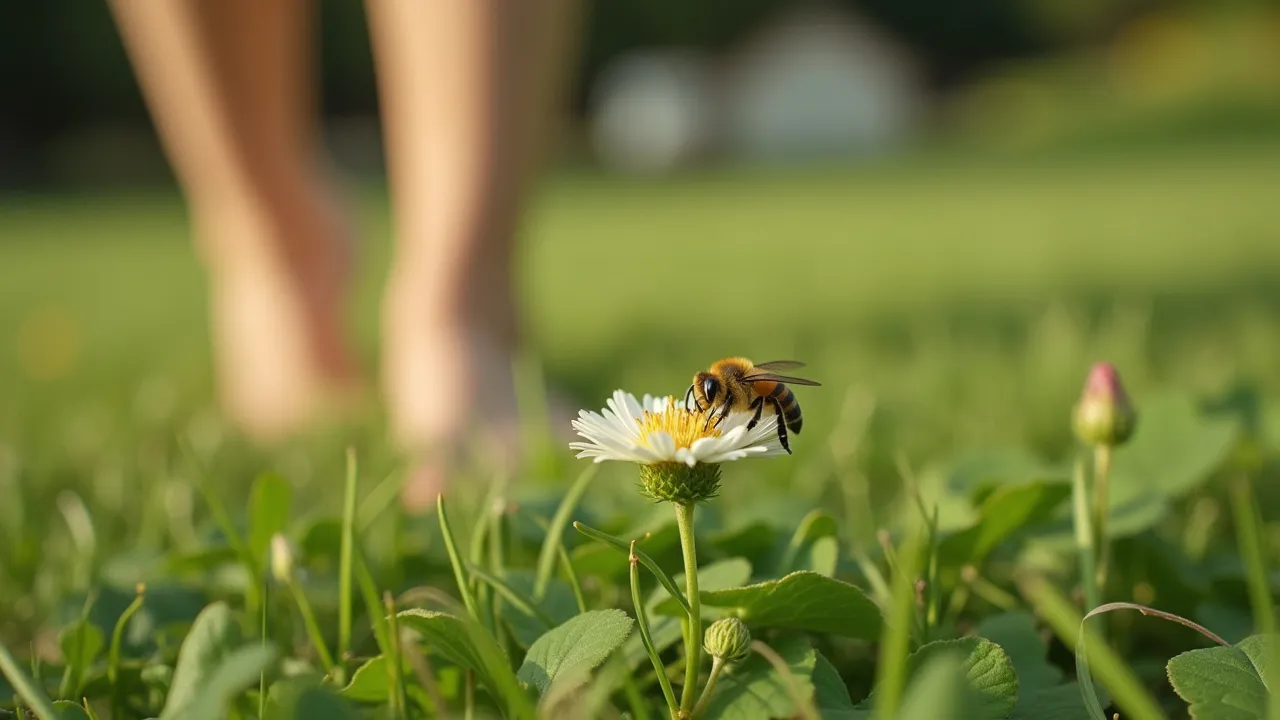
Don't Step on a Bee Day, observed on July 10th, encourages mindfulness of bees and their critical role in pollination. It promotes simple actions to protect these vital insects.
The Historical Origins & Evolutionary Journey
Don't Step on a Bee Day was founded in 2015 by beekeeper and environmental advocate Thomas Van Arsdell. Distressed by the casual disregard for bees often seen underfoot, Van Arsdell envisioned a day to foster empathy and action. The observance quickly spread through social media and local beekeeping communities, evolving into a global call to protect pollinators.
The Foundational Catalyst
Van Arsdell's inspiration came from a personal experience: witnessing a child intentionally crush a bee. Realizing that harmful actions often stem from ignorance, he created the day to educate people on bees' ecological importance. The first celebration involved simple steps: wearing bee-friendly colors, planting flowers, and leaving water sources for thirsty bees. The message resonated strongly with gardeners, educators, and conservationists.
The Legislative/Official Adoption
While not officially legislated, Don't Step on a Bee Day has been recognized by several municipal proclamations and endorsed by major environmental nonprofits. In 2017, the National Wildlife Federation incorporated it into their Garden for Wildlife campaign. Some U.S. states have issued statements encouraging citizens to participate, though the day remains a grassroots phenomenon.
Modern Global Legacy
Today, Don't Step on a Bee Day is observed on every continent except Antarctica. Schools integrate bee curricula, companies host pollinator-friendly workshops, and social media campaigns under hashtags like #DontStepOnABee reach millions. The day has also inspired longer-term commitments: many cities now include bee-safe landscaping in urban planning, and the observance is often paired with World Bee Day on May 20th for extended awareness.
How to Celebrate Don't Step on a Bee Day
Celebrating Don't Step on a Bee Day is about mindfulness and small actions that create a safe environment for bees. Whether you are an individual, a family, a school, or a corporation, here are best practices from around the world:
Individual Actions
- Watch your step: Walk slowly and look down, especially on warm days when bees may be resting on the ground.
- Provide water: Place a shallow dish with pebbles or marbles so bees can drink without drowning.
- Plant bee-friendly flowers: Choose native plants like lavender, sunflowers, and clover that bloom throughout the season.
- Avoid pesticides: Use natural alternatives like neem oil or introduce beneficial insects.
School and Community Activities
- Bee walks: Organize guided walks to identify local bee species and their behaviors.
- Build bee hotels: Create nesting sites for solitary bees using bamboo tubes and drilled logs.
- Art contests: Have children draw or paint bees and display the art in public spaces.
Corporate and Organizational Celebrations
- Host a lunch & learn: Invite a local beekeeper to speak about pollinator health.
- Adopt a hive: Sponsor a beehive through organizations like Heifer International.
- Modify landscapes: Replace turf grass with wildflower meadows on corporate campuses.
Regional Variations
In the United Kingdom, many participate in the Bumblebee Conservation Trust's surveys. In Australia, native bee species are highlighted through community workshops. In Japan, some temples offer blessings for beekeepers. Wherever you are, the core principle remains: respect the bee's right to exist without harm.
The Global Impact on Bee Populations
Bees are responsible for pollinating over 75% of flowering plants and nearly 35% of global food crops. Without them, ecosystems would collapse and food security would be severely threatened. Don't Step on a Bee Day amplifies this message and mobilizes action. According to the Food and Agriculture Organization, managed honeybee colonies have declined in many regions, while wild bee species face extinction rates up to 100 times higher than natural levels. The day encourages direct intervention: reducing pesticide use, preserving habitats, and fostering public vigilance. In China, labor-intensive hand pollination of fruit trees has become necessary in some areas due to bee loss, highlighting the urgency the observance tries to address.
Core Societal Themes: Empathy, Education, and Ecology
Don't Step on a Bee Day intertwines three themes: empathy for small creatures, education about their value, and ecology of interdependent systems. Empathy drives individuals to reconsider their footprint; education provides the knowledge to act effectively; ecology demonstrates the ripple effects of each saved bee. The day also intersects with movements like slow living and mindful consumption, urging people to step back from a fast-paced, technology-dominated world and reconnect with nature's basics. Schools often use the day to teach children about food webs, while businesses apply its principles to corporate sustainability goals.
Threats to Bees and How the Day Addresses Them
Major Threats
- Pesticides: Neonicotinoids and other chemicals impair bee navigation and reproduction.
- Habitat loss: Urbanization and monoculture farming eliminate diverse forage.
- Climate change: Shifting bloom times and extreme weather disrupt life cycles.
- Diseases and parasites: Varroa mites and Nosema fungi devastate colonies.
How Don't Step on a Bee Day Helps
The day directly combats these threats by promoting pesticide-free gardening, creating pollinator corridors, and funding research through donations. Its greatest power is in shifting public behavior: when millions of people temporarily avoid stepping on bees, it reduces accidental killings and fosters curiosity that leads to longer-term support for conservation policies. Many participants sign petitions for bee-safe farming legislation on this day.
Industry Transformations Inspired by the Observance
The observance has catalyzed changes across multiple industries. In agriculture, farmers have adopted integrated pest management and cover cropping to protect pollinators. The landscaping industry now offers bee-friendly planting designs and reduced mowing schedules. Beekeeping supply companies report increased sales of beginner kits on July 10th. Even the tech sector participates: apps like Seek by iNaturalist launch special challenges to identify bee species. The tourism industry sees growth in eco-tours focused on pollinator gardens and apiaries. These shifts demonstrate that a day of mindful walking can reshape global markets toward sustainability.
Historical Timeline
Thomas Van Arsdell founds Don't Step on a Bee Day on July 10th. The first celebration includes local beekeeper talks and social media outreach.
The day gains national attention when the National Wildlife Federation endorses it. Several U.S. cities issue proclamations.
Don't Step on a Bee Day is integrated into school curricula in over 200 districts across the United States and Canada.
A viral video of a beekeeper rescuing bees from a puddle on this day leads to widespread media coverage, boosting participation to millions.
The observance expands to 50 countries. The United Nations Environment Programme mentions it in a blog post about pollinator protection.
COVID-19 lockdowns increase interest in backyard beekeeping and gardening, with record searches for 'Don't Step on a Bee Day activities'.
The day is recognized by the International Bee Research Association. Major retailers promote bee-friendly plants and products.
A global 'Bee Step Challenge' launches: participants walk barefoot on grass without stepping on a bee, raising funds for conservation.
Over 10 million people participate. The hashtag #DontStepOnABee trends on Twitter, generating 500 million impressions.
Legislation inspired by the observance is proposed in three U.S. states to restrict neonicotinoid use. The day continues to grow as a catalyst for change.