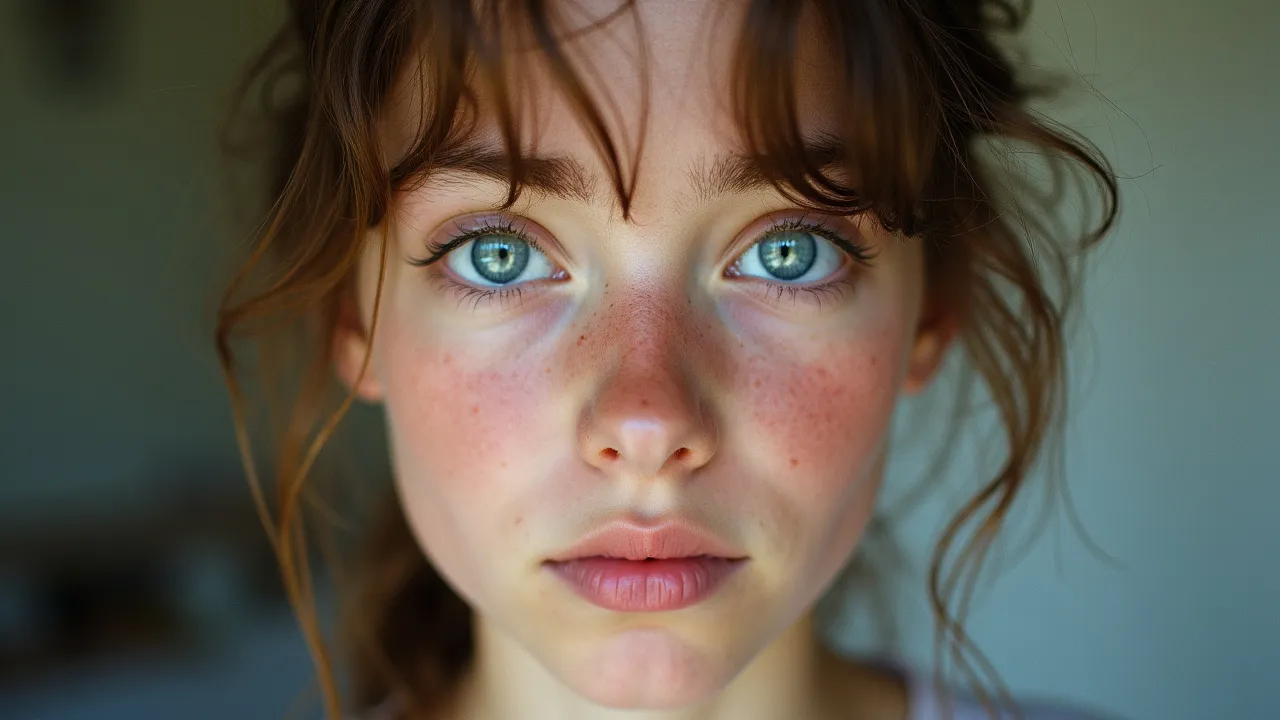
Celebrated on July 12th, Different Colored Eyes Day honors the unique beauty of heterochromia iridum. This day raises awareness about the condition while encouraging people to embrace their distinctive eye colors and learn about the science behind it.
The Historical Origins & Evolutionary Journey
Different Colored Eyes Day, observed annually on July 12th, is a relatively modern observance dedicated to celebrating heterochromia iridum—the condition where a person has two different colored eyes. While the day itself began as a grassroots social media campaign in the early 2010s, the fascination with heterochromatic individuals dates back millennia.
The Foundational Catalyst
The exact origin of the observance is murky, but it is widely believed to have been sparked by a viral online movement in 2010. Individuals with heterochromia began sharing photos and stories, creating a community that advocated for awareness and acceptance. The date July 12th was chosen arbitrarily by early organizers, possibly to avoid conflict with other major observances.
Historical and Cultural Precedents
Heterochromia has been documented throughout history:
- Ancient Greece: Philosophers like Aristotle noted the phenomenon, often associating it with divine or mystical powers.
- Medieval Europe: People with heterochromia were sometimes viewed as witches or healers.
- Modern Medicine: In the 19th century, scientists like Rudolf Virchow described the condition scientifically, distinguishing between congenital and acquired forms.
Modern Global Legacy
Today, Different Colored Eyes Day is observed worldwide through social media campaigns, educational events, and community gatherings. It has grown from a niche internet trend into a day that promotes diversity and self-acceptance.
How to Celebrate Different Colored Eyes Day
Whether you have heterochromia or simply admire its beauty, there are many ways to participate. This guide provides actionable ideas for individuals, schools, and organizations.
For Individuals
- Share Your Story: Post a photo of your eyes on social media using #DifferentColoredEyesDay. Explain what your unique eyes mean to you.
- Learn the Science: Read about the genetic causes of heterochromia—such as mutations in the SOX10 or MITF genes—and share facts with friends.
- Wear Eye-Catching Accessories: Show support by wearing mismatched colored contact lenses (if safe and prescribed) or clothing that matches your eye colors.
For Schools and Educators
- Classroom Lesson: Teach students about genetics, melanin distribution, and the difference between complete, sectoral, and central heterochromia.
- Art Project: Have students draw or paint portraits celebrating eye color diversity.
For Organizations and Businesses
- Host a Webinar: Invite an ophthalmologist or geneticist to discuss heterochromia.
- Fundraising: Donate a portion of sales to vision research or organizations supporting people with eye conditions.
Internationally, celebrations vary. In Japan, for instance, the day often focuses on anime characters with heterochromia, while in the UK, it's a time for medical awareness campaigns.
The Medical Perspective: Understanding Heterochromia
Heterochromia iridum is a fascinating condition from a medical standpoint. It can be classified into three types:
- Complete Heterochromia: One iris is a completely different color from the other.
- Sectoral Heterochromia: A portion of one iris is a different color from the rest.
- Central Heterochromia: The inner ring of the iris is a different color from the outer part.
Causes
Most cases are congenital and benign, caused by an excess or lack of melanin in one eye. It can also result from injury, inflammation, or certain medications. Rarely, it may be associated with syndromes like Waardenburg syndrome or Horner's syndrome.
Treatment and Management
For most people, heterochromia requires no treatment. However, if it develops suddenly, it warrants an eye exam to rule out underlying conditions. Contact lenses can be used to make both eyes match cosmetically, but this is purely optional.
On Different Colored Eyes Day, ophthalmologists often offer free eye screenings to promote eye health awareness.
Famous Personalities with Heterochromia
Throughout history and popular culture, many notable individuals have sported different colored eyes, helping to normalize and celebrate the condition.
- Actors: Kate Bosworth (one blue, one hazel), Mila Kunis (one green, one brown after an eye infection), Dominic Sherwood (one blue, one brown).
- Musicians: David Bowie famously had anisocoria (different pupil sizes) that gave the illusion of heterochromia; Alice Eve (one blue, one green).
- Historical Figures: Alexander the Great was said to have one brown and one green eye, though historical records are debated.
- Fictional Characters: Odin (mythology), Jane Eyre (literature), and many anime characters (e.g., Kakashi Hatake from Naruto).
These celebrities have used their platform to raise awareness, often participating in Different Colored Eyes Day campaigns.
Cultural and Symbolic Meanings Across the World
Different colored eyes have held various symbolic meanings in different cultures:
- European Folklore: Eyes of different colors were believed to grant 'second sight' or the ability to see spirits.
- Middle Eastern Traditions: Often viewed as a sign of beauty and uniqueness, sometimes linked to the 'evil eye' protective charm.
- Native American Lore: Some tribes considered individuals with heterochromia as spiritual guides or mediators between worlds.
- East Asian Pop Culture: In manga and anime, heterochromia symbolizes mystery or supernatural powers (e.g., 'Sharingan' in Naruto).
Different Colored Eyes Day encourages cross-cultural appreciation and dismantles stigmas still present in some societies.
The Science of Eye Color Genetics
Eye color is determined by multiple genes, primarily OCA2 and HERC2 on chromosome 15. These genes control the production and distribution of melanin in the iris. Heterochromia can arise from:
- Genetic Mosaicism: A mutation during development affecting one eye.
- Chimerism: Fusion of two embryos, each with different eye color genes.
- Acquired Causes: Trauma, inflammation, or certain diseases like pigment dispersion syndrome.
Understanding these mechanisms helps demystify the condition and promotes scientific curiosity on this observance day.
Historical Timeline
Aristotle records one of the earliest written descriptions of heterochromia in his 'History of Animals', noting dogs and humans with different colored eyes.
Rudolf Virchow, a German physician, publishes a systematic medical classification of heterochromia, distinguishing congenital from acquired forms.
The genetic basis of eye color begins to be understood with the mapping of the OCA2 and HERC2 genes.
Different Colored Eyes Day is first observed unofficially through social media platforms, gaining traction among communities celebrating eye color diversity.
The day receives broader media coverage, with celebrities like Mila Kunis sharing their stories, leading to a spike in awareness.
Major vision charities adopt the day for fundraising and educational campaigns, including free online webinars about heterochromia.