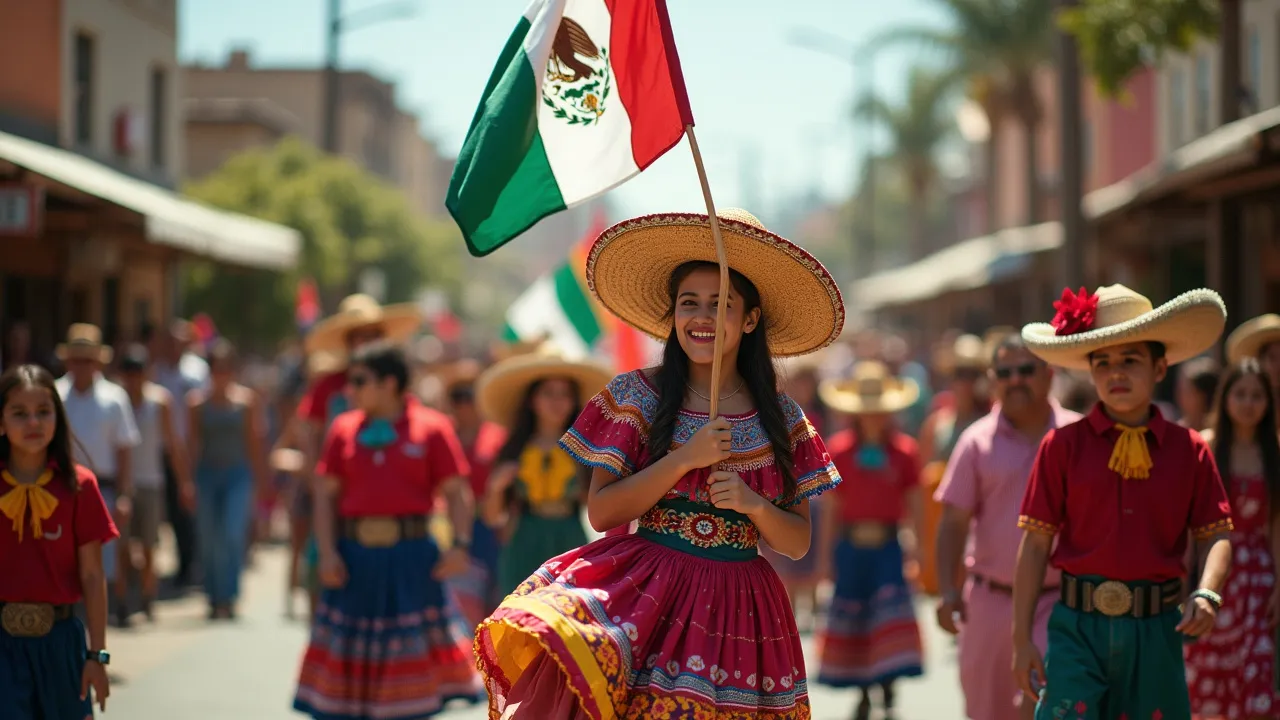
Cinco de Mayo commemorates the Mexican army's victory over France at the Battle of Puebla on May 5, 1862. While not a major holiday in Mexico, it has become a popular celebration of Mexican heritage and culture in the United States.
The Historical Origins & Evolutionary Journey
Cinco de Mayo, observed on May 5th, marks the Mexican army's unlikely victory over French forces at the Battle of Puebla in 1862. This day has evolved from a regional Mexican commemoration into a widespread celebration of Mexican culture, particularly in the United States.
The Foundational Catalyst
In 1861, Mexico was in financial ruin after years of internal strife. President Benito Juárez suspended debt payments to European nations, prompting France, Britain, and Spain to send forces. Britain and Spain negotiated and withdrew, but France, under Napoleon III, sought to establish a client state in Mexico. The French army, considered one of the best in the world, advanced toward Mexico City. On May 5, 1862, they encountered a poorly equipped Mexican army of about 4,000 men led by General Ignacio Zaragoza near Puebla. Despite being outnumbered and outgunned, the Mexican forces achieved a decisive victory, stalling the French advance.
The Legislative/Official Adoption
The first official commemoration of Cinco de Mayo took place in Puebla in 1863. In Mexico, the day is primarily observed in the state of Puebla with military parades and reenactments. Nationwide, it is a minor holiday, overshadowed by larger celebrations like Independence Day (September 16). In the United States, the holiday gained momentum during the Chicano Movement of the 1960s and 1970s, when Mexican-Americans embraced it as a symbol of cultural pride and resistance. It was later commercialized by the beer and food industries, becoming a major celebration in cities with large Hispanic populations.
Modern Global Legacy
Today, Cinco de Mayo is celebrated around the world, though often misunderstood. In the United States, it is one of the largest Mexican cultural celebrations, featuring parades, music, traditional dances, and cuisine. It also holds significance as a day of cultural awareness and education about Mexican history.
How to Celebrate Cinco de Mayo
Whether you are an individual, a school, or a corporation, celebrating Cinco de Mayo authentically involves honoring Mexican culture and the historical significance of the day. Below are actionable strategies for different groups.
For Individuals and Families
- Learn the history: Watch documentaries or read about the Battle of Puebla to share accurate knowledge.
- Cook traditional dishes: Prepare mole poblano, tacos al pastor, or chiles en nogada with family.
- Attend local events: Join parades, concerts, or cultural festivals in your community.
- Support Mexican artists: Buy crafts, listen to mariachi or folk music, and read Mexican authors.
For Schools and Educational Institutions
- Organize a cultural fair: Showcase traditional art, dance, and cuisine from different regions of Mexico.
- Invite speakers: Bring in historians or community leaders to discuss the significance of the day.
- Classroom activities: Create timelines of Mexican history or art projects inspired by Frida Kahlo and Diego Rivera.
For Organizations and Corporations
- Host a team lunch: Offer authentic Mexican food and provide informational pamphlets about the holiday.
- Partner with local businesses: Collaborate with Mexican-owned restaurants and vendors for events.
- Promote cultural sensitivity: Avoid stereotypes and focus on respectful celebration. Use the day to highlight contributions of Mexican employees and community members.
The Battle of Puebla: Details and Significance
The Battle of Puebla was a pivotal engagement in the Franco-Mexican War. Despite being a logistical defeat for the Mexican army—the French later captured Mexico City—the victory at Puebla provided a massive morale boost and symbol of resistance.
Key Details
- Date: May 5, 1862
- Location: Puebla, Mexico (forts of Loreto and Guadalupe)
- Commanders: General Ignacio Zaragoza (Mexico) vs. General Charles de Lorencez (France)
- Outcome: Mexican victory; French forces retreated with heavy losses
- Aftermath: The French regrouped and eventually installed Emperor Maximilian I in 1864, but the resistance continued until 1867.
The battle is celebrated as a testament to Mexican courage and unity. It also delayed French ambitions, allowing the United States to enforce the Monroe Doctrine after its Civil War ended.
Cinco de Mayo in Mexico vs. United States
While Cinco de Mayo is a minor federal holiday in Mexico (only official in Puebla), it has become a major cultural event in the United States. Understanding the differences is key to appreciating its evolution.
In Mexico
- Primarily observed in the state of Puebla with military parades and reenactments of the battle.
- Schools and government offices are closed only in Puebla; elsewhere it is a normal working day.
- Celebrations are modest and focus on historical remembrance rather than parties.
In the United States
- Celebrated nationwide, especially in areas with large Mexican-American populations like Los Angeles, Chicago, and Houston.
- Features large street festivals, concerts, and food festivals, often with commercial sponsorship.
- Has been criticized for cultural appropriation and over-commercialization, but many groups use it for cultural education and pride.
Cultural Impact and Commercialization
Cinco de Mayo has grown into a multi-billion dollar economic event in the United States, driven by alcohol sales, restaurant promotions, and retail marketing. However, commercialization often overshadows the historical meaning.
Positive aspects: Increased visibility of Mexican culture, economic opportunities for Mexican-American businesses, and a platform for cultural exchange.
Negative aspects: Perpetuation of stereotypes (e.g., sombreros, maracas), overemphasis on drinking, and dilution of the historical narrative. Advocacy groups work to refocus the day on education and authentic traditions.
Many organizations now promote authentic celebration by highlighting Mexican art, history, and cuisine without resorting to clichés.
Traditional Foods and Drinks of Cinco de Mayo
Food is central to Cinco de Mayo celebrations. While many Americanized versions exist, authentic dishes vary by region.
Signature Dishes
- Mole Poblano: A rich sauce made with chocolate, chiles, and spices, served over poultry. Originating from Puebla, it is closely tied to the holiday.
- Chiles en Nogada: Stuffed poblano peppers in a walnut sauce, representing the colors of the Mexican flag.
- Tacos: Street-style tacos with various fillings like carnitas, barbacoa, or al pastor.
Beverages
- Margaritas: A popular choice in the US, though less common in Mexico for this day.
- Agua frescas: Refreshing fruit waters like horchata or jamaica (hibiscus).
- Mexican beer: Brands like Corona, Modelo, and Pacifico are frequently consumed.
Music and Dance Traditions
Music and dance are integral to Cinco de Mayo festivities. Traditional genres provide a vibrant soundtrack to the day.
Musical Styles
- Mariachi: Ensembles of trumpets, violins, and guitars performing folk songs and rancheras.
- Banda: Brass-heavy music popular in northern Mexico.
- Norteño: Accordion-based music with polka influences.
Dances
- Ballet Folklórico: Colorful regional dance performances that tell stories of Mexican history.
- Jarabe Tapatío: The Mexican hat dance, often performed at celebrations.
- Son Jarocho: From Veracruz, featuring harp and foot-stomping.
Myths and Misconceptions
Despite its popularity, Cinco de Mayo is surrounded by myths. Correcting these is important for cultural understanding.
- Myth: Cinco de Mayo is Mexico's Independence Day. Fact: Independence Day is September 16.
- Myth: It is a major holiday throughout Mexico. Fact: It is primarily observed in Puebla.
- Myth: The victory at Puebla won the war. Fact: The French ultimately won the battle for Mexico City; the victory was symbolic.
- Myth: The holiday was created by beer companies. Fact: It originated from Mexican pride, though commercialization expanded it.
Historical Timeline
France, Britain, and Spain send forces to Mexico over debt defaults. Britain and Spain withdraw after negotiations.
The Battle of Puebla occurs. Mexican forces under General Ignacio Zaragoza defeat the French army.
First official commemoration of Cinco de Mayo in Puebla. The day is declared a holiday in the state.
Maximilian I is executed; French intervention ends. Cinco de Mayo remains a symbol of resistance.
Chicano Movement in the United States adopts Cinco de Mayo as a day of cultural pride and activism.
Commercialization accelerates as beer companies and restaurants heavily market the holiday in the U.S.
U.S. Congress passes resolution calling for official recognition of Cinco de Mayo's historical significance.