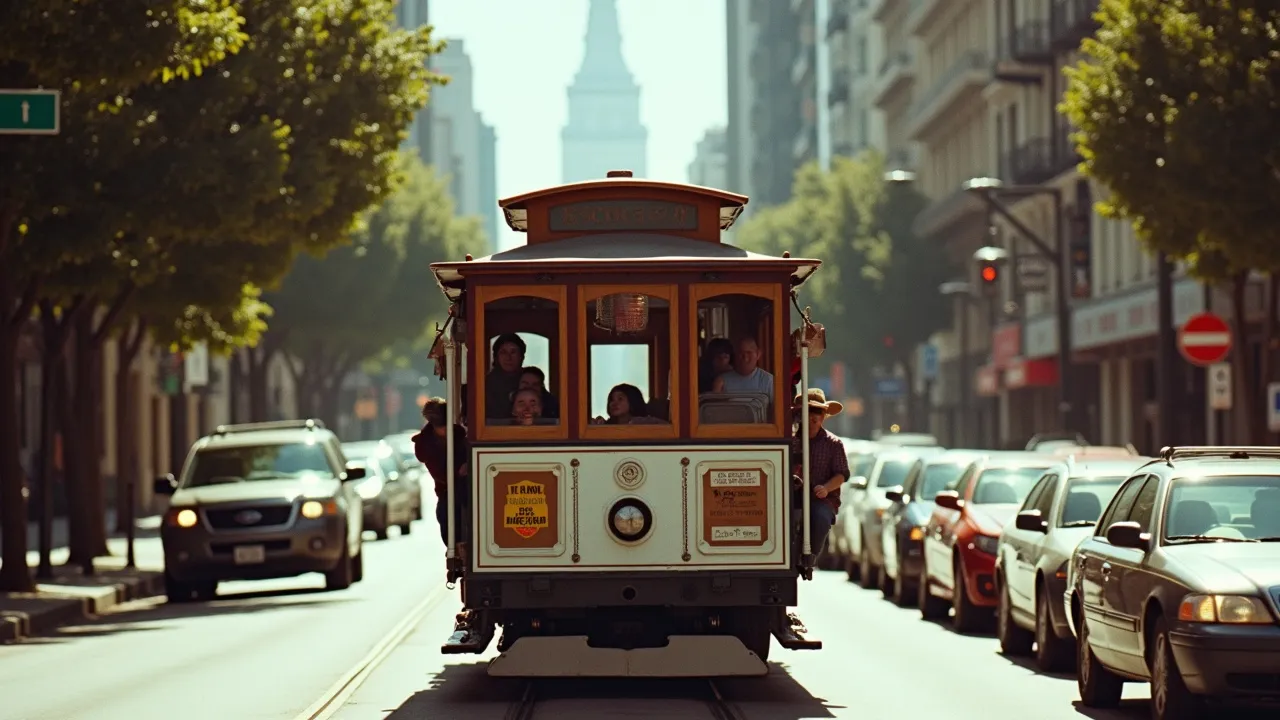
Cable Car Day on January 17th celebrates the invention and legacy of the cable car system. This day honors the innovative transportation that shaped urban landscapes and invites riders to enjoy a historic journey.
The Historical Origins & Evolutionary Journey
Cable Car Day, observed annually on January 17th, commemorates the patent granted to Andrew Smith Hallidie in 1871 for the cable car system. This day recognizes the transformative impact of cable cars on urban transportation and their enduring cultural significance.
The Foundational Catalyst
The invention of the cable car was driven by the need for a reliable, horse-free mode of transport in hilly cities. In 1869, Hallidie witnessed a horse-drawn carriage accident on a slippery San Francisco street, which inspired him to design a safer alternative. His system used underground steel cables powered by a central steam engine to pull cars along fixed tracks. The first successful line, the Clay Street Hill Railroad, began operation on August 2, 1873, and quickly became a model for other cities.
Legislative and Official Adoption
Following the 1906 San Francisco earthquake, many cable car lines were destroyed. Public outcry led to their rebuilding, and by 1912, the system had been restored. In 1964, the San Francisco cable cars were designated a National Historic Landmark. To further honor this innovation, the San Francisco Cable Car Museum established Cable Car Day in 2014, choosing January 17th to coincide with Hallidie's patent date.
Modern Global Legacy
Today, cable cars operate in about 20 cities worldwide, including Lisbon's famous funiculars and Wellington's cable car. San Francisco's system remains the world's last manually operated cable car system, carrying over 7 million passengers annually. Preservation organizations continue to maintain the historic fleet, ensuring that this 19th-century technology remains a vibrant part of modern transit.
How to Celebrate Cable Car Day
Cable Car Day offers numerous ways for individuals, schools, and organizations to participate. The day encourages both appreciation for transit history and engagement with local communities.
Individual Celebration Ideas
- Take a ride on a historic cable car line and learn about its operation.
- Visit a cable car museum, such as the San Francisco Cable Car Museum, to see historic vehicles and machinery.
- Watch documentaries or read books about the evolution of cable cars.
- Share photos and stories on social media using the hashtag #CableCarDay.
School and Educational Activities
- Organize a field trip to a local cable car or funicular system.
- Assign students to research the engineering principles behind cable propulsion.
- Create model cable cars using simple materials like string and pulleys.
- Host a presentation on the cultural impact of cable cars in cities like San Francisco and Lisbon.
Organizational and Corporate Rituals
Transport authorities can offer free or discounted rides on Cable Car Day. Transit museums can hold special events, including guided tours and restoration demonstrations. Local businesses can sponsor cable car-themed contests or donate to preservation funds.
Global Traditions
In San Francisco, the day often features a bell-ringing contest among gripmen. Lisbon celebrates with special funicular tours, and in New Zealand, the Wellington Cable Car offers commemorative passes. Each city adds its own local flavor to the celebration.
Engineering Marvels of the Cable Car System
Cable cars represent a remarkable feat of 19th-century engineering. The system's core innovation lies in its use of continuously moving underground cables to which cars attach via a grip mechanism.
The Cable and Grip Mechanism
Steel cables, typically 1.25 inches in diameter, run in a slot beneath the street at a constant speed (about 9 mph). The gripman operates a lever that engages the cable to propel the car. Releasing the grip allows the car to coast or brake. This system requires precise timing and skill, especially on steep grades.
Power and Safety Systems
Central powerhouses house steam or electric engines that drive the cables. Modern systems incorporate automatic tensioners to prevent slack. Safety features include emergency brakes that clamp onto the cable slot and manual braking by the gripman.
Comparison with Other Transit Modes
- Funiculars use a single car counterbalanced by another, operating on a fixed slope.
- Aerial tramways suspend cars from cables but are not street-level.
- Traditional streetcars rely on overhead electric wires rather than underground cables.
The cable car's unique ability to climb steep grades without slipping made it indispensable in cities like San Francisco, where some streets have gradients exceeding 20%.
Cultural and Social Significance
Cable cars have become cultural icons, especially in San Francisco where they symbolize the city's resilience and innovation. They appear in countless films, songs, and artworks, reinforcing their status as a beloved landmark.
In Popular Media
Movies like The Pursuit of Happyness and Mrs. Doubtfire feature cable cars prominently. The song The Trolley Song from Meet Me in St. Louis (1944) celebrates streetcar travel, but cable cars share a similar romantic aura. Postcards and souvenirs often depict the iconic red and cream cars.
Tourism and Economic Impact
San Francisco's cable cars draw over 7 million tourists annually, contributing significantly to the local economy. Riding a cable car is considered a must-do activity, generating revenue for the city. Other cities like Lisbon also leverage their funiculars as tourist attractions.
Community Identity
Cable cars foster a sense of place and continuity. They connect neighborhoods and provide a nostalgic link to the past. Preservation efforts often become community causes, uniting residents around shared heritage.
Global Cable Car Systems and Variations
While San Francisco boasts the most famous cable cars, similar systems operate worldwide, each with unique characteristics.
Lisbon's Funiculars
Lisbon has several funiculars (e.g., Elevador da Glória) that use cable traction but differ from street cable cars. They shuttle passengers up steep hills and are integrated into the city's public transport.
Wellington Cable Car
New Zealand's Wellington Cable Car runs from the central business district to the suburb of Kelburn. It opened in 1902 and uses a hybrid cable/electric system, offering panoramic views.
Other Notable Systems
- Chicago 'L' (partial cable): Early versions used cable traction before electrification.
- New York City's Roosevelt Island Tramway: An aerial cable car connecting Manhattan and Roosevelt Island.
- Valparaiso Ascensores: Chile's funiculars that scale steep coastal hills.
Each system adapts the core cable technology to local geography and needs, demonstrating versatility.
Preservation and Future of Cable Cars
Preserving historic cable car systems requires ongoing maintenance, funding, and public support. Challenges include aging infrastructure, parts scarcity, and competition from modern transit.
Preservation Efforts
The San Francisco Municipal Transportation Agency operates the cable car system as both a transit service and a historic asset. The Cable Car Museum performs restorations, and volunteer groups like the Market Street Railway advocate for funding. In 2020, a major rehabilitation project replaced entire cable lengths and upgraded the powerhouse.
Technological Integration
Modern systems incorporate GPS tracking, automated braking, and hybrid power to improve efficiency while maintaining historic character. Electric motors now supplement the original steam engines in some powerhouses.
Future Outlook
Cable cars may see a revival in eco-tourism and heritage transit projects. New installations, such as the London Cable Car across the Thames, show that the concept remains viable. However, the original street-level cable car remains rare, making preservation even more critical.
Historical Timeline
Andrew Smith Hallidie receives a patent for the cable car system on January 17, laying the groundwork for the first successful line.
The Clay Street Hill Railroad in San Francisco begins operation on August 2, becoming the world's first successful cable car line.
Cable car systems spread to other US cities including Chicago, New York, and Philadelphia, though many later convert to electric streetcars.
The San Francisco earthquake and fire destroy most of the cable car system, but public demand leads to rebuilding.
San Francisco's cable car system is fully restored, with new lines replacing horse-drawn cars.
San Francisco's remaining cable car lines are designated a National Historic Landmark, ensuring their protection.
A federal grant helps preserve the cable car system after a decline in ridership threatens closure.
The San Francisco Cable Car Museum opens in the historic Washington-Mason powerhouse, showcasing vintage cars and machinery.
The first official Cable Car Day is celebrated on January 17, established by the Cable Car Museum to honor Hallidie's patent.
A major rehabilitation project replaces cables and upgrades the powerhouse to ensure long-term operation.
San Francisco celebrates the 150th anniversary of the cable car system; ridership rebounds post-pandemic.